To be honest, after a month at Renée Materials, I am utterly exhausted.
I’ve tried to find joy in the work: collaborating with Yijia, a fellow DPS student, makes the days less lonely, and I’ve always found a sense of achievement in organizing messy fabrics into neat sets. But these small sparks are being drowned out by a massive wave of burnout.
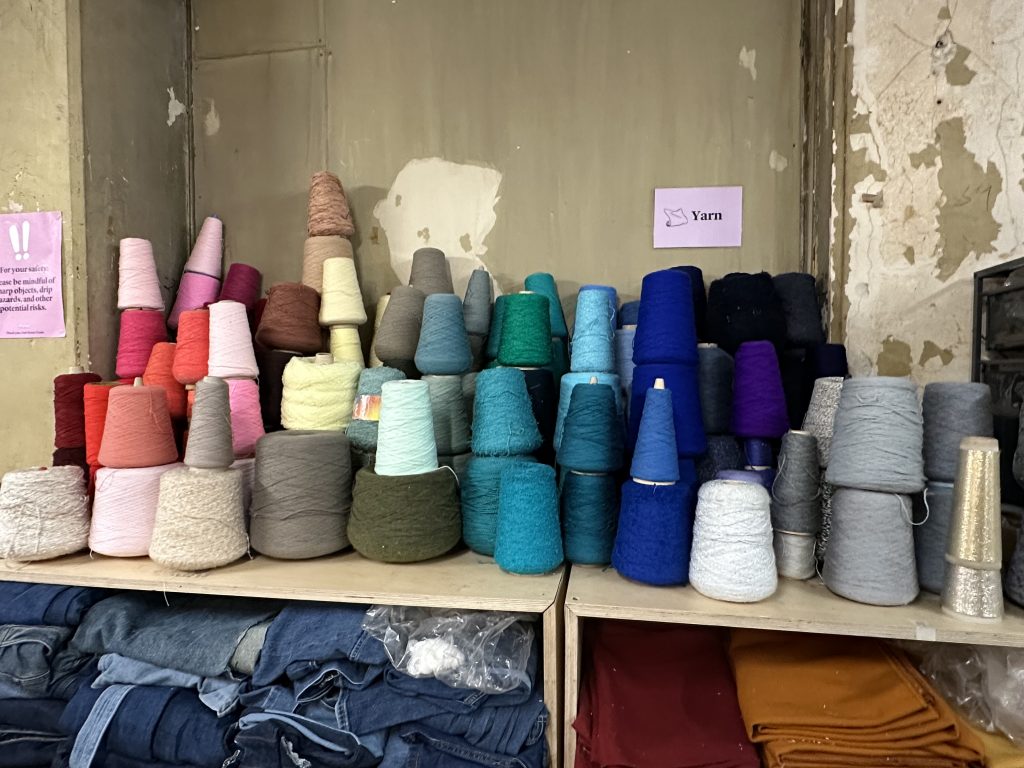
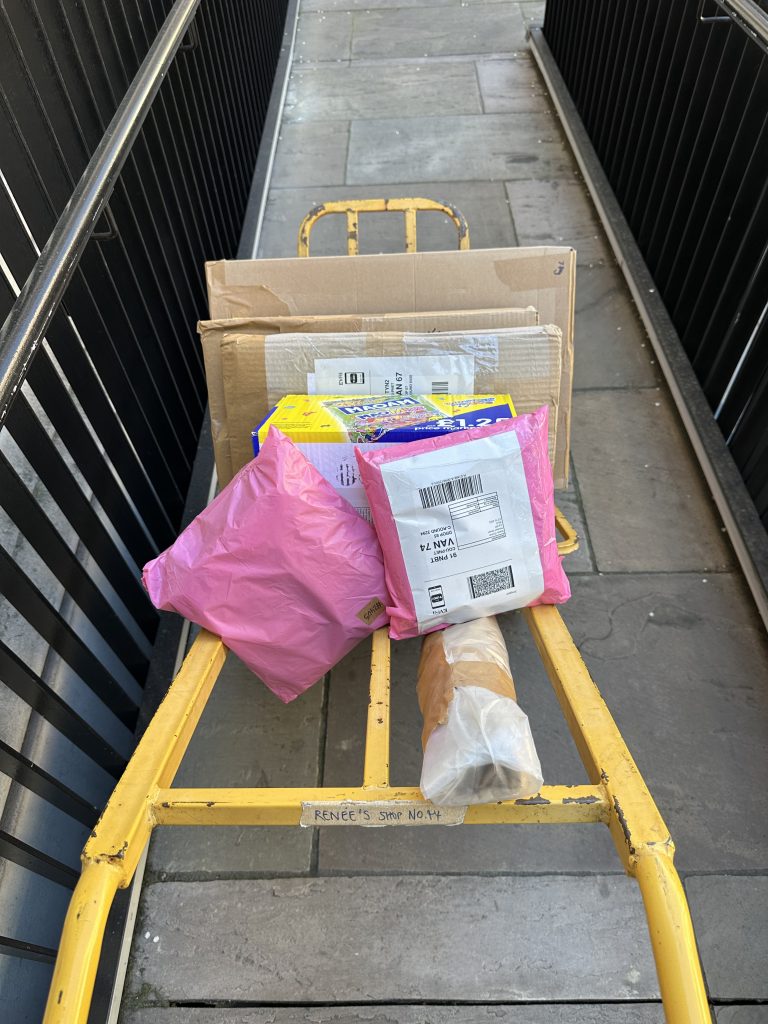
The offline work is high-intensity manual labor. I spend all day in the Hub standing and sorting heavy yarn, or dragging massive parcels to the post office.
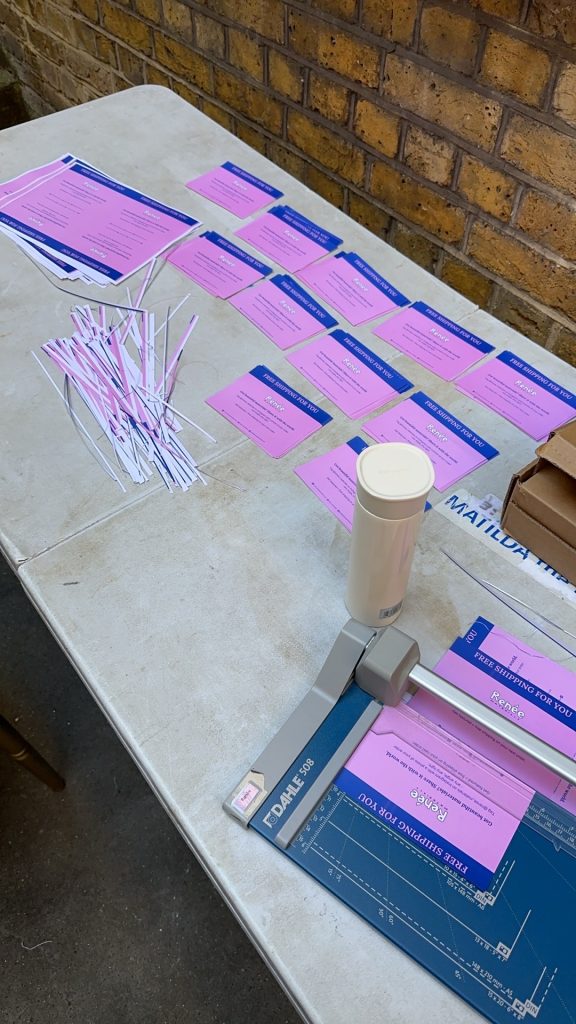
Beyond the physical strain, the repetitive tasks are numbing my brain. Whether it’s sitting outdoors for three hours cutting 200 small cards or spending seven hours adding image captions to the website, these tasks feel like they are draining my creativity dry.
We are asked to travel to distant events with no travel reimbursement. We have no breaks except for a one-hour lunch; as soon as one task ends, another is assigned immediately, as if we aren’t allowed to breathe. This is an unpaid internship. We are volunteers here because we identify with the mission of environmental protection, yet the management treats our labor as an entitlement and still implies we aren’t working hard enough.
I can’t help but compare this to my time at UCCA in Beijing. There, I worked eight hours a day, five days a week. was full of energy. This was because the supervisor there would actively notice my hard work; they would buy me coffee or take me out for meals. That heartfelt gratitude made me feel like a “human being” rather than an “asset.” At UCCA, I could rest or relax at any time, but it was precisely because of that trust that I became more proactive in wanting to take on more work.
I’ve realized that management is like a “Non-Newtonian Fluid”: the harder you squeeze and the more you micro-manage, the more resistance and stress you create. It makes the employees rigid and passive. But when you lead with trust and flexibility, the team flows smoothly and takes more initiative.
This experience, though exhausting, has taught me where to draw the line. I refuse to let my future career be defined by this kind of exploitation. True sustainability must start with respecting the human being.
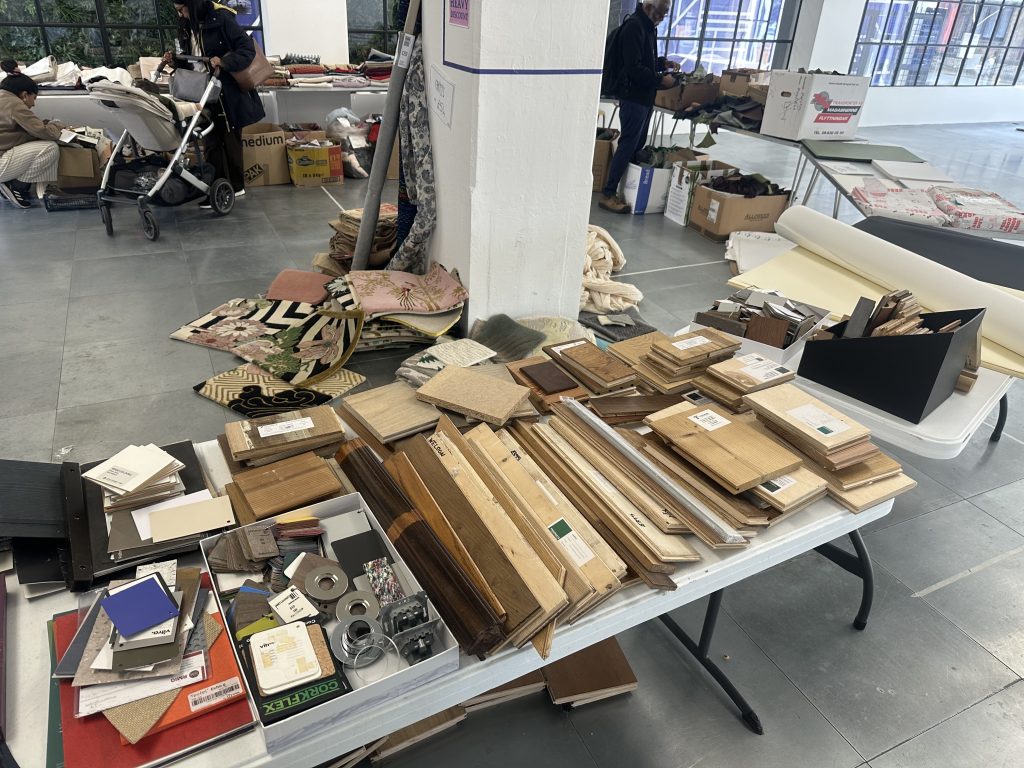
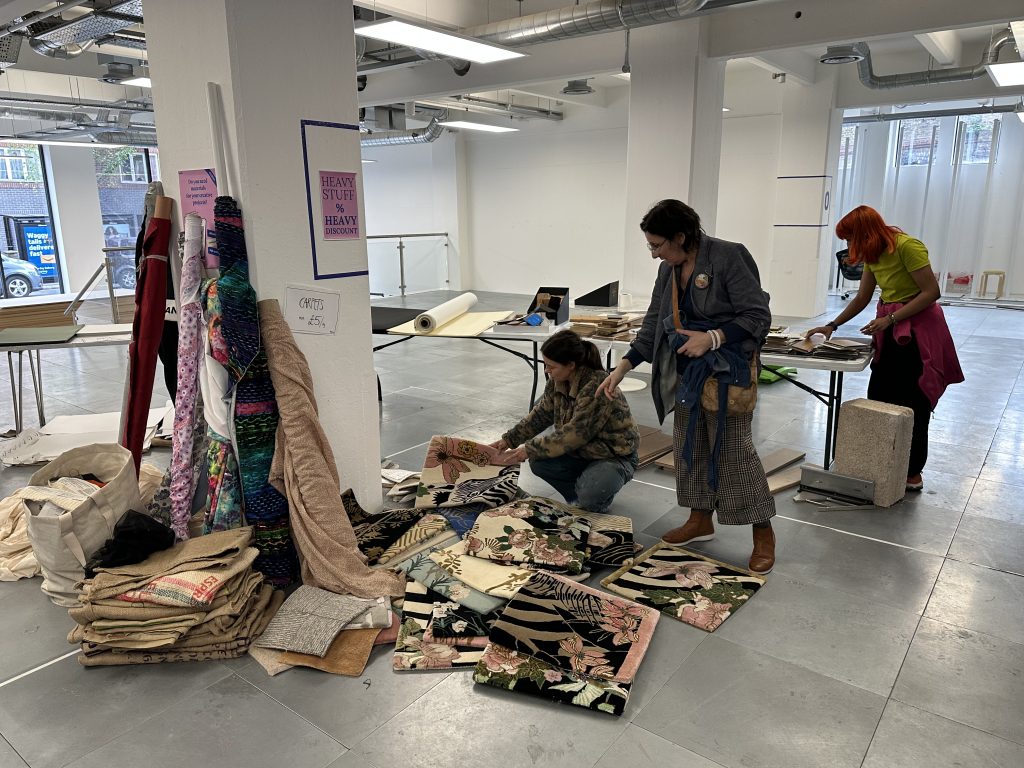
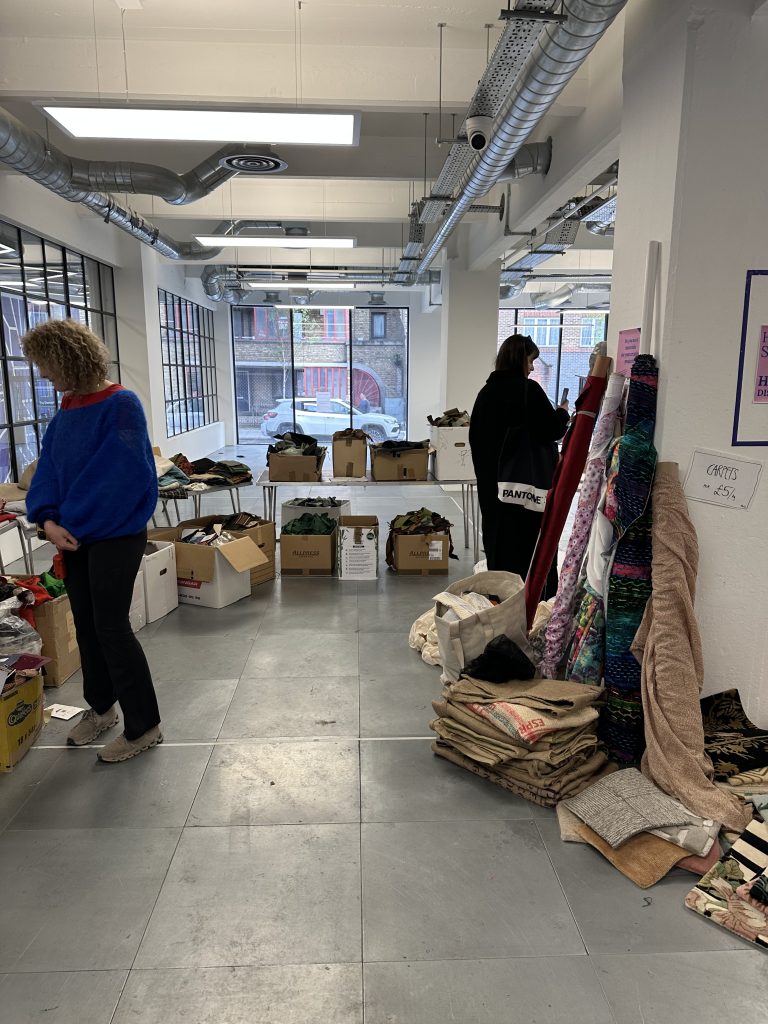
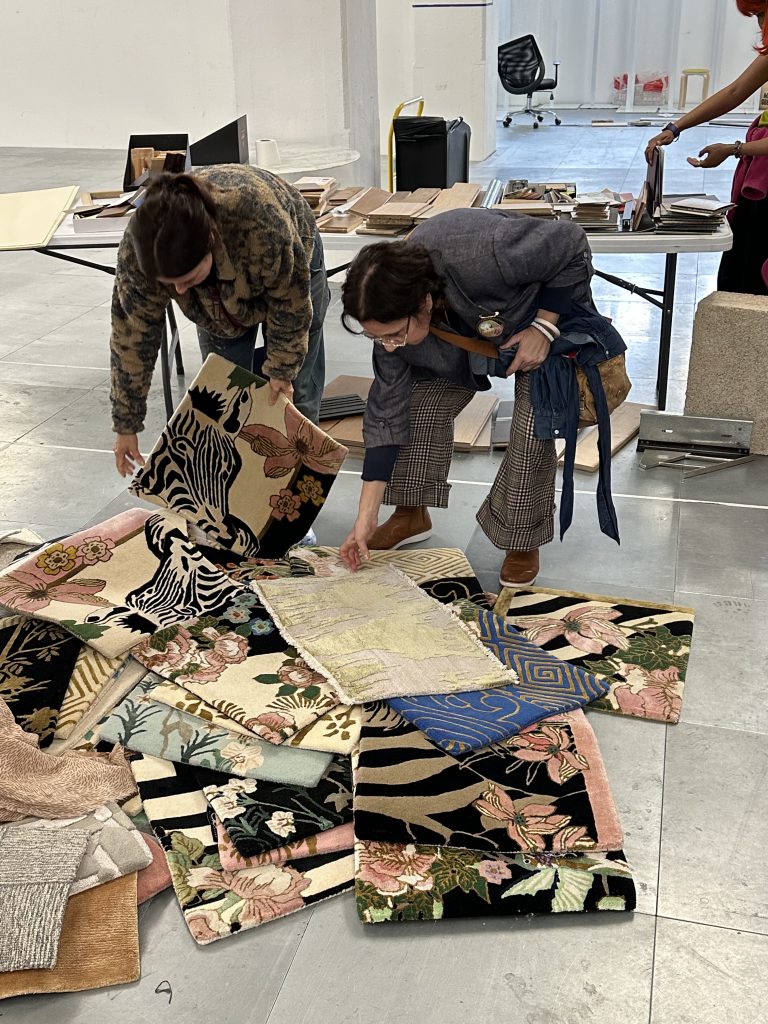
Today was Renée Materials’ monthly pop-up event, where we set up a stall in a studio to sell our materials. I went to help along with Yijia, a new intern who is also a fellow DPS student. It was really nice to meet new classmate through placement, it made me feel not alone anymore.
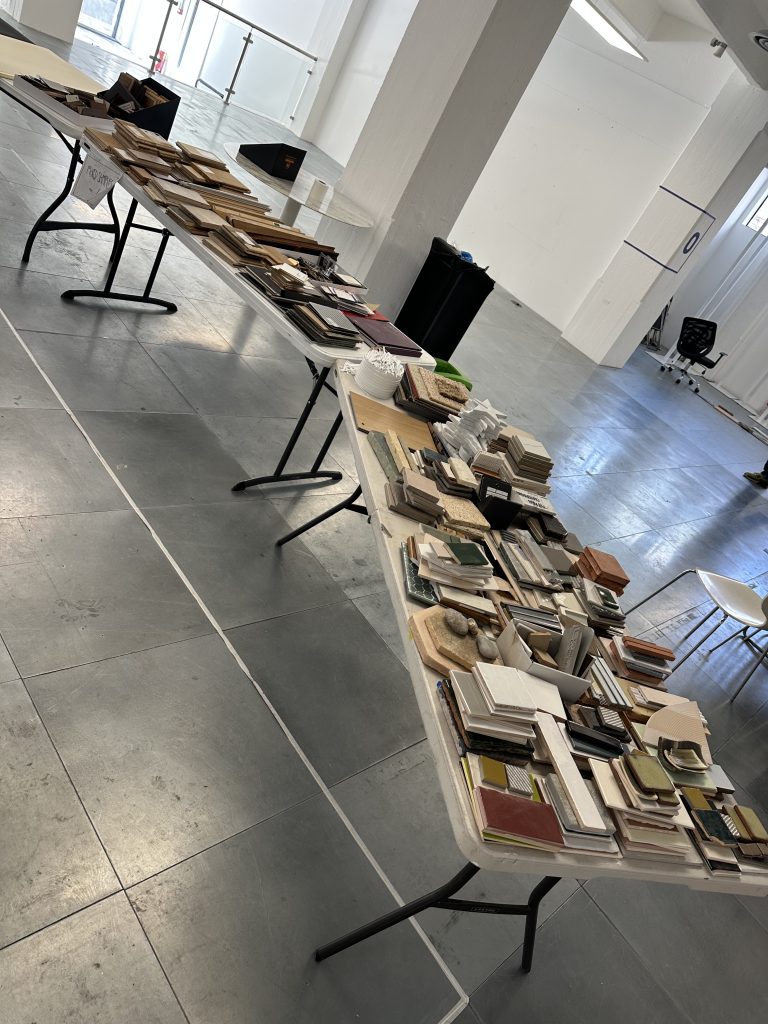
Today’s work was definitely a physical challenge; we had to haul a lot of heavy materials up from the basement and arrange them on the tables.
This was my first time interacting directly with customers. I helped them with shopping baskets and learned how to handle checkouts, issue invoices, and take photos for our Instagram promotion. Talking to different customers was very interesting. I got to learn about their projects and the stories behind them, and I could really feel their passion for handcrafting.
I love this sense of connection with society and strangers who share the same interests. This event made me more willing to chat with different people and helped me become more extroverted.
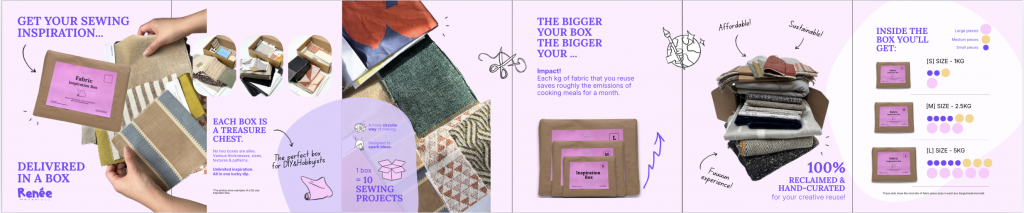
I successfully found a new internship in London at a company called Renée Materials. They focus on material reuse, turning idle resources into treasures for creators to build a circular economy. As an art student who cares deeply about sustainability and the environment, I truly believe in their mission.
Offline: Materials and Space
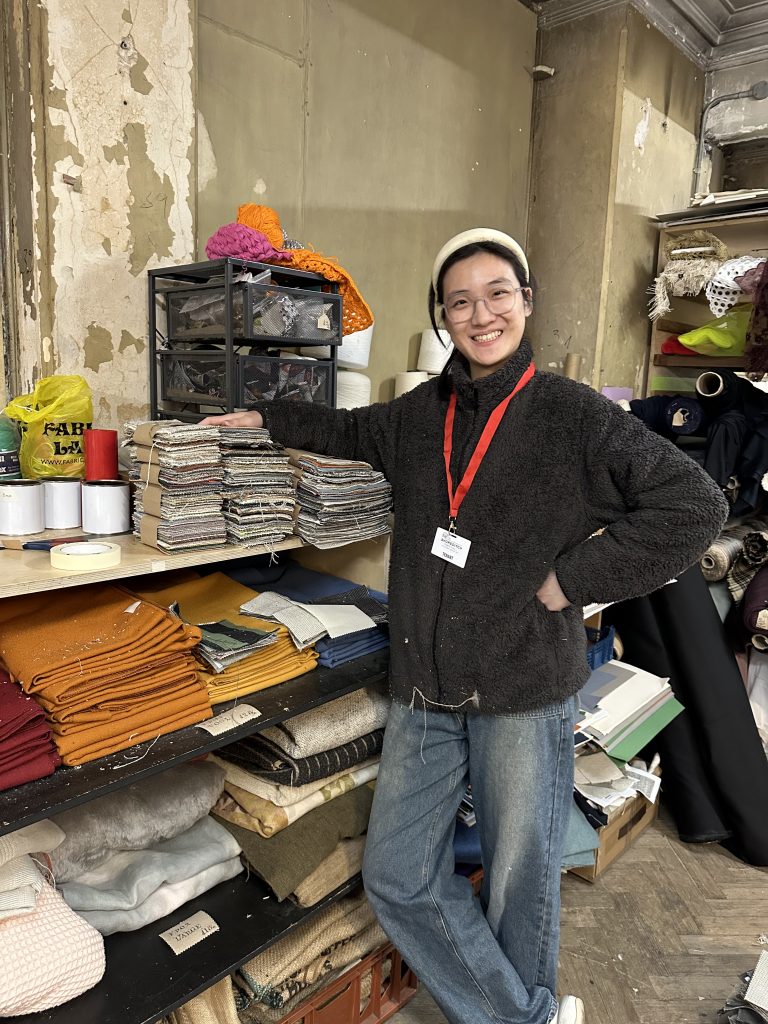
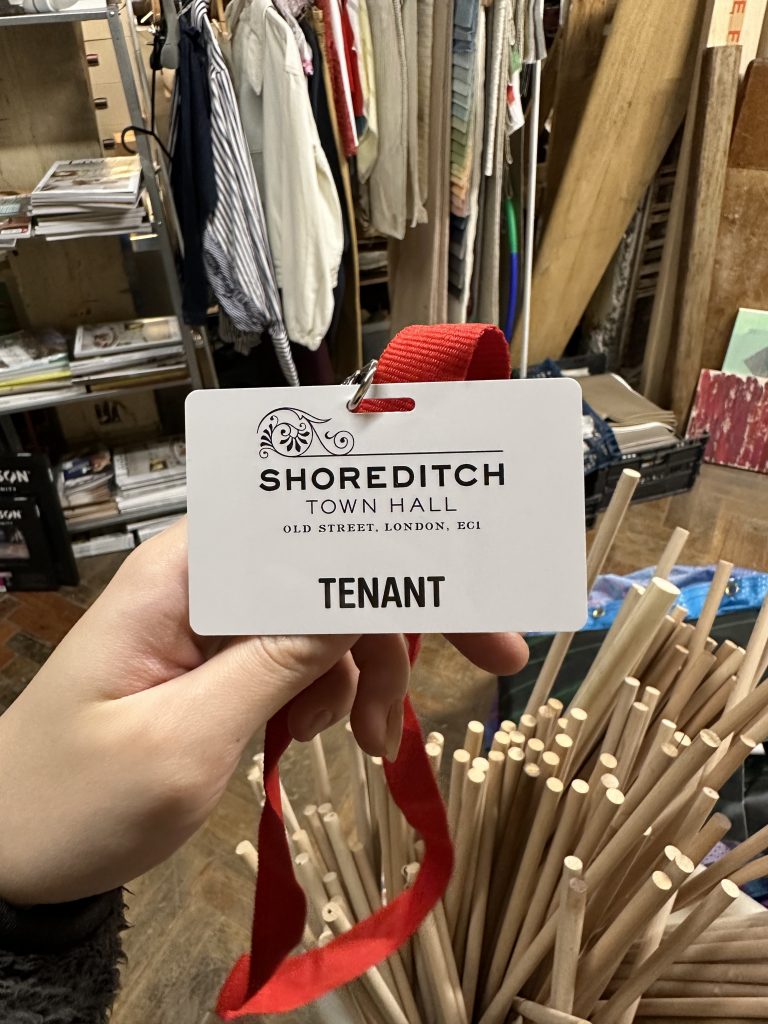
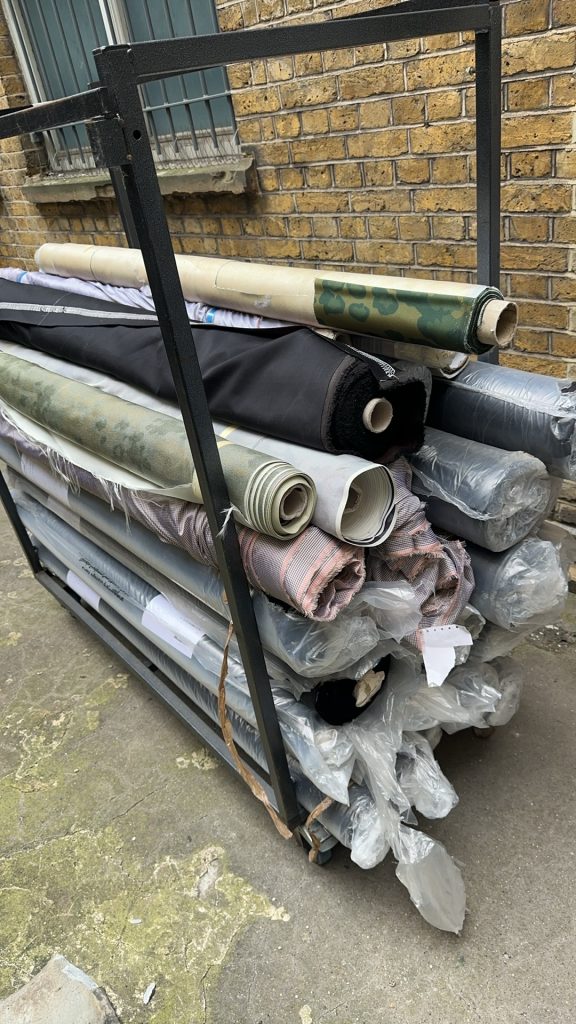
Every Tuesday, I work on-site at the company’s Hub. My tasks include packing, organizing the warehouse, and assisting customers.
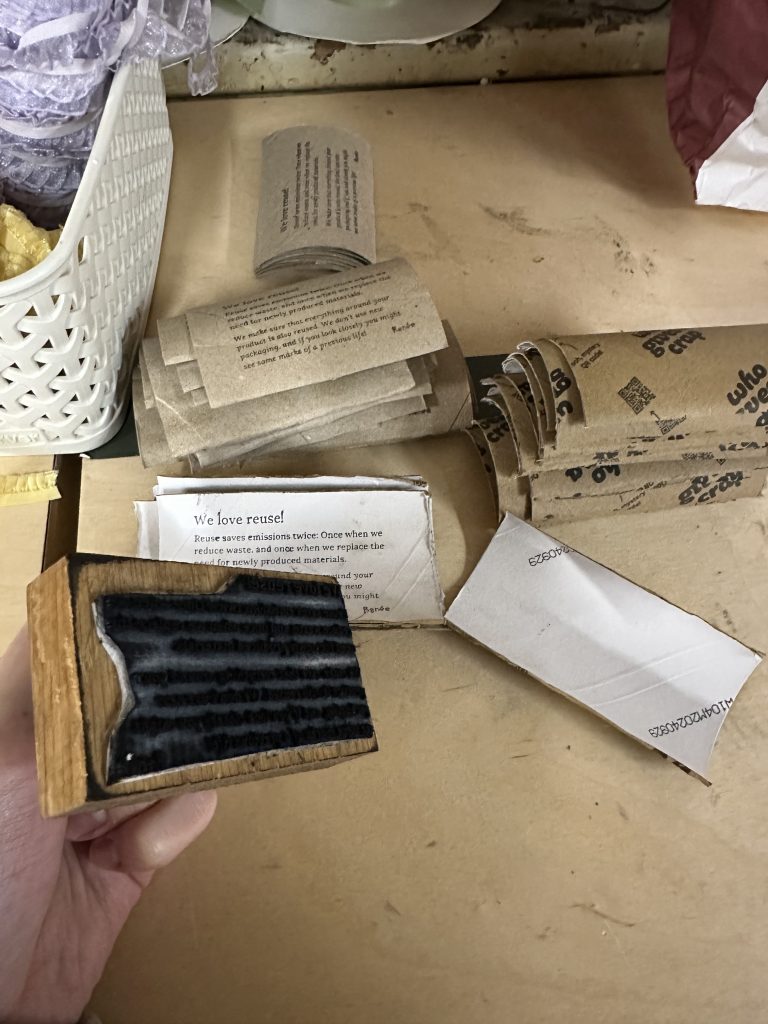
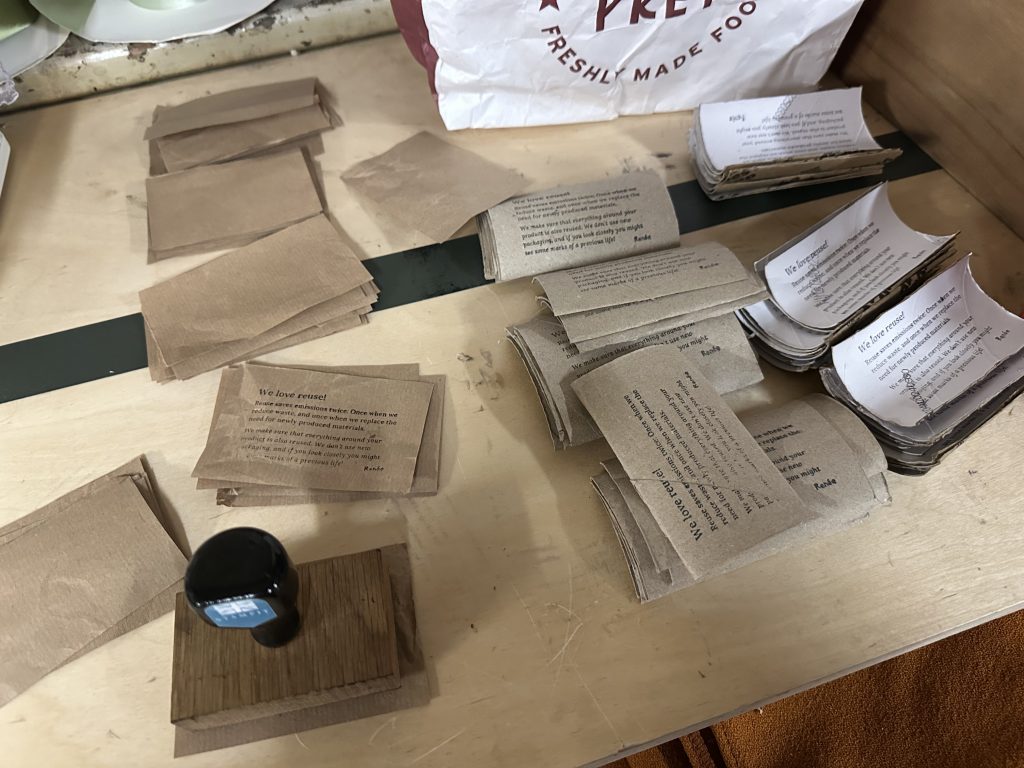
This I hand-make the company’s mission cards using recycled scraps for our shipments,
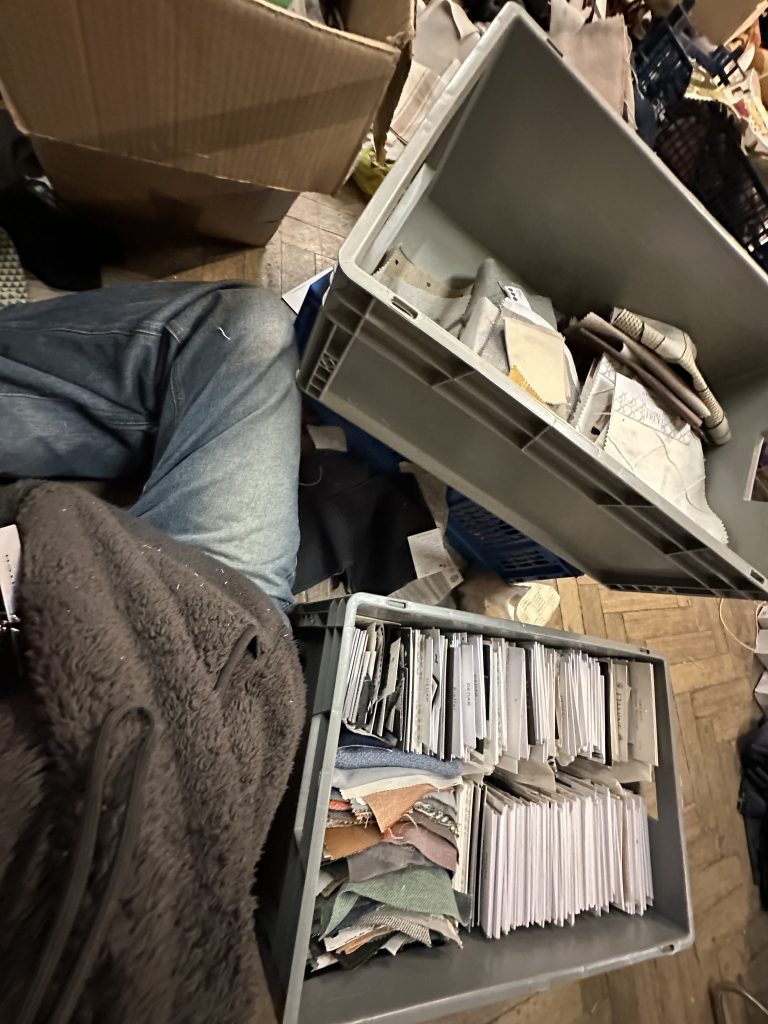
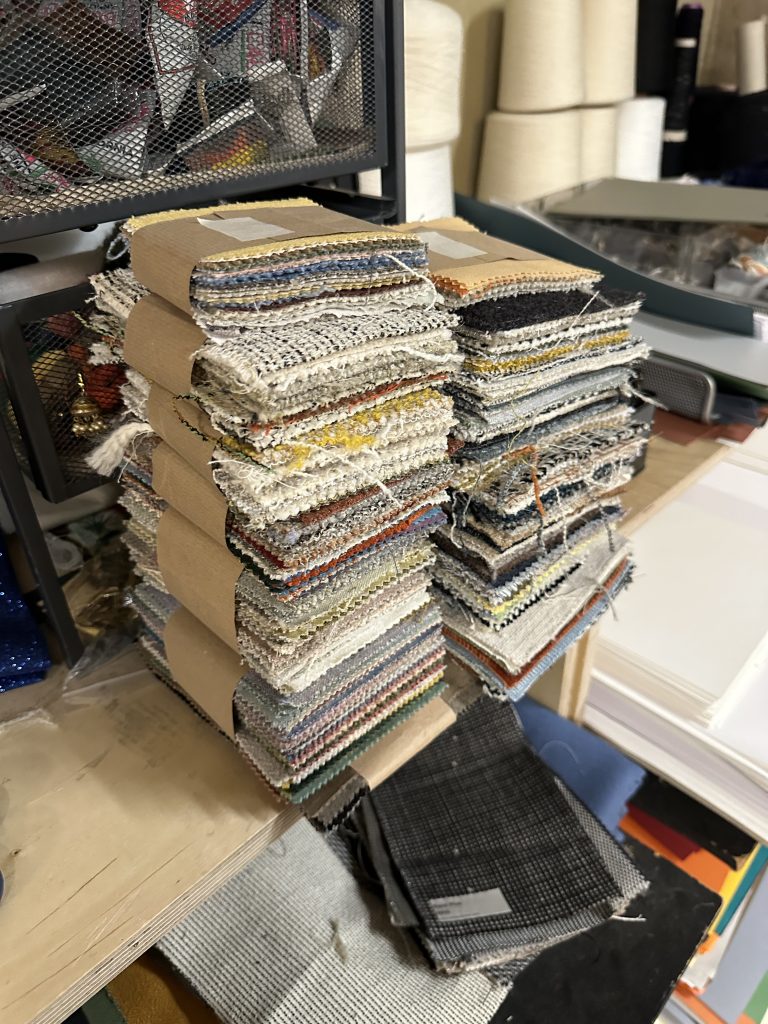
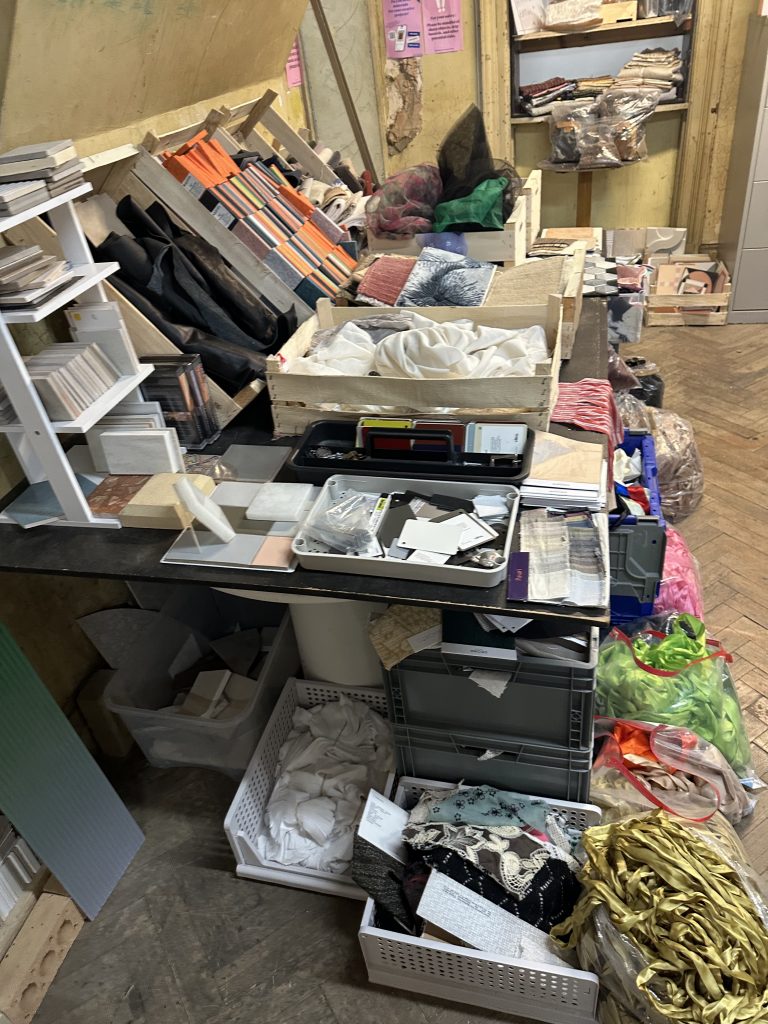
Here I categorize new materials as they arrive.
I love this work. First, touching and exploring such a wide variety of materials gives me endless inspiration for my own handcrafts. Second, I’ve realized that organizing a warehouse is a creative work. In this space, I am given the freedom to set the logical rules and decide how to display materials to customers. Every time I see a messy pile turn into an organized system under my logic, I feel a huge sense of achievement.
Online: Market Perspective and Operations
On Wednesdays and Thursdays, I work remotely on market research and promotion. My first task was to write a report on our official website, analyzing its strengths and weaknesses from multiple angles and offering suggestions for improvement.
This is my first time doing marketing, and the new perspective is exciting. It forces me to switch from a “creator” mindset to a “customer” mindset. During my time at UCCA, I learned the importance of looking at things from different roles. Now, I understand even more deeply that a company’s operations—not just its design or aesthetics—require a strong sense of empathy and “switching perspectives.”
Conclusion: Looking at Art from the Outside
These past two weeks have pushed me beyond the pure “art layer.” I am starting to observe the world through the lens of market and operations. I’ve realized that art should not just be an isolated form of self-expression. To truly find its place in the real world, art needs the support of clear business logic and a solid operational system.
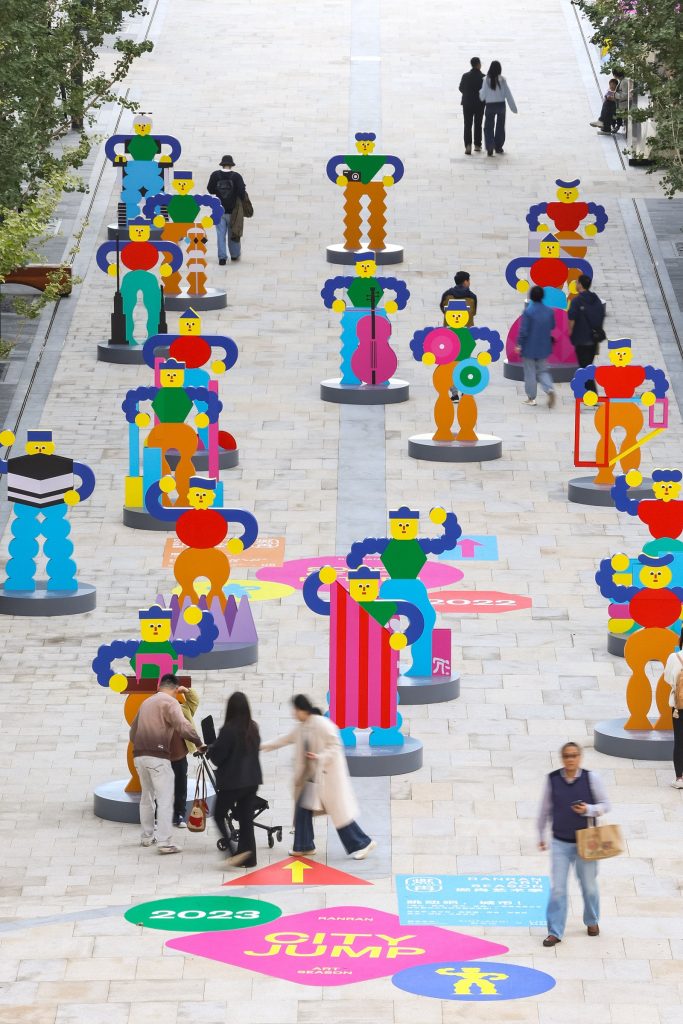
“Ranran” is a three-year young artists’ incubation program initiated by UCCA and Shanghai Xintiandi. Over three years, it has brought nearly one hundred artworks into central Shanghai’s public spaces, continuously exploring how art can coexist with everyday urban life.
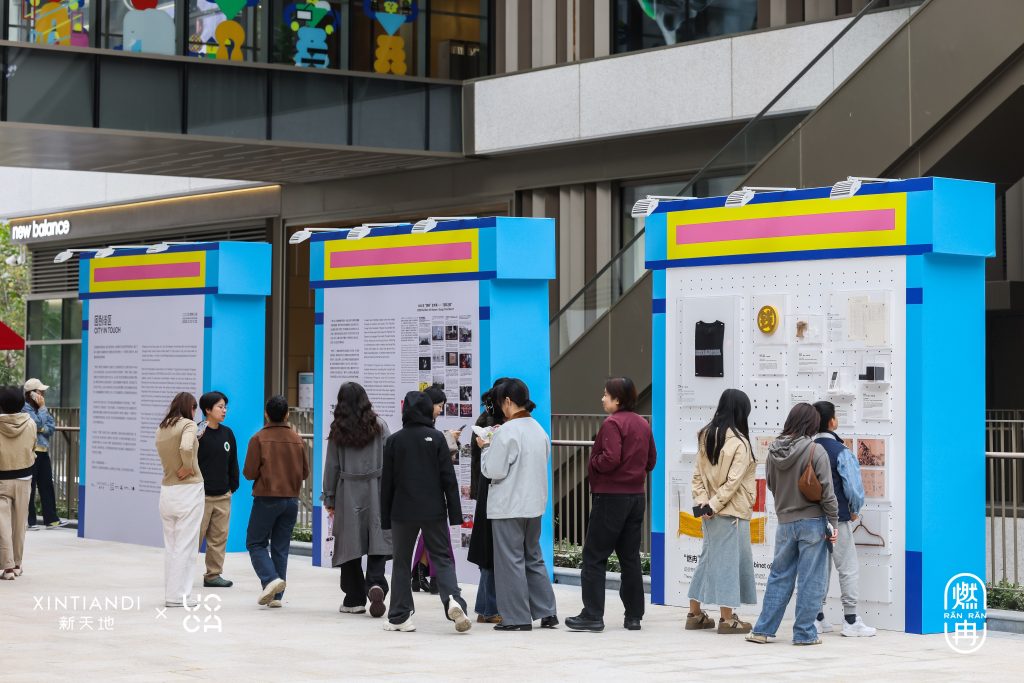
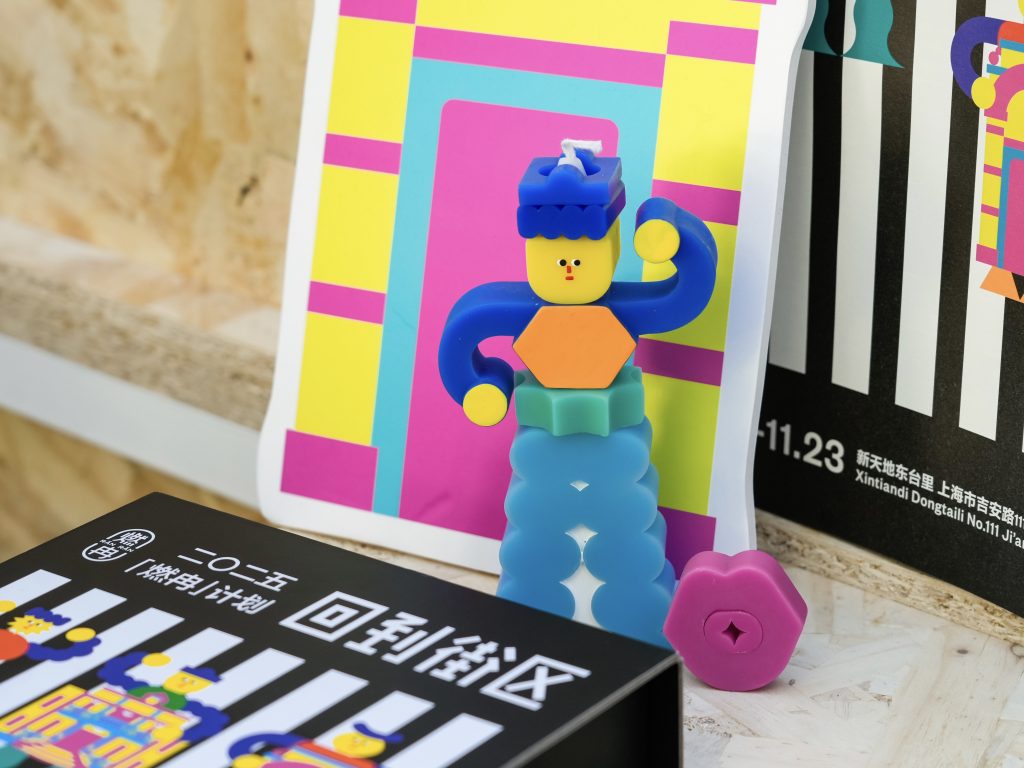
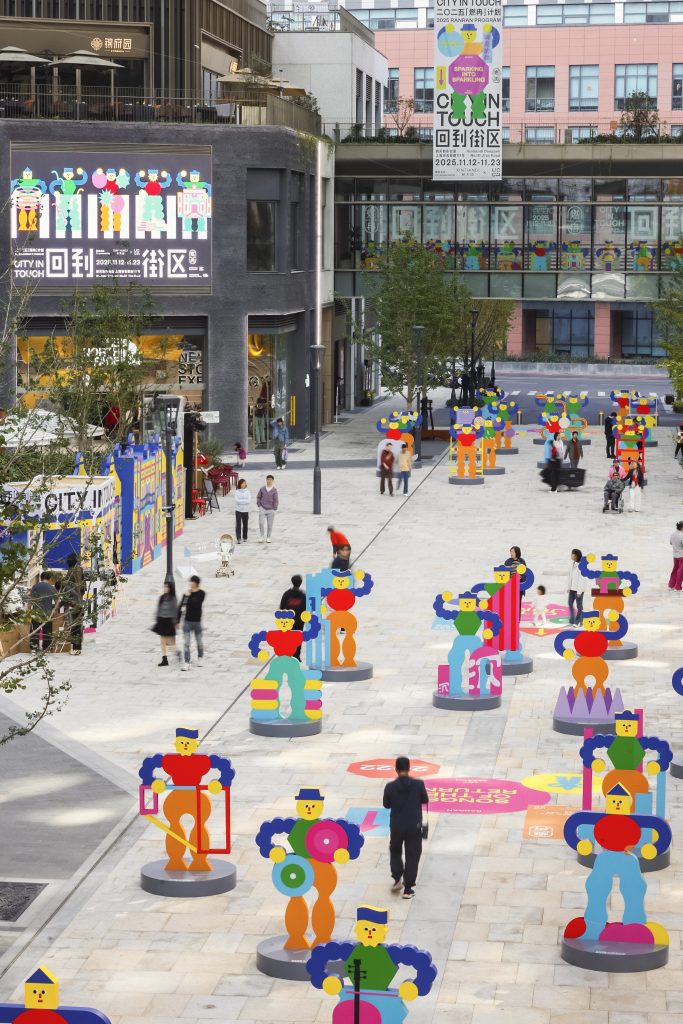
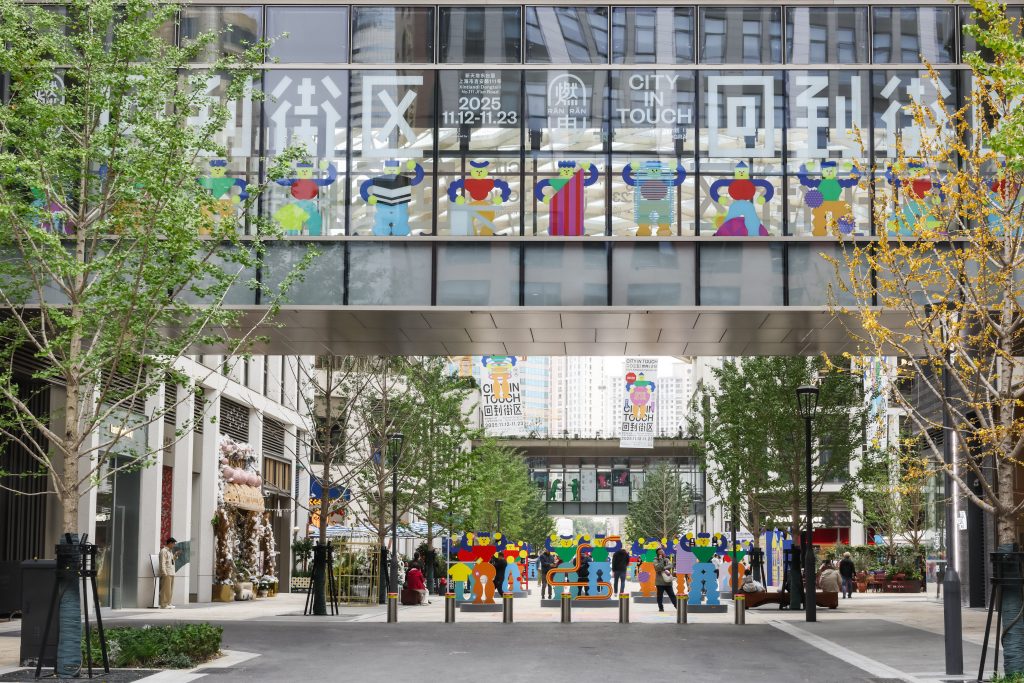
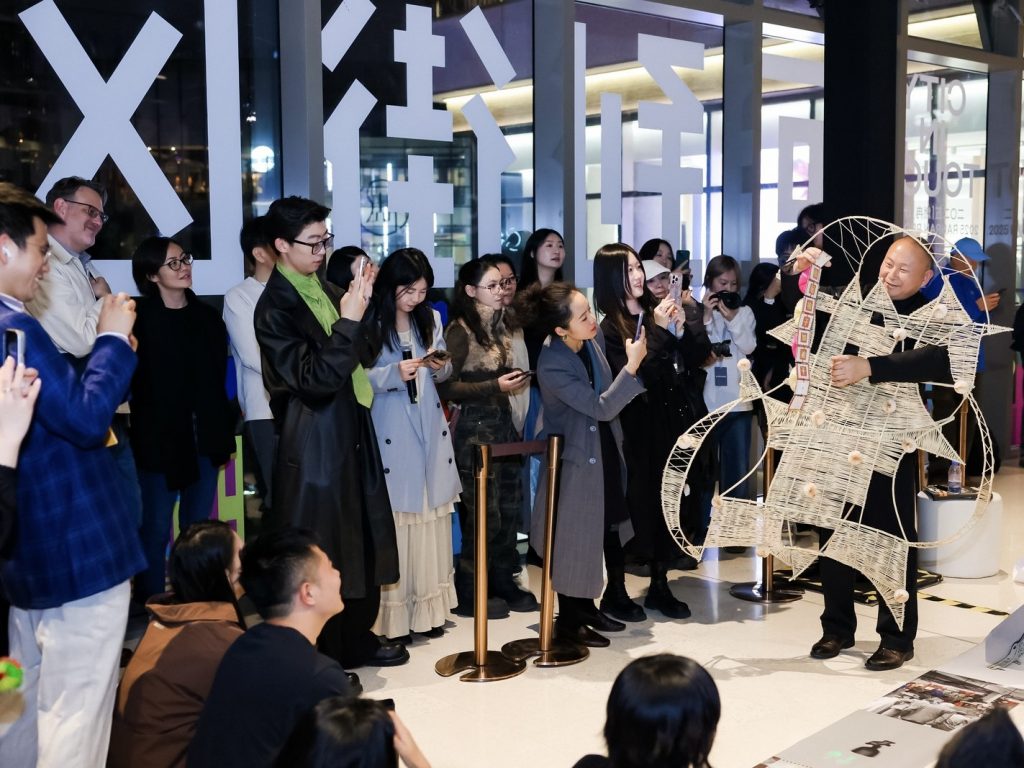
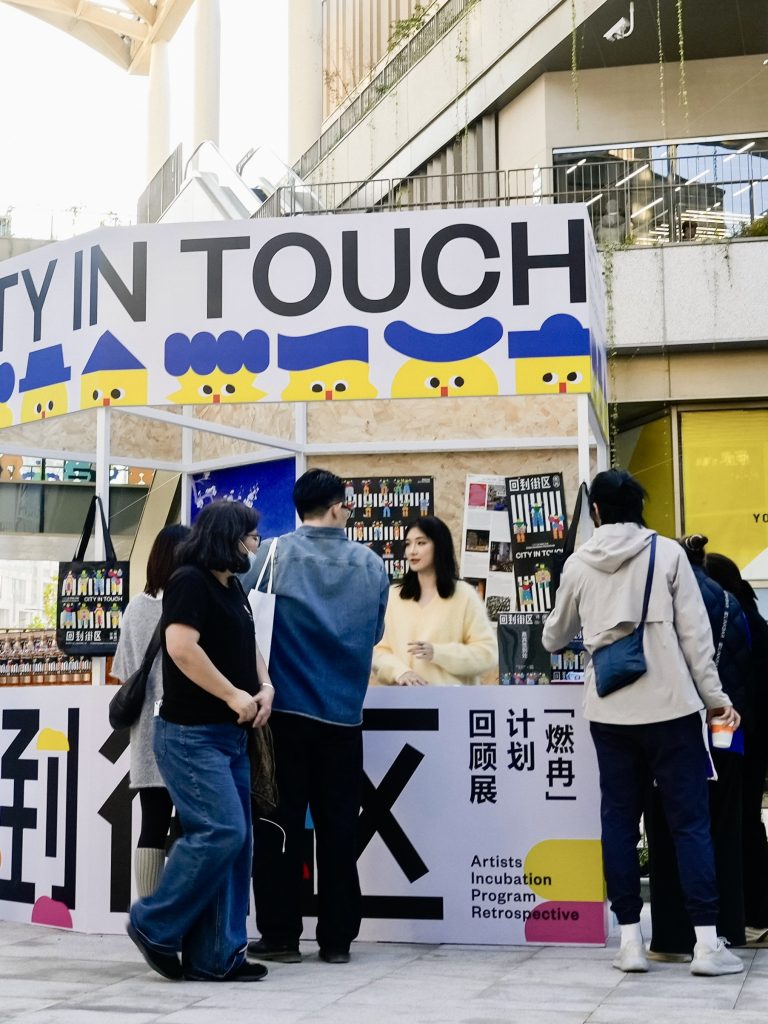
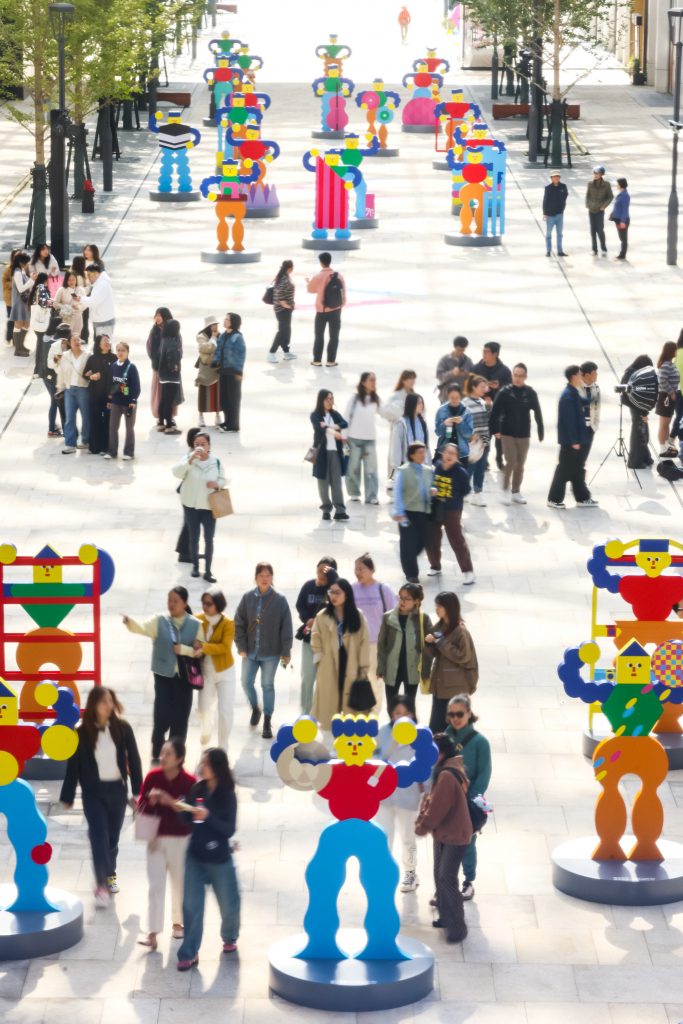
From 12 to 23 November 2025, the closing project, “Ranran 2025 – City in touch!”, took place at Dongtaili in Shanghai Xintiandi. The event reviewed the three years of work. It consisted of a retrospective display and a forum: we built a memory wall of objects from past projects, designed cartoon characters for 31 artists based on their works, produced matching merchandise and sculptural pieces, and invited six experts to discuss art and urban culture.
retrospective display winecandle
The theme “City in touch!” echoes Henri Lefebvre’s theory of the “production of space”:
space is not a neutral container but a field produced by relationships and daily practice. Returning art to the street is an effort to root practice in the social environment and rebuild direct connections between people.
Power of Interpretation
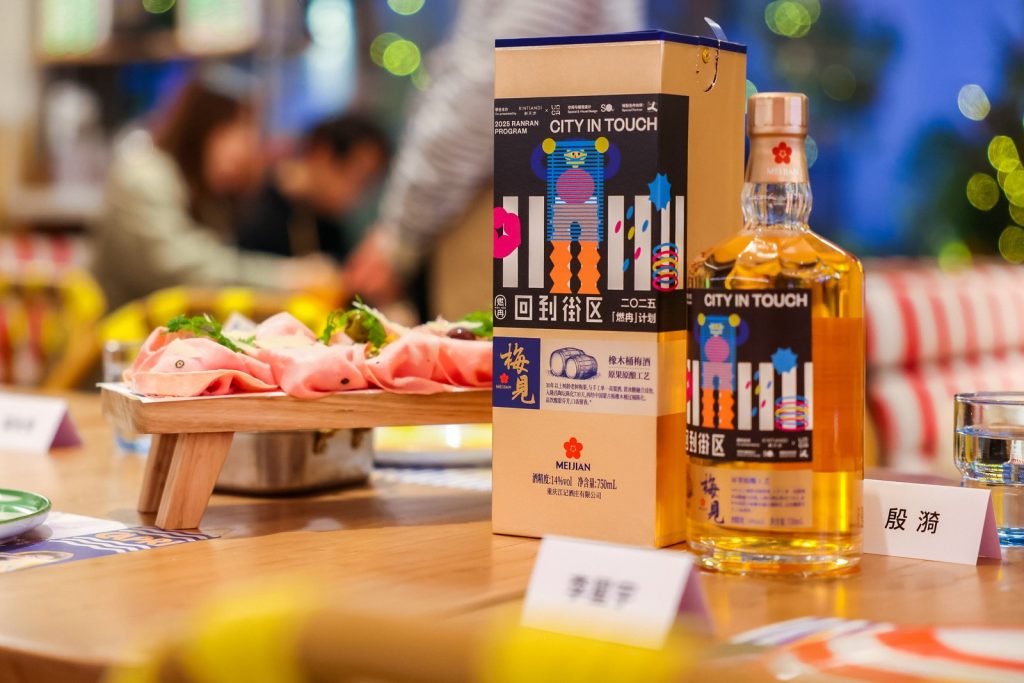
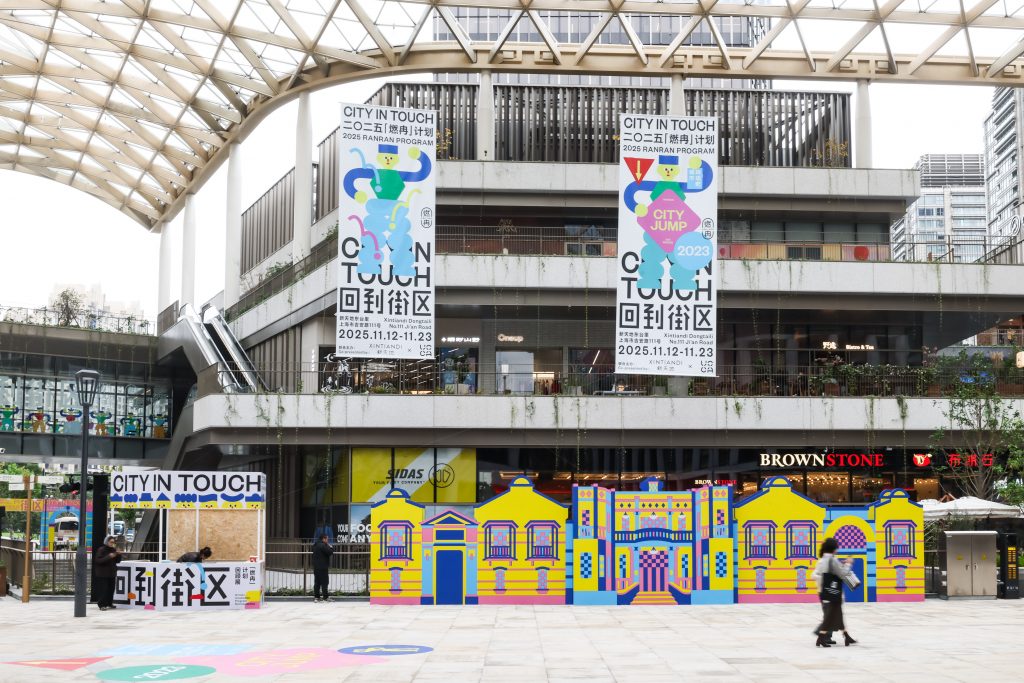
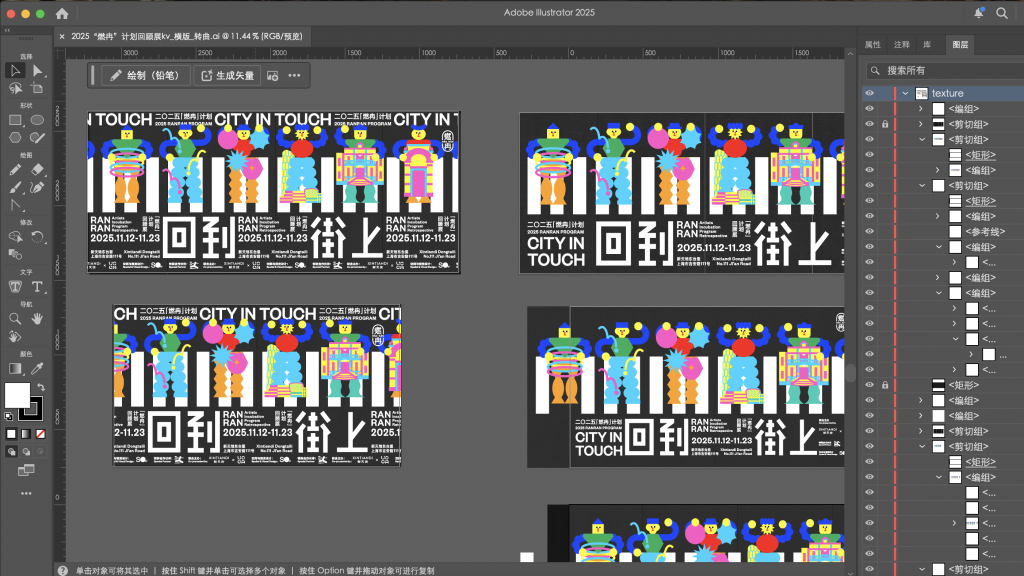
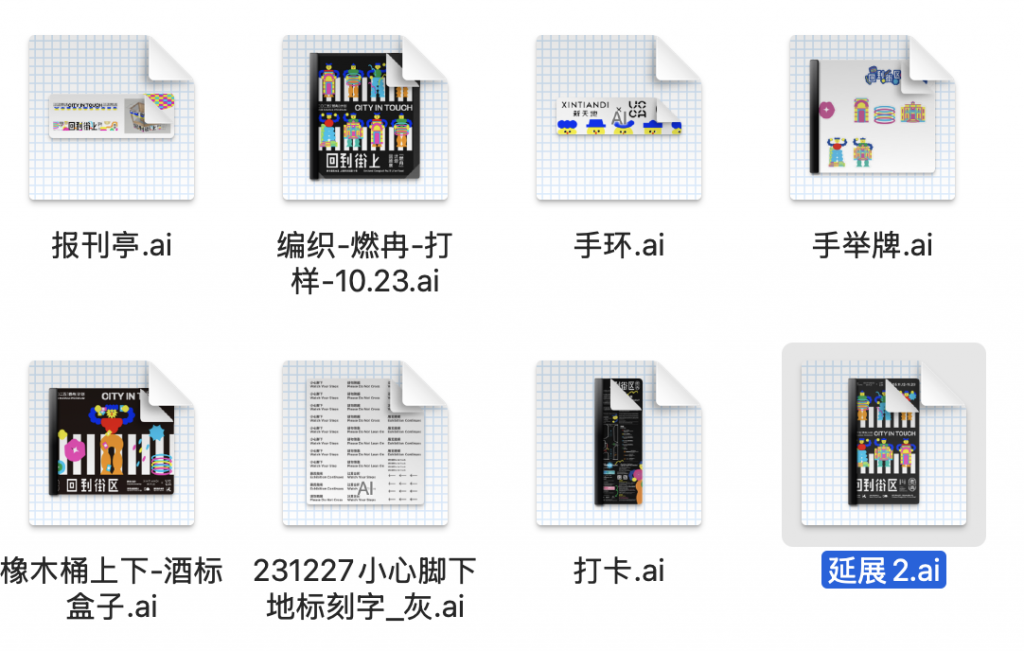
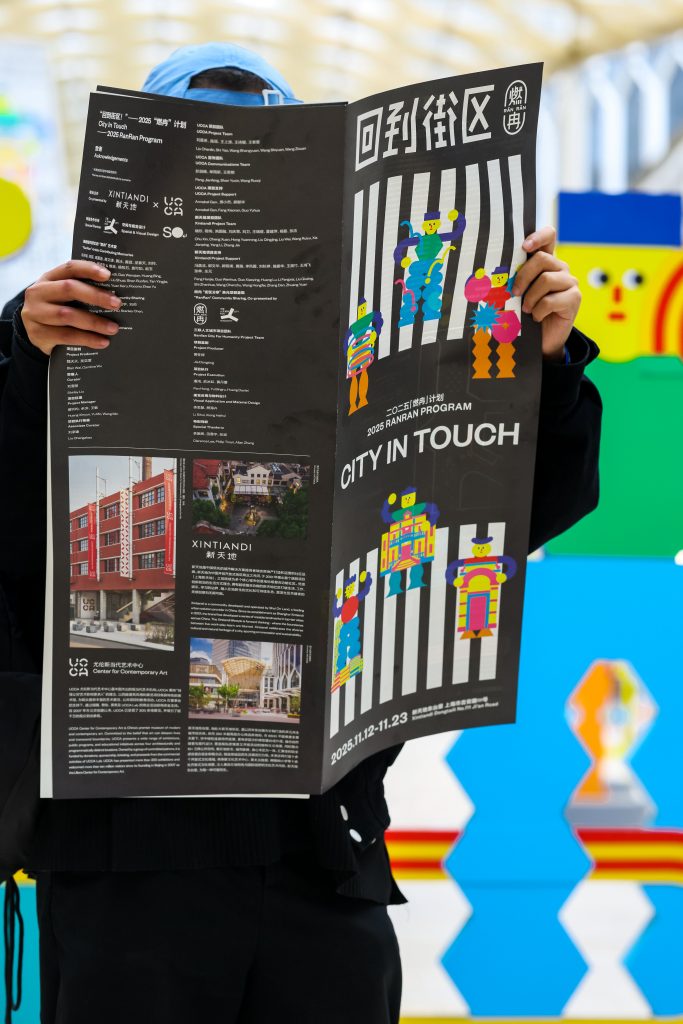
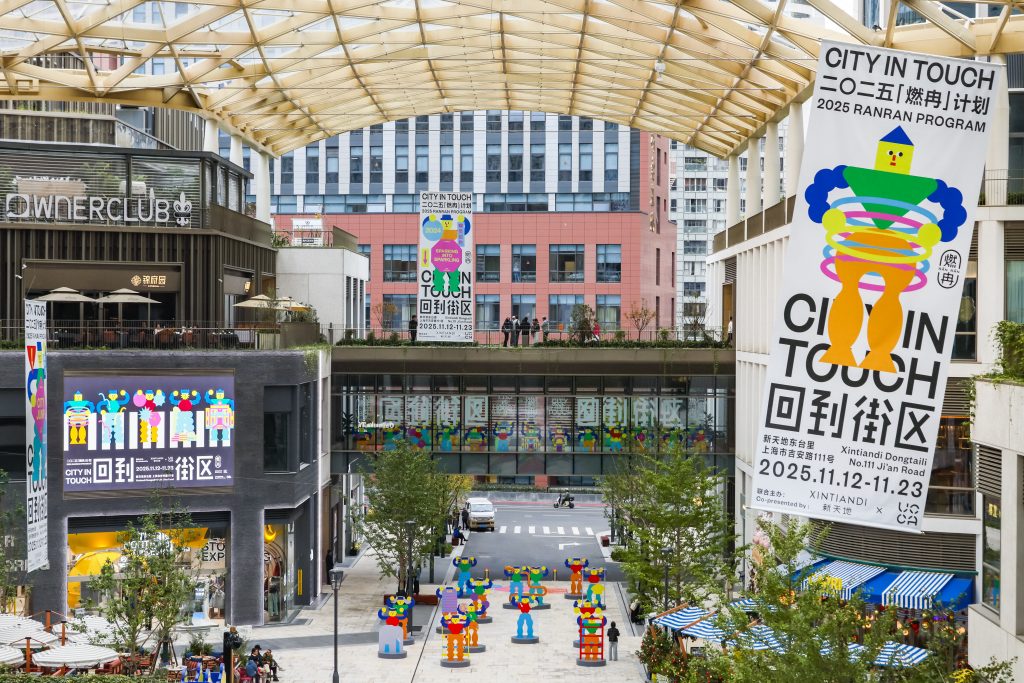
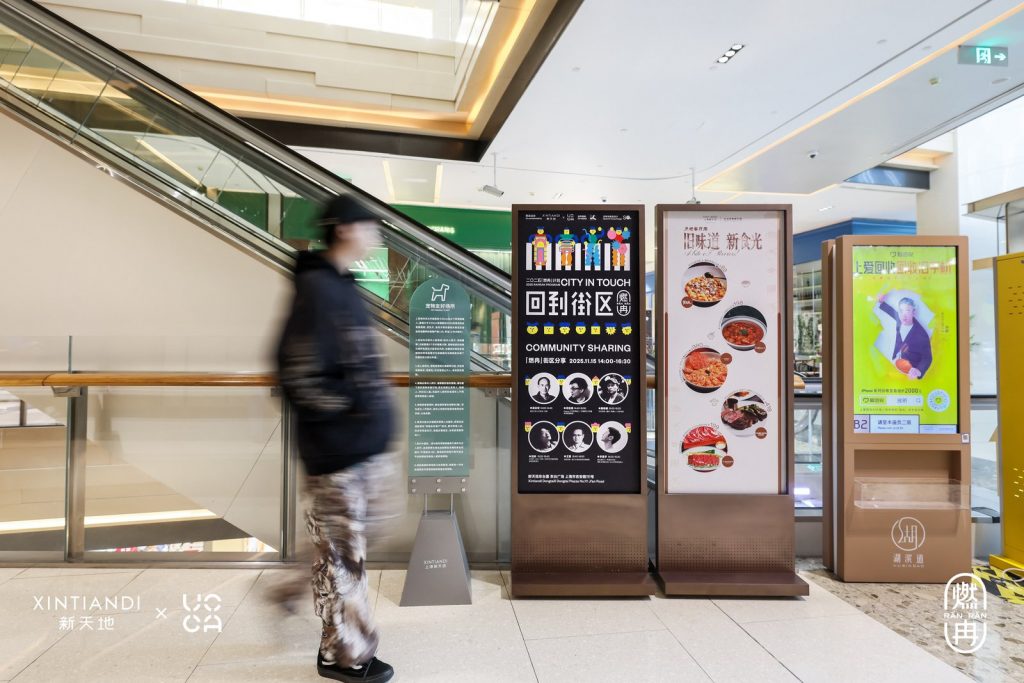
In this project, I was responsible for extending the main visual identity and designing all printed materials, including posters of various sizes and product packaging. The workload was heavy, but I enjoyed the creative challenge of recomposing each layout.
After dozens of designs had been approved internally, the project title failed to pass government review. The original forum title “Public presentation” and Chinese title “回到街上” were judged politically sensitive because of associations with twentieth-century Chinese political history. We were required to change them to “community Sharing”and“回到街区”. The phrases differ only in the last character, their meanings and English translations are almost identical.
Due to this, I had to remake every file to replace that single character. Through this repetitive work, I realised how much I dislike tasks that feel meaningless and require no creativity.
At the same time, the experience showed me the power of communication and interpretation. Faced with the same poster, different positionalities focus on different things: I care about layout and visual balance; passers-by care about the activity’s time and place; officials may only notice one or two “sensitive” words. It made me think about how language shapes perception, how bias forms, and how art might send different messages to different groups.
Connections
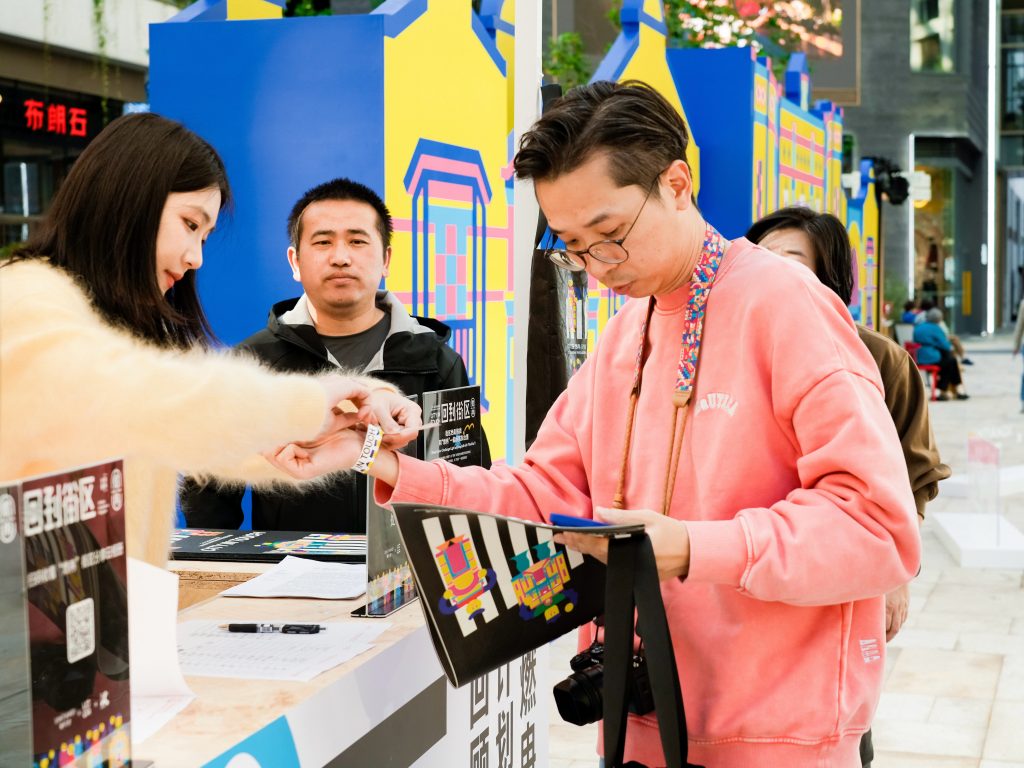
our booklet–looks like a huge news paper!
On opening day, I worked at the information deskMany people stopped to pick up the booklet and chat with me. One woman was surprised that I am only twenty. She said that at twenty she was still skipping classes in uni, while my posters were already covering one of Shanghai’s busiest commercial districts.
Her comment shifted my perspective. I had treated these work as “just doing my job”, but if saying it as a twenty-year-old student can visibly shape the visual atmosphere of a major urban area in Shanghai, that is remarkable. Watching people pause in the street to look closely at the memory wall and the posters I designed, I felt both proud and deeply moved. I sensed the links between art and society, and between one person and another.
In that moment, I understood the core idea of the “Ranran” project:
art is never far from everyday life; it is part of life itself, and a window through which we get to know the city and understand one another.
The event lasted only two weeks, but its traces in the city will be long-lasting. Buildings and residents will change, yet the city’s atmosphere and its human connections continue. In Xintiandi, we used art to briefly link past, present, and future. Art quietly enters the environment and becomes part of the community’s shared memory. Its influence may appear now, or surface later in an unexpected moment.
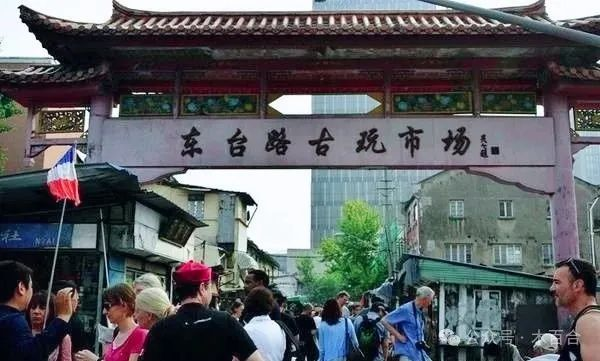
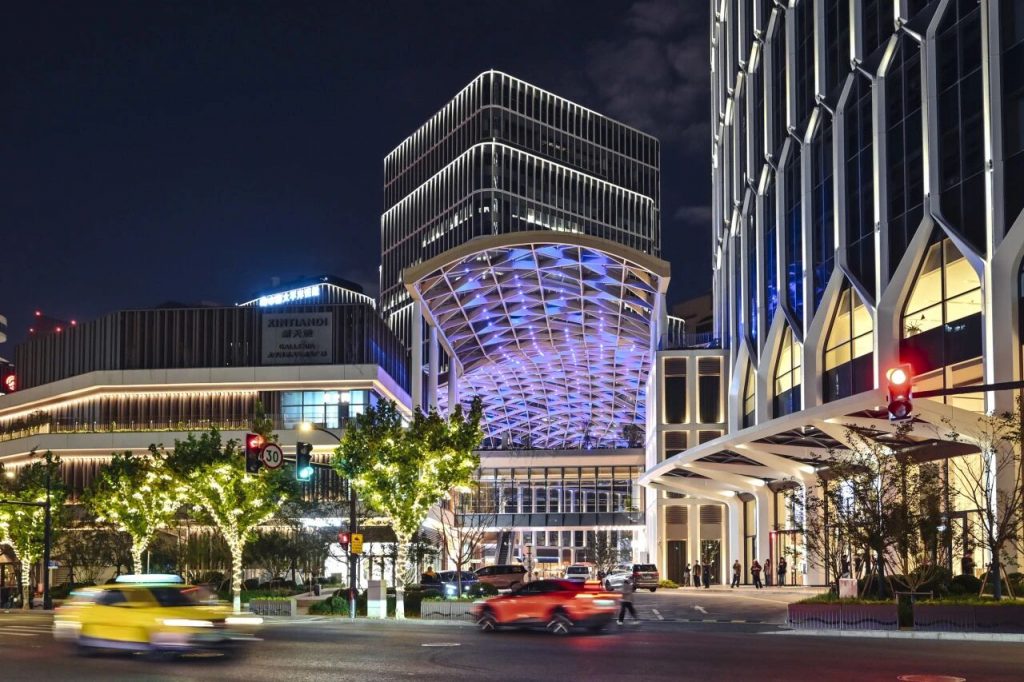
Dongtaili in the Past Dongtaili Today
As an ancestor of future city dwellers, I would like to believe that the energy and thought I put into these works will keep growing in the city, living on in ways that are subtle but enduring.
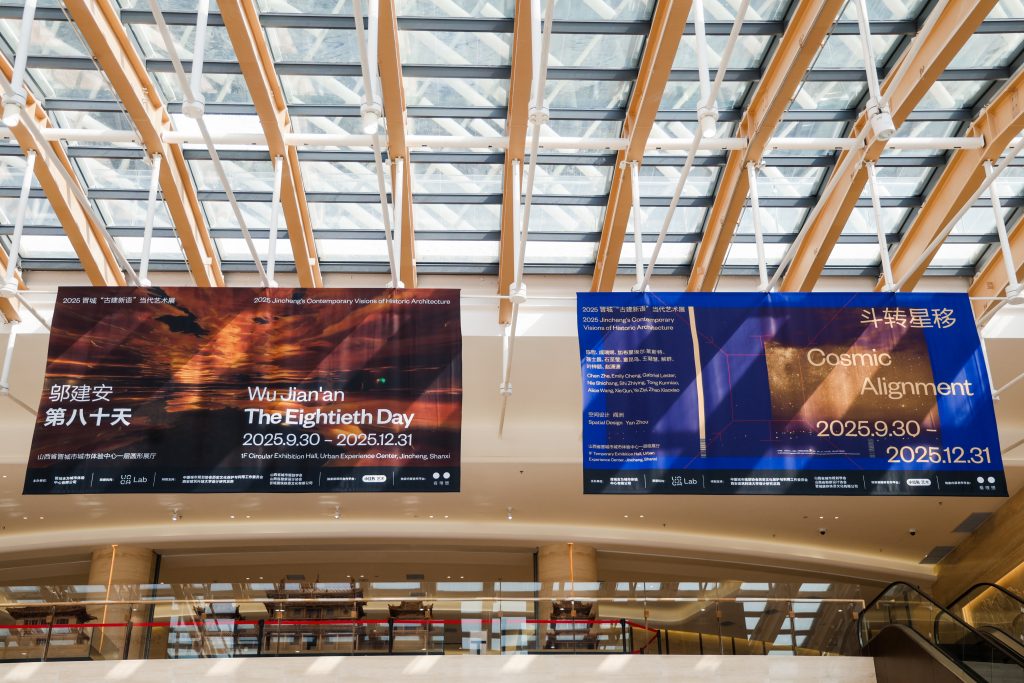
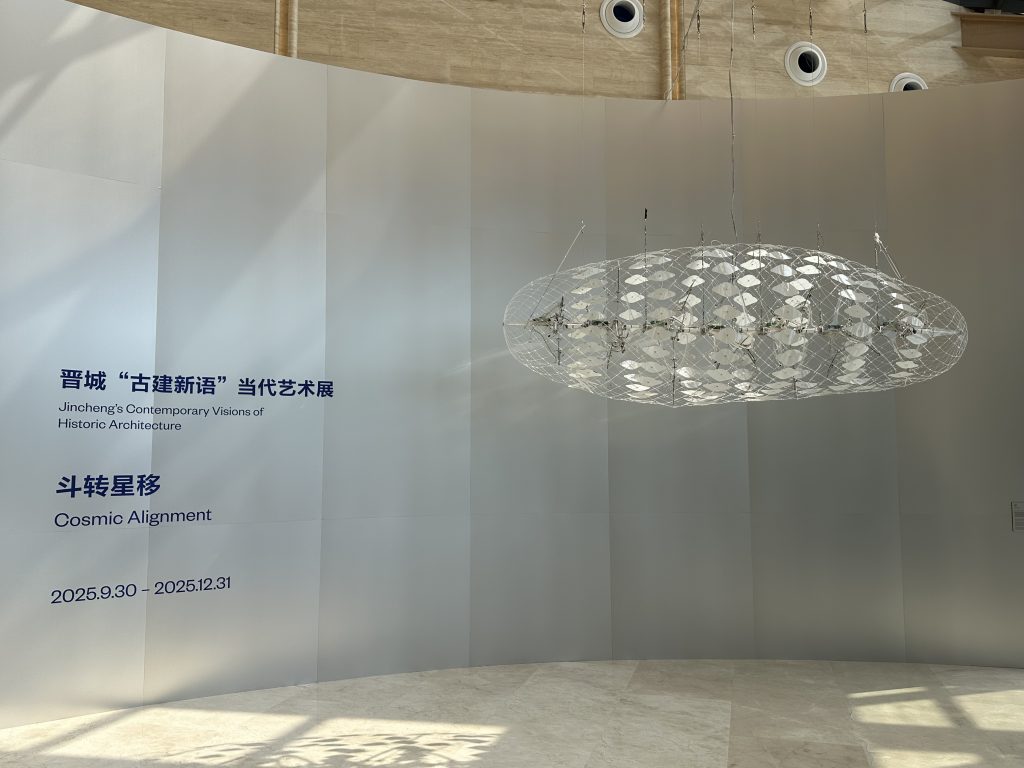
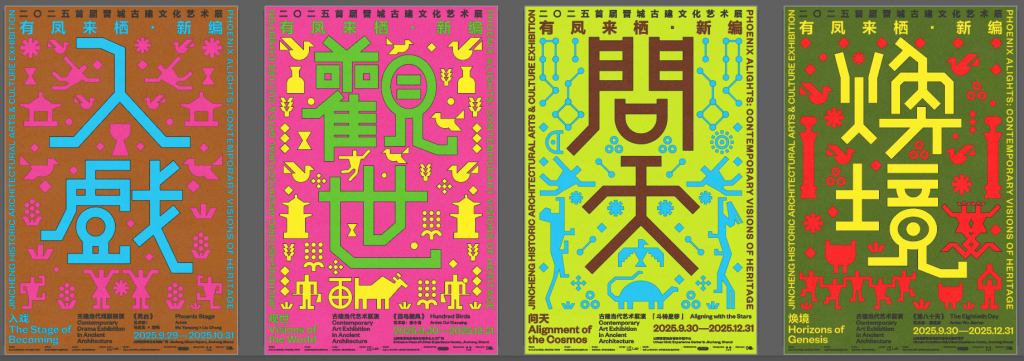
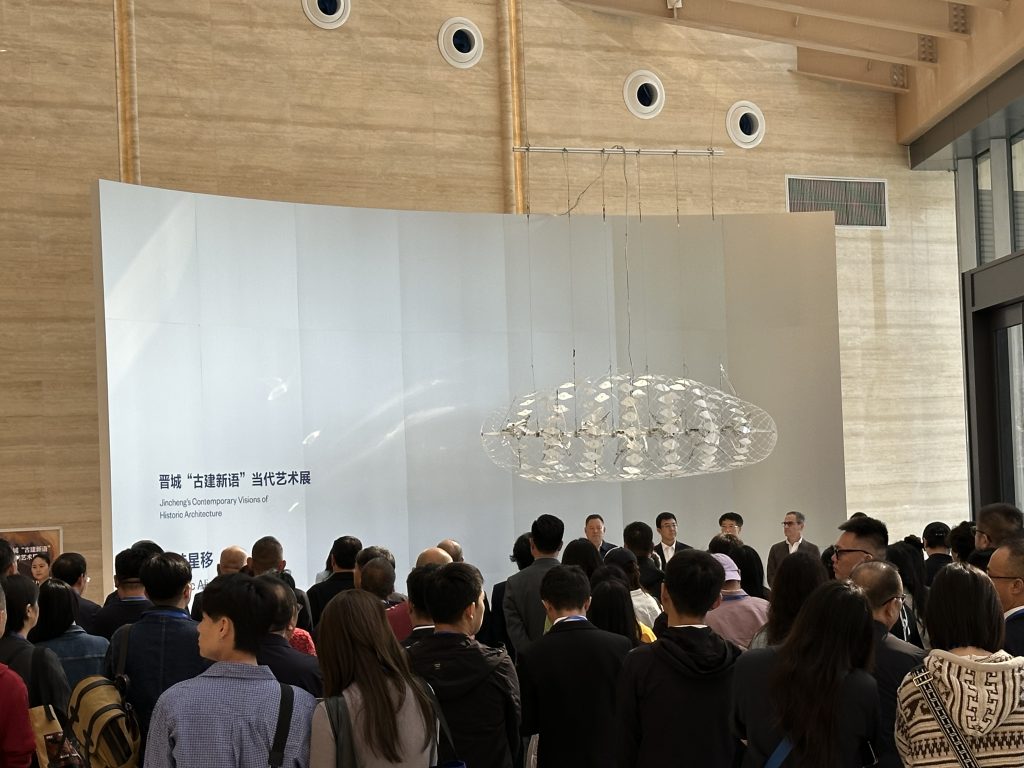
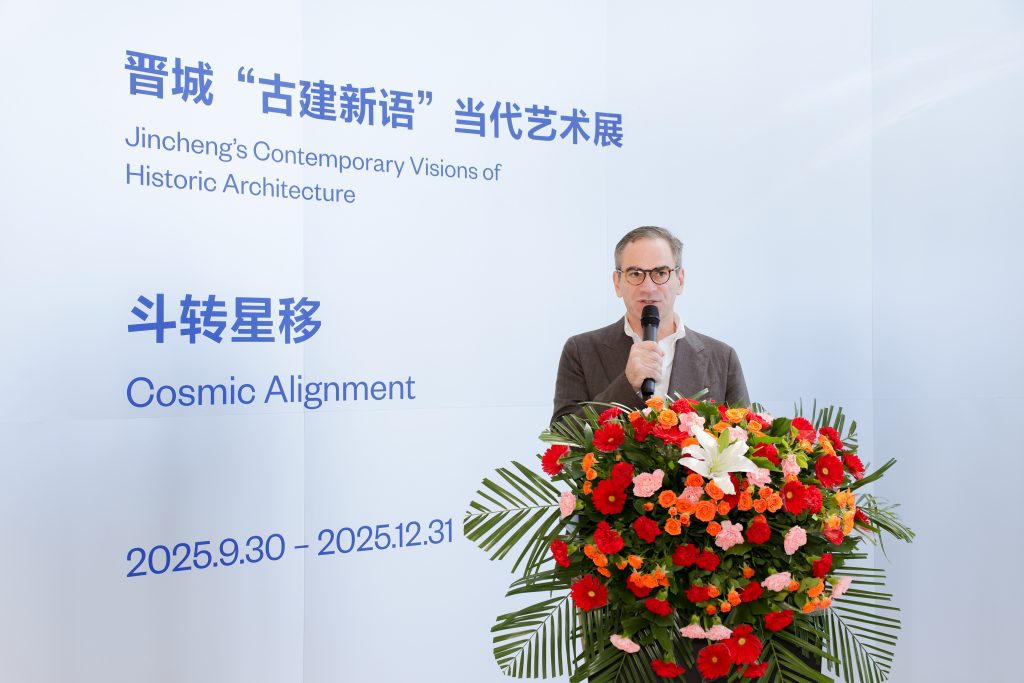
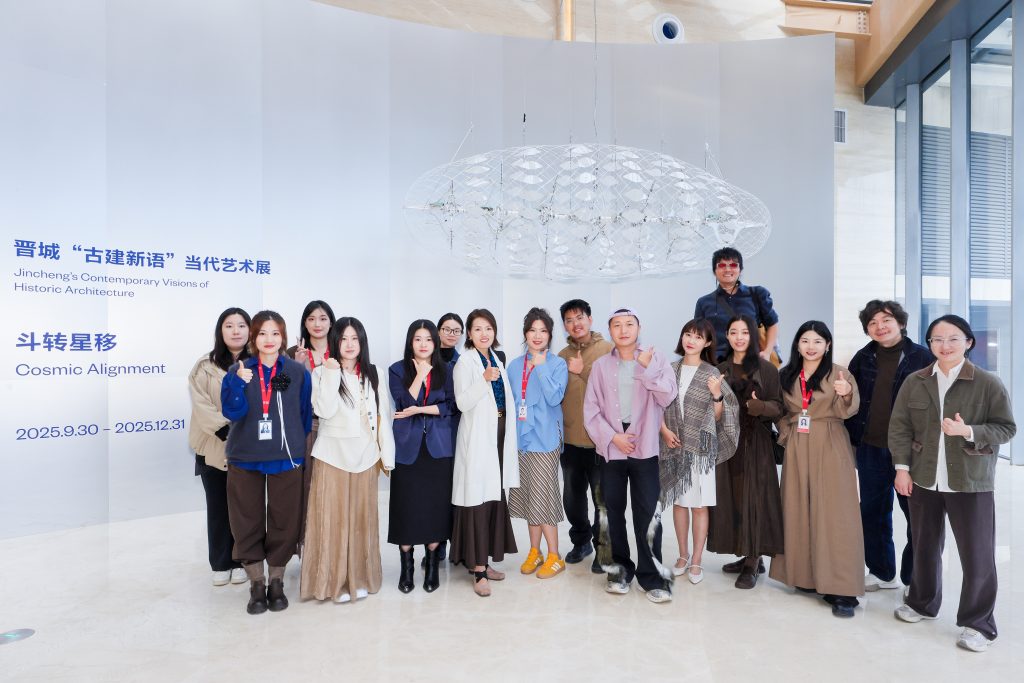
“New Language of Ancient Architecture,” was the first and largest project I worked on during my placement. It was in Jincheng, which is not a developed city, but it is known for historic architecture and deep cultural heritage. The exhibition ran 30/09/2025–31/12/2025 and was a collaboration between our company and the Jincheng municipal government to promote local architectural culture and support the local arts.
The exhibition comprised two parts: one is the group show Cosmic Alignment, featuring ten Chinese and international artists; the other is the site-specific project The Eightieth Day.
Exhibition 1 — Cosmic Alignment
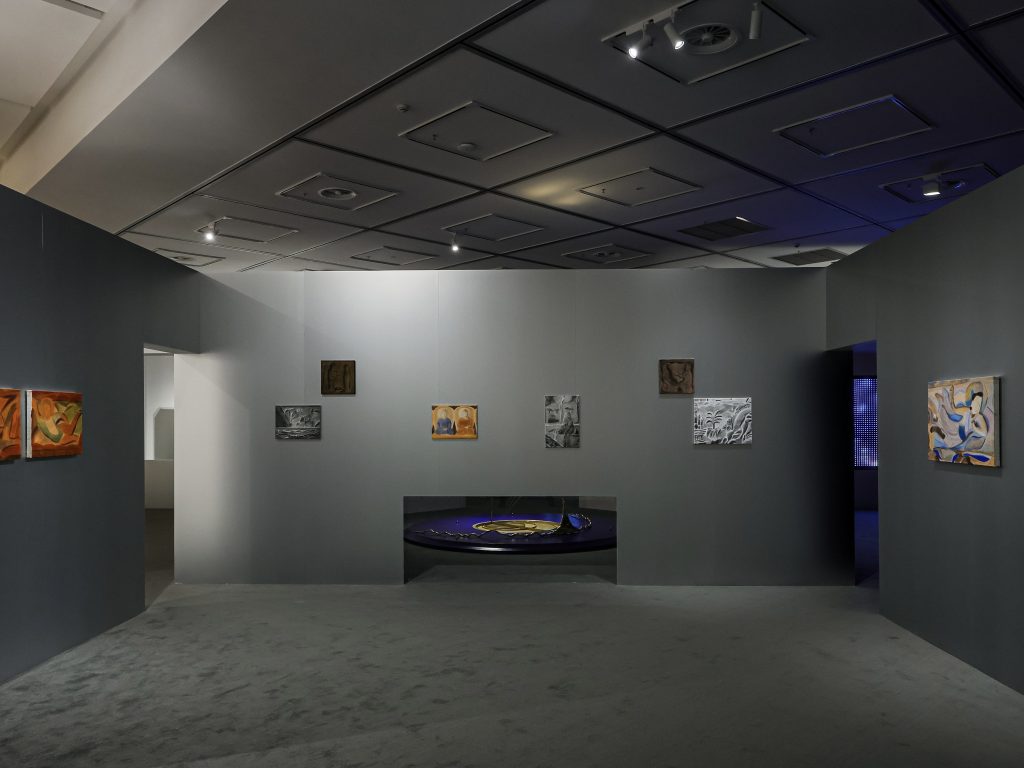
The gallery footprint was modest, but the spatial design was smart: tailored niches for works across very different media and styles, unified by a deep blue–silver palette that sustained a cosmological atmosphere.
Concept
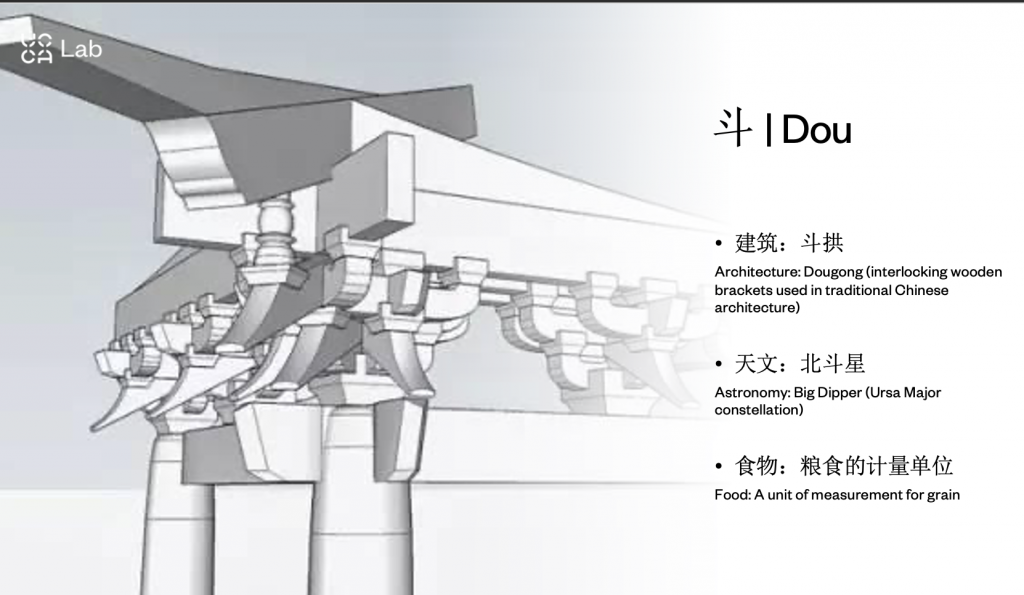
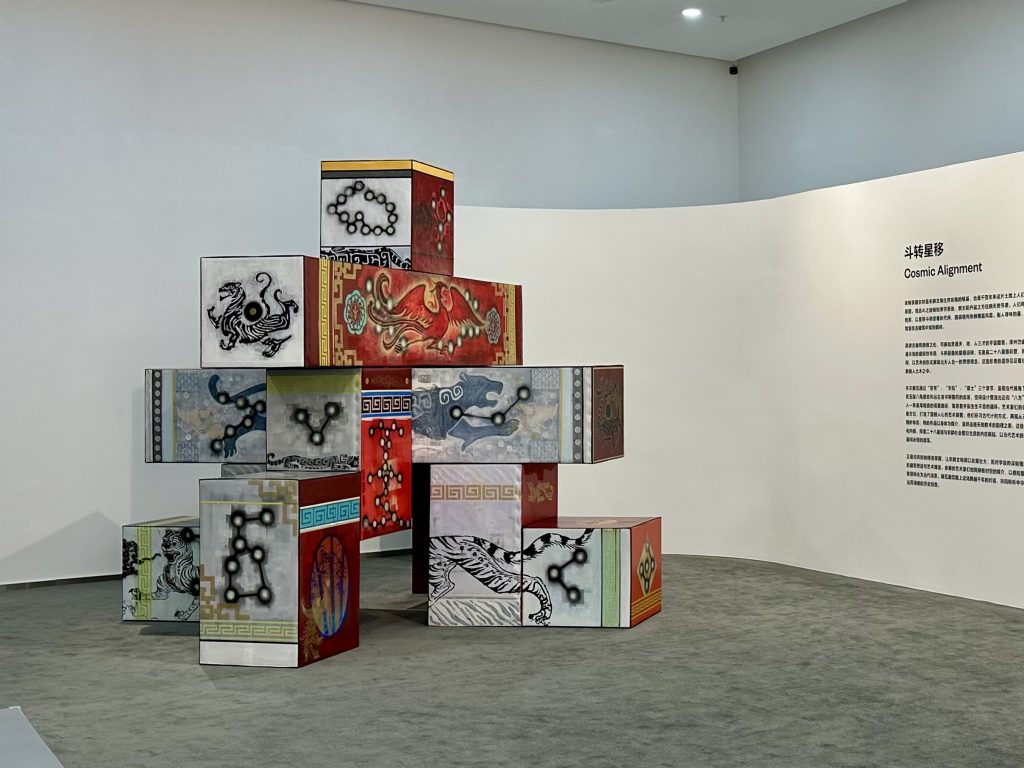
“Cosmic Alignment” grows from the Chinese character “斗 (dou)”, bridging architecture, astronomy, and agriculture.
This ancient unit of measurement interconnected three pivotal technologies—mechanics, astronomy, and numerology. I think this concept is extremely brilliant!The exhibition explores ancient Chinese cosmology through material and technological lenses, embodying the unity of space and time, an infinite universe, and the relationship between humans and the cosmos.
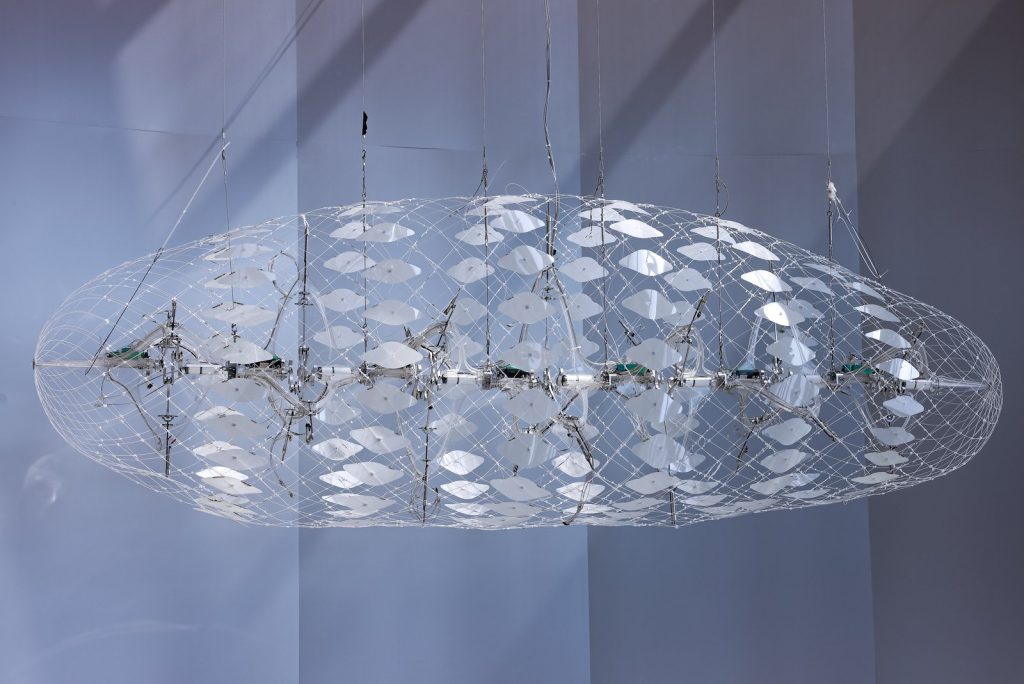
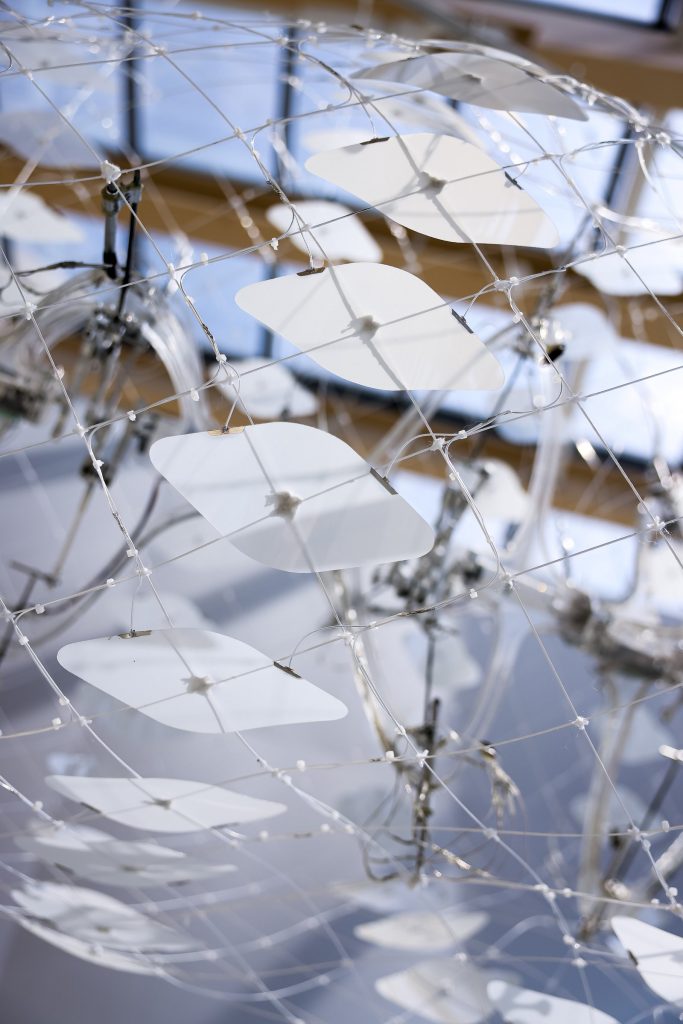
This is a kinetic installation. It uses sensors to collect real-time air-quality data and converts it into changes of form, color, and sound within the mechanism, making otherwise invisible atmospheric conditions perceptible. Like a “translator,” it lets viewers sense environmental change through sight and sound, drawing attention to the interplay between human activity and the state of the air.
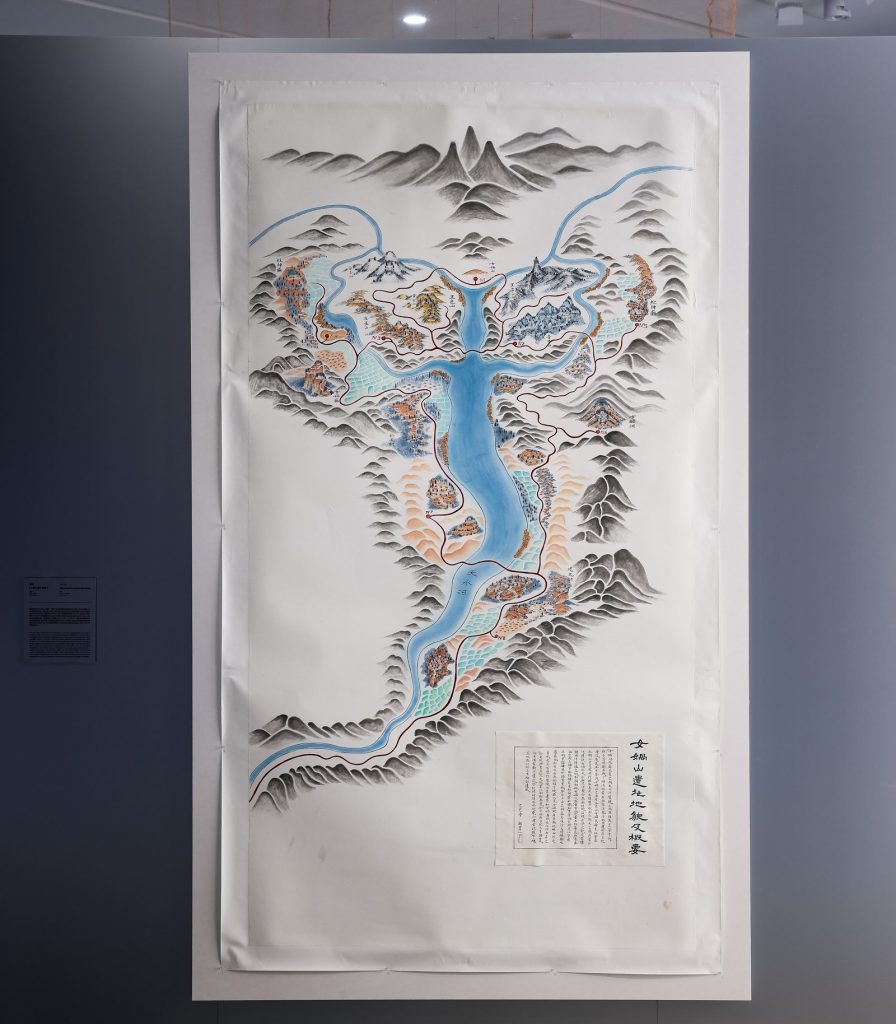
Xie Qun, Map of the Nuwa Mountain Ruins, 2025, ink on xuan paper, 240 × 123 cm
Inspired by Chinese myth of Nuwa patching the sky, the serpent-bodied figure is transformed into the counter-form of earth veins and mountains, symbolizing unity between human and natural form. The work situates myth within concrete spaces and practices, combining material-culture research with anthropological imagination.
I have been reading the Classic of Mountains and Seas and am drawn to the ties between mythical creatures and their geographies; this piece turns myth into a legible spatial and productive reality.
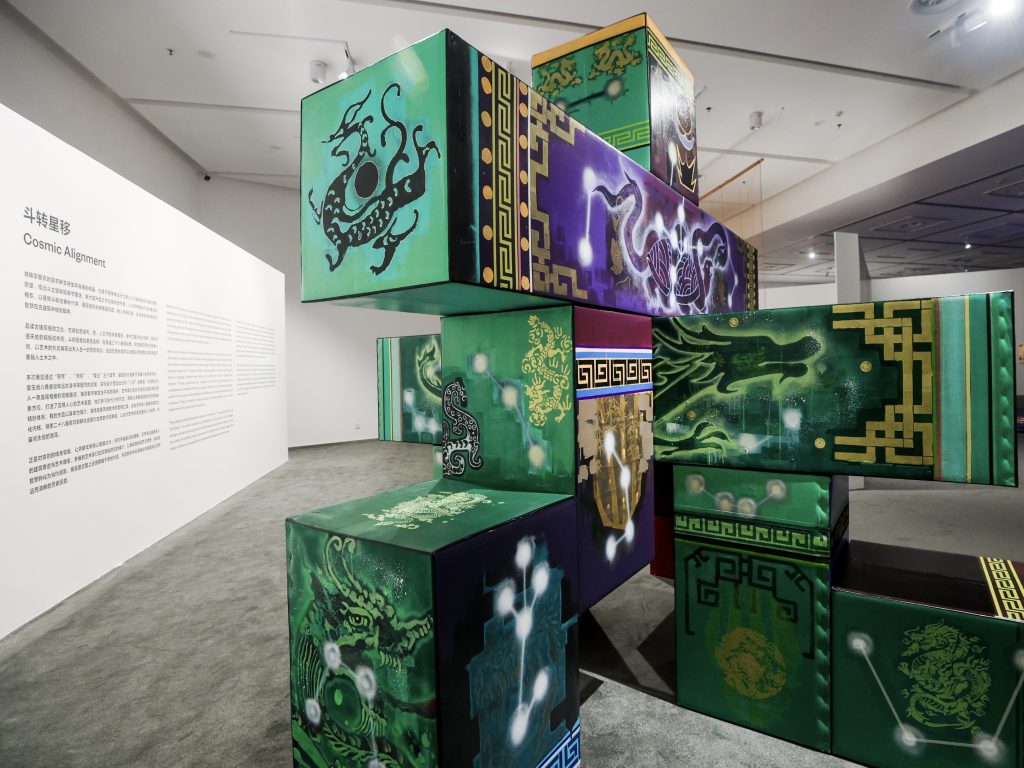
Using discarded cardboard, the artist reconstructs the dougong structure (interlocking wooden brackets) from traditional architecture and paints the Four Symbols(the protection of the four directions). Standing before it, I felt surrounded by stars and ancient temples, sensing the link between cosmos and architecture, faith and belief. I can feel the depth of ancient imagination about the universe.
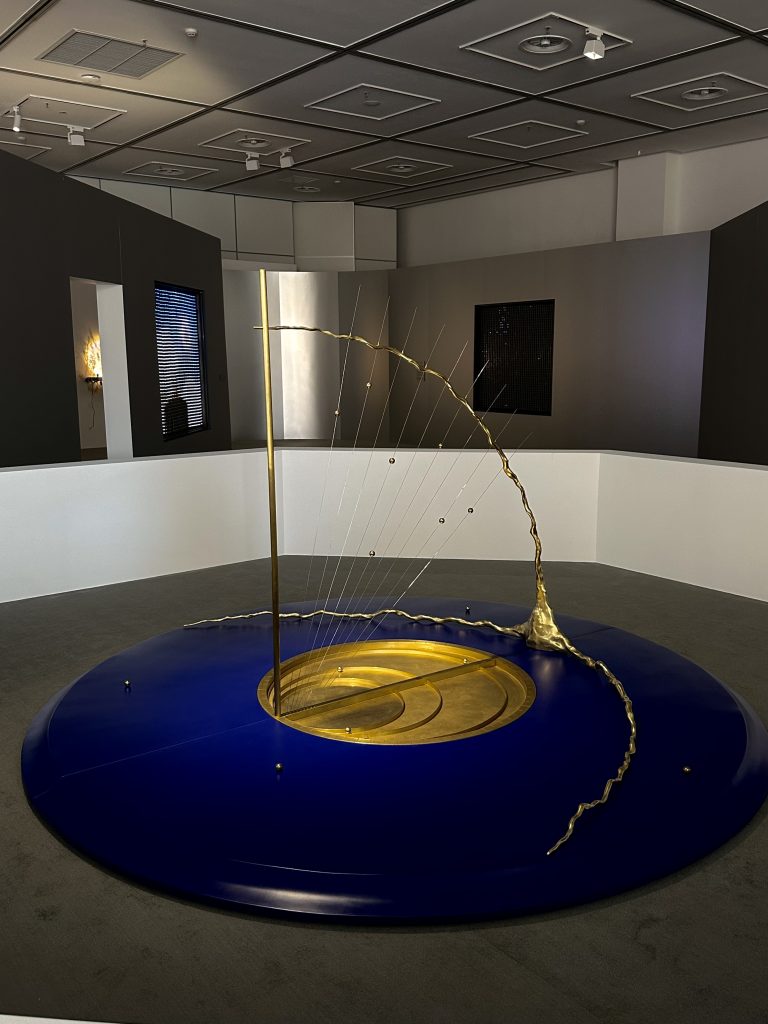
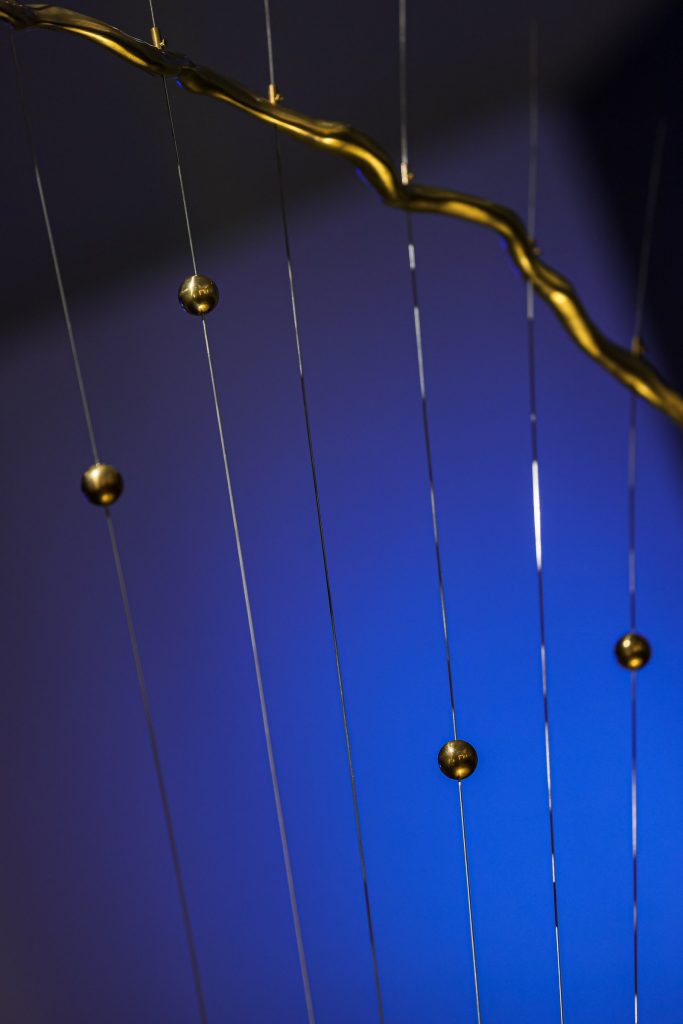
The work draws on the ancient practice of “measuring with the body”—telling time by observing one’s shadow in sunlight. Later generations invented astronomical instruments to refine this temporal order. The artist suggests humans have never been separate from nature; the cosmos is apprehended through the body, expressing Chinese philosophy about“the unity of heaven and humanity”.
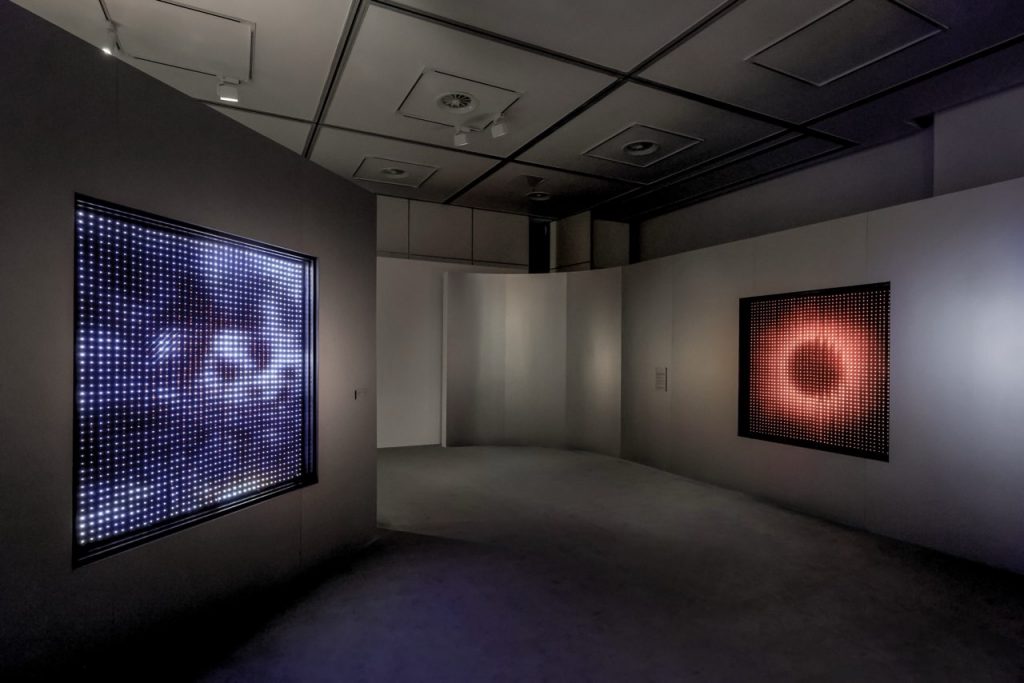
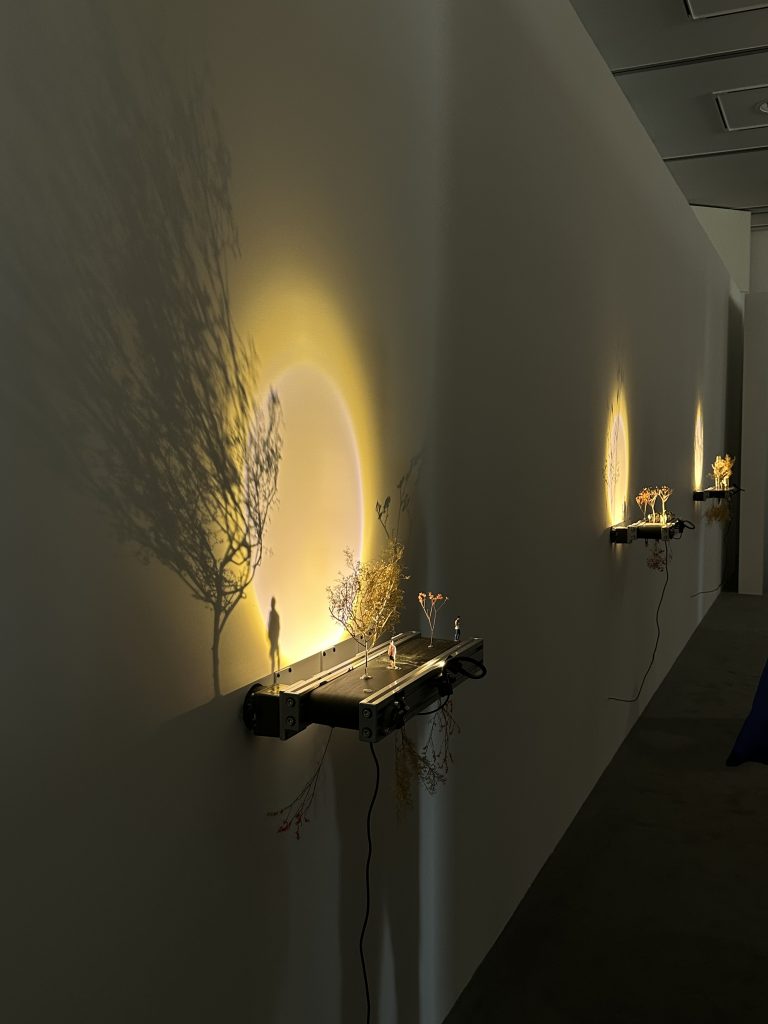
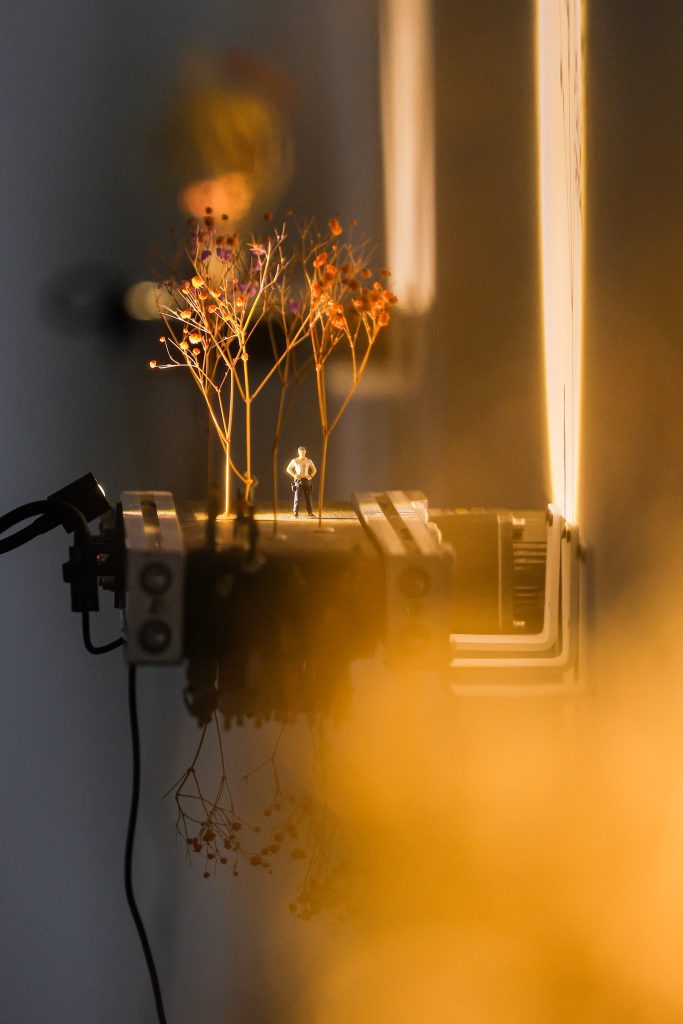
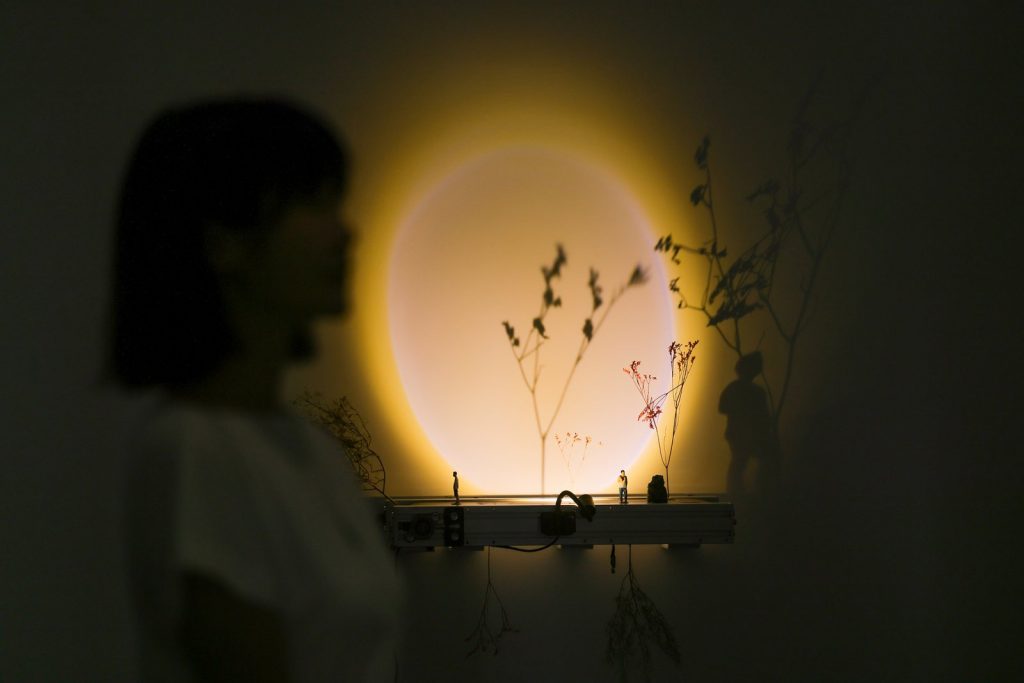
Gabriel Lester, Small People, Big Shadows, 2024, conveyor, tree models, figurines, 45 × 50 × 46 cm
Two light-based works continue Lester’s long-term inquiry into narrative, motion, spatiotemporal perception. Figures and objects travel on a conveyor while constant light witnesses their passage. It reminded me of a famous accent Chinese poem sentence:
“People today do not see the moon of old,
yet this moon once shone on people of the past.”
The light behind is like the moon that remains constant, quietly witnessing change and the passage of time.
Screenshot
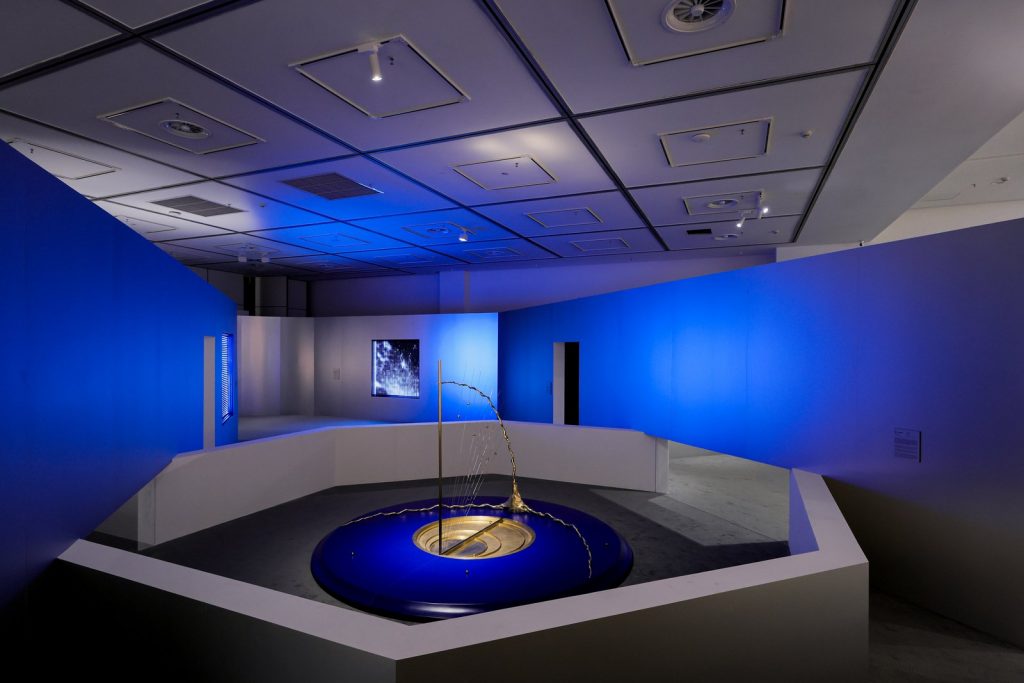
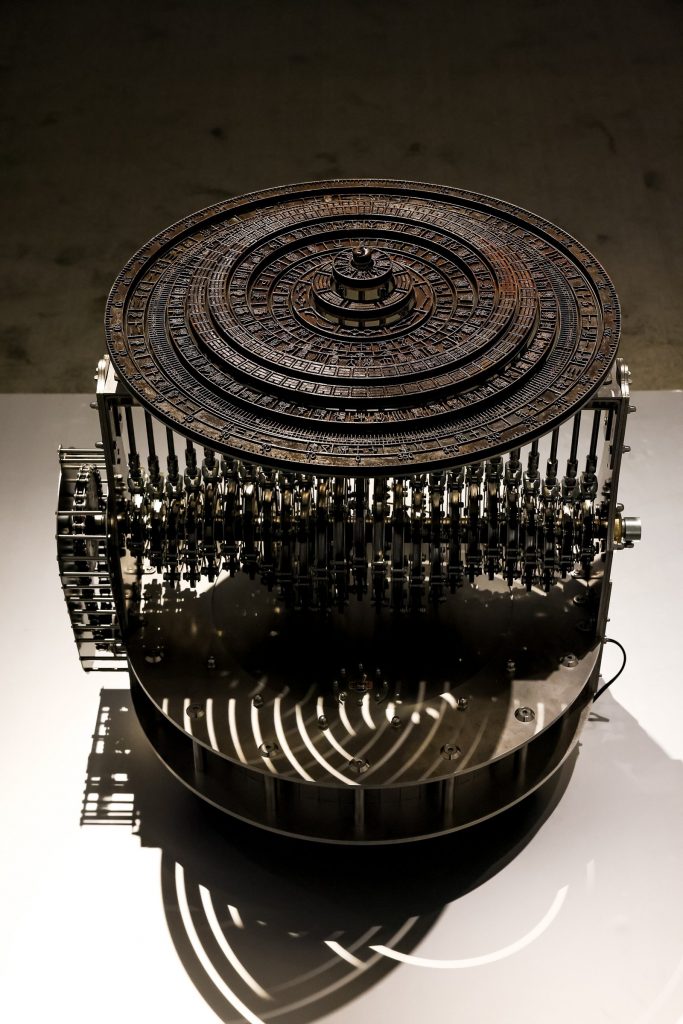
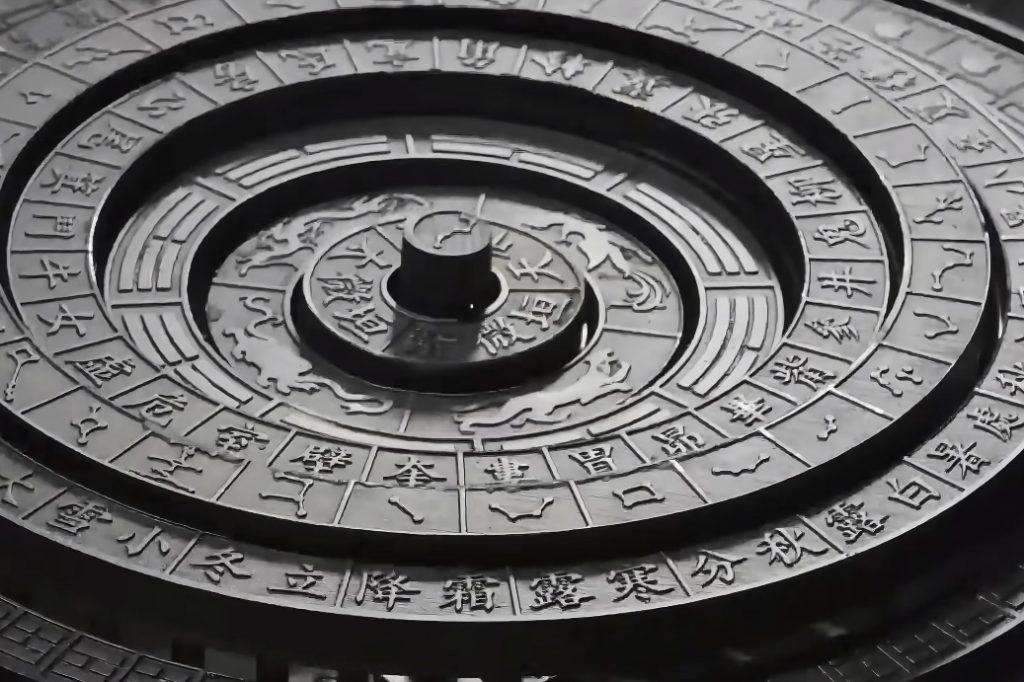
Nie Shichang, Droplet Oscillator, 2025, mixed metals (iron, stainless steel, copper), 90 × 70 × 80 cm
Based on calendar systems derived from sky-watching and agricultural time, the work embeds yin-yang lunisolar principles in concentric rings. It is Merging natural ripple patterns with compass-like forms, a mechanical transmission simulates wave dynamics. As the device runs, rings inscribed with celestial symbols rise and overlap like waves, suggesting a link between subtle variation and grand cosmic order and inviting reflection on natural laws within traditional Chinese cosmology.
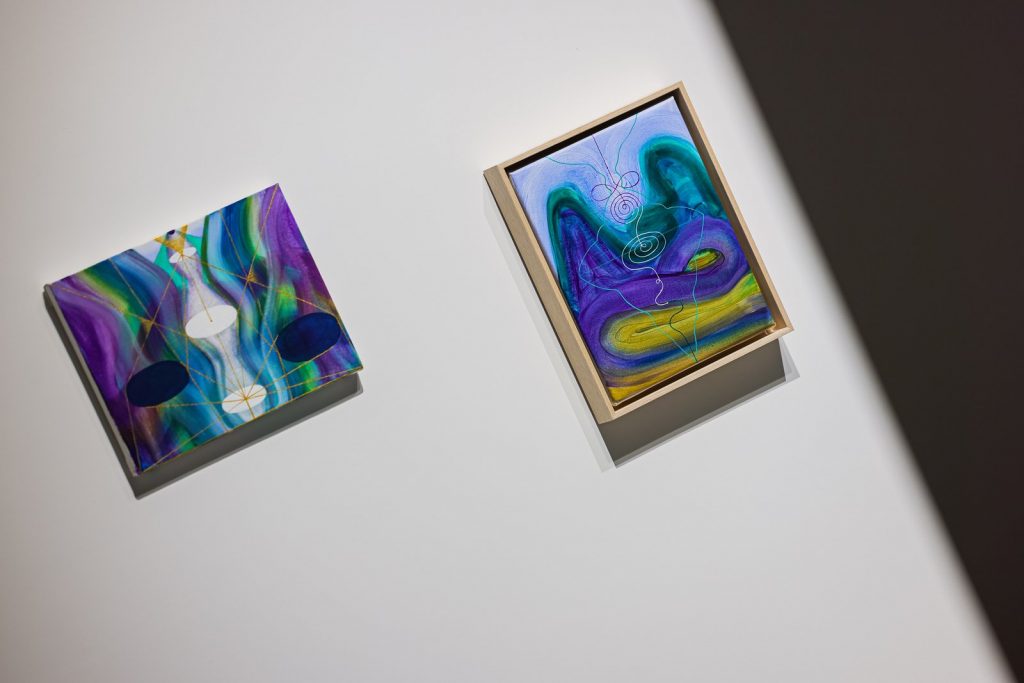
Emily Cheng, Cassandra, 2023, Flashe on canvas, 28 × 36 cm
Cheng explores the spirituality of painting and cosmological philosophy, constructing visions that link inner spirit and universe through abstraction. Combining Daoist talismans, scientific illustration, and prehistoric rock art, she dissolves boundaries between inner/outer, individual/collective, past/present.
Exhibition 2 — The Eightieth Day
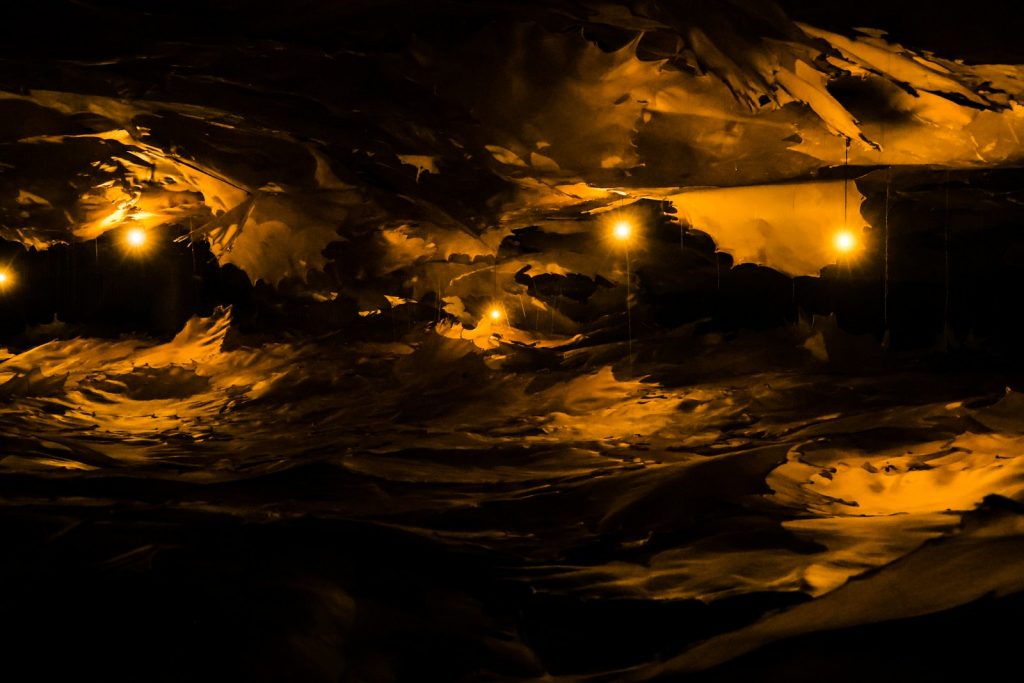
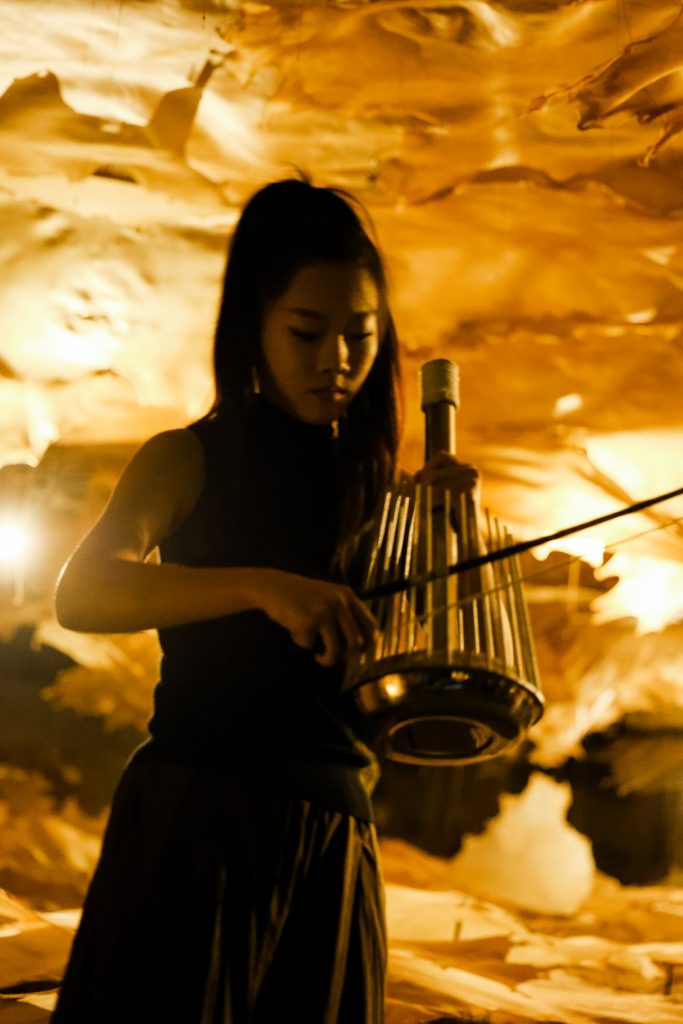
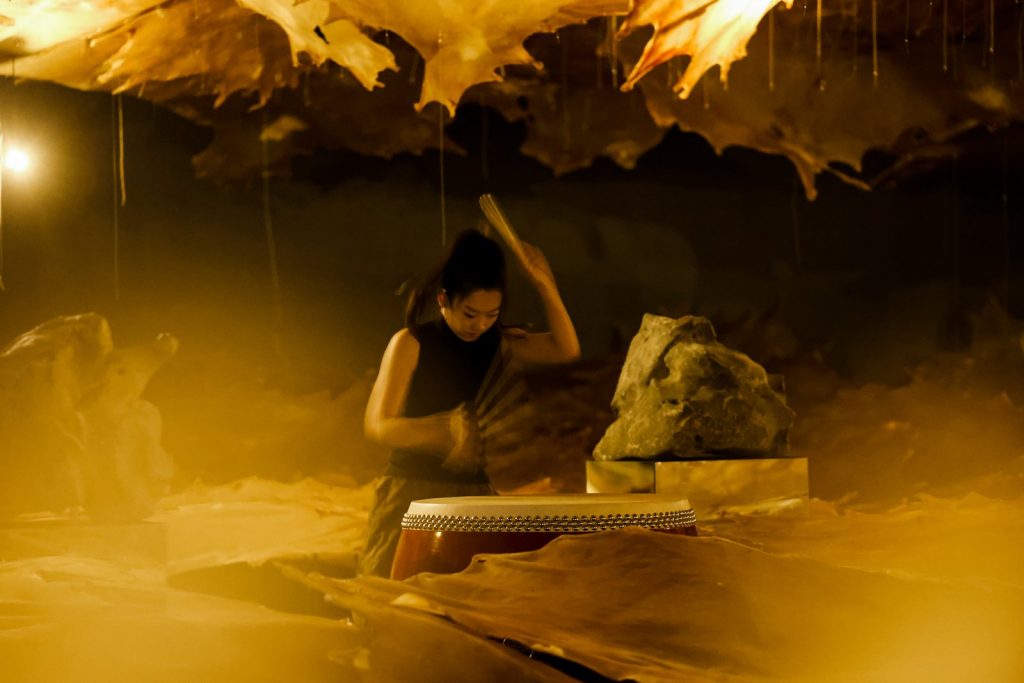
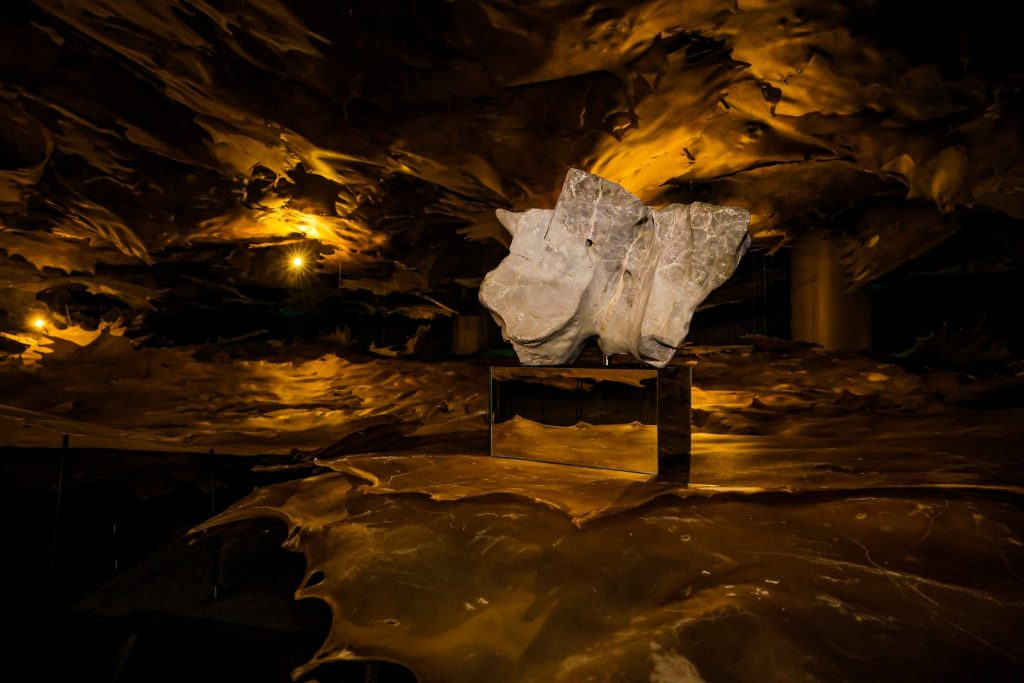
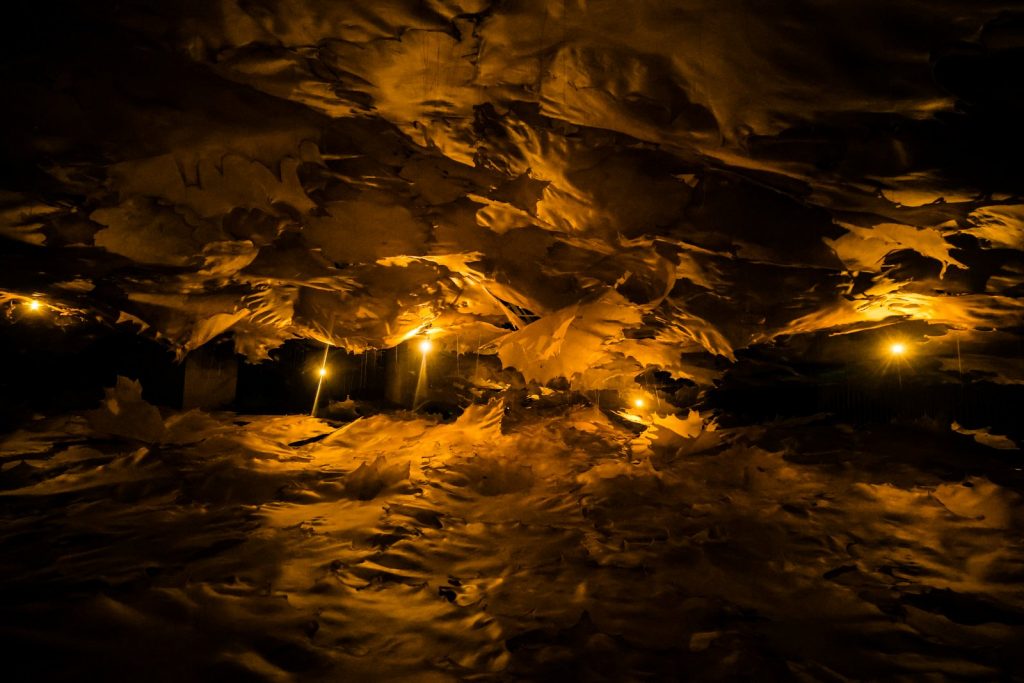
This large-space installation draws on the myth of Nuwa patching the sky. Using raw cowhide, natural stone, and mixed media with instrumental performance, it focuses on the moment just before cosmic order is restored.
I appreciate this immersive format that invites reflection.Walking through, I felt suspended between destruction and repair, chaos and order—as if back before the birth of civilization, about to witness the shift from turmoil to structure. It prompted three questions: Who am I? Where do I come from? Where am I going?
However, as an animal-protection advocate, the material of this work – cowhide – made me into deep reflection. I understand cowhide is a by-product of beef production. It is common in everyday life such as car interiors, bags, where its properties are functionally used. However, in this exhibition, over 200 sheets of dried cowhide were simply suspended in the space, without any real use of their material properties. What will happen to them after the show?Stored away or discarded?
To me, cowhide is not strictly irreplaceable in this context. While Damien Hirst’s work is controversial, His works expose how the living often face death with indifference, even turning it into a spectacle. However, The Eightieth Day explores the dawn of civilization; if the aim is to evoke a primordial atmosphere,fabric or recycled, low-impact materials could achieve a similar effect. More broadly, creative practice should move beyond a human-centered default, ask what “nature” or non-human creature would say, and keep sustainability in view.
A Setback — and What It Taught Me
Beyond this, the project also left me with another important lesson. Our original plan was more ambitious: beyond the exhibition, we scheduled a week-long outdoor stage performance over holiday, designed by famous architect Ma Yansong and directed by Liu Chang, blending contemporary theatre with local traditional opera—a genuinely inventive program. The entire team believed in its artistic merit. Yet one week before opening, the mayor and the police department canceled it, even though rehearsals and stage construction were complete.
From the mayor’s perspective, parts of the work were too avant-garde and dark for an official, government-partnered event. The police cited practical concerns: hundreds of spectators in an open square, insufficient parking, and potential crowd-safety risks. This was my first real lesson that artistic creation is not absolutely “free.” The same artwork conveys different meanings when viewed from the perspectives of different social roles. Mature projects must balance multiple viewpoints; while pursuing artistic ideals, we must fully account for real world conditions and social context.
Conclusion
This project gave me more than new sources and ideas for my research: it deepened my understanding that artistic work must weigh environmental responsibility and communication to different role, alongside concept and form. I’m certain the experience will stay with me and inform my future practice.
Since April this year, I have been continuously revising my portfolio and CV, sending applications to ten art institutions. At first, I received internship offers from two fashion brands, a game company, and three art museums. However, the company I desired best—UCCA Center for Contemporary Art—still haven’t reply.
Founded in Beijing by the Ullens couple, UCCA is China’s top contemporary art institutions and also my favorite museum. It has hosted many solo exhibitions of global famous artists, such as Lubaina Himid and Lawrence Weiner. My desire to intern there not only because its curatorial excellence, but also because I believe the opportunity to learn within a professional and intellectually vibrant environment.
I first applied through UCCA’s website in June, updated my portfolio and reapplied in July, but received no response. Although I felt anxious and discouraged, knowing the competition was fierce, I applied a third time in August—and a week later received an interview invitation. During the interview, my supervisor told me UCCA had no plan to recruit interns in June and July, but new projects had just opened positions, and my email happened to appear at the top of their inbox. That experience taught me that no reply doesn’t mean rejection, persistence and sincerity can create opportunities.
Observation
I am currently interning in the UCCA Lab department, which curates collaborative art projects between UCCA and government and various brands, such as Prada, Arc’teryx, and Lenovo. Over the past two months,I have participated in five projects and gained valuable experience.
Firstly, I developed new graphic design skills. Previously, I only used Photoshop, but many projects required editing AI-format posters and InDesign layouts. To meet these needs, I learned AI and ID by myself. During this process, I often asked technical problems to ChatGPT—it has become my most reliable learning companion. Through continuous practice, I am now proficient in both design software and in using artificial intelligence tools. This improvement has made me more efficient in my internship and made a solid foundation for creating my own publications in the future.
More importantly, this internship revealed the complex structure behind art projects. Although as an intern, my work mainly involves execution rather than innovation or decision-making, I have learned about the entire process of turning a curatorial concept into an actual exhibition.
I used to think that curation was simply about spatial design and artwork arrangement. However, I now see that my supervisors must also communicate constantly with government partners and sponsors, refine proposals, collaborate with design studios on visual systems, and handle logistics such as transport and travel. My duties include creating visual designs based on the main visual systems, designing goods, confirming caption with artists……
Practice
This experience completely reshaped my previous “bias”of curation. It is not merely an artistic idea, but a collaborative and highly coordinated system involving multiple departments. The experiences, methods, and insights I have gained here will continue to influence my future studies and creative practice.
At present, I plan to work at UCCA Lab for three months, then apply for another department at UCCA or seek new internship opportunities in London. I hope that through experiencing different professional and cultural environments, I can broaden my perspective, challenge my own biases, and make my artistic practice more open and inclusive.
Leave a Reply