Program Introduction
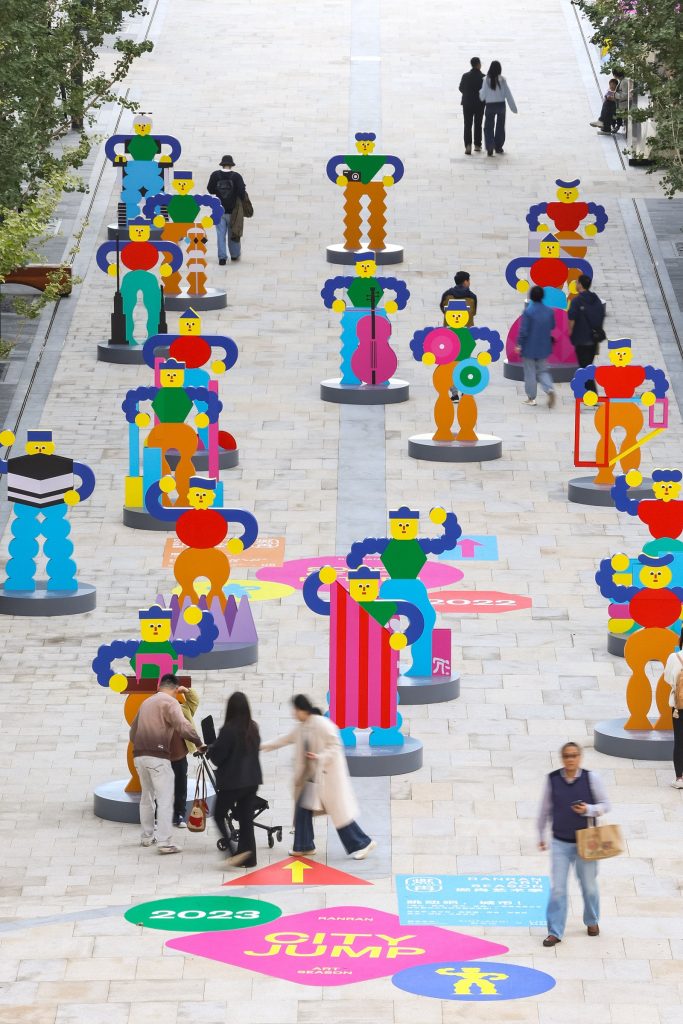
“Ranran” is a three-year young artists’ incubation program initiated by UCCA and Shanghai Xintiandi. Over three years, it has brought nearly one hundred artworks into central Shanghai’s public spaces, continuously exploring how art can coexist with everyday urban life.
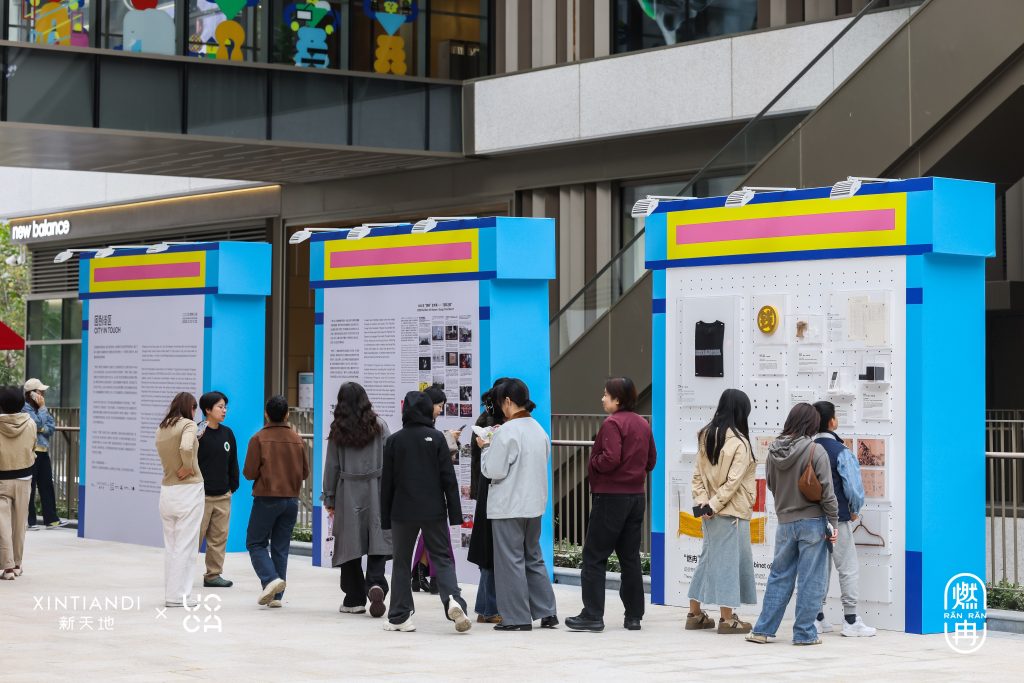
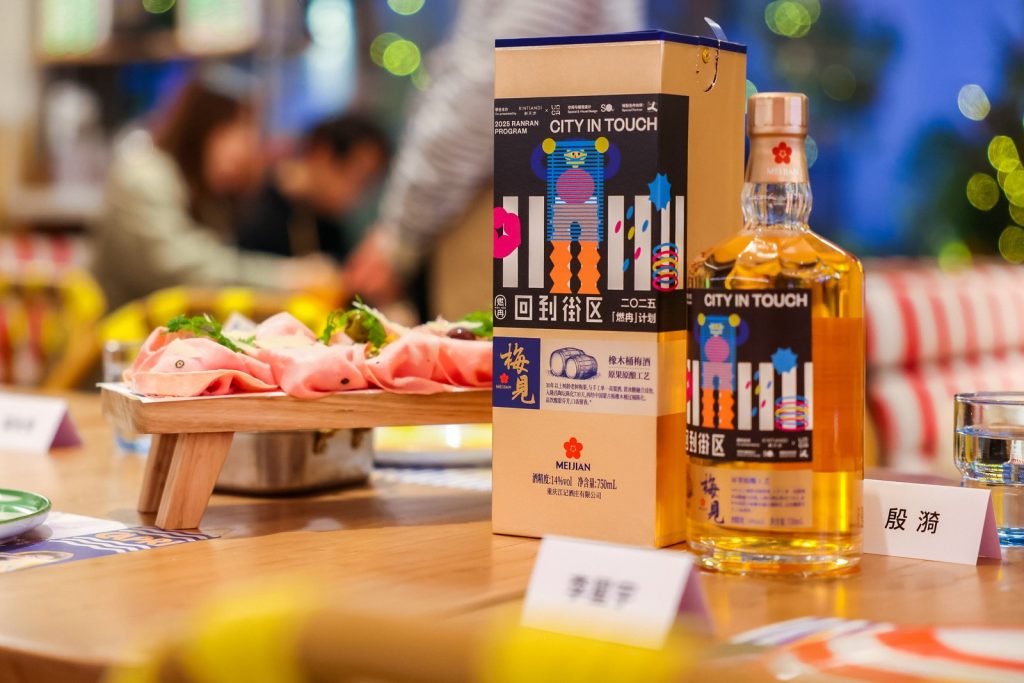
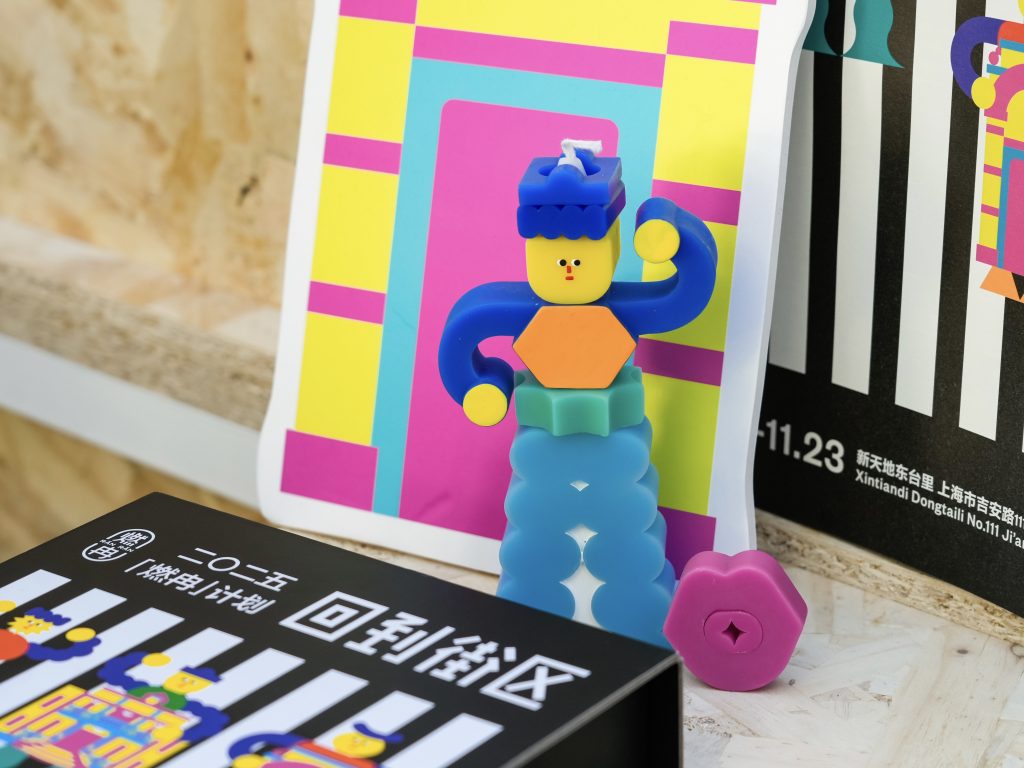
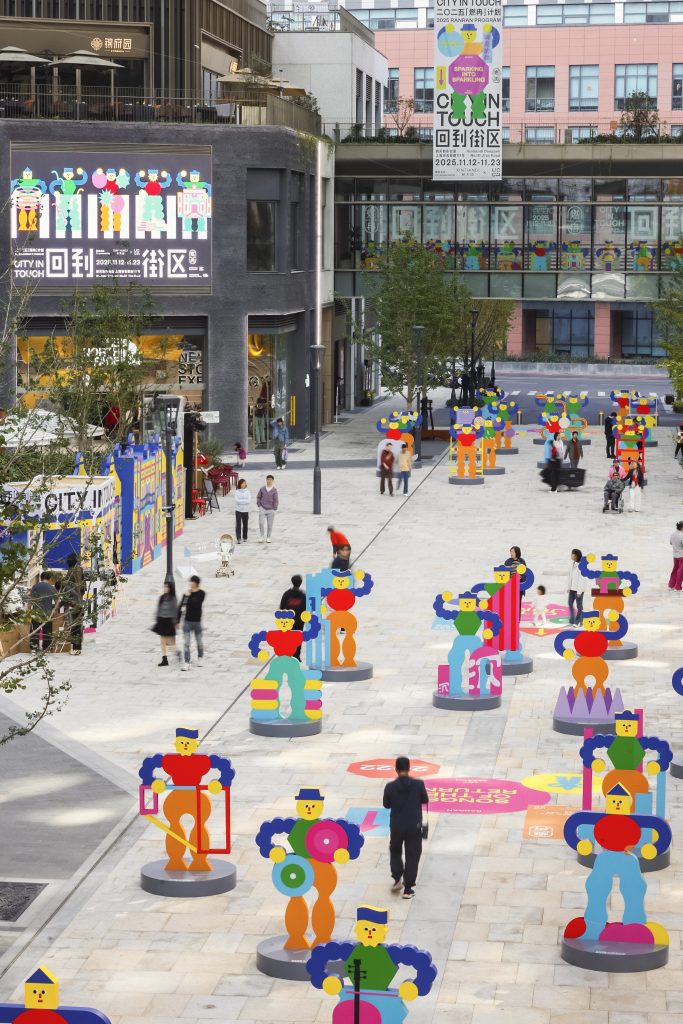
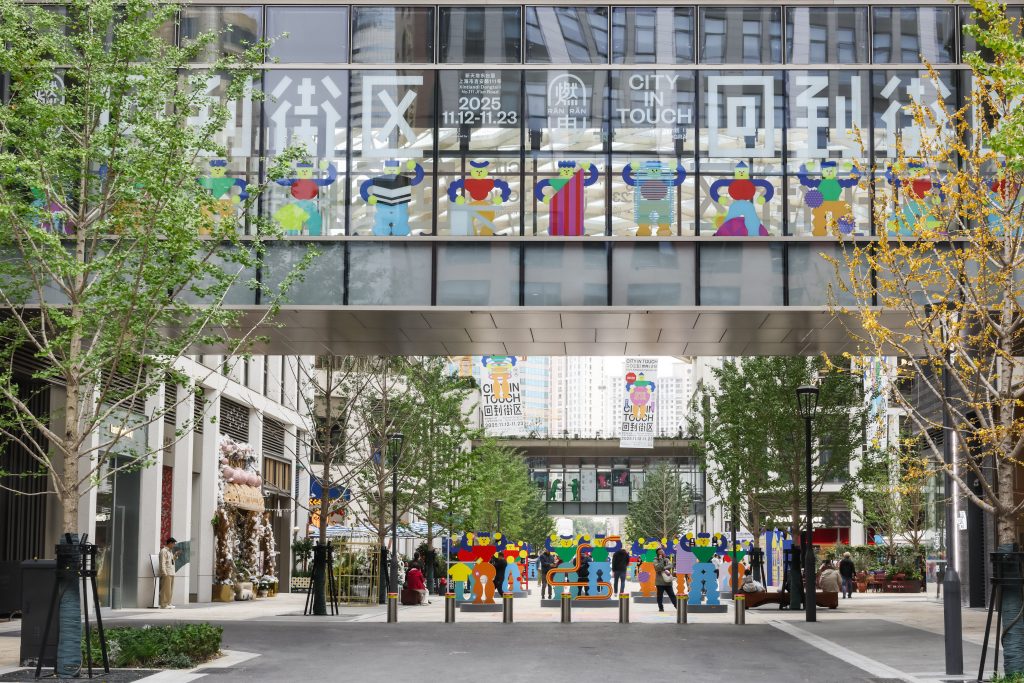
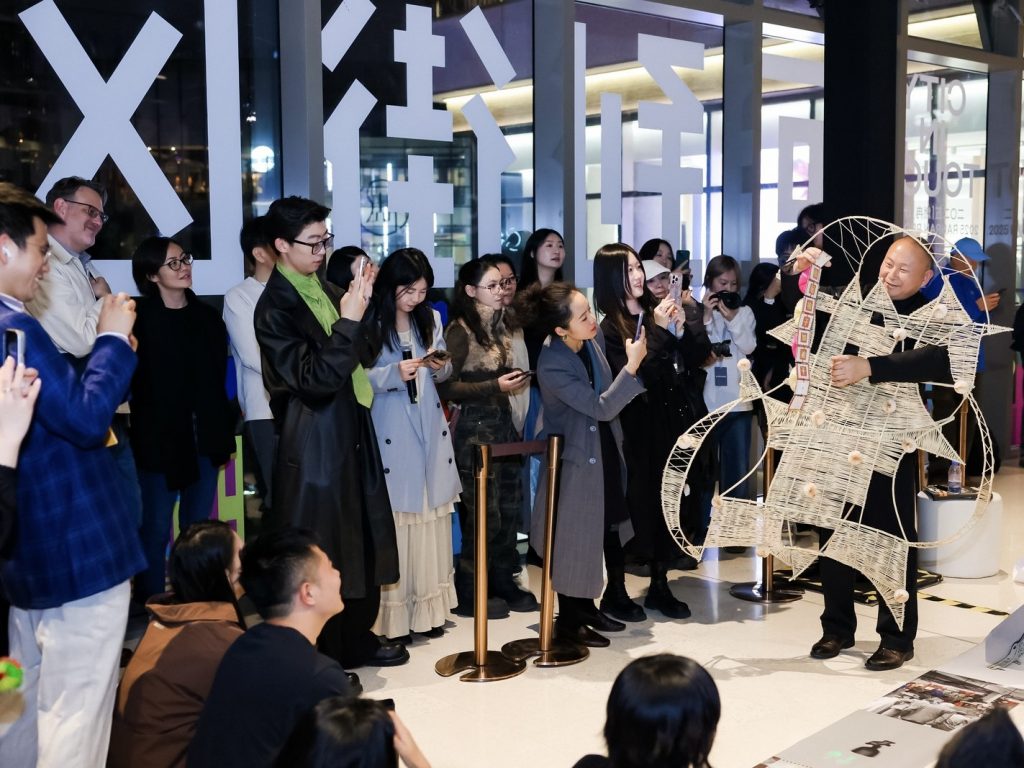
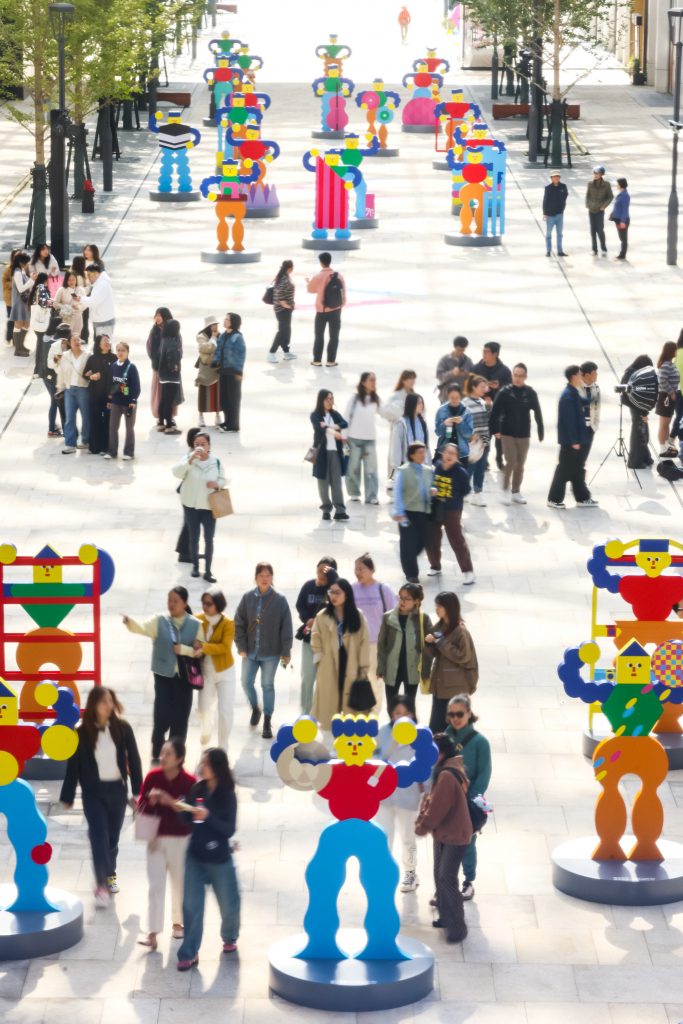
From 12 to 23 November 2025, the closing project, “Ranran 2025 – City in touch!”, took place at Dongtaili in Shanghai Xintiandi. The event reviewed the three years of work. It consisted of a retrospective display and a forum: we built a memory wall of objects from past projects, designed cartoon characters for 31 artists based on their works, produced matching merchandise and sculptural pieces, and invited six experts to discuss art and urban culture.
wine
The theme “City in touch!” echoes Henri Lefebvre’s theory of the “production of space”:
space is not a neutral container but a field produced by relationships and daily practice. Returning art to the street is an effort to root practice in the social environment and rebuild direct connections between people.
Power of Interpretation
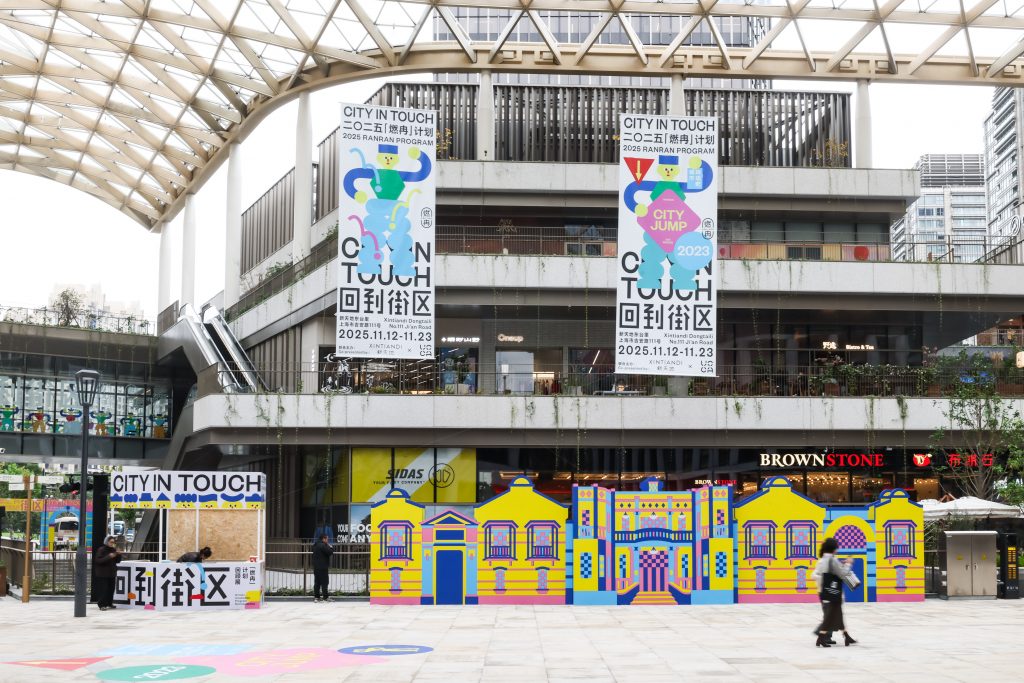
In this project, I was responsible for extending the main visual identity and designing all printed materials, including posters of various sizes and product packaging. The workload was heavy, but I enjoyed the creative challenge of recomposing each layout.
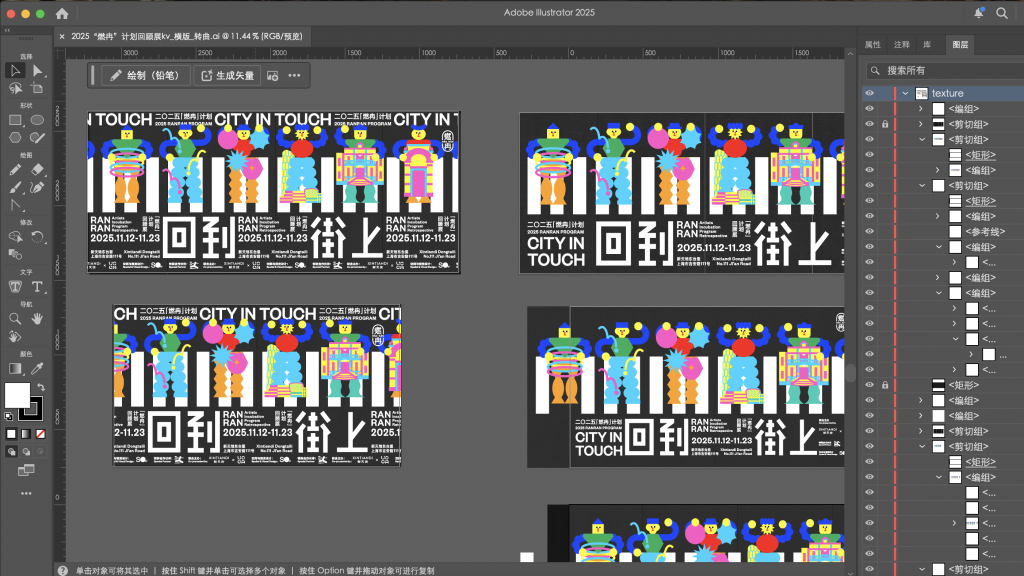
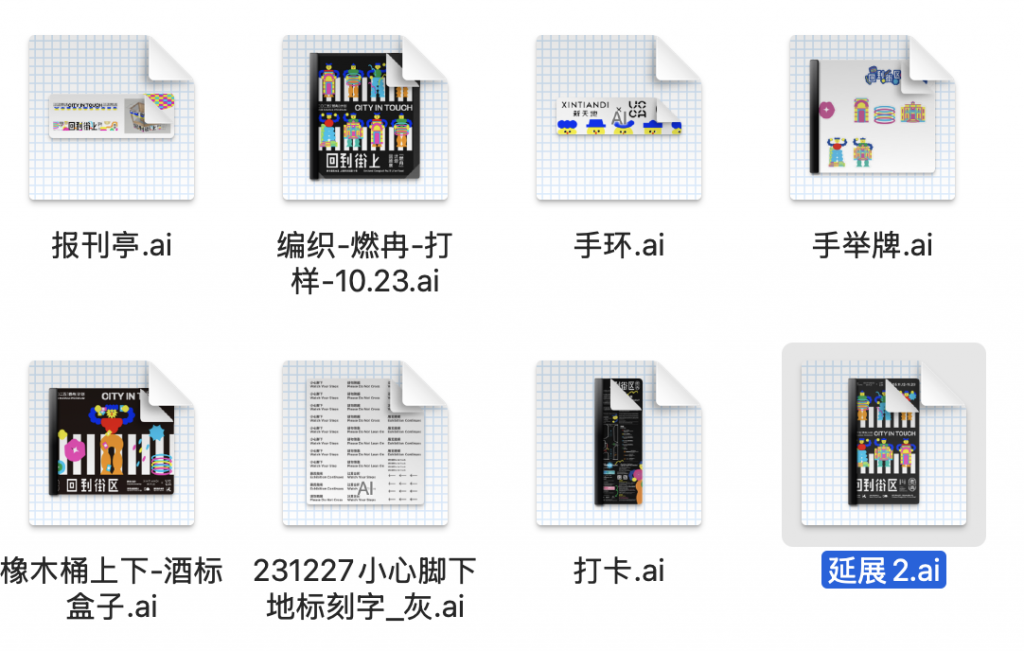
After dozens of designs had been approved internally, the project title failed to pass government review. The original forum title “Public presentation” and Chinese title “回到街上” were judged politically sensitive because of associations with twentieth-century Chinese political history. We were required to change them to “community Sharing”and“回到街区”. The phrases differ only in the last character, their meanings and English translations are almost identical.
Due to this, I had to remake every file to replace that single character. Through this repetitive work, I realised how much I dislike tasks that feel meaningless and require no creativity.
At the same time, the experience showed me the power of communication and interpretation. Faced with the same poster, different positionalities focus on different things: I care about layout and visual balance; passers-by care about the activity’s time and place; officials may only notice one or two “sensitive” words. It made me think about how language shapes perception, how bias forms, and how art might send different messages to different groups.
Connections
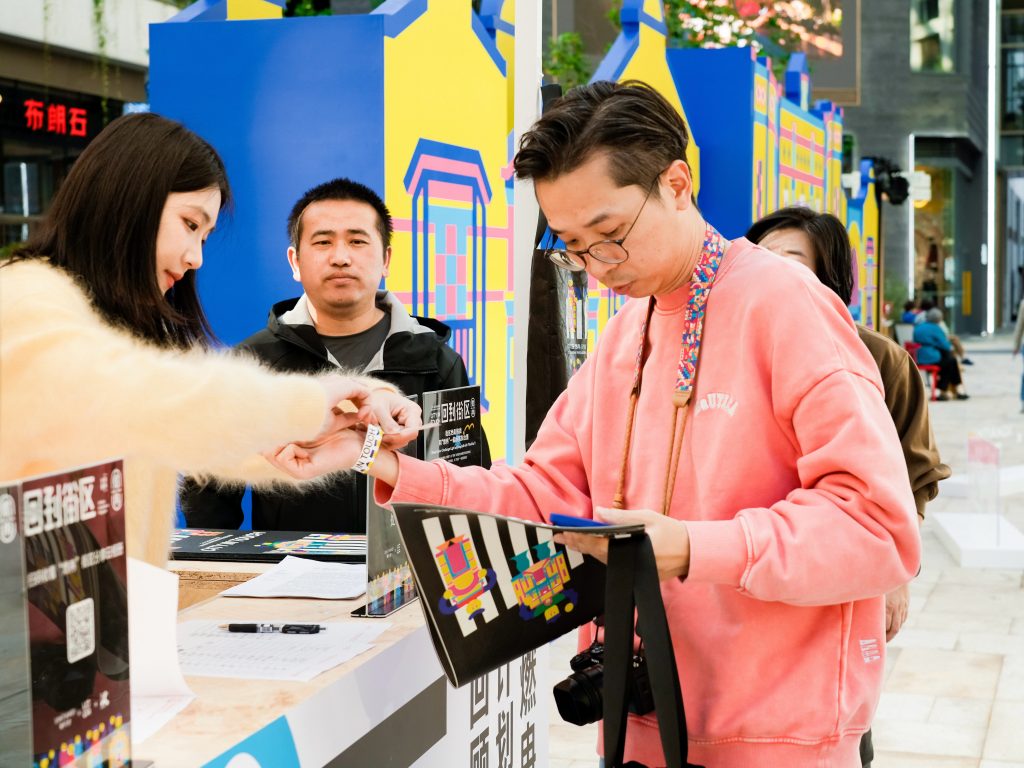
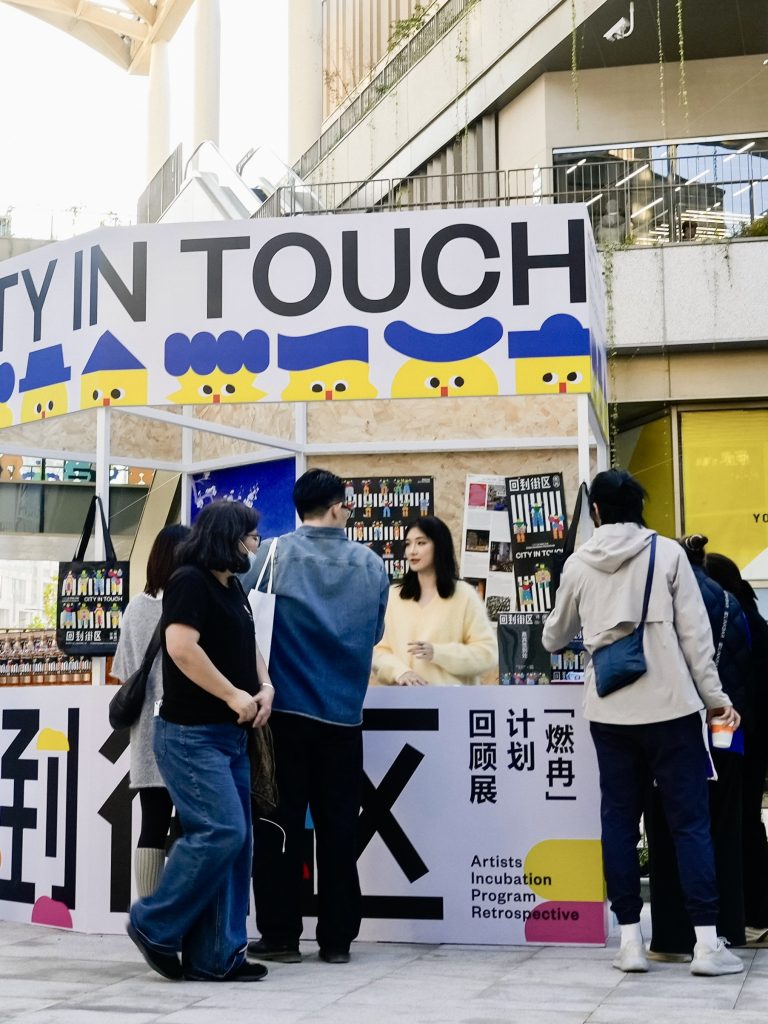
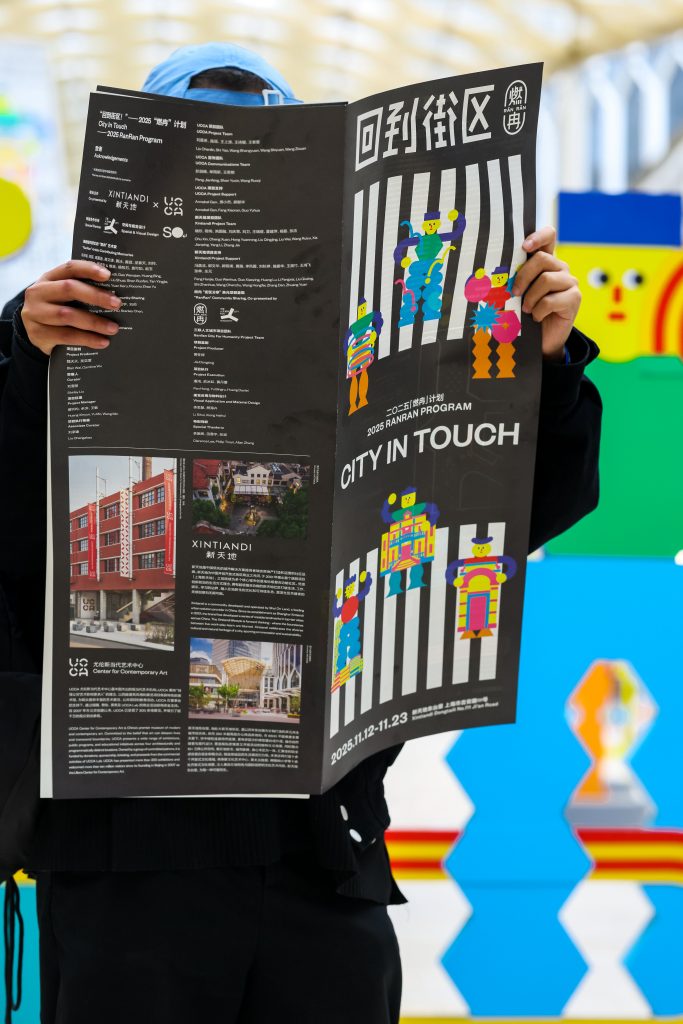
On opening day, I worked at the information deskMany people stopped to pick up the booklet and chat with me. One woman was surprised that I am only twenty. She said that at twenty she was still skipping classes in uni, while my posters were already covering one of Shanghai’s busiest commercial districts.
Her comment shifted my perspective. I had treated these work as “just doing my job”, but if saying it as a twenty-year-old student can visibly shape the visual atmosphere of a major urban area in Shanghai, that is remarkable. Watching people pause in the street to look closely at the memory wall and the posters I designed, I felt both proud and deeply moved. I sensed the links between art and society, and between one person and another.
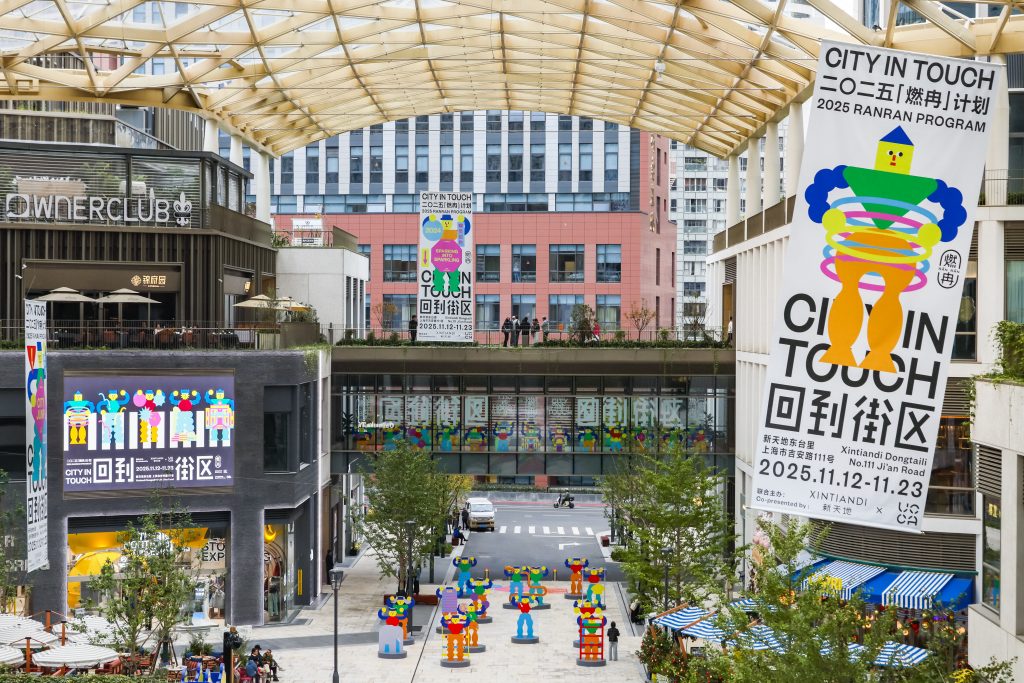
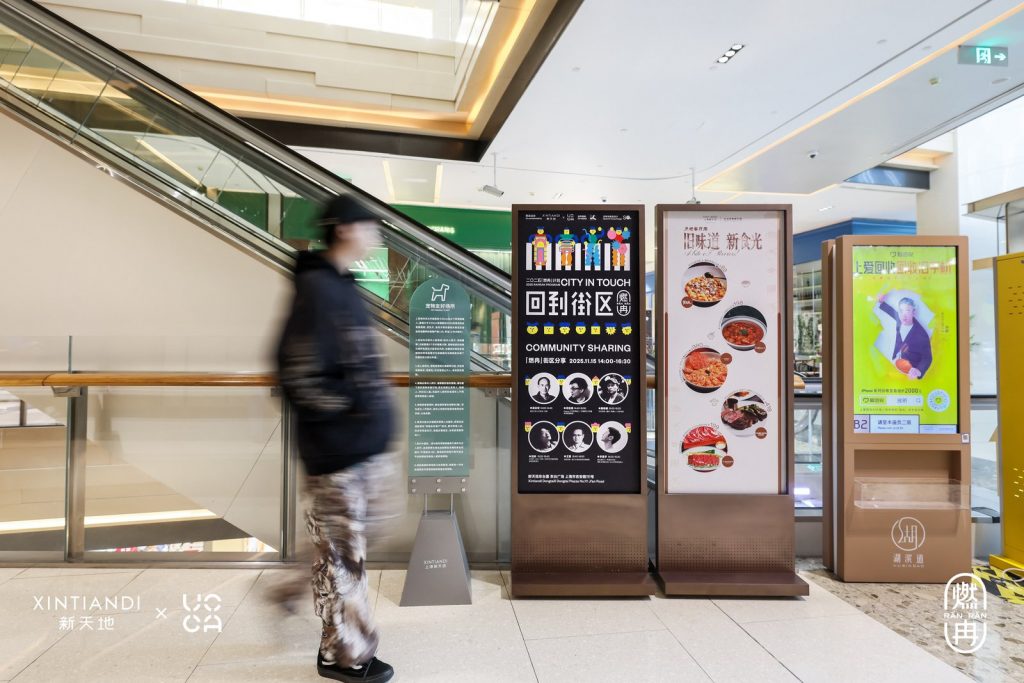
In that moment, I understood the core idea of the “Ranran” project:
art is never far from everyday life; it is part of life itself, and a window through which we get to know the city and understand one another.
The event lasted only two weeks, but its traces in the city will be long-lasting. Buildings and residents will change, yet the city’s atmosphere and its human connections continue. In Xintiandi, we used art to briefly link past, present, and future. Art quietly enters the environment and becomes part of the community’s shared memory. Its influence may appear now, or surface later in an unexpected moment.
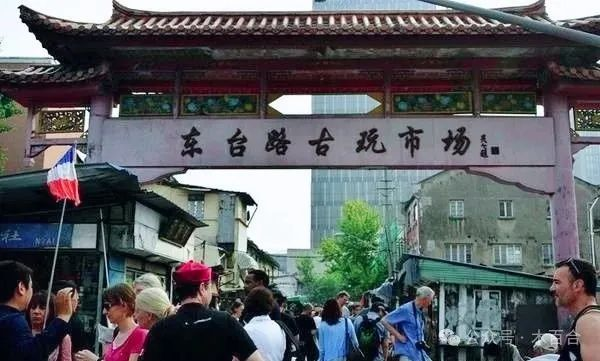
Dongtaili in the Past
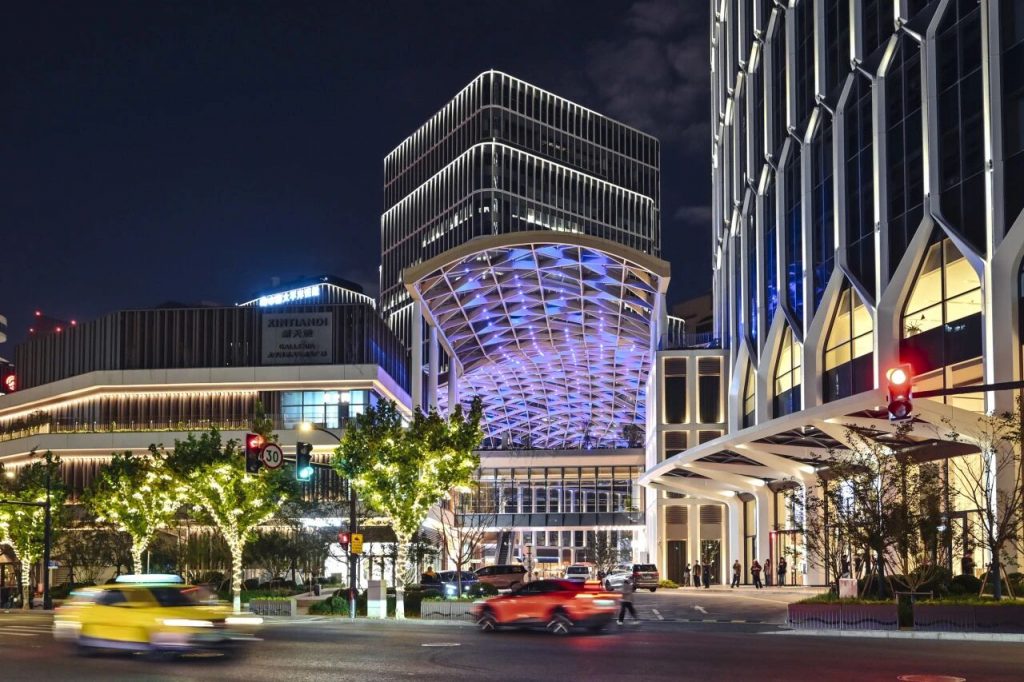
Dongtaili Today
As an ancestor of future city dwellers, I would like to believe that the energy and thought I put into these works will keep growing in the city, living on in ways that are subtle but enduring.
Leave a Reply