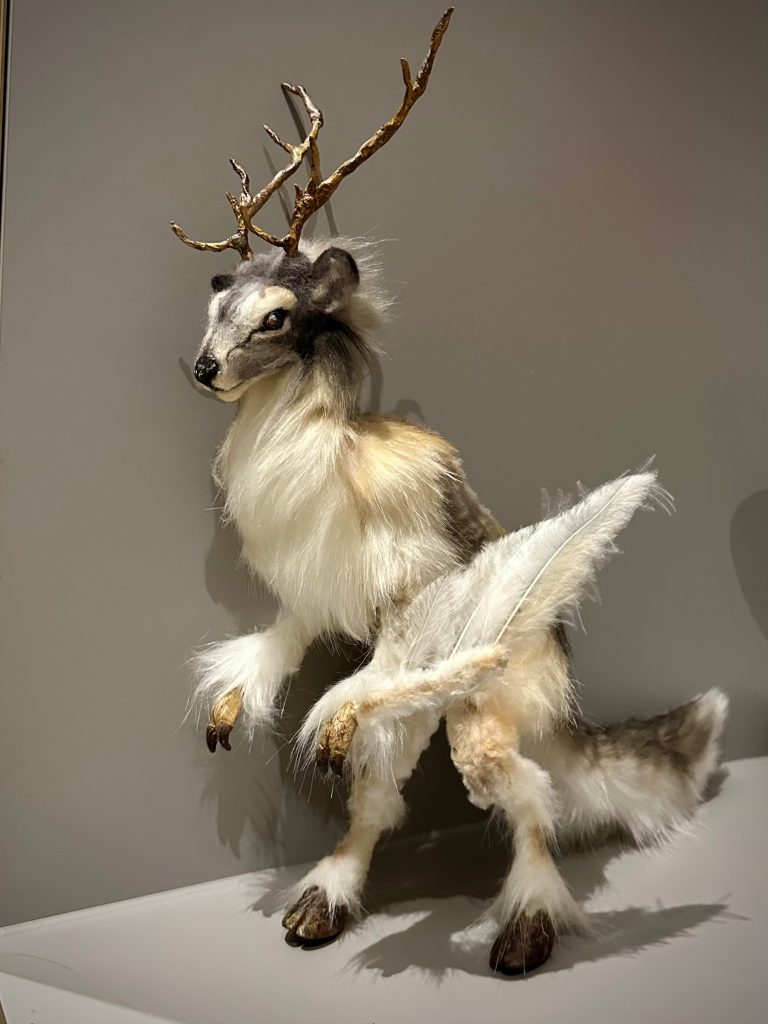
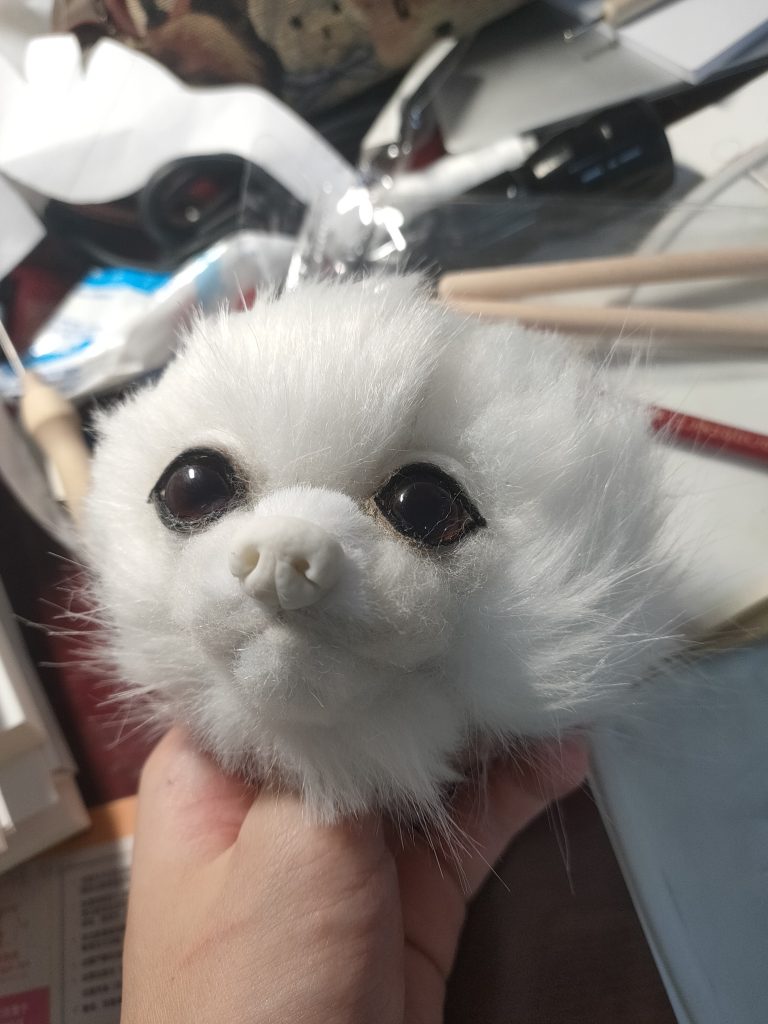
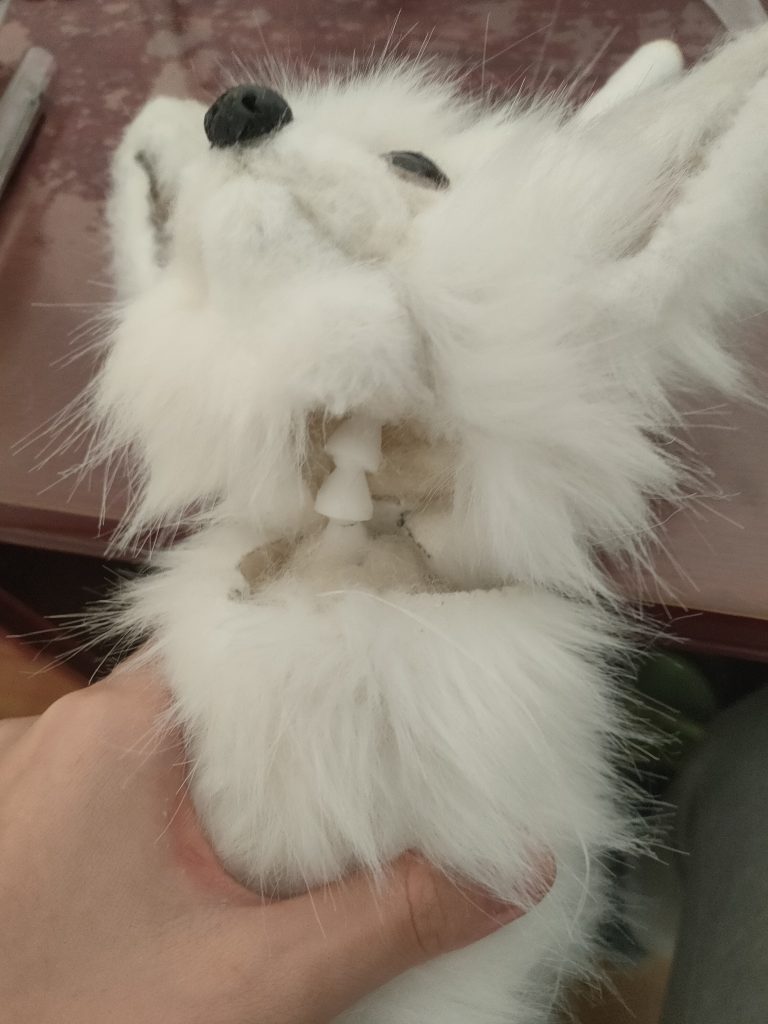
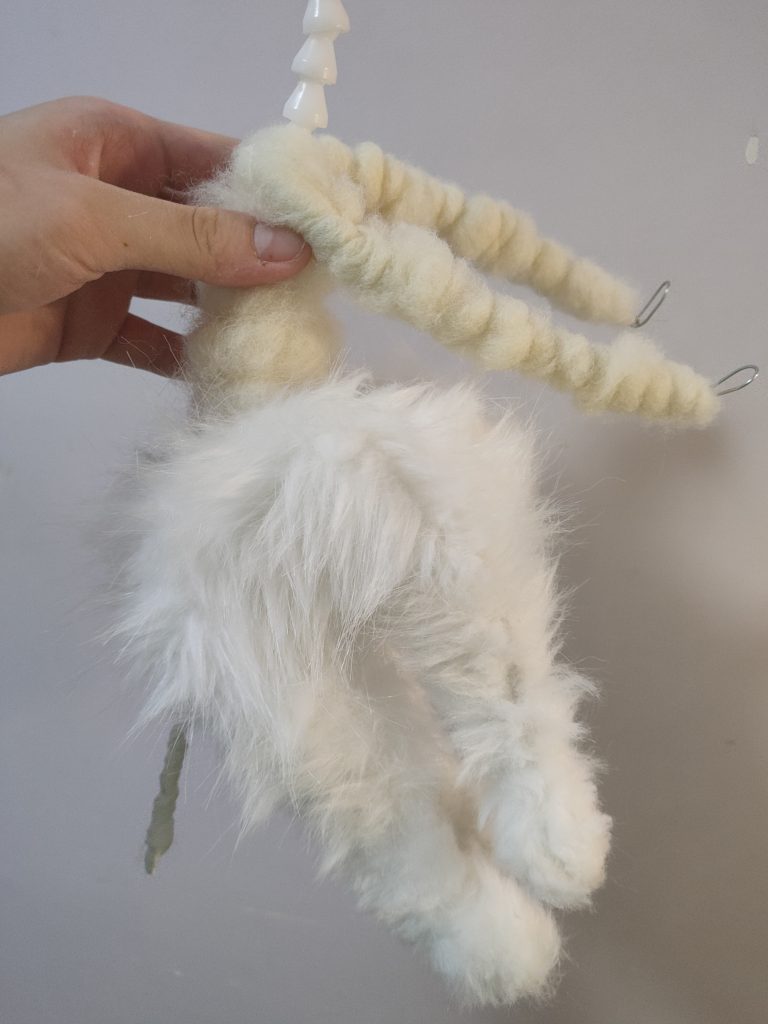
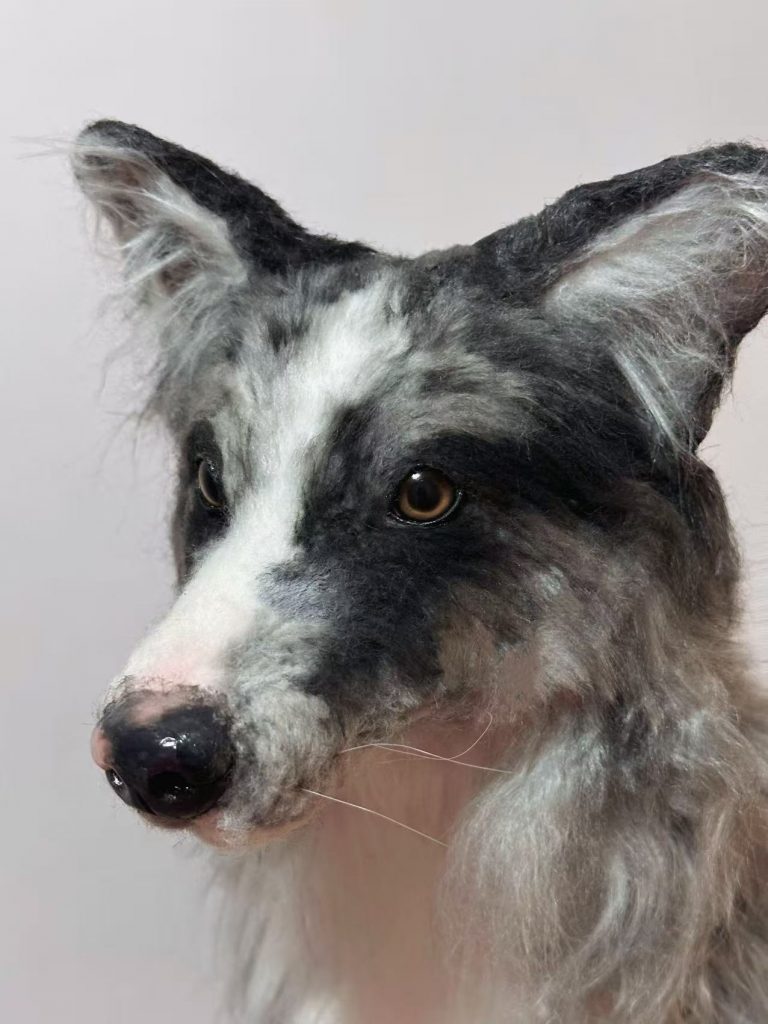
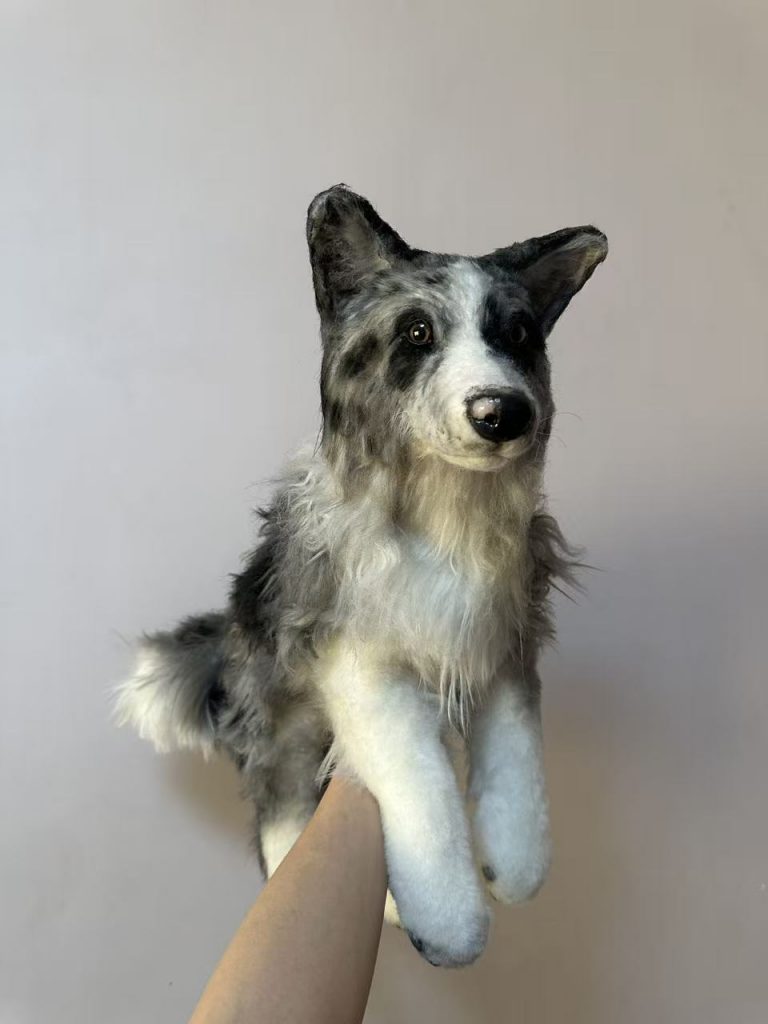
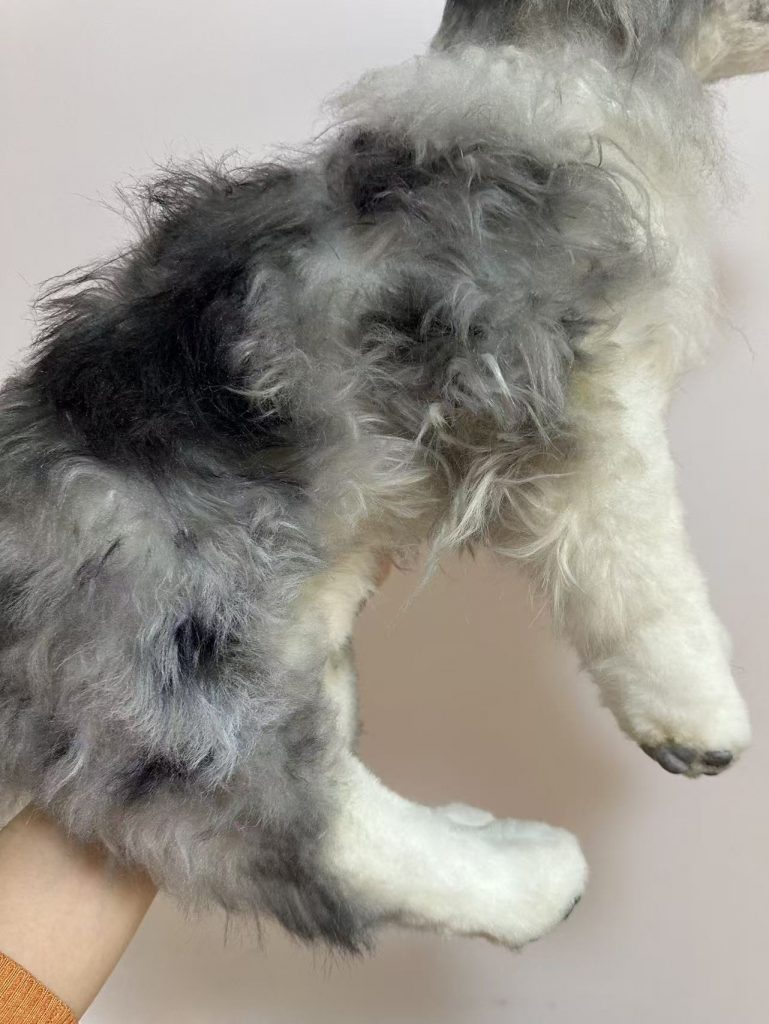
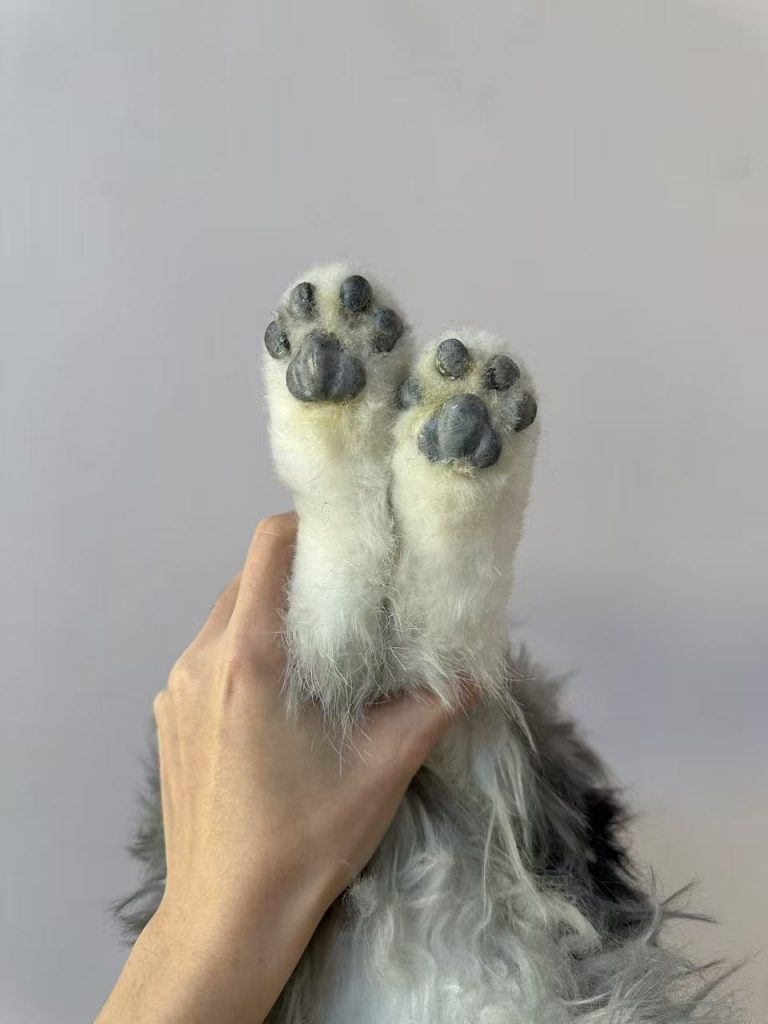
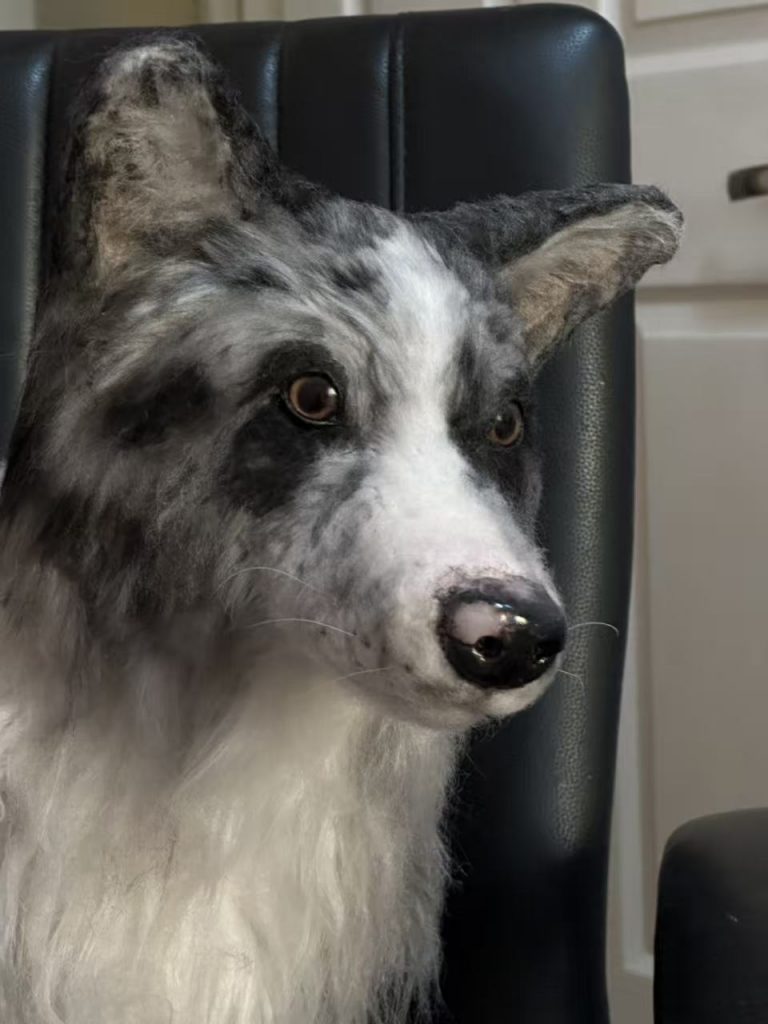
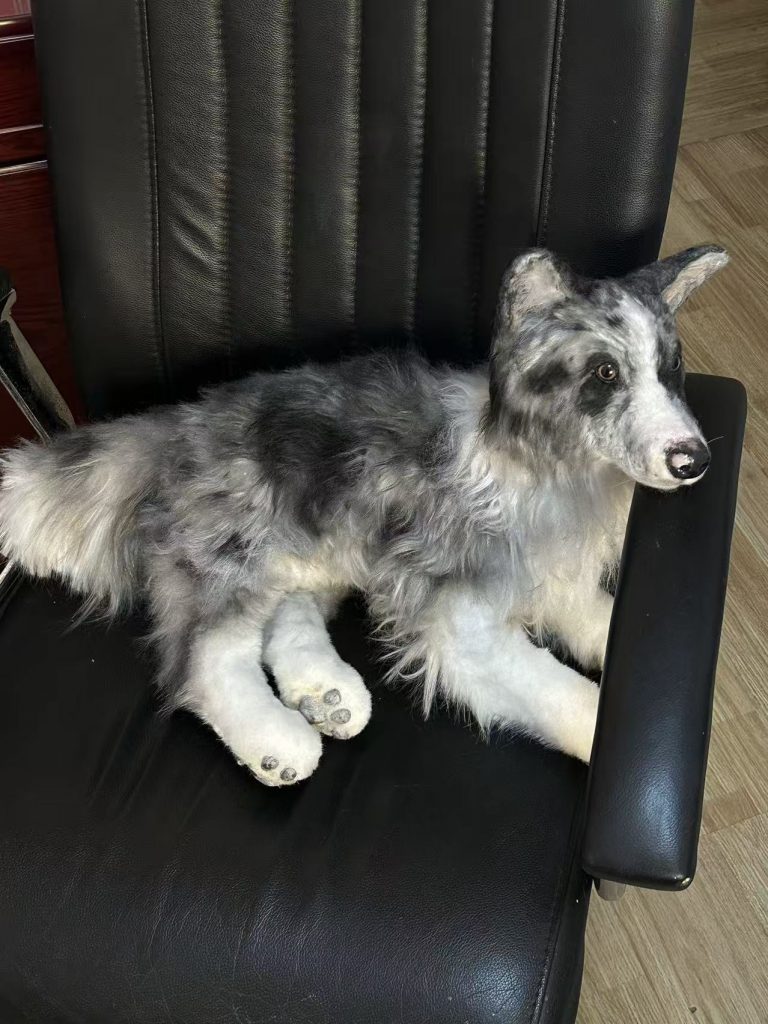
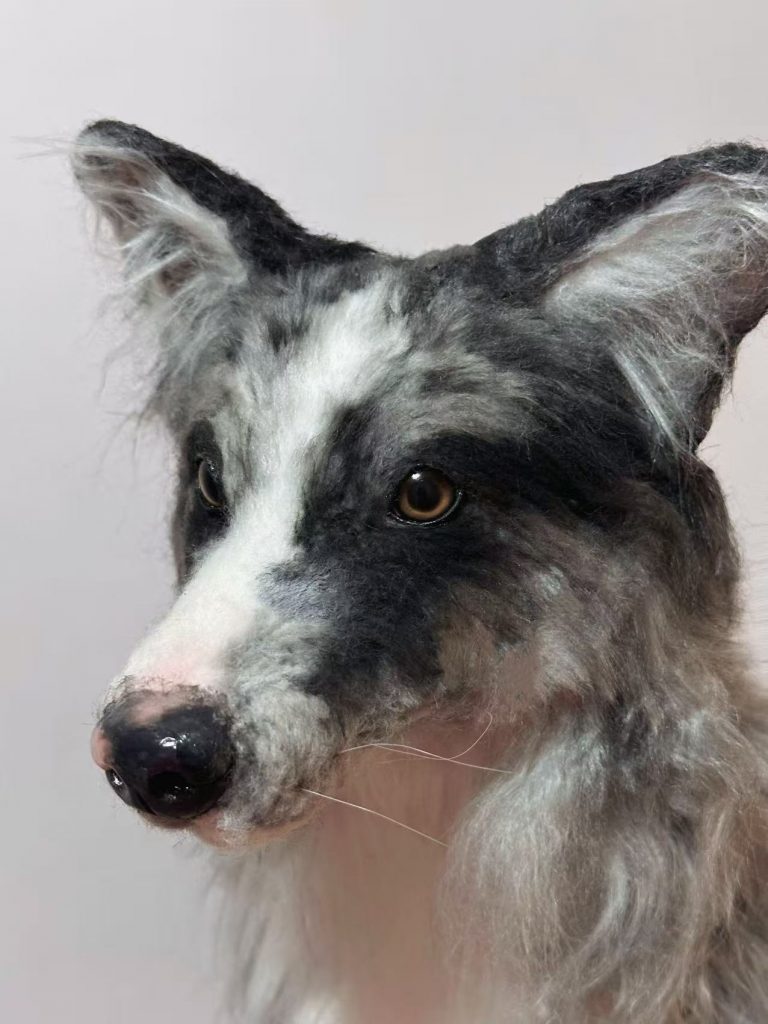
During my tutorial with Chole and Samantha, I received very helpful feedback on my SIP project. They confirmed that the project has potential, but I also realised that it needs to move further towards an ethical fine art practice. The work should not only aim to “look like” an animal, but should also express my perspective, emotional judgement and values as an artist. I need to develop the project in two main areas: form and material ethics.
In terms of form, I need to move away from purely realistic imitation and develop a more artistic language. The work should not simply copy an animal’s appearance, but use posture, structure, material and setting to express how I understand animal lives.
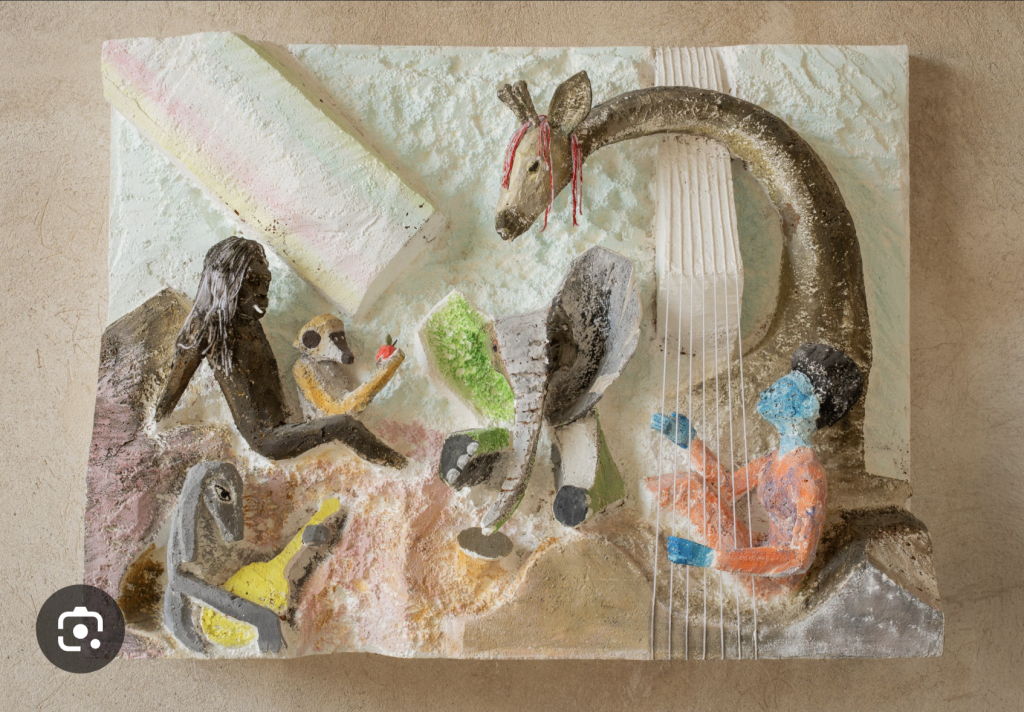
Lin May Saeed’s work inspired me to see animals as “beings in their own right”, rather than symbols of human emotion or extensions of human ownership. Her work made me realise that I do not have to make a pet that looks exactly like a photograph. Instead, I can give the animal an action, a position or a narrative setting, so the work can move from a single pet replica to a more meaningful animal scene.
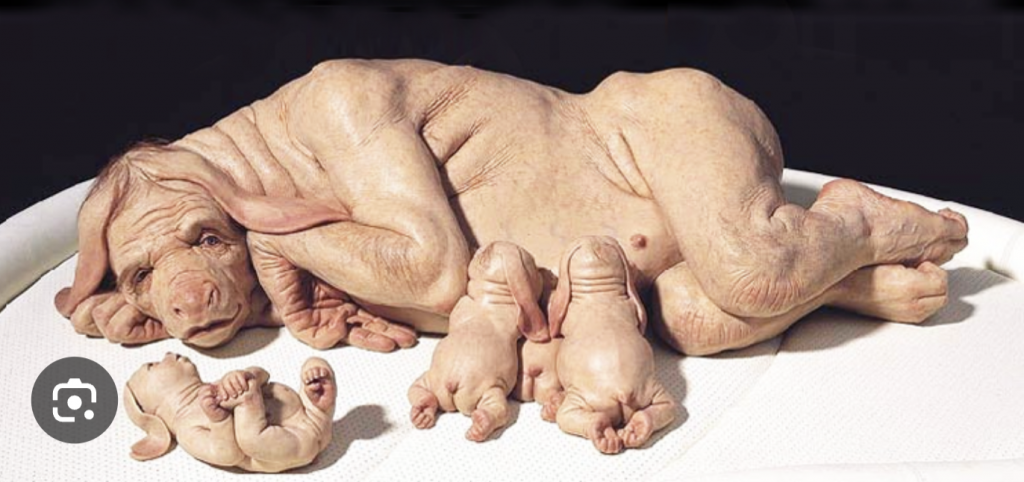
Patricia Piccinini made me think about whether imperfect, unfamiliar or vulnerable lives can create stronger empathy and care. For my project, this means I do not need to over-beautify stray animals. I can keep their thinness, alertness, scars and imperfections, because these are also part of their lived experience.
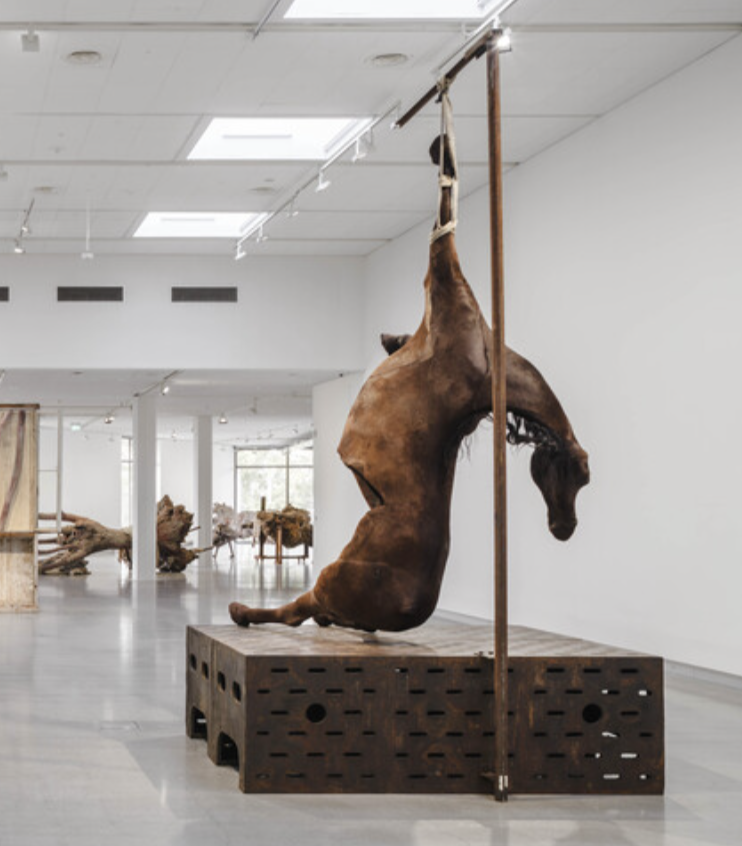
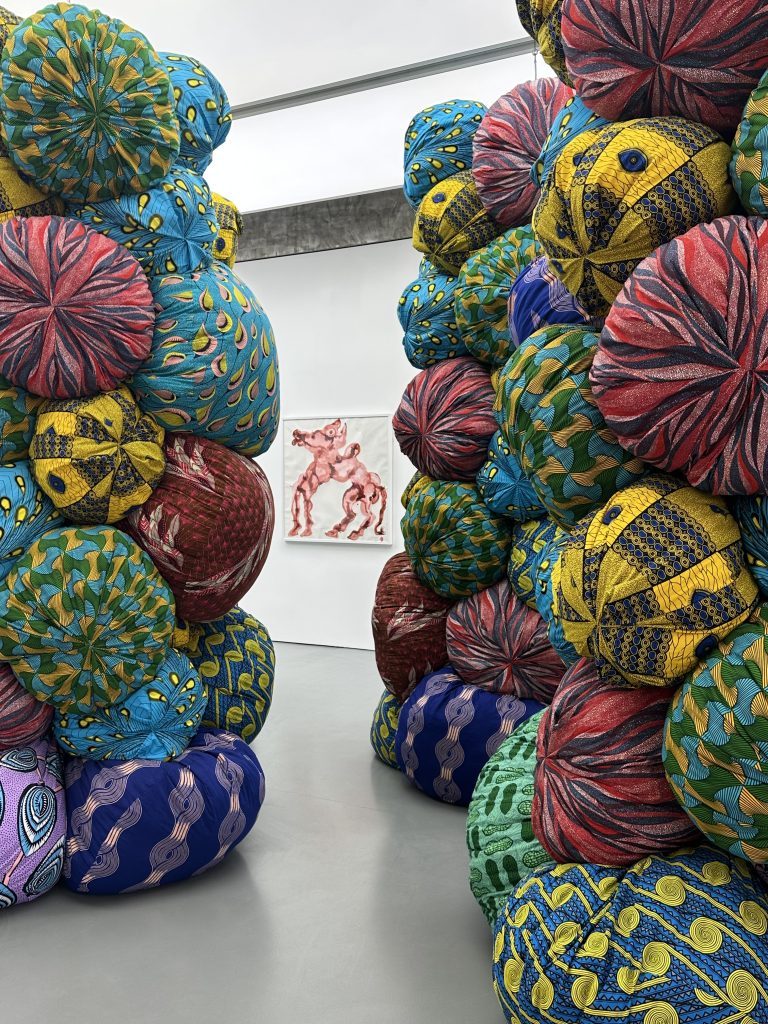
Berlinde De Bruyckere’s work helped me think about bodies, pain and traces. She often uses materials such as wax, animal skins, hair and textiles to create distorted, fragile forms that feel like bodily remains. Her work made me realise that memorial does not always mean revival or complete reconstruction. It can also mean acknowledging pain, preserving traces and proving that a life truly existed.
In terms of material, I need to reflect on my previous use of artificial fur. Although artificial fur avoids the animal ethics problem of real fur, it can still cause environmental harm and conflict with the sustainability values of my project. In the future, I hope to reduce synthetic materials and explore more suitable material choices.
Naturally collected animal hair is an important direction. It is not only more environmentally friendly, but also carries body, scent, memory and intimacy. Especially in pet memorial works, hair can become a real trace of an animal’s existence.
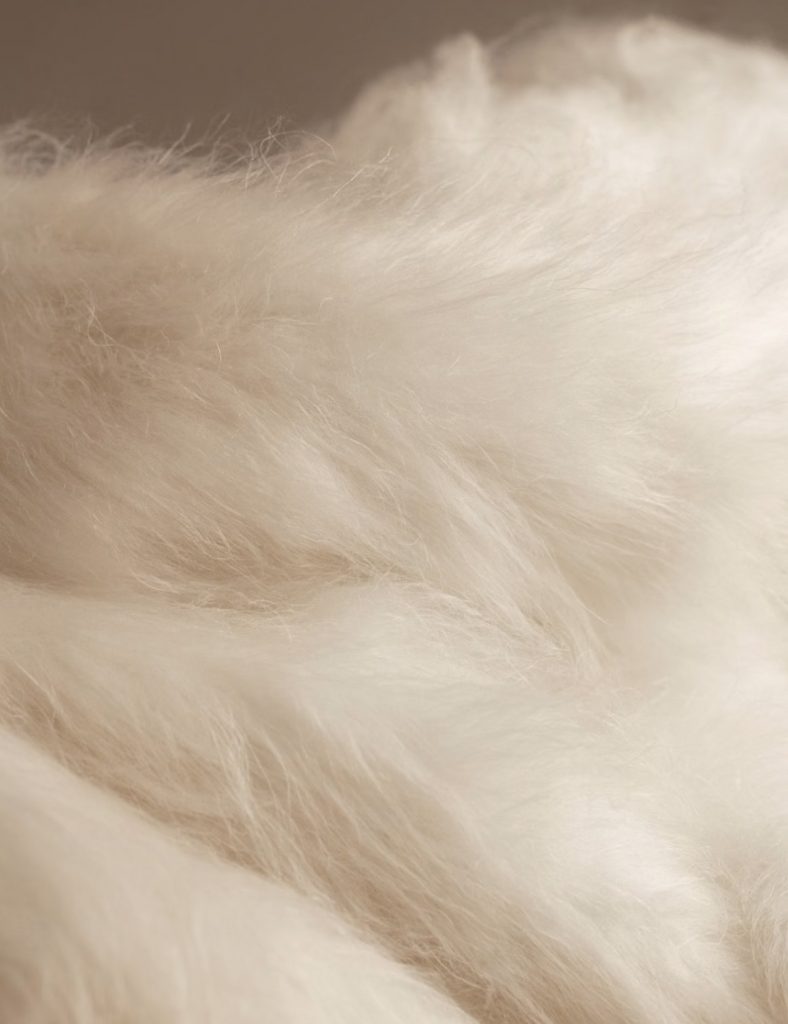
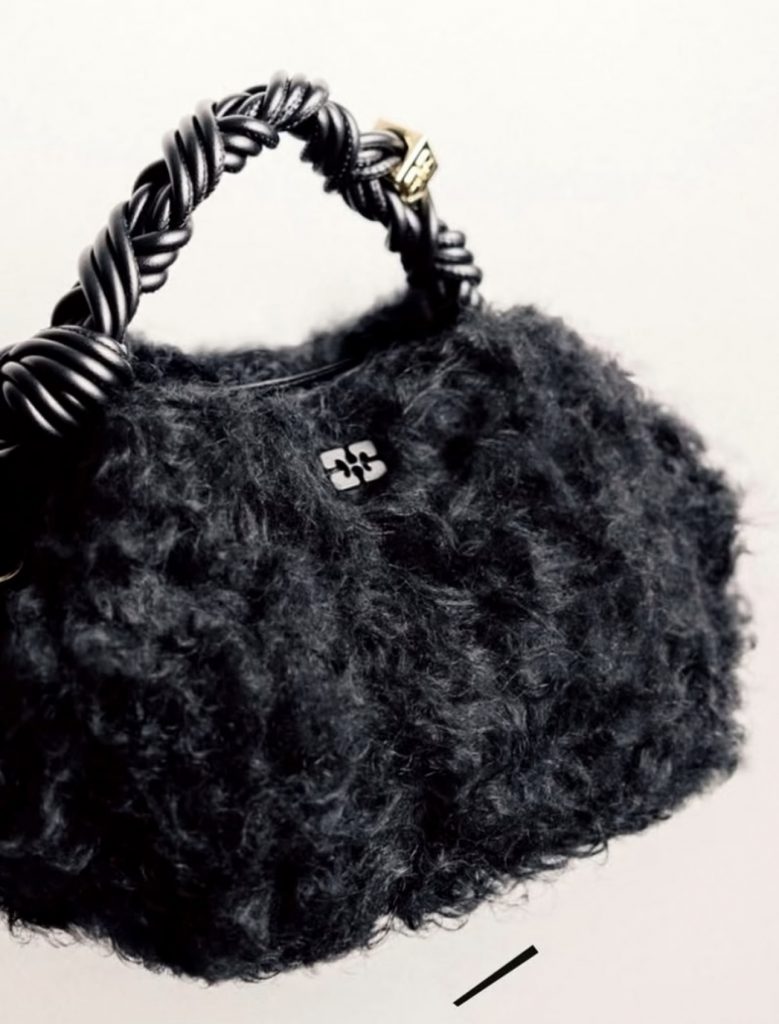
I also want to research plant-based leather, bamboo fibre, mango-based materials and other sustainable alternatives. Savian / BioFluff’s plant-based fur material has also inspired me. Made from natural fibres such as flax and agricultural waste, it aims to create a biodegradable fur alternative with a soft, luxurious texture and a lower carbon footprint. This showed me that sustainable materials do not have to feel rough or cheap. They can also be soft, intimate and close to luxury textiles.
In conclusion, this tutorial helped me see more clearly that my SIP should not remain a pet memorial product. It should develop into an art project about small lives, memory, material care and ethical practice. My aim is not only to make animals look alive, but to prove that they once lived fully and vividly.
I’ve realized that “sustainability” shouldn’t just exist in our work or the industry—it belongs in our personal life philosophy.
Life is not a machine for infinite output; it requires recovery, self-reflection, and regeneration. Sustainability is essentially the capacity to continue through time. The same applies to our future careers.
After graduation, many Fine Art students choose to stay true to their roots as freelance artists. It’s a free path, but the reality is that most depend on family support or part-time jobs in cafes just to keep creating. Right now, with my parents’ support, studying art feels like a joy.
But once I truly enter the real world and face the gap between my income and rent, those pressures will inevitably wear down my passion and persistence. Even stable jobs in curation or galleries often pay very little and offer zero freedom. I worry this kind of drain will eventually kill my desire for self-expression.
My love for Fine Art is undeniable. I excelled in physics and biology in high school, yet I chose art. I was originally preparing for a Master’s in Fine Art, but I’ve watched my peers—who love art as much as I do—leave the field for AI or even Geography.
I began to waver, too. But I didn’t waver because I lost my love for art; I wavered because I treasure my “artistic spirit” too much. I’ve realized that if my profession isn’t self-sustaining, my passion will simply become the fuel that burns me out. I refuse to let my enthusiasm and perception of the world be consumed by a daily struggle for survival.
This is why I am increasingly drawn to studying business for my Master’s. It might sound like the opposite of Fine Art, but to me, business is the vessel for art in the real world. Fine Art taught me how to perceive and express; Business will teach me how to establish rules and exchange value.
I am learning business to master a rational language that can protect my emotional ideals. Only by understanding how the system works can art stop depending on “family support” or “unpaid exploitation.”
To me, true success is when both your physical and spiritual needs are self-sufficient. Only then can artistic creation be truly free. That is what a sustainable life looks like.
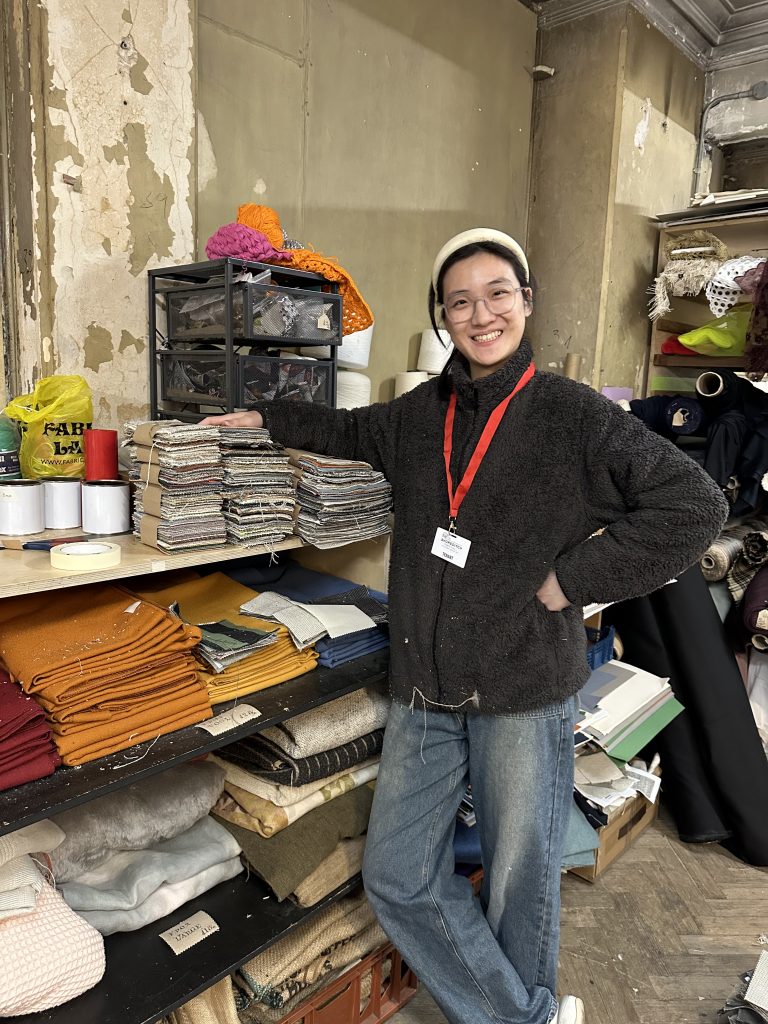
To be honest, after a month at Renée Materials, I am utterly exhausted.
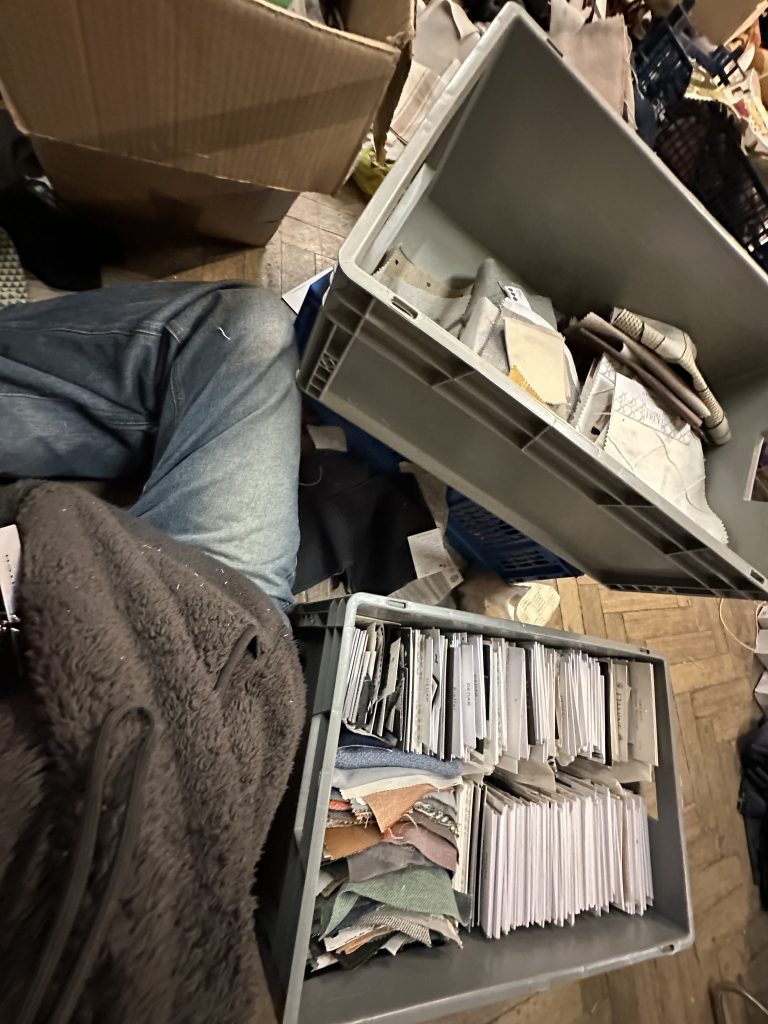
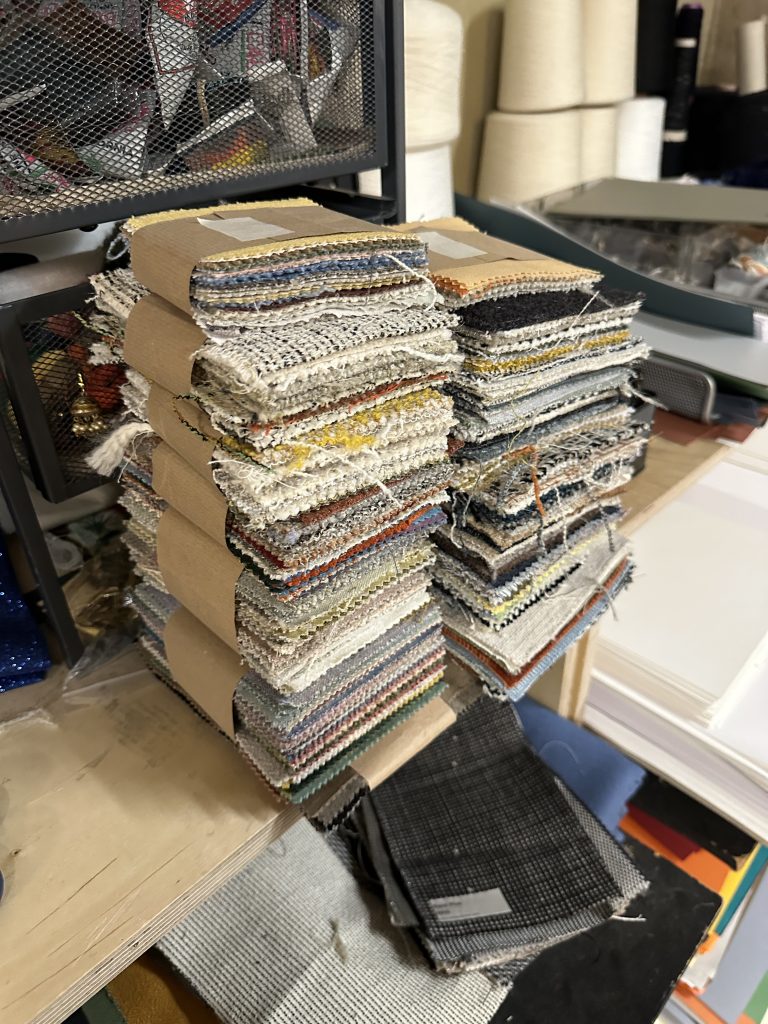
I’ve tried to find joy in the work: collaborating with Yijia, a fellow DPS student, makes the days less lonely, and I’ve always found a sense of achievement in organizing messy fabrics into neat sets. But these small sparks are being drowned out by a massive wave of burnout.
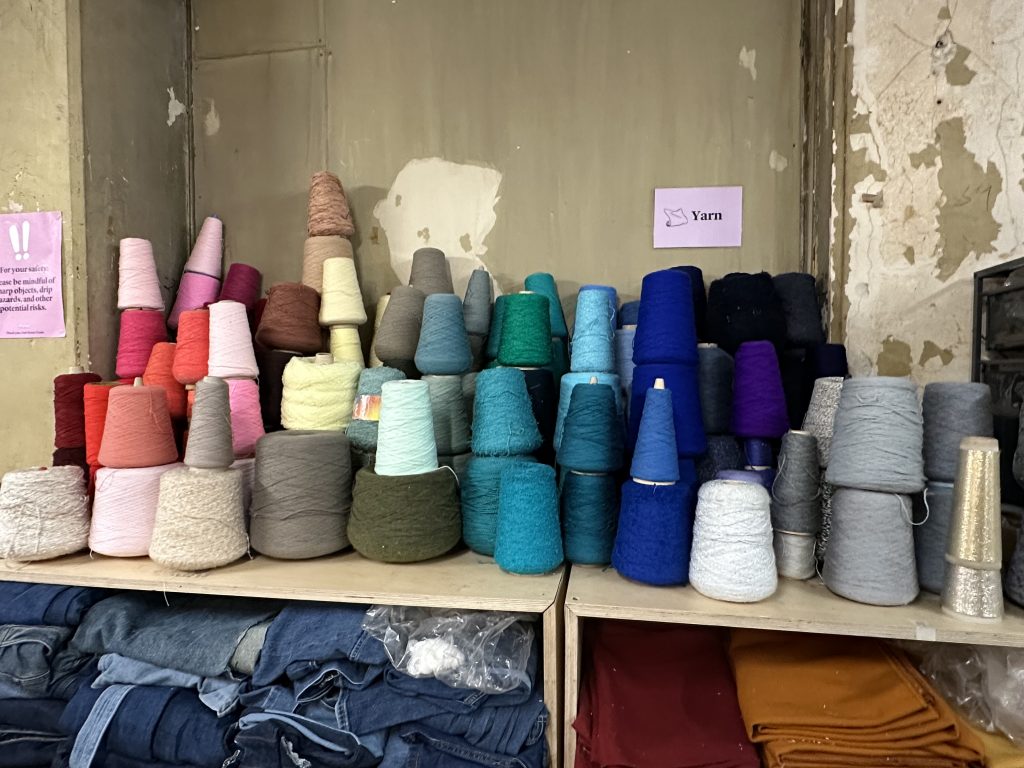
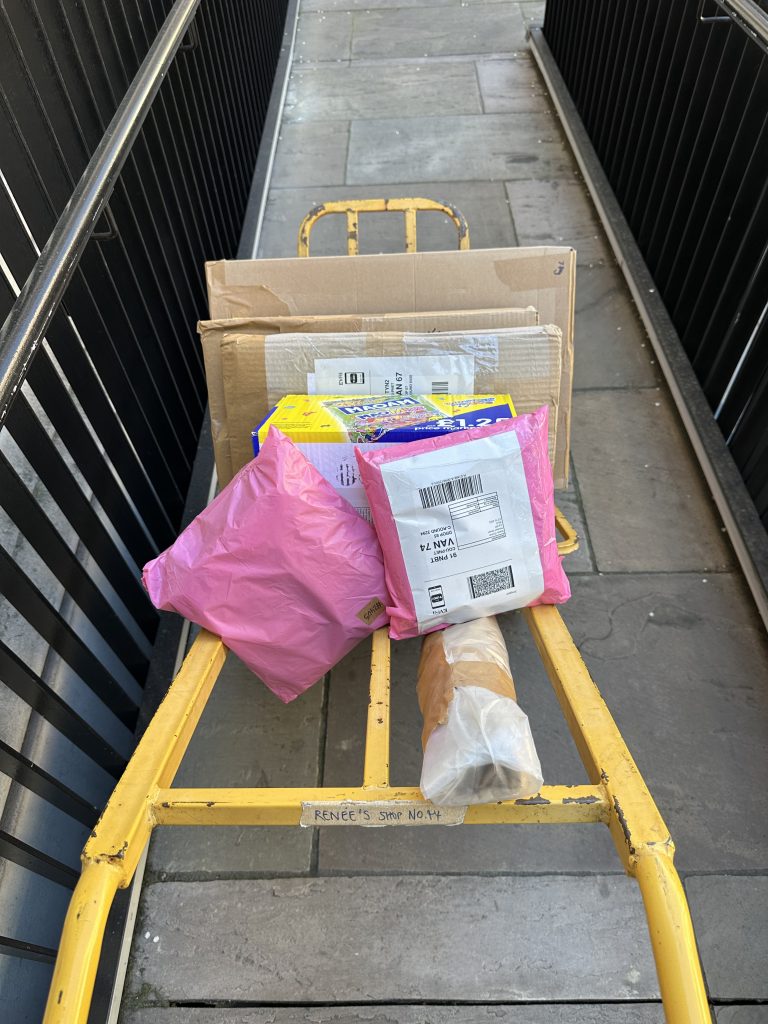
The offline work is high-intensity manual labor. I spend all day in the Hub standing and sorting heavy yarn, or dragging massive parcels to the post office.
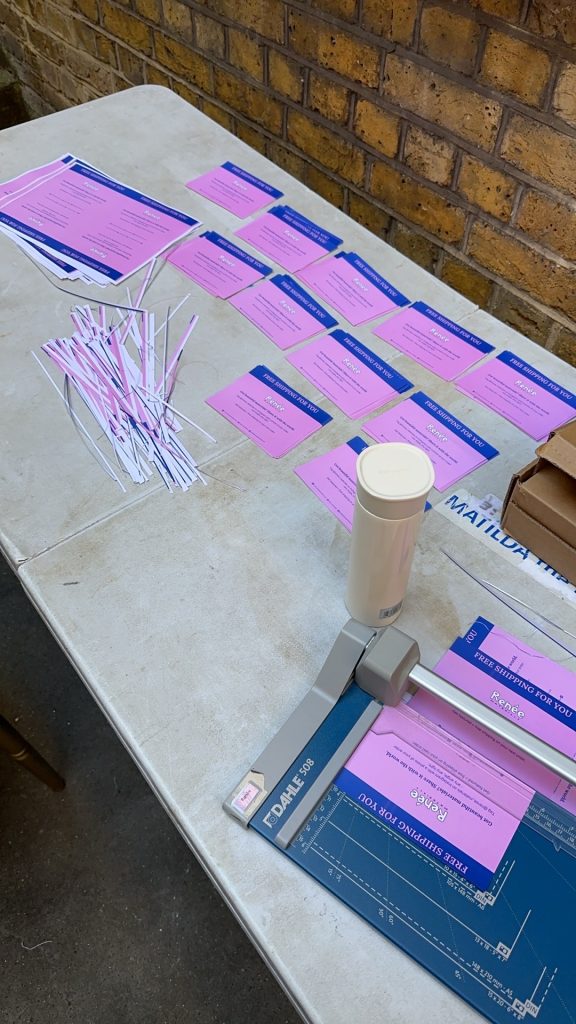
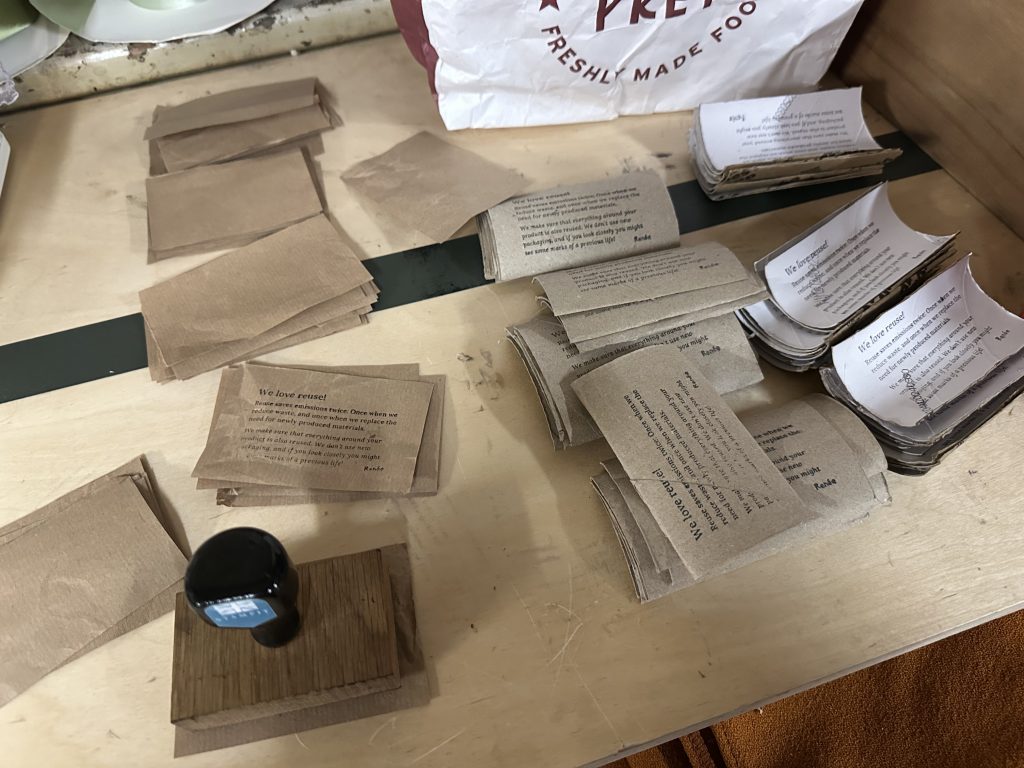
Beyond the physical strain, the repetitive tasks are numbing my brain. Whether it’s sitting outdoors for three hours cutting 200 small cards or spending seven hours adding image captions to the website, these tasks feel like they are draining my creativity dry.
We are asked to travel to distant events with no travel reimbursement. We have no breaks except for a one-hour lunch; as soon as one task ends, another is assigned immediately, as if we aren’t allowed to breathe. This is an unpaid internship. We are volunteers here because we identify with the mission of environmental protection, yet the management treats our labor as an entitlement and still implies we aren’t working hard enough.
I can’t help but compare this to my time at UCCA in Beijing. There, I worked eight hours a day, five days a week. was full of energy. This was because the supervisor there would actively notice my hard work; they would buy me coffee or take me out for meals. That heartfelt gratitude made me feel like a “human being” rather than an “asset.” At UCCA, I could rest or relax at any time, but it was precisely because of that trust that I became more proactive in wanting to take on more work.
I’ve realized that management is like a “Non-Newtonian Fluid”: the harder you squeeze and the more you micro-manage, the more resistance and stress you create. It makes the employees rigid and passive. But when you lead with trust and flexibility, the team flows smoothly and takes more initiative.
This experience, though exhausting, has taught me where to draw the line. I refuse to let my future career be defined by this kind of exploitation. True sustainability must start with respecting the human being.
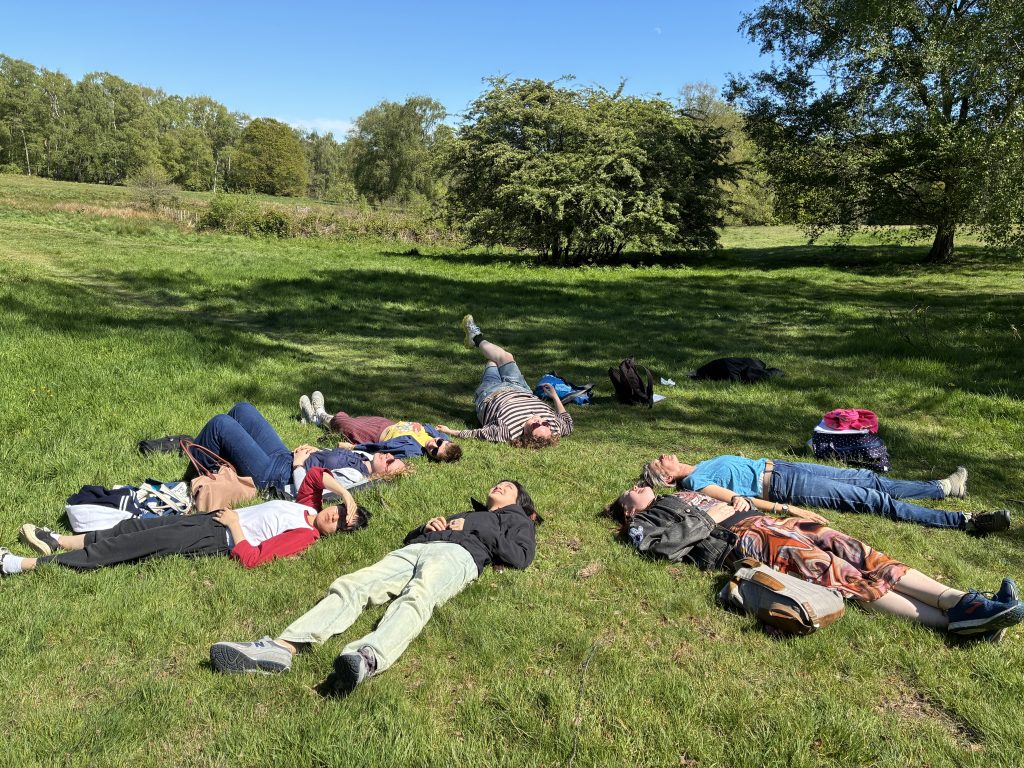
Yesterday, I joined a Deep Time Walk organized by the DPS team and spent a perfect day with a group of loooovely people. A Deep Time Walk is a 4.6km guided journey that brings Earth’s 4.6 billion-year history to life. Each meter you walk represents one million years of time. It is more than just a walk; it is an experiment for the head, heart, and body, allowing us to find our place within the wider living world through storytelling and reflection.
From Textbooks to Footsteps
I studied Environmental Science and Biology in high school, but walking the timeline felt completely different from reading a book. Every step represented hundreds of thousands, even millions of years. By lunchtime, with half the day already gone, we had only just reached the stage of the “Cambrian Explosion.” I felt a sense of urgency, knowing that dinosaurs, mammals, humans, agriculture, and the Industrial Revolution were still ahead, with only a few hours of walking left.
However, I had forgotten that the progression of time is not linear. Shortly after the rise of mammals, our tutor stopped and used her arm as a scale. In her less-than-one-meter arm span, humans appeared in the middle of her forearm, agriculture at her index finger, and the Industrial Revolution sat right at the very tip of her fingernail.
Rejecting Anthropocentrism
I was deeply shaken. Numbers in a textbook can never make you feel how tiny human history is compared to the Earth’s. We walked 4.6 kilometers, yet the entire history of human civilization covered less than 30 centimeters. This scale instantly shatters “anthropocentrism.” Humans are insignificant in the grand scale of ecology and history. What right do we have to think of ourselves as the masters of the Earth? This perspective gave me a more reverent understanding of “sustainability”: environmental protection is not about “saving the Earth”—it is about saving the fragile space that allows humans to exist.
The Barrier Between Idealism and Reality
We also discussed a very practical topic: the only reason we can sit here and discuss ecology and the future is that we are receiving a higher education. In the real world, so many people are struggling just to meet their basic needs for food and shelter. When a person cannot even guarantee their basic survival and freedom, they have no energy left to care about the environment.
This reminds me of a realization from my recent internship: there is a massive barrier between idealism and reality. Without financial support from parents, it is incredibly difficult to make a living by pursuing the ideals or causes we believe in. Concepts like sustainability and environmentalism are often a form of discourse that can only be held by those with a certain economic foundation.
An Unpredictable Future
Finally, I had a deep realization: the future is completely unpredictable. The bacterial ancestors at the dawn of the Earth could never have imagined that humans would appear billions of years later. Since the future has no fixed direction, all we can do is enjoy and cherish every present moment. We shouldn’t be overly anxious about a future that hasn’t happened yet, because while everything is unpredictable, it is also full of opportunity.
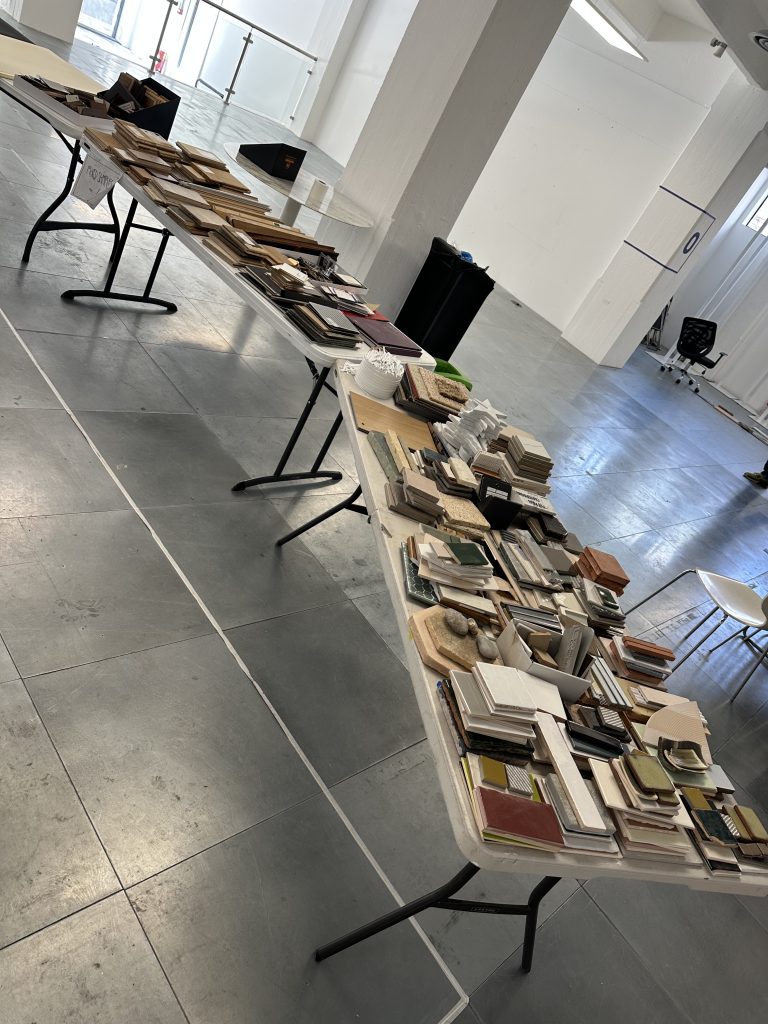
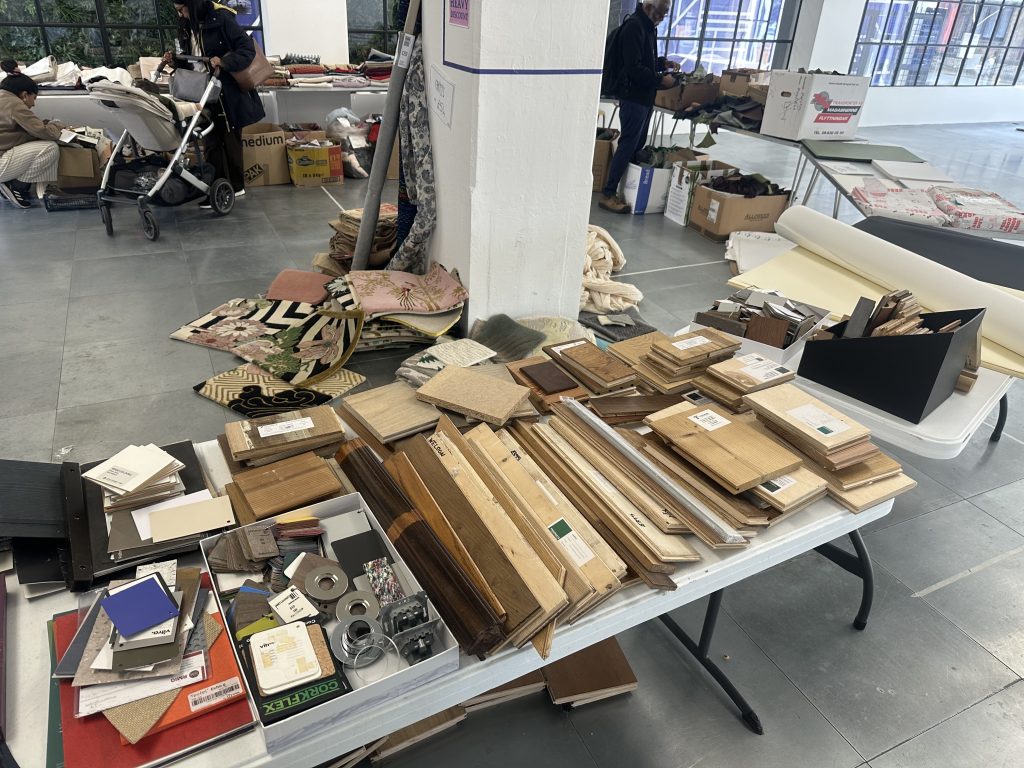
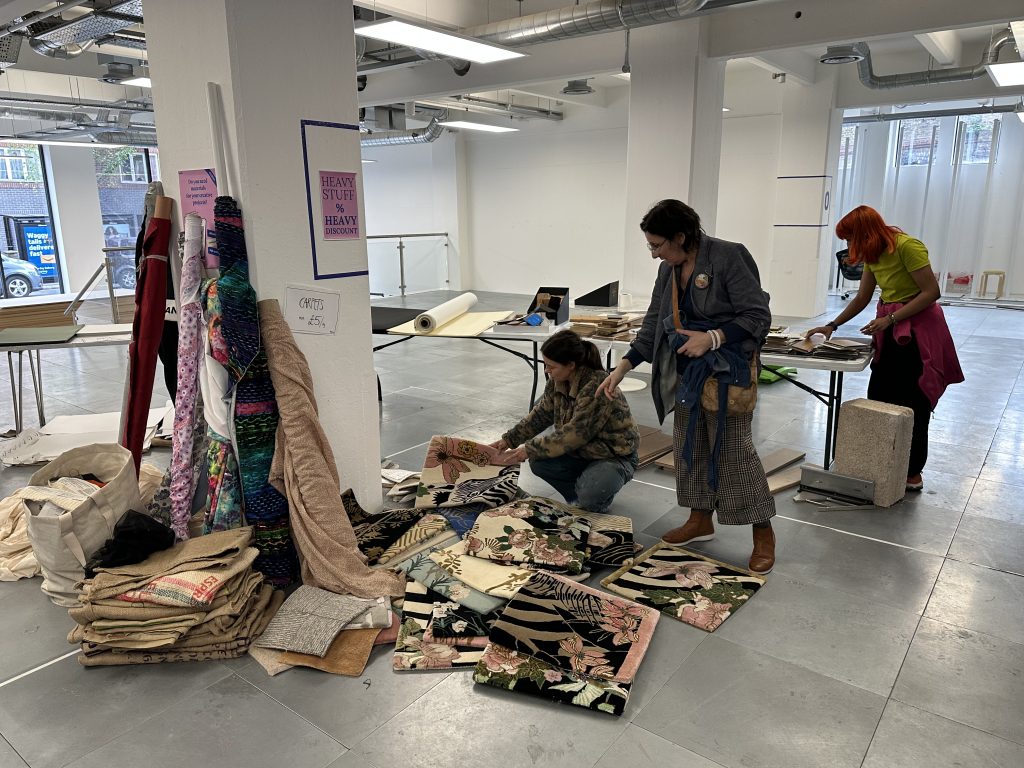
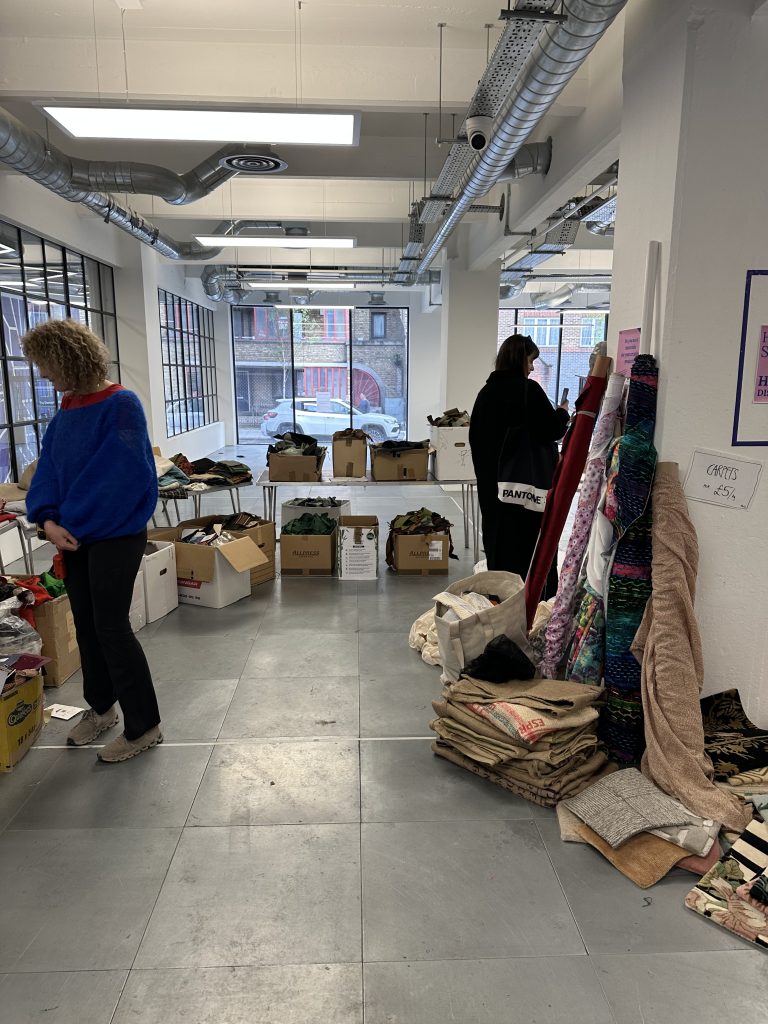
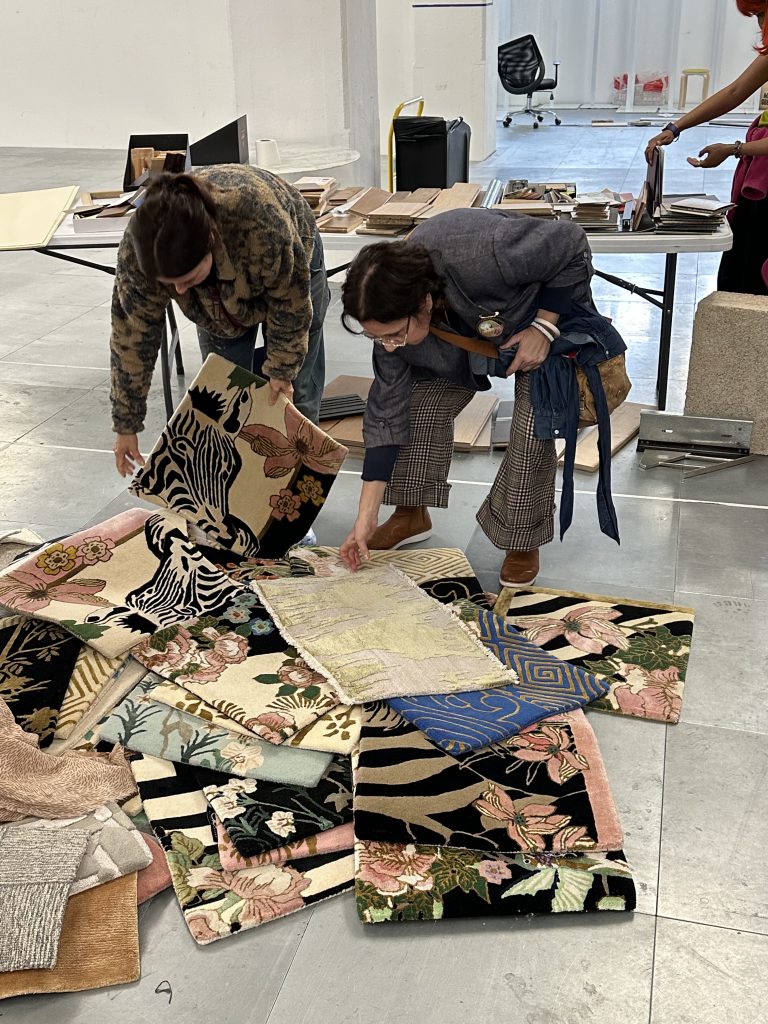
Today was Renée Materials’ monthly pop-up event, where we set up a stall in a studio to sell our materials. I went to help along with Yijia, a new intern who is also a fellow DPS student. It was really nice to meet new classmate through placement, it made me feel not alone anymore.
Today’s work was definitely a physical challenge; we had to haul a lot of heavy materials up from the basement and arrange them on the tables.
This was my first time interacting directly with customers. I helped them with shopping baskets and learned how to handle checkouts, issue invoices, and take photos for our Instagram promotion. Talking to different customers was very interesting. I got to learn about their projects and the stories behind them, and I could really feel their passion for handcrafting.
I love this sense of connection with society and strangers who share the same interests. This event made me more willing to chat with different people and helped me become more extroverted.
During my internship at UCCA, I noticed many unsustainable practices in how large art institutions operate. First, there is material waste. A project last September used a large amount of cowhide; I do not agree with this creative philosophy. Second is the waste of human labor. I once finished a set of over 40 visual materials, but because one word failed a review for “sensitivity,” I was ordered to redo everything. A single order from a superior wasted money, energy, and labor. In large systems, waste is the norm for the sake of process and reviews.
To find a team that shared my values, I joined Renée Materials in London. They successfully put high-quality materials back into use, reducing waste in the industry. However, I found a new problem: the mission is sustainable, but the business is not. Because the supply is unstable and hard to scale, there is a lot of repetitive labor like sorting, folding, and organizing. This work mostly relies on “unpaid labor”—interns like me. If a business must rely on free labor to function, it is not truly sustainable in its internal logic.
I used to think that repetitive, mechanical tasks were a waste of life and that only “creation” had meaning. But I have realized that every industry needs basic labor to function. The irony is that in a huge system, this labor is wasted for no reason; in a small, idealistic team, overwork and unpaid labor are justified by “passion.”
Many young people accept low or no pay just to get a “ticket” into the industry. This structure effectively excludes anyone without financial support. I have to ask myself: after graduation, without my parents’ help, how will I support myself? How can I achieve “personal sustainability” for my own life?
Even though schools emphasize social responsibility, the jobs that actually pay well and provide visa sponsorship are rarely found in these value-driven organizations. We know what is “right,” but we are often forced to do “wrong” just to survive.
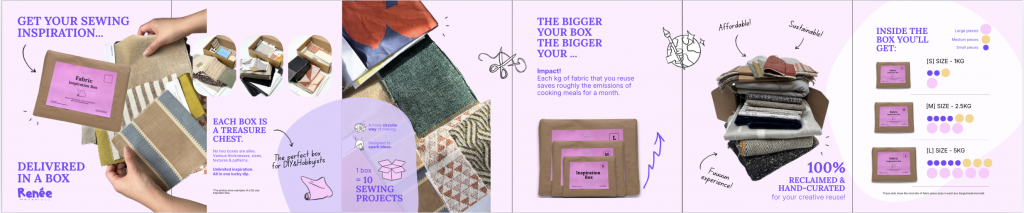
I successfully found a new internship in London at a company called Renée Materials. They focus on material reuse, turning idle resources into treasures for creators to build a circular economy. As an art student who cares deeply about sustainability and the environment, I truly believe in their mission.
Offline: Materials and Space
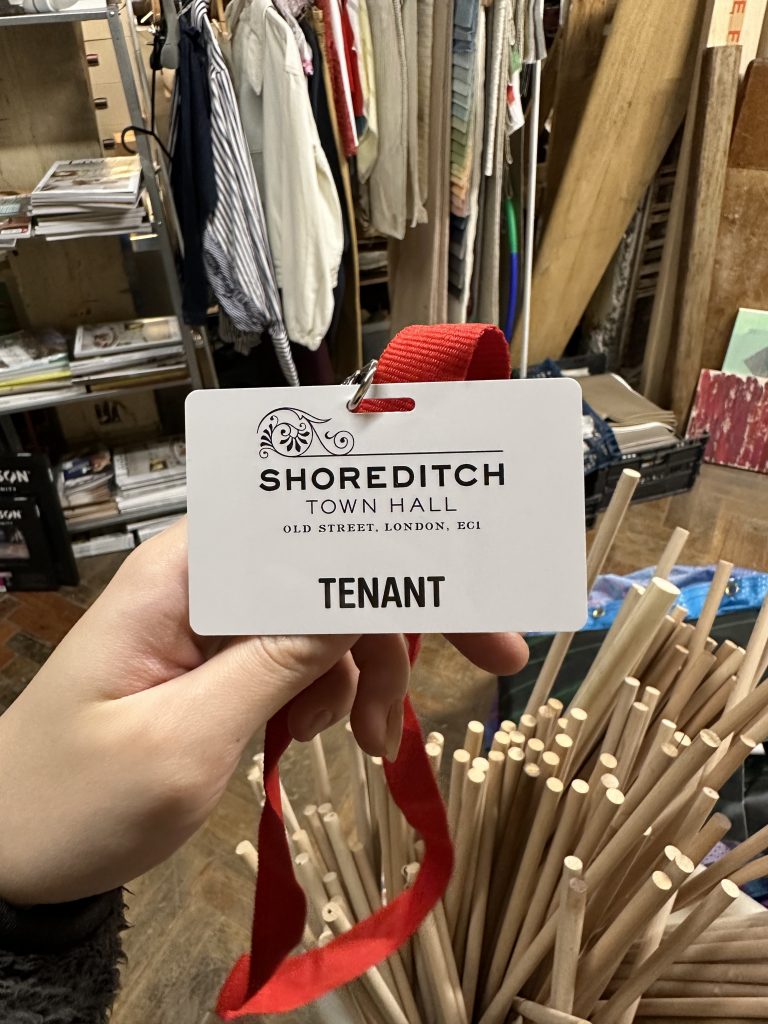
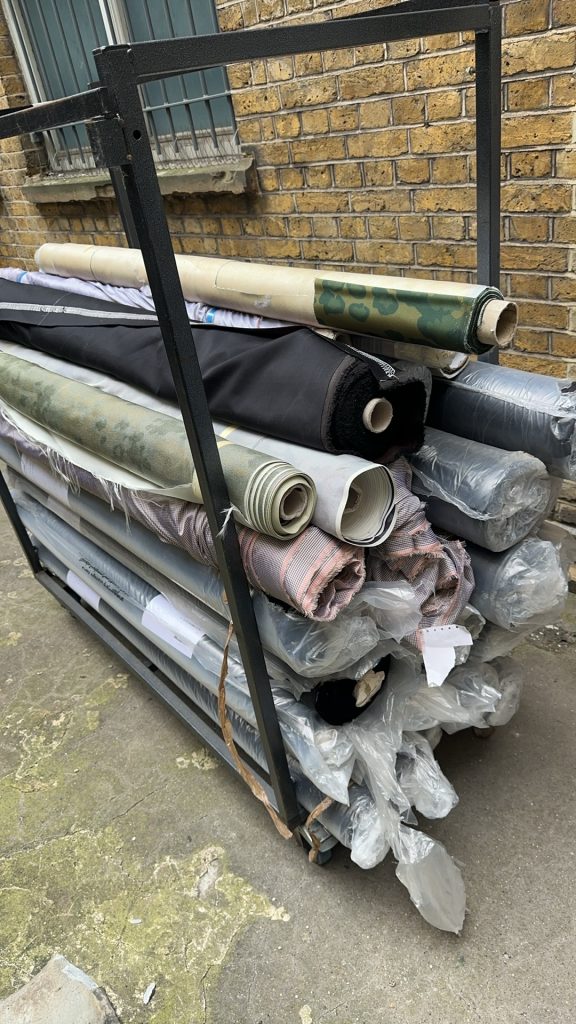
Every Tuesday, I work on-site at the company’s Hub. My tasks include packing, organizing the warehouse, and assisting customers.
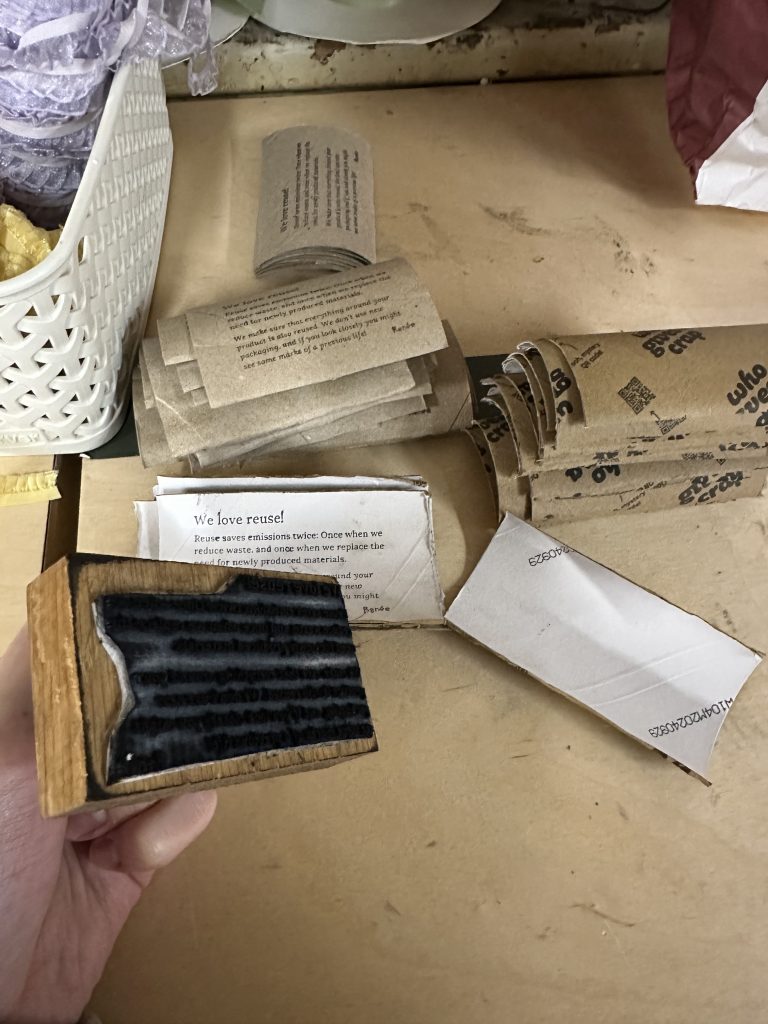
This I hand-make the company’s mission cards using recycled scraps for our shipments,
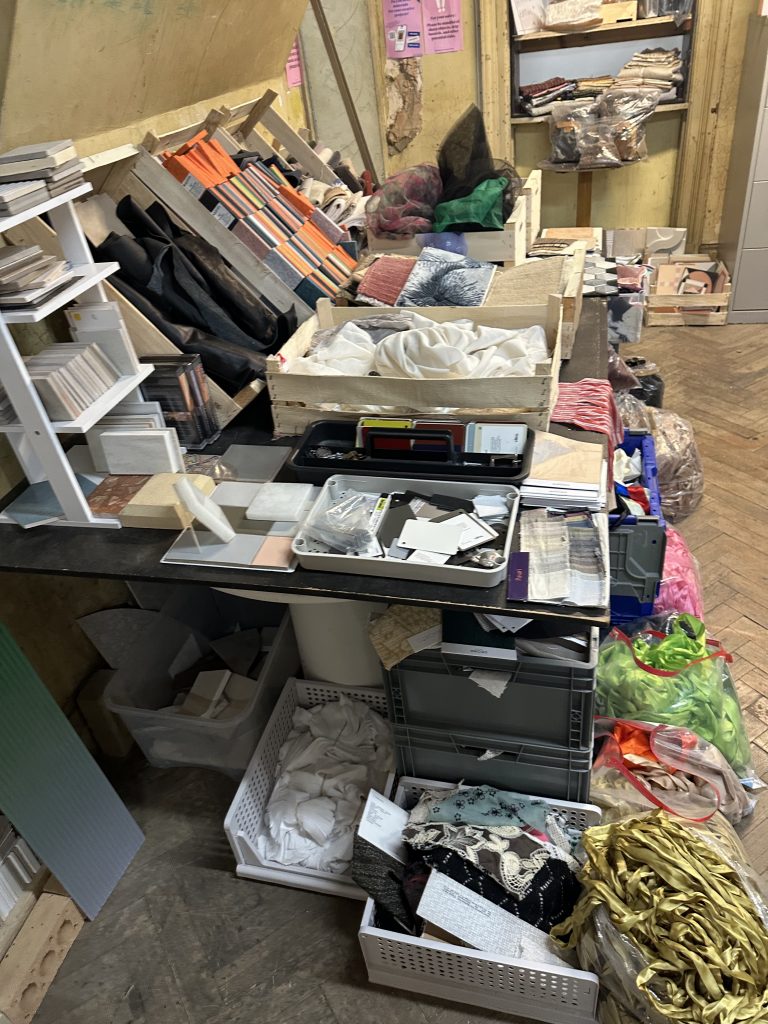
Here I categorize new materials as they arrive.
I love this work. First, touching and exploring such a wide variety of materials gives me endless inspiration for my own handcrafts. Second, I’ve realized that organizing a warehouse is a creative work. In this space, I am given the freedom to set the logical rules and decide how to display materials to customers. Every time I see a messy pile turn into an organized system under my logic, I feel a huge sense of achievement.
Online: Market Perspective and Operations
On Wednesdays and Thursdays, I work remotely on market research and promotion. My first task was to write a report on our official website, analyzing its strengths and weaknesses from multiple angles and offering suggestions for improvement.
This is my first time doing marketing, and the new perspective is exciting. It forces me to switch from a “creator” mindset to a “customer” mindset. During my time at UCCA, I learned the importance of looking at things from different roles. Now, I understand even more deeply that a company’s operations—not just its design or aesthetics—require a strong sense of empathy and “switching perspectives.”
Conclusion: Looking at Art from the Outside
These past two weeks have pushed me beyond the pure “art layer.” I am starting to observe the world through the lens of market and operations. I’ve realized that art should not just be an isolated form of self-expression. To truly find its place in the real world, art needs the support of clear business logic and a solid operational system.
Time flies. I have been interning at UCCA for six months now. This experience gave me so much: I taught myself 2D design, learned how the art industry and curation work, and developed strong research and critical thinking skills.
Although I loved my team and our projects, I realized I needed to leave my comfort zone. Growth is a series of goodbyes. I turned down the offer to renew my contract and decided to return to London for a new challenge.
finding job in London
Finding a job in London is not easy. During the Chinese New Year in February, I spent most of my holiday updating my CV and portfolio.
I first targeted famous galleries that fit my Fine Art background. I wrote tailored cover letters for each one. I also applied for research assistant roles at universities. Every day, I checked sites like Art Temps and Creative Opportunities. In just two weeks, I sent out over 40 applications, but I received very few replies.
The competition is intense. I am realizing that while I have good manual skills, aesthetics, and ideas, I lack “hard skills” like software proficiency and marketing experience. These are the things employers value most.
Rethinking Fine Art
This experience made me think about the nature of “Fine Art.” It isn’t just about technique or theory. It is an unquantifiable aesthetic, a way of seeing the world, and a personal attitude. These things aren’t really taught in school; they come from years of personal practice and exploration.
Because of this, I am considering a different subject for my Master’s degree—either a hard technology or a new field of knowledge.
Art is the spirit, but practical skills are the “outlet.” By learning something new, I want to find a better way for my art to exist in the world. I don’t want my work to just “float”; I want it to speak professionally and strategically in the real world. I believe this combination will create a “1+1 > 2” effect for my future.
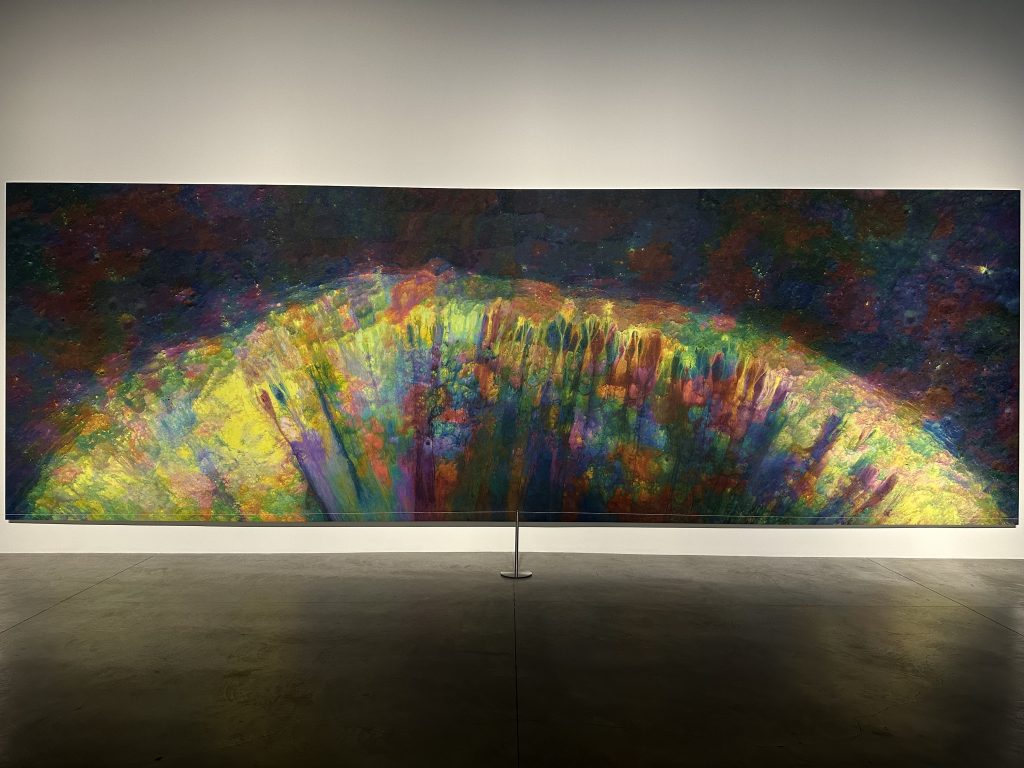
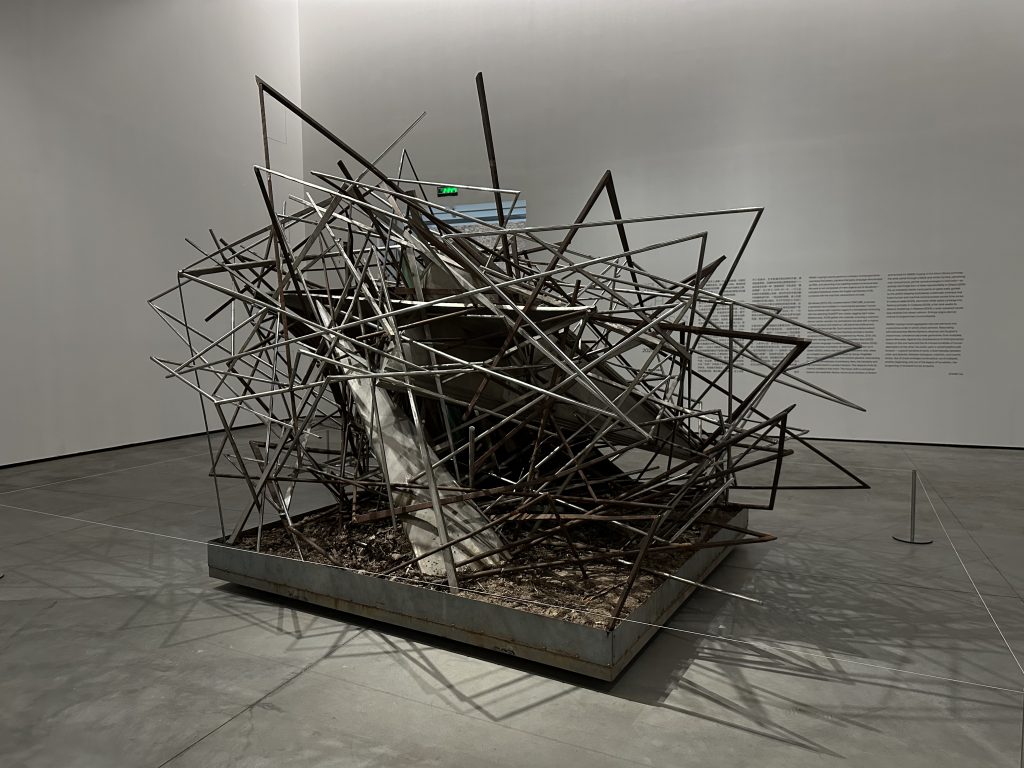
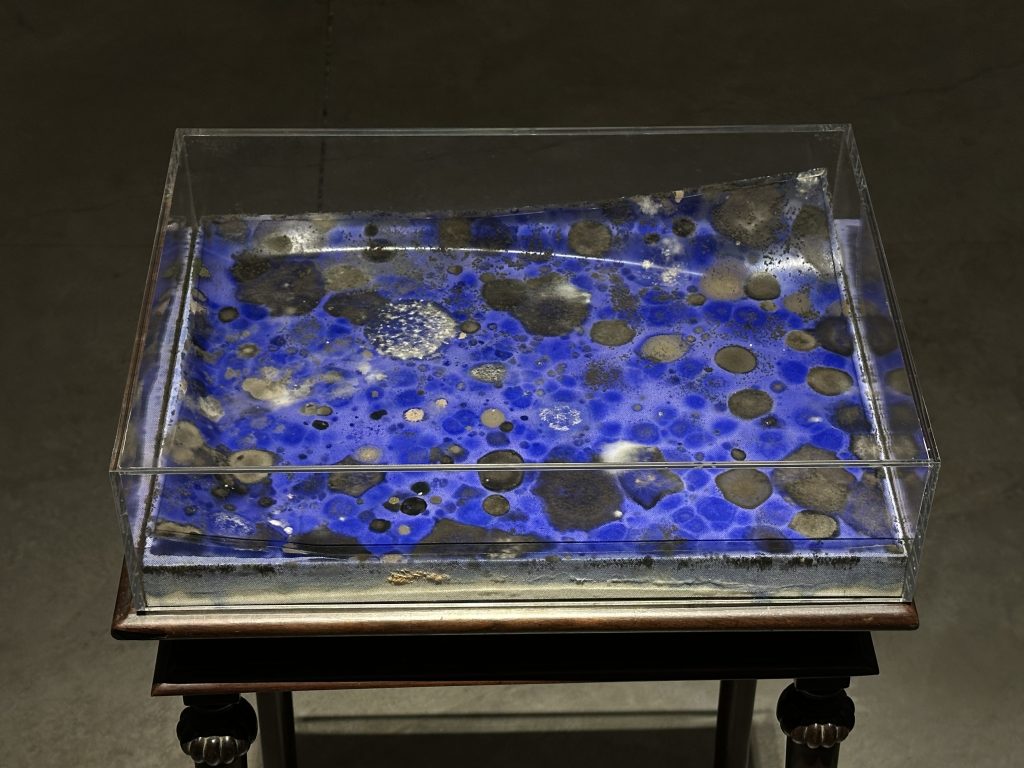
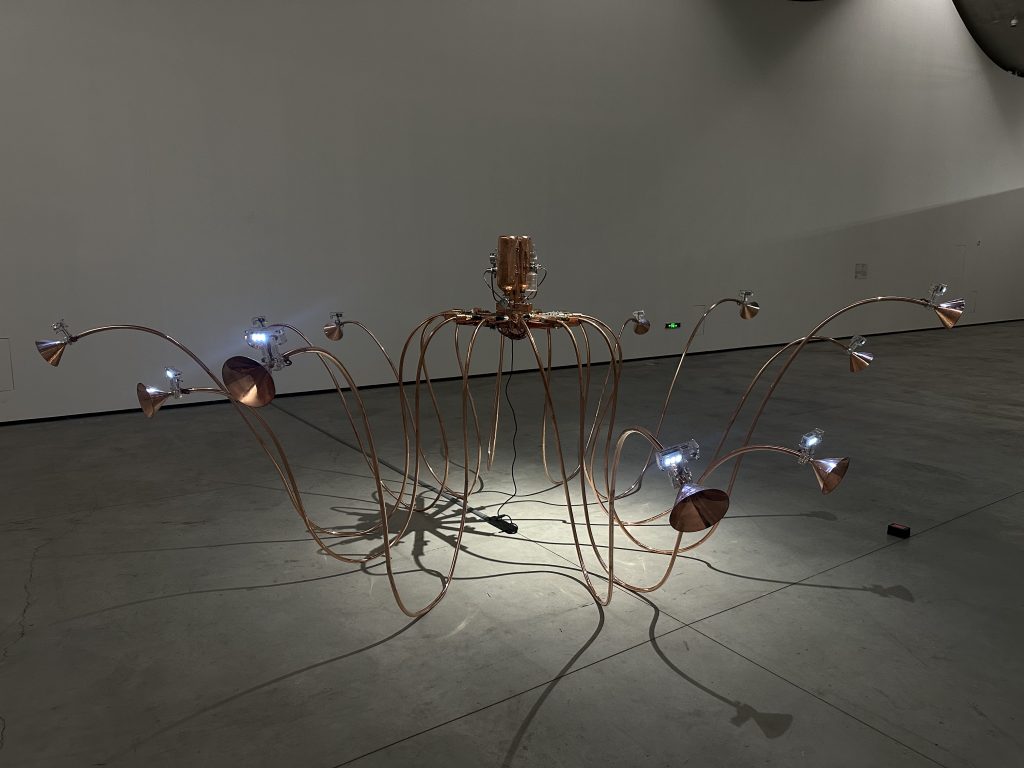
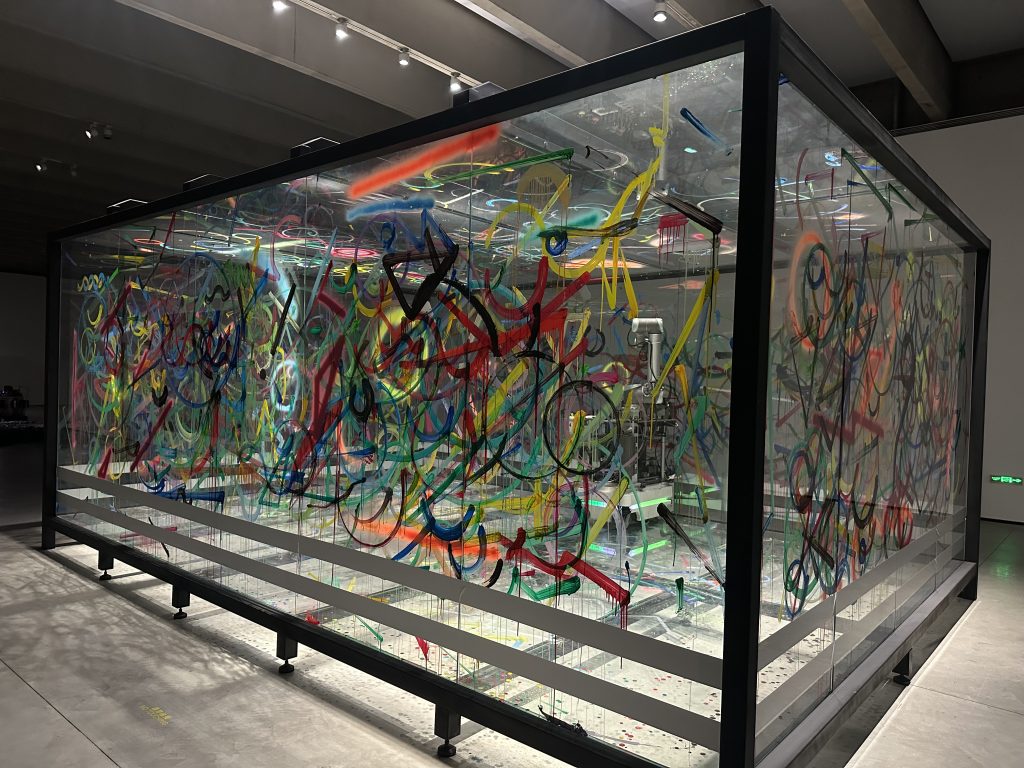
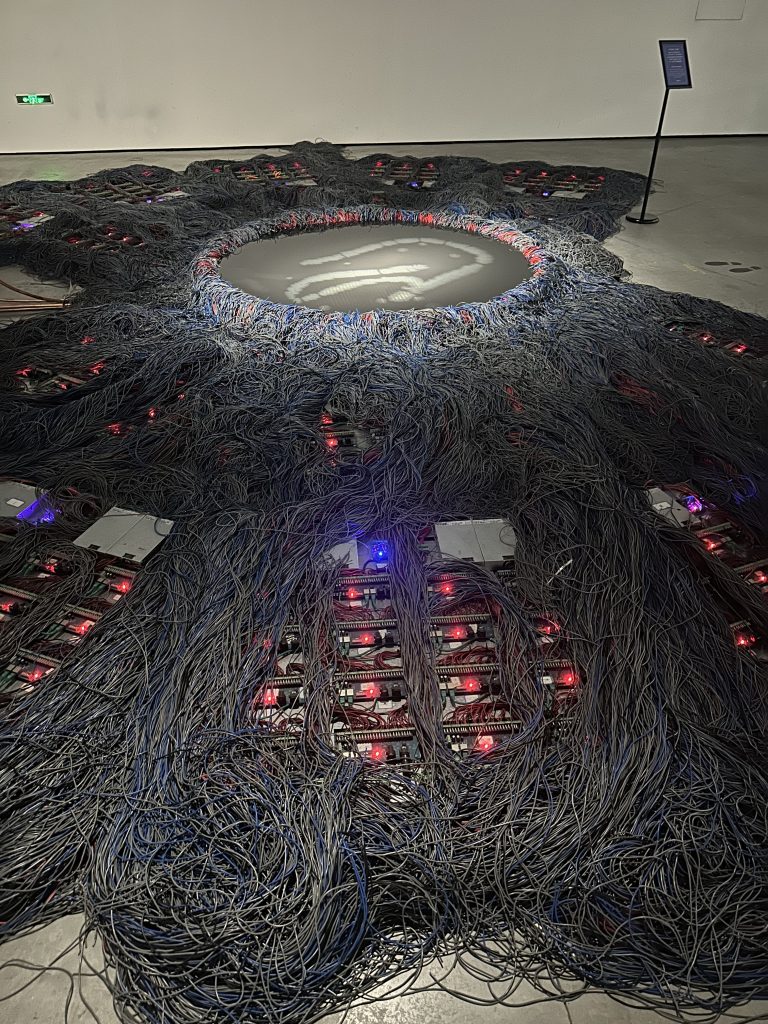
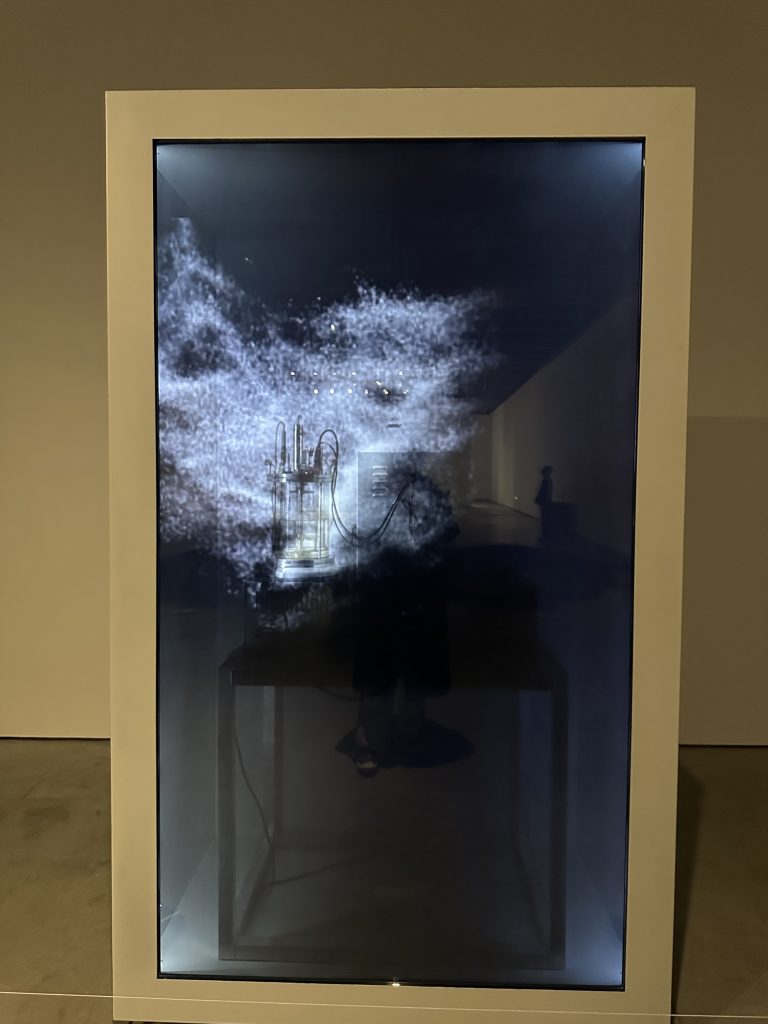
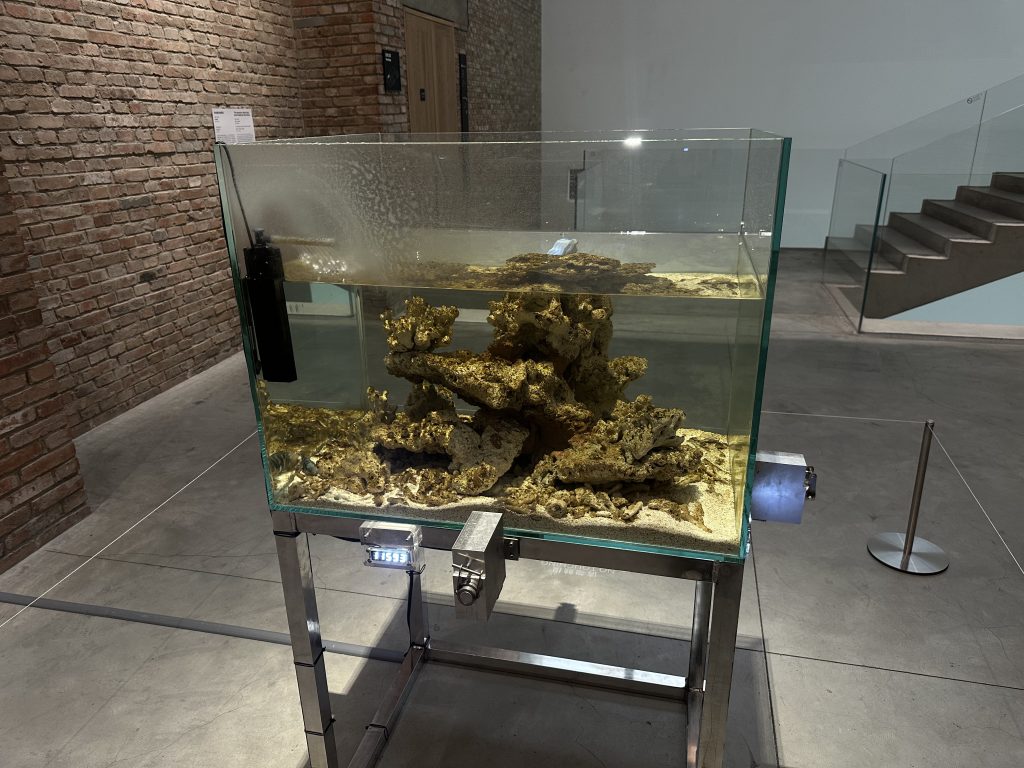
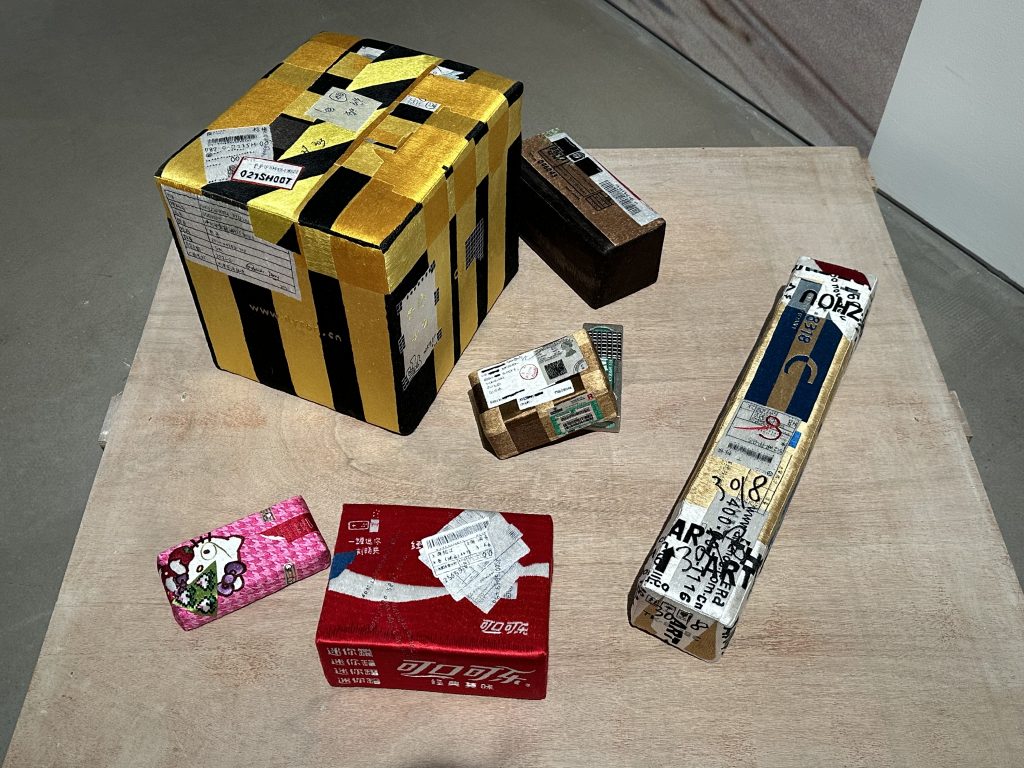
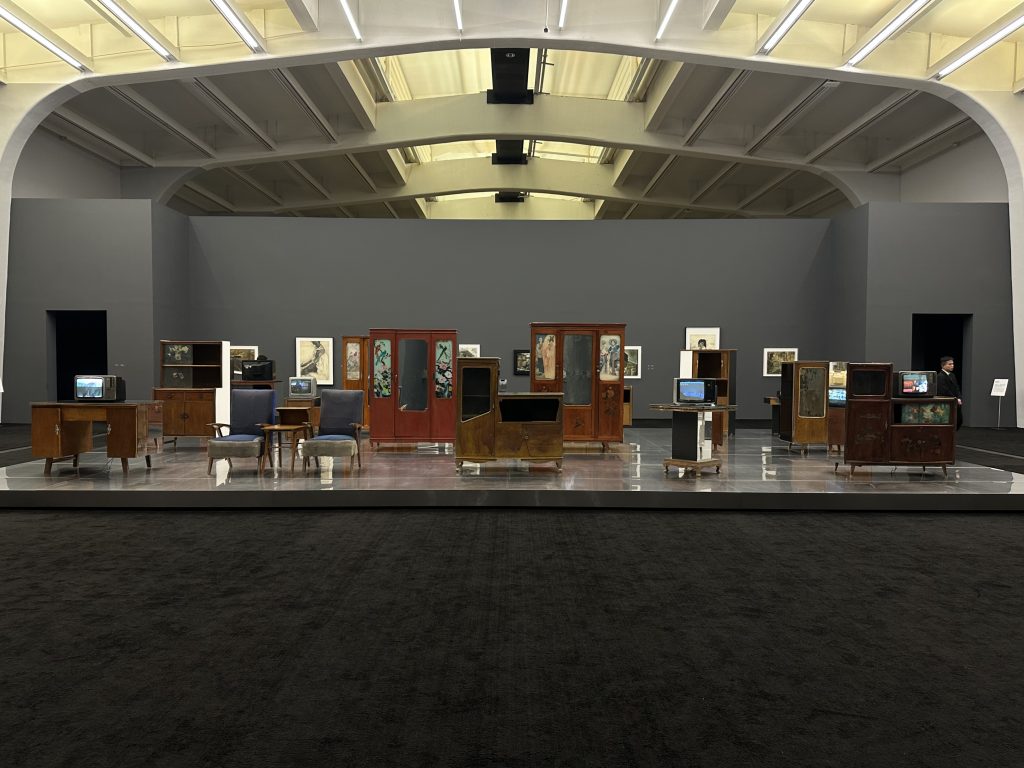
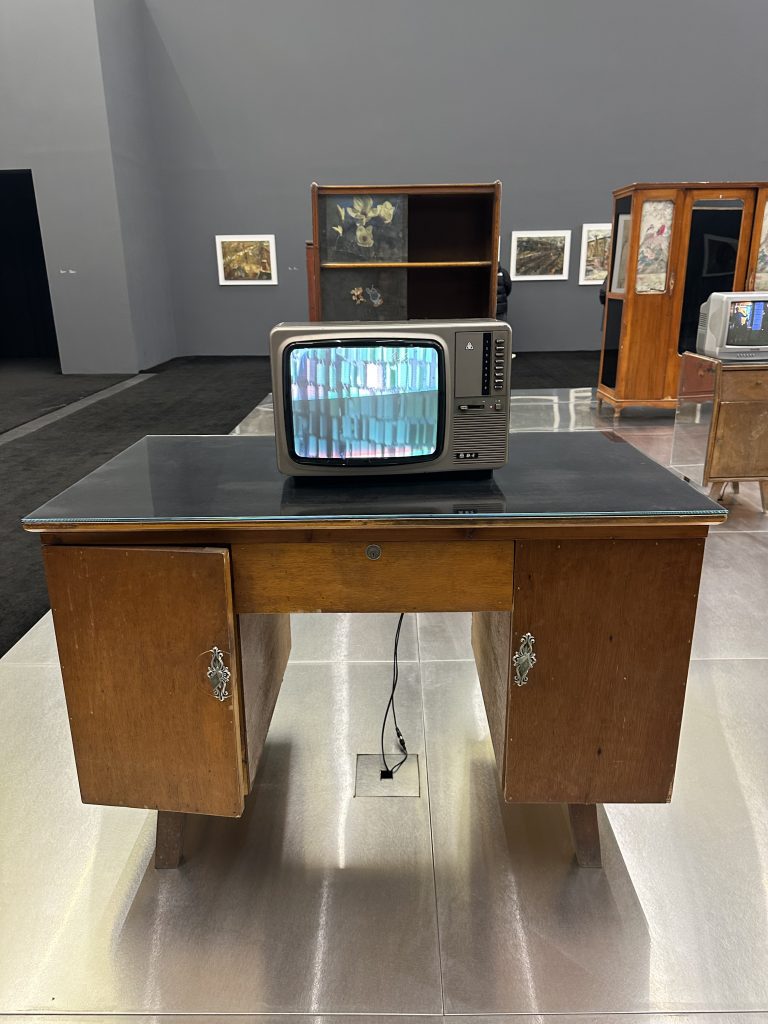
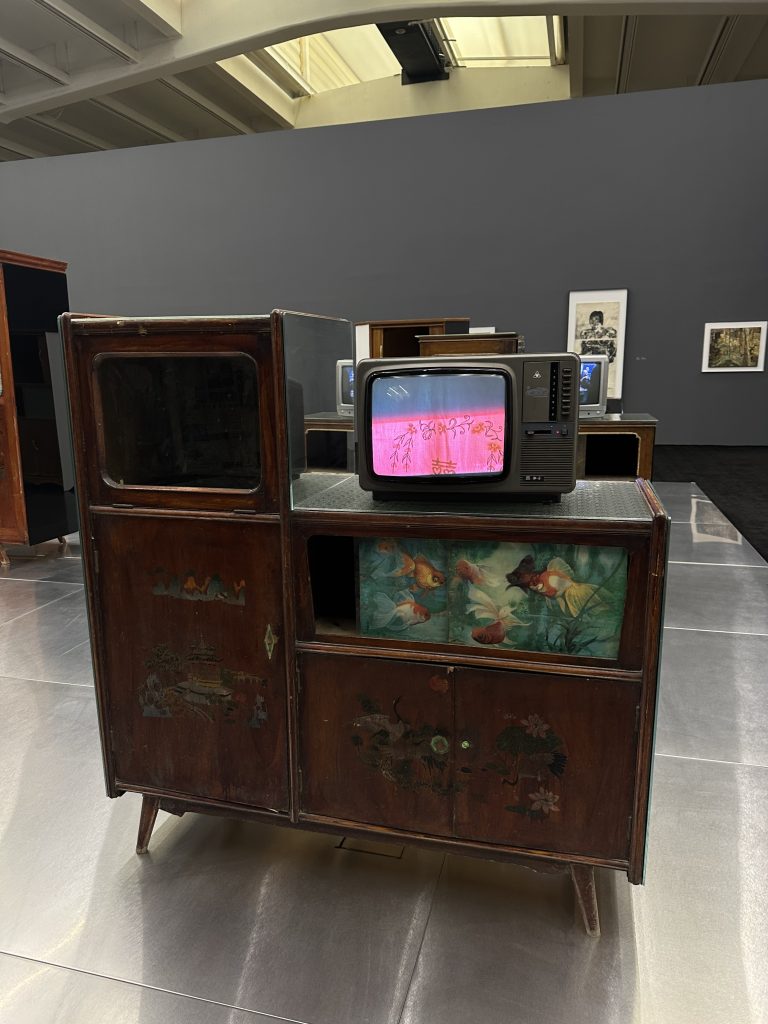
In this exhibition, cross-disciplinary installations driven by AI and programming break the boundaries between fields. The interaction between the audience and machines vividly shows the theme: technology, life, and the environment have merged into one and cannot be separated.
We are like fish in a tank—appearing to swim freely, but actually wrapped in an invisible shell of technology. From a sustainability perspective, when technology becomes our “second nature,” have we cut our real connection to the Earth? Is this prosperity based on algorithms a true evolution, or are we just borrowing from our original life force?
Spurs Gallery: The Viewfinder
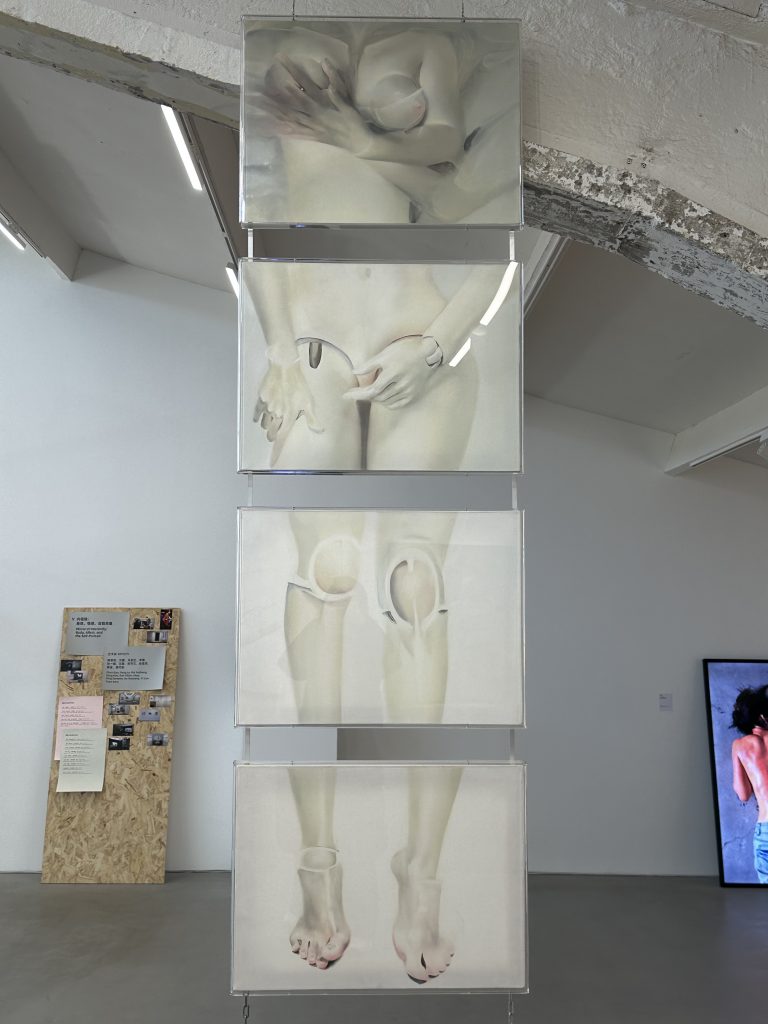
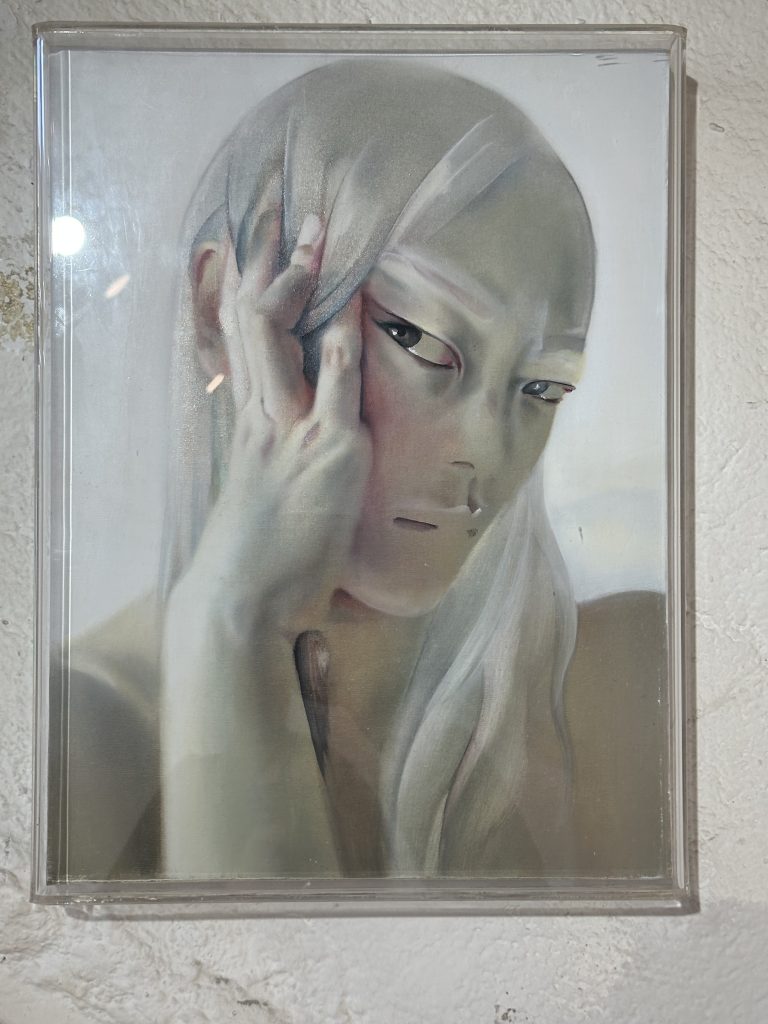
These two works feature delicate embroidery and cool, subtle, yet colorful paintings. I really like this fine craftsmanship.
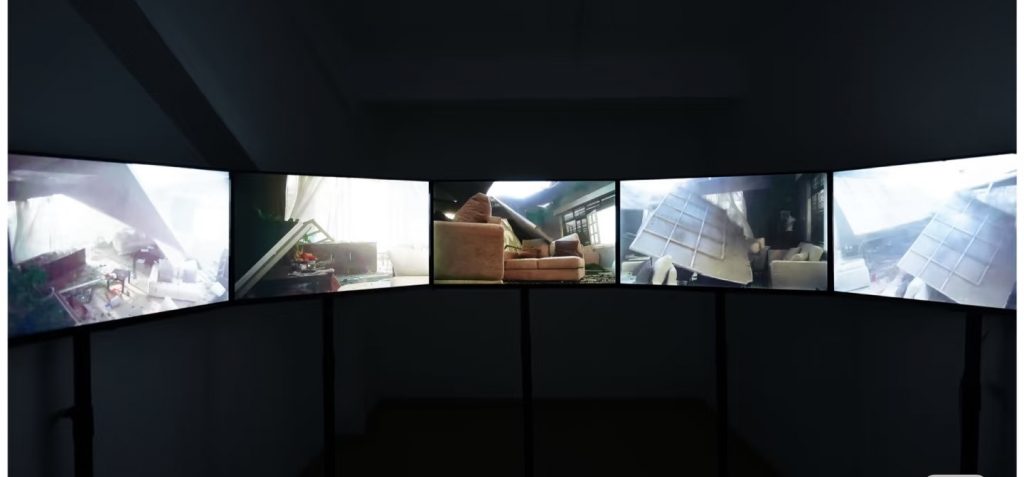
However, another video piece left a very deep impression on me. It used five camera angles to record a cozy wooden house collapsing in a storm. I watched the home break apart and a fish tank shatter. The goldfish struggled on the floor and died.
I did not like this work. Although I understand the artist might want to show “chaos” or “the cruelty of destruction,” I cannot agree with a creative method that involves intentional destruction or harming life. Sustainability in art should not just be about the materials used; it should be found in the ethics of creation. If artistic expression is built on real destruction, it goes against the core of sustainability: protecting life and respecting the environment.
Rethinking Sustainability
These experiences have given me a deeper understanding of “sustainability” beyond just art.
In Earth’s vast ecosystem, everything has its own internal cycle. Sustainability should not just be about recycling materials; it should be a conscious resistance against the “entropy of life.”
Whether in art or in life, if we overspend, hurt, or destroy irreplaceable spirits just for an image or a moment of pleasure, this “progress” will eventually lead to desolation. Sustainability is admitting our humility—admitting that we are not creators, but guardians of Earth’s complex system. We should not steal from the future or trample on small lives. Even after seeing the cruelty of the world, we should still choose a constructive and gentle way to coexist with all things.
My internship at UCCA is located in the 798 Art District, the most influential art community in Beijing and China. The area is filled with galleries, which updating many exhibitions in high quality. I realized that the value of an internship goes far beyond daily work; the surrounding art resources are a treasure that must be actively explored.
Therefore, since January, I have started a habit: using 30 minutes of my lunch break each day to visit one exhibition. These works have not only enriched my inspiration but also made me think about the boundaries of artistic creation.
UCCA: Yang Fudong, Fragrant River
Named after the artist’s hometown village, this exhibition is a reconstruction of nostalgia and collective memory. There is no set route or linear plot. Instead, the space is filled with old objects, vintage videos, and fragmented sounds.
The “maze-like” layout is brilliant because it gives the creative power back to the audience. Every stop and every change in perspective allows the viewer to complete the “montage” for the director. I left the hall in tears. The fragments I captured took me back to my own childhood—a time of freedom and light from over ten years ago.
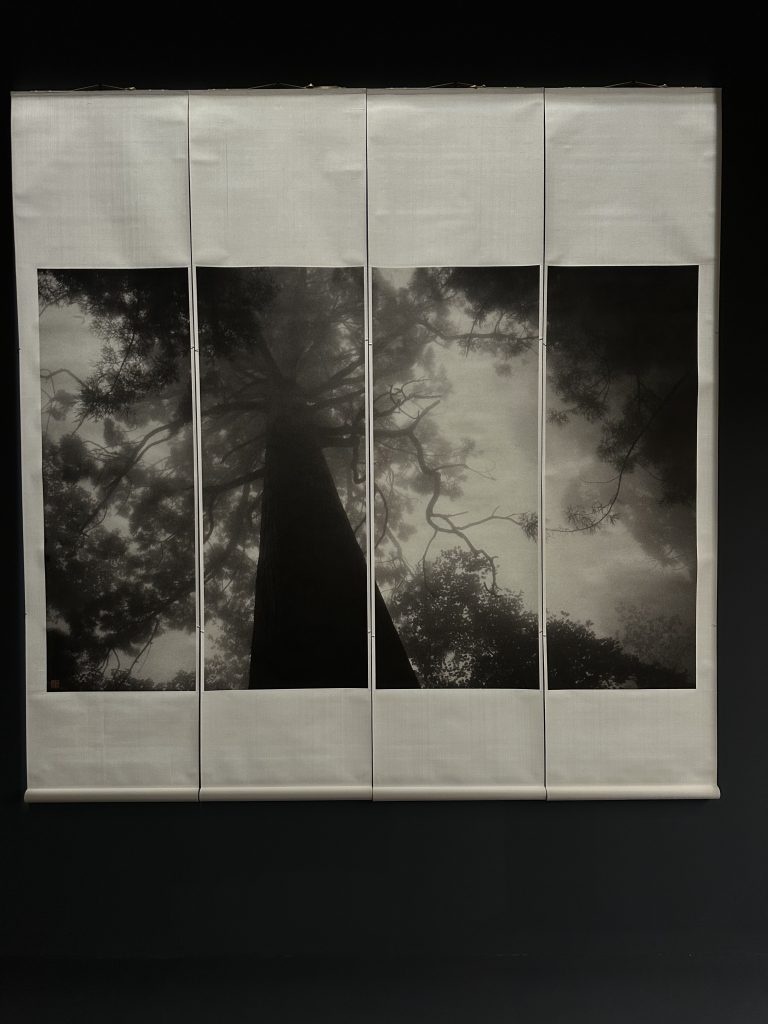
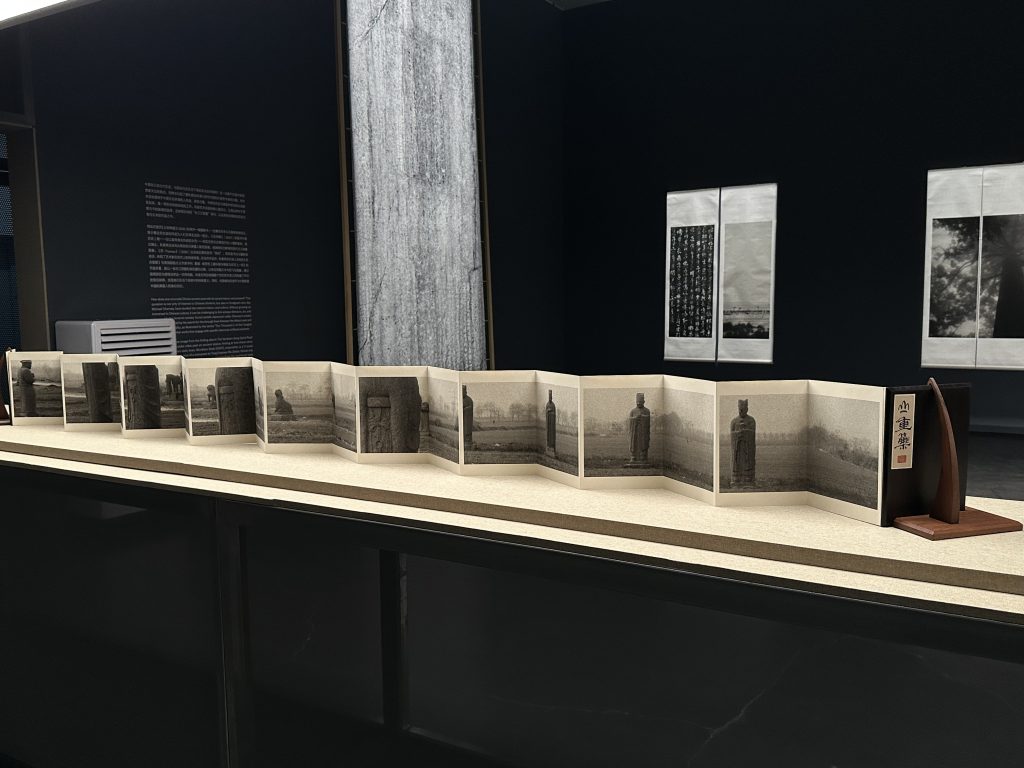
Michael Cherney: Middle Distance
American artist Michael Cherney offers a different perspective. He traveled across China’s mountains and cities, capturing them through photography but presenting them in the style of traditional Chinese ink wash painting.
The works look different from every angle, echoing the famous Chinese poem: “Viewed from the side a peak, from the front a range.” From one side, the images flow down like a powerful waterfall. I was deeply moved by how an expat artist could understand Chinese culture so thoroughly. As an international student studying art in a Western context, I often ask myself: How do I bring my own “mother tongue” into another culture? It’s not just about translation; it is about deep cultural transposition.
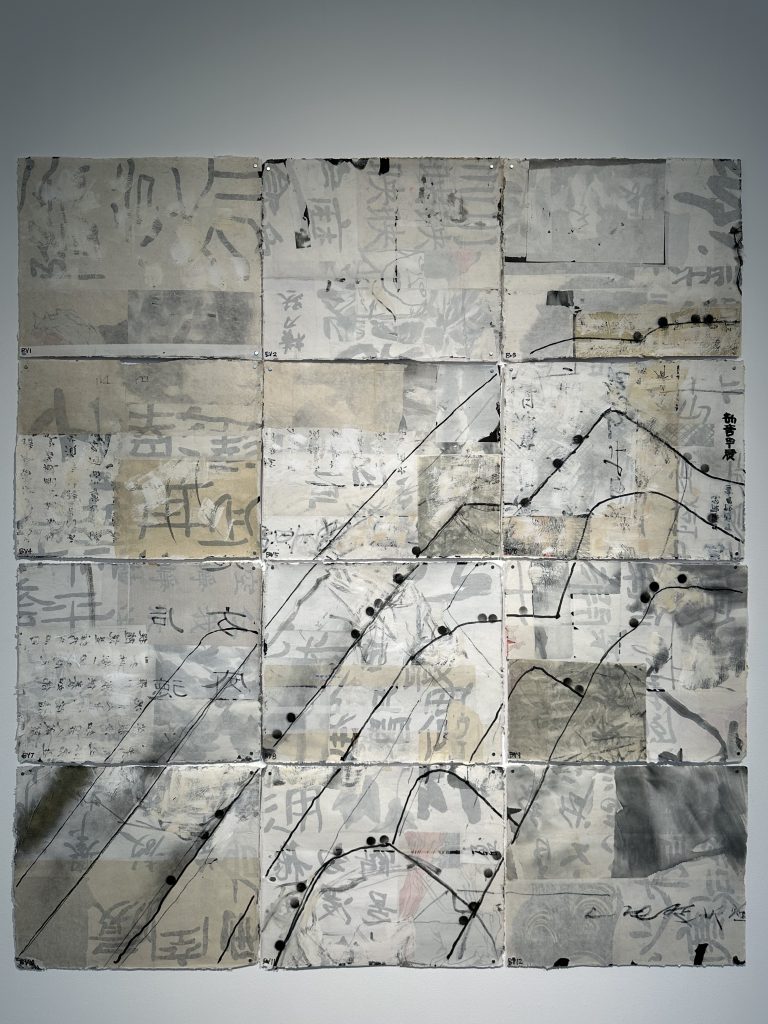
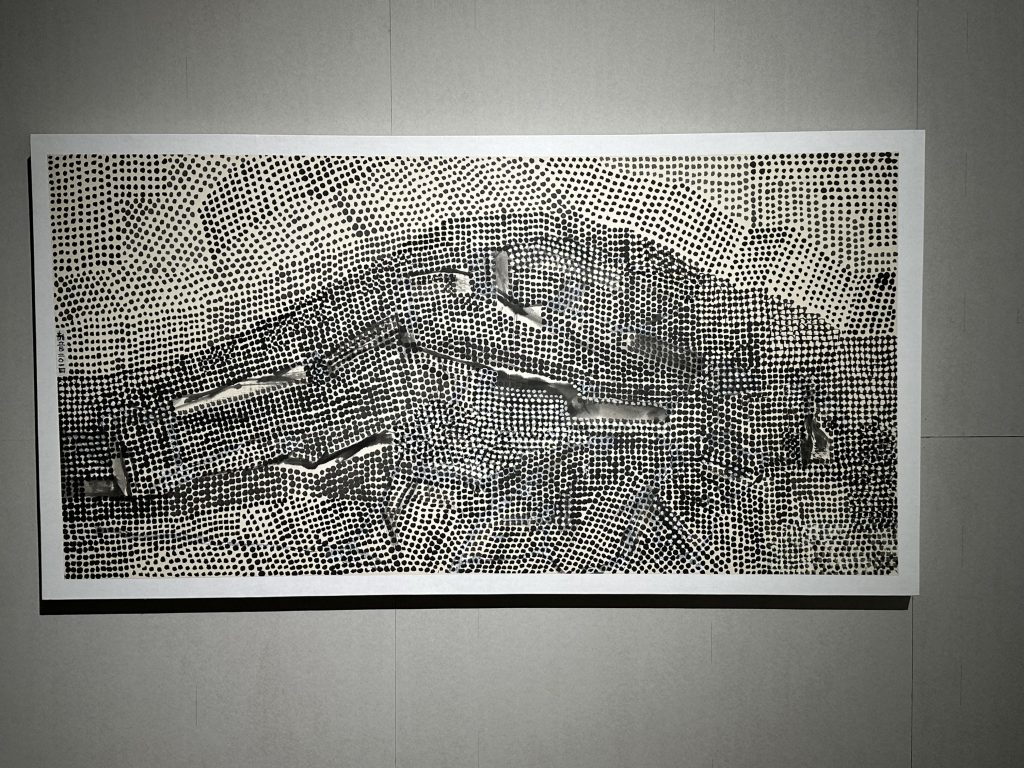
Asia Art Center: Wang Jieyin, Accretions
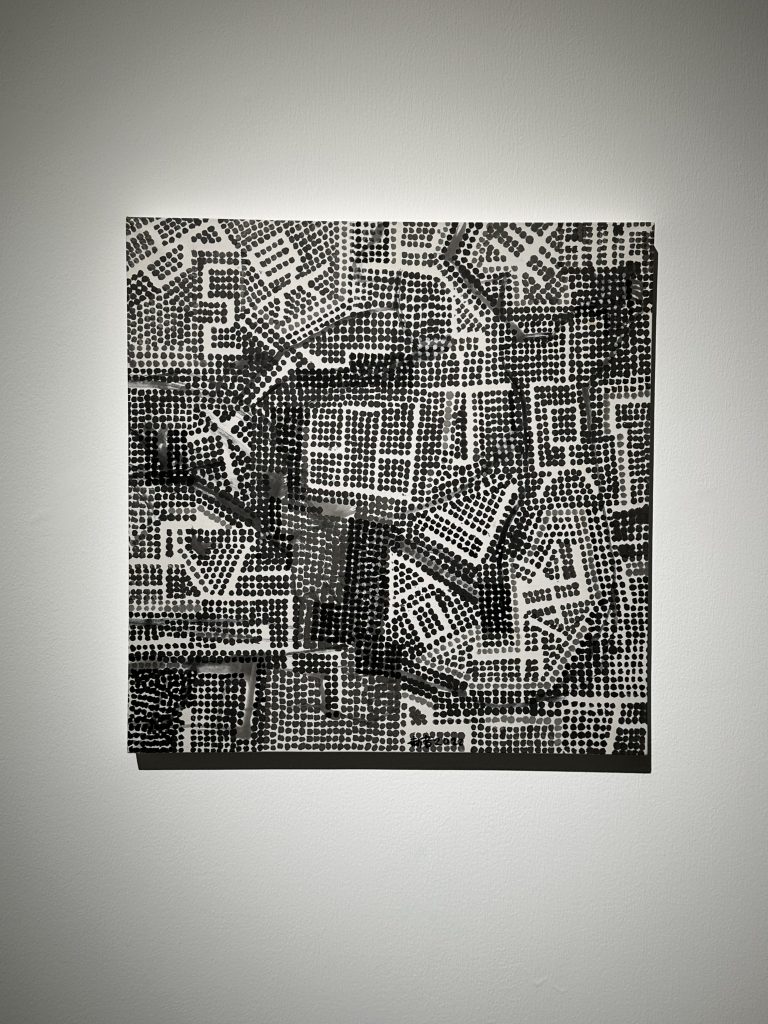
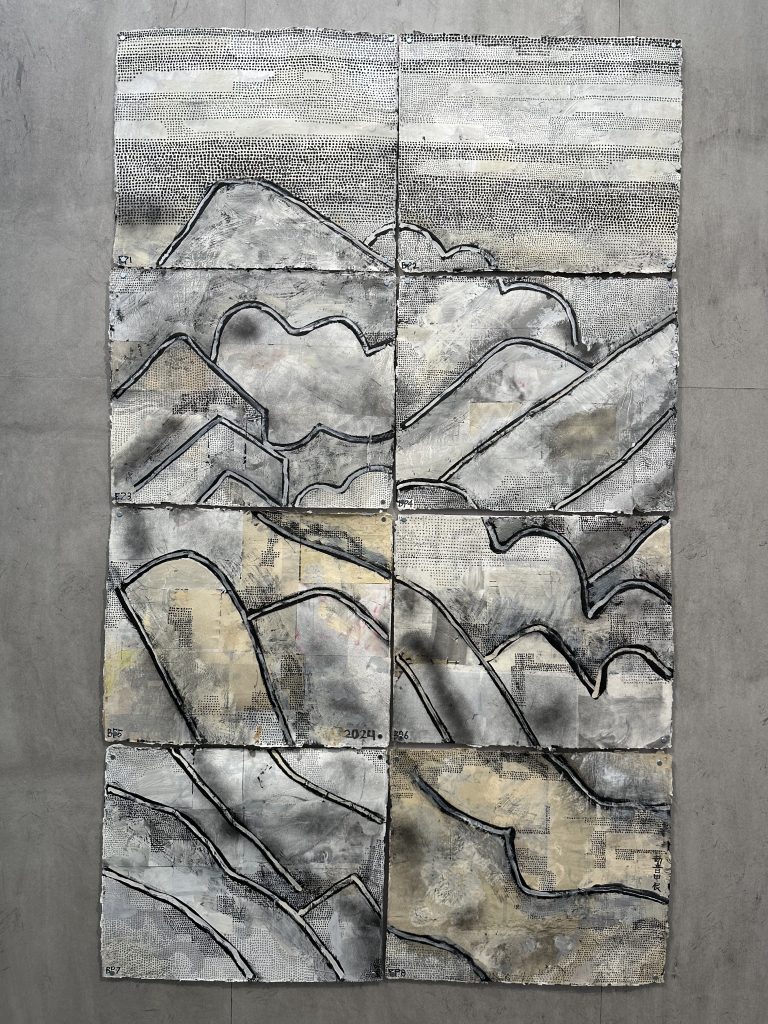
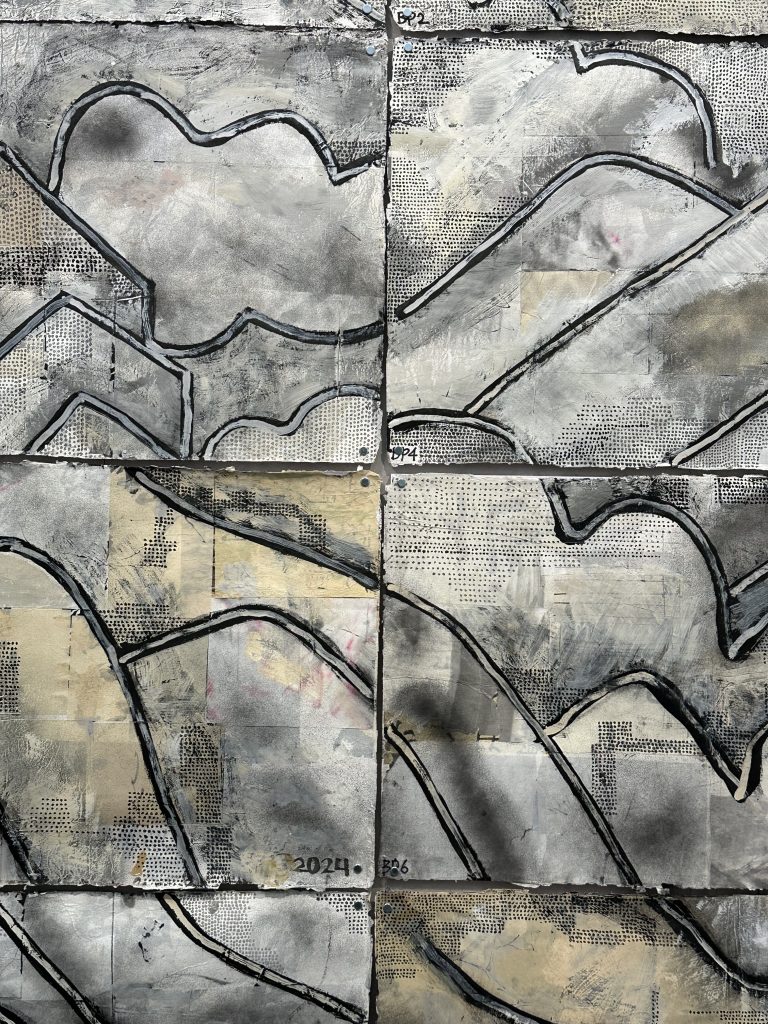
In this exhibition, I saw the textures of ancient papermaking, the calmness of ink painting, and the depth of printmaking. It gave me great inspiration on how to combine the Chinese aesthetics I love with the global language of contemporary art.
Wang’s work proves that whether it is a Chinese landscape or a Western scene, art is not just a pile of techniques—it is a reflection of the artist’s inner state.
Summary
These exhibitions have deepened my understanding of cultural fusion. Culture is not a wall; it is a carrier. Fusion is not just about stacking different elements together. When an artist touches the essence of life—such as nostalgia, a respect for nature, or the perception of time—the barriers of language simply disappear.
This winter break, feeling anxious and lost, I started studying metaphysics.
People always say that we only seek medicine when we are sick. When life is hard and the future is unclear, metaphysics becomes a form of comfort.
The low pay and instability of my art internship made me doubt my choices. I turned to metaphysics for answers. It generally falls into two categories: Innate Destiny (like Chinese Bazi or Western Astrology), which reveals your natural traits and life path; and Prediction (like I Ching or Tarot), used to calculate the outcomes of specific events.
After studying deeply, my view changed. Metaphysics is not just a relief for emotions. It is a logical system, much like math or physics—a tool to help us explore the world and ourselves.
Prediction: Curves and Tangents
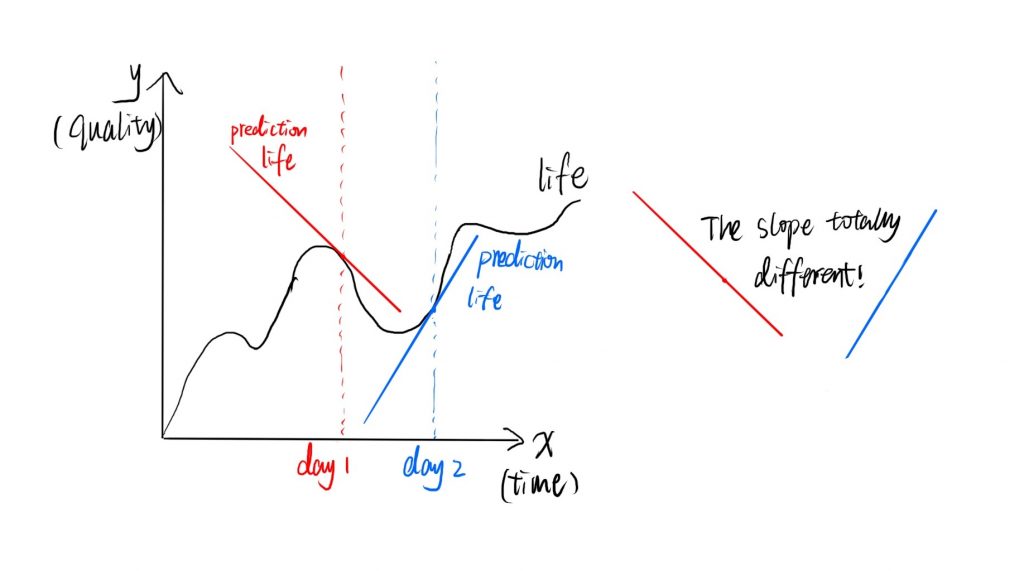
Relying on divination and losing your free will is a mistake. If life is a mathematical function, our experiences are a rising and falling curve. Divination is like a tangent line at a single point on that curve: it predicts a trend based on your current state, but it cannot lock in a final destination.
The future changes with your mindset. If you are anxious now, the prediction will be dark. If you are confident, the result will be bright. I realized that life is not set in stone; we always have the power to create.
Innate Attributes: The Manual
To me, metaphysics is not about foretelling the future. It is a user manual—a tool to understand and use myself better to reach my goals.
Life is like a MOBA game. We all play different characters with different stats. No character is “weak”; they just require different strategies. Some are built to take damage, some to deal it. Some are strong early on, while others need time to grow. Metaphysics reveals these fixed starting attributes: your personality, your talents, and your timing. To win the game, you must understand your character’s strengths and act accordingly.
Therefore
Reading my own chart restored my confidence. I am now more determined to follow the path of art. My chart tells me that my deep sensitivity and desire to explore the spiritual world are my unique gifts. Fine art is not just my passion; it is a field where I can truly succeed. My current struggles and quiet accumulation are simply gathering energy for a future breakout.
This winter, my mind and soul grew. Metaphysics didn’t give me a “result”—it gave me “instructions.”
I no longer ask the universe”Will I get what I want” ,instead,I ask “How do I get what I want” ;
I no longer fear uncertainty. Instead, I focus on knowing myself and pushing my potential to the fullest.
For the final outcome, do not ask others and universe. Only ask me.
Philosophy The ancient Chinese philosopher Confucius once said, “If one hears the Way (the Truth) in the morning, one can die content in the evening.” I deeply identify with this sentiment.
For me, exploration is divided into two parts:
Outward Exploration: Understanding nature, time, the universe, and philosophical worldviews.
Inward Exploration: Understanding my identity, emotions, consciousness, and the meaning of existence.
I am forever fascinated by the colorful diversity of the vast world, and I am forever moved by the fact that we can perceive our own existence. Therefore, in my artistic creation and my life, I constantly explore, learn, and perceive. To think is my greatest goal.
Core Goals
Explore the External, Perceive the Internal.
Reduce bias against vulnerable groups in the world.
Part 2: Specific Themes
Connection Between Civilizations
Prehistoric Civilizations: Sanxingdui, the Pyramids, and Atlantis.
The Collective Unconscious: DNA memories, and the serpent-bodied figures in legends (Fuxi and Nuwa).
Origins: Where do we come from? Exploring connections through Religion and the Tao.
History and Reality
Truth vs. Fabrication: History is often a doll dressed by the victors. I seek the “Fire” (Li Trigram) to burn away the false and reveal the true.
Time and Perception: Dreams vs. Reality, “Dreamcore,” and the fluidity of Past, Present, and Future.
The Dream of Life: As the classic poem suggests, “Life is a vast dream; waking up, the smoke vanishes.”
Existentialism: Life is not a destination; it is a journey.
Spiritual Survival: Using Taoist philosophy to maintain mental freedom in a chaotic world.
Eastern Culture: The Spirit of Resistance
Active Struggle: Unlike the Western myth of Noah’s Ark (escaping the disaster), Eastern mythology focuses on fighting back and fixing the world (e.g., Great Yu Controls the Waters, Nuwa Mends the Sky, The Foolish Old Man Removes the Mountains).
This represents a unique form of Existentialism.
The Universe and Origins
Physics and the Tao: Time is an illusion; the past and present happen simultaneously.
The Multiverse: Dreams are merely jumps between parallel worlds.
Mysticlsm and Mathematics
Self-Exploration: Comparing Eastern systems (Ba Zi, Zi Wei Dou Shu) with Western Astrology (Star Charts).
Life as Calculus: Life is a curve. Fortune-telling is simply calculating the derivative—finding the tangent point of the current moment. Metaphysics is essentially mathematics.
Duality and Opposition
Eternity vs. Change: Perception is subjective; everyone sees a different world.
Macro vs. Micro: The relationship between the Universe and the Human Body (e.g., the myth of Kuafu Chasing the Sun).
ASD (Autism Spectrum Disorder)
Inner vs. Outer Worlds: Exploring the boundary between the two.
Breaking the Barrier: Using “Fire” to burn away hypocrisy and reveal the raw, authentic self—removing the invisible membrane that separates neurodivergent individuals from others.
Animals and Nature
Mythological Creatures: Analyzing fantasy creatures from the Classic of Mountains and Seas (Shan Hai Jing) as potential memories of prehistoric civilizations.
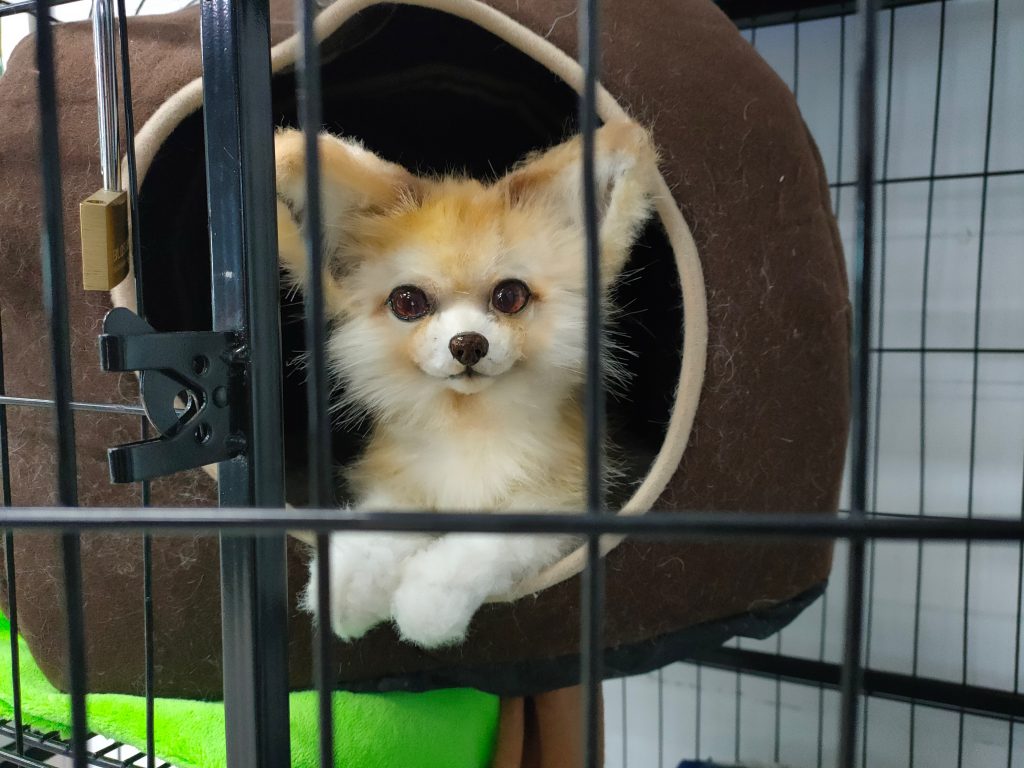
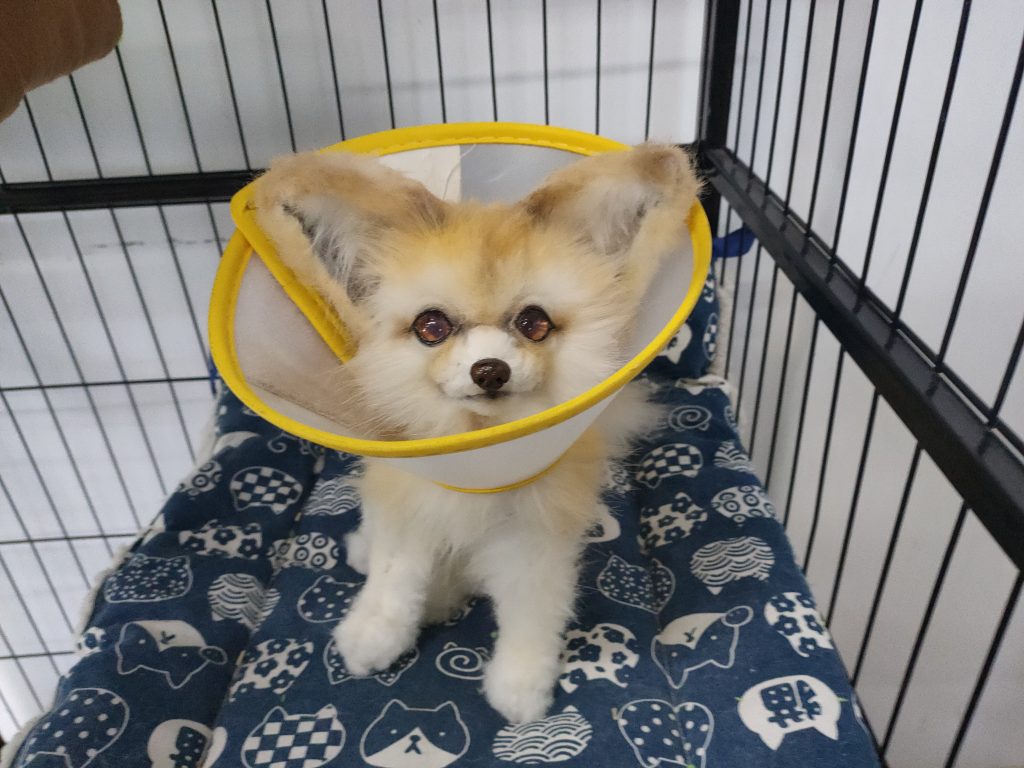
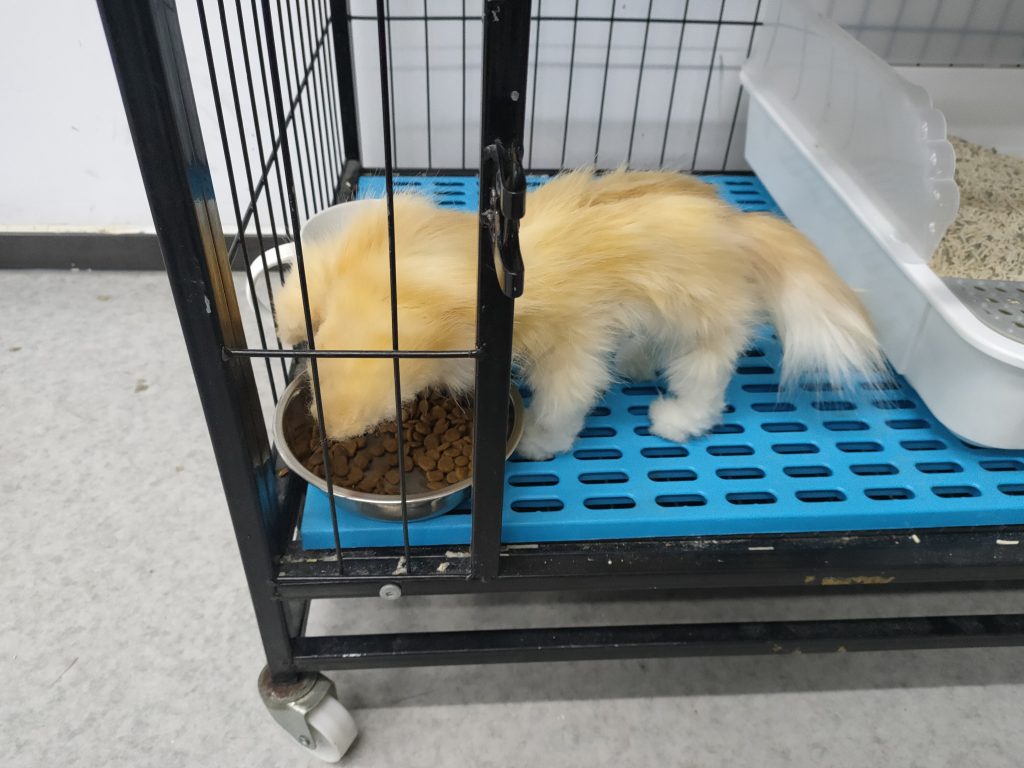
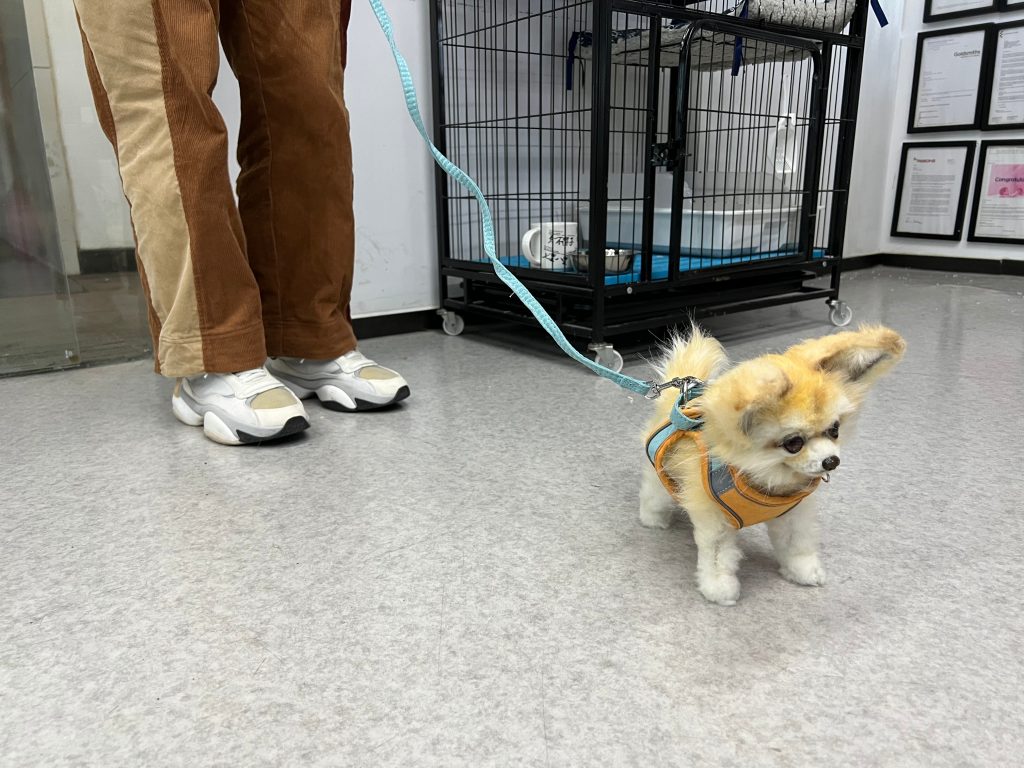
Animal Protection: The SIP Project and custom dolls.
“It Matters to This One”: (Reference to the Starfish Story)—Focusing on saving individual lives even if you cannot save the whole world.
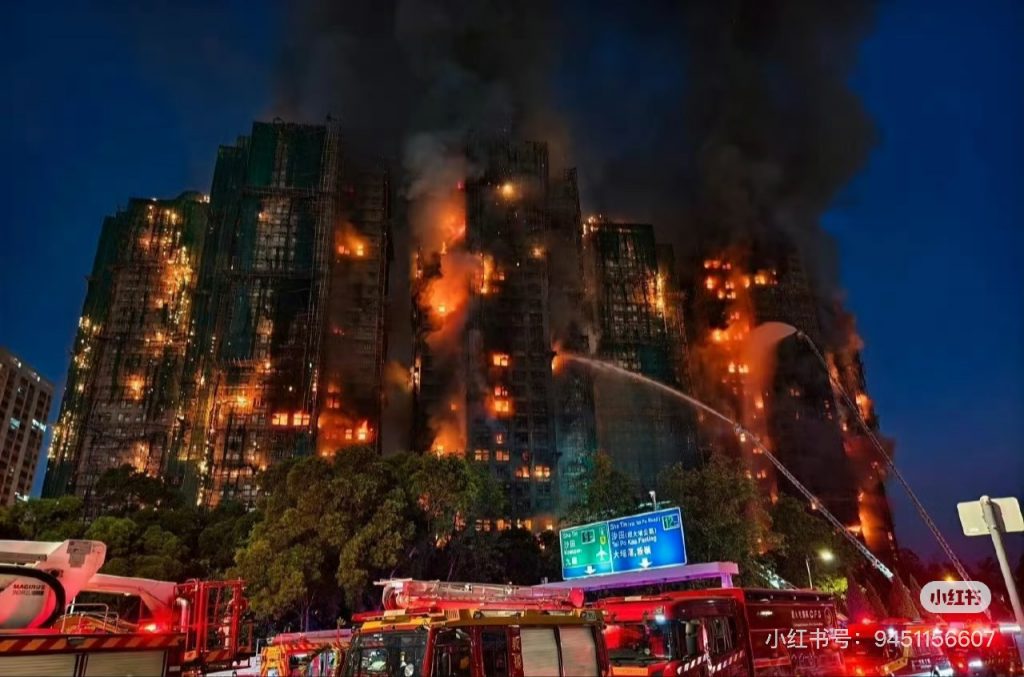
A few days ago, a major fire broke out in Hong Kong. Eight residential buildings under exterior renovation caught fire in dry, windy conditions. The flames spread uncontrollably and burned for over thirty hours, until nothing was left.
I had only seen scenes like this in movies. I could not believe it was real.
That night, I barely slept. On the news, alongside cries for help, people left messages: “There’s a cat at home.” “There’s a dog.” For the first time, I fully realized that in disasters, the trapped are not only humans. I cannot imagine the fear and helplessness of pets left alone when the fire arrived.
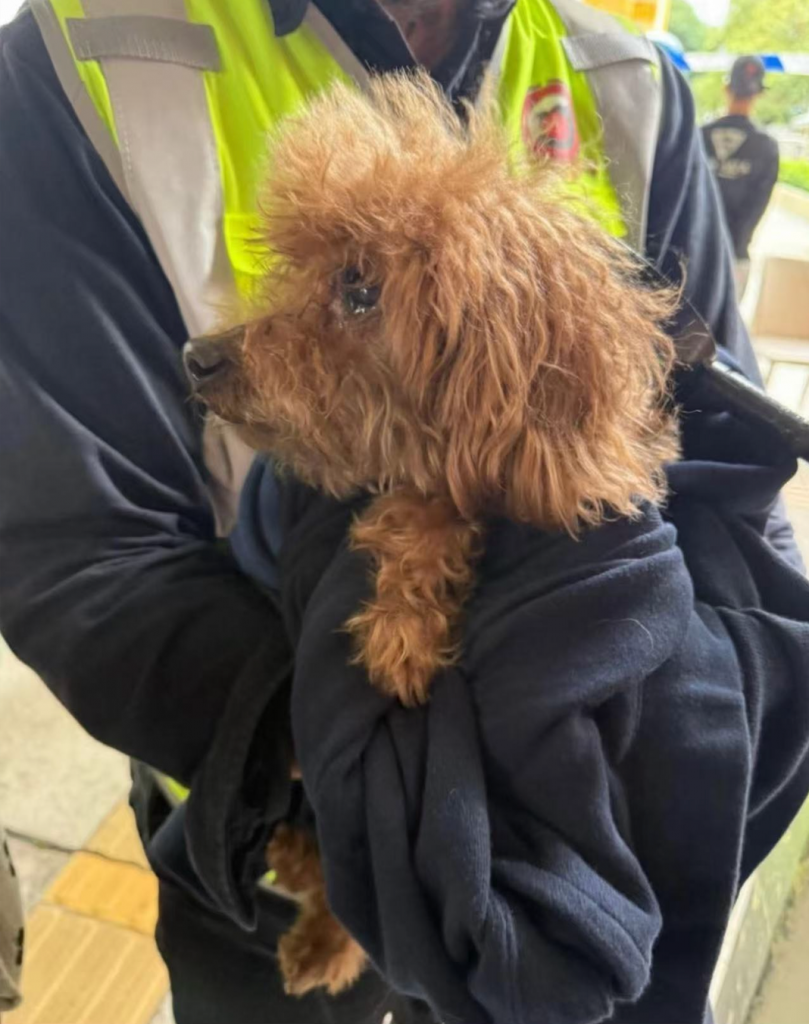
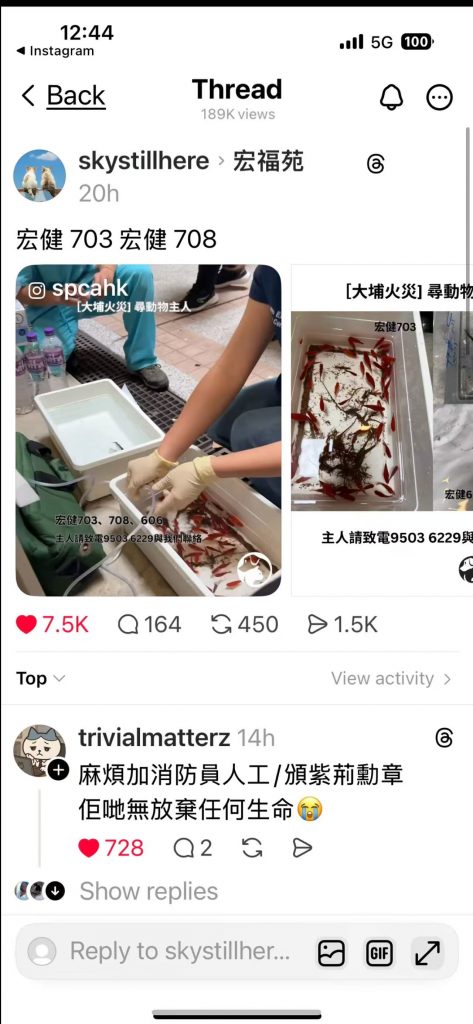
The next day, as the fire weakened, firefighters entered for rescue. Good news came one after another as residents were saved. What moved me most was that they also rescued many animals: a 15-year-old dog, an 18-year-old cat, a parrot, and even a snake, a turtle, and a tank of goldfish… I was deeply moved. I have pets myself, and I know they are never “just animals,” but irreplaceable family.
Honestly, the rescue of these animals moved me even more than the rescue of people. Saving people is what we naturally expect of firefighters. But in such a disaster, they still searched carefully for a tank of goldfish—this is what I truly admire.
To some, in the face of catastrophe, the lives of cats and dogs seem insignificant, and goldfish or hamsters even more so. Yet it is precisely these “insignificant” lives that most clearly test a society’s respect for life.
I was suddenly reminded of a story:
One morning, I walked along the shore and saw countless little fish trapped in shallow pools. Soon the water would evaporate, and they would die. Ahead, a little boy kept bending down, picking up fish and throwing them back into the sea.
I asked him, “There are hundreds, even thousands. You can’t save them all.”
“I know,” he said.
“Then why do it? Who cares?”
“This fish cares,” he said, tossing another fish into the sea.
He kept repeating, “This little fish cares. And this one too.
And this one, and this one…”
This disaster made me realize that Hong Kong is a truly warm and civilized city. I love my country, yet I must admit with sadness that in many parts of mainland China, ideas such as “all life is equal” and “animals deserve to be seen” are still far from widely accepted. I hope to use art to make these overlooked lives truly visible.
In a fire that burned down eight buildings, who would care about a tank of goldfish?
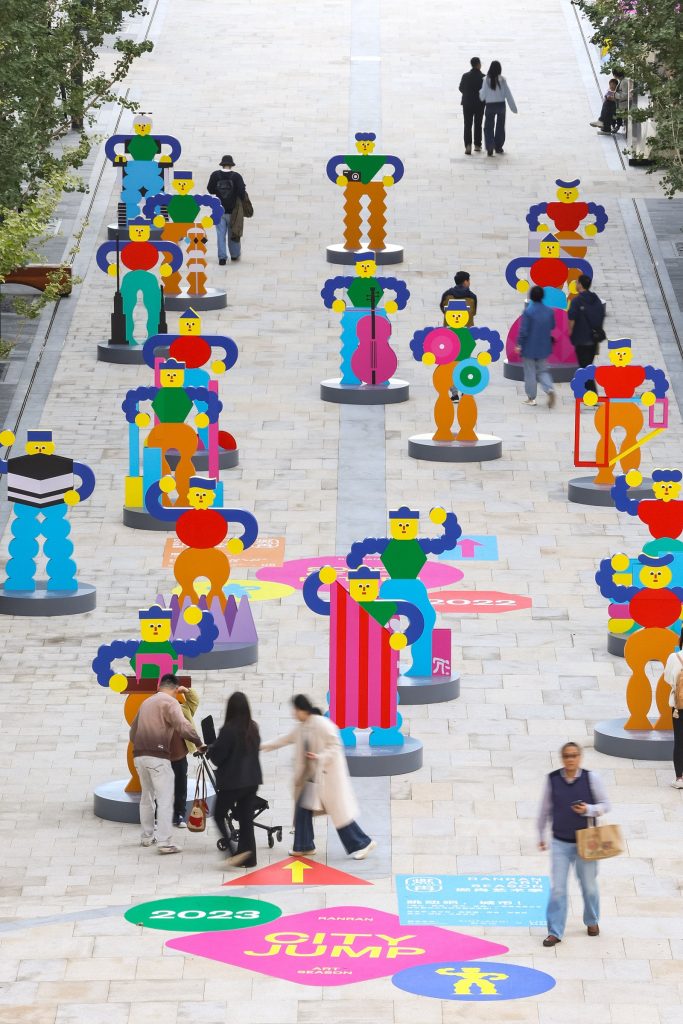
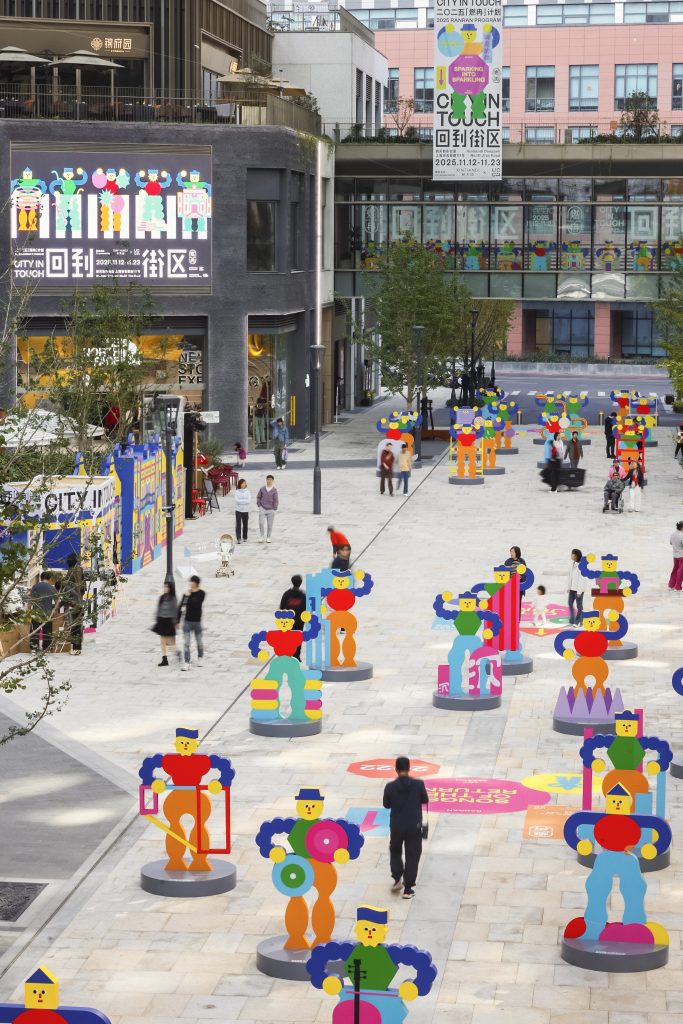
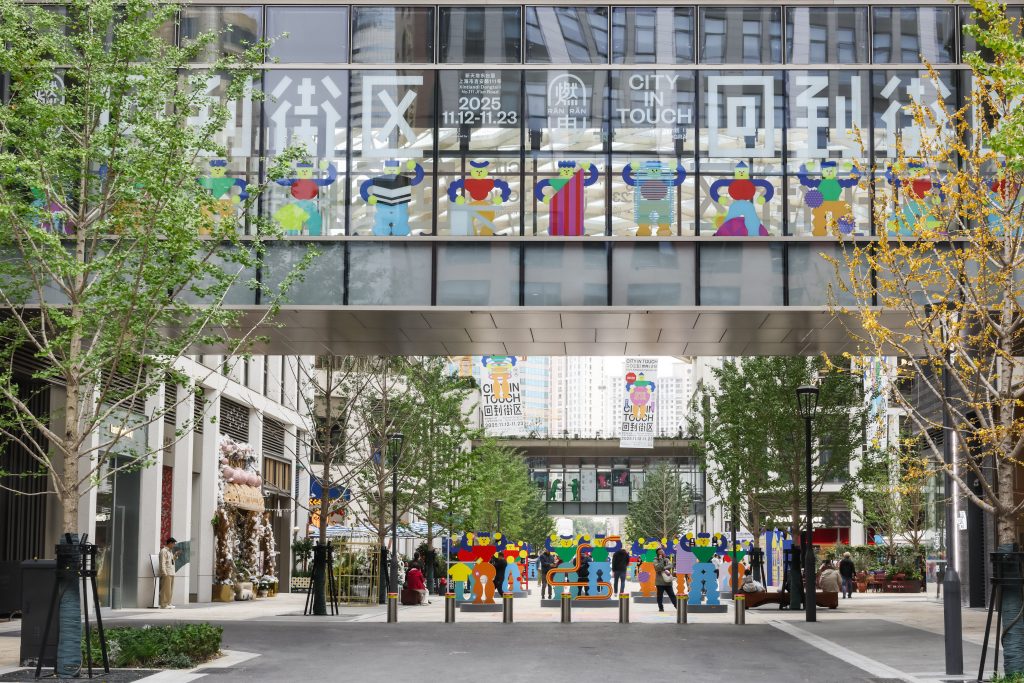
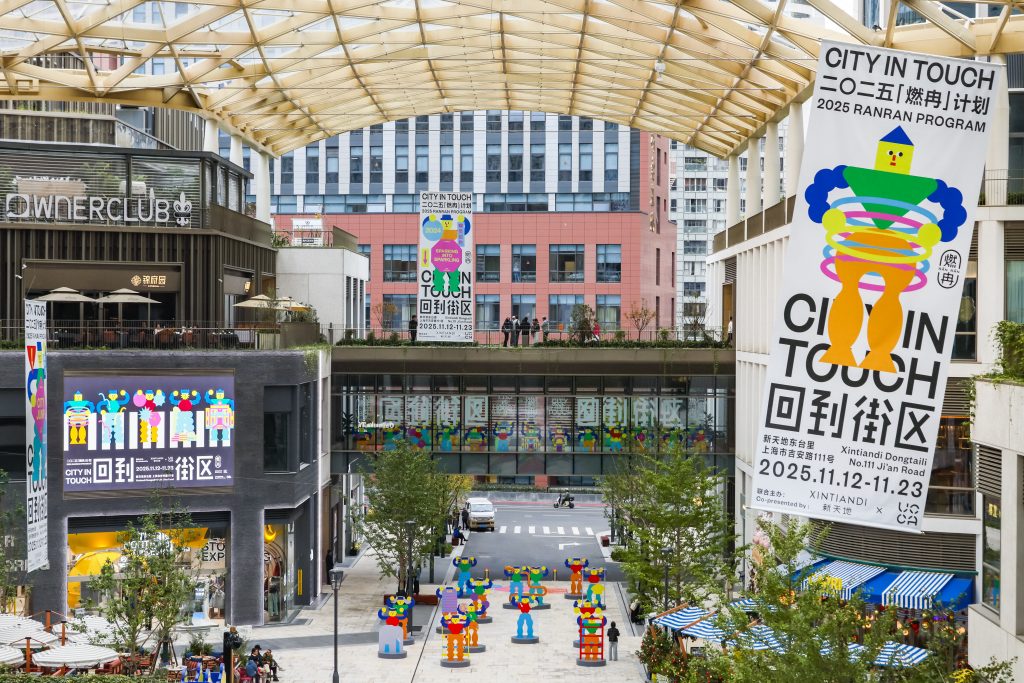
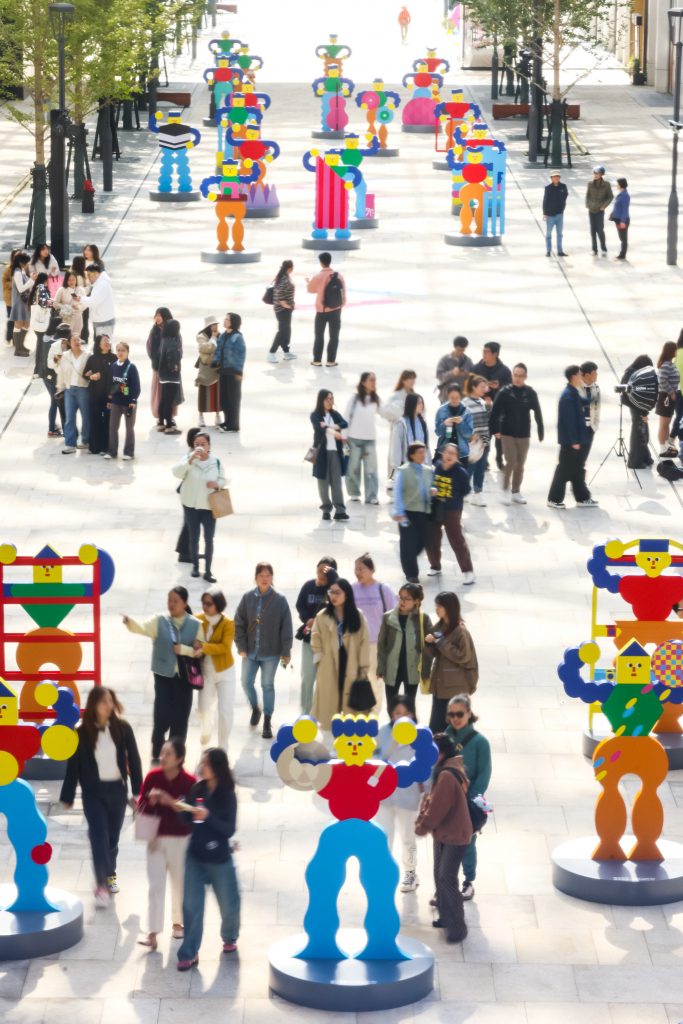
“Ranran” is a three-year young artists’ incubation program initiated by UCCA and Shanghai Xintiandi. Over three years, it has brought nearly one hundred artworks into central Shanghai’s public spaces, continuously exploring how art can coexist with everyday urban life.
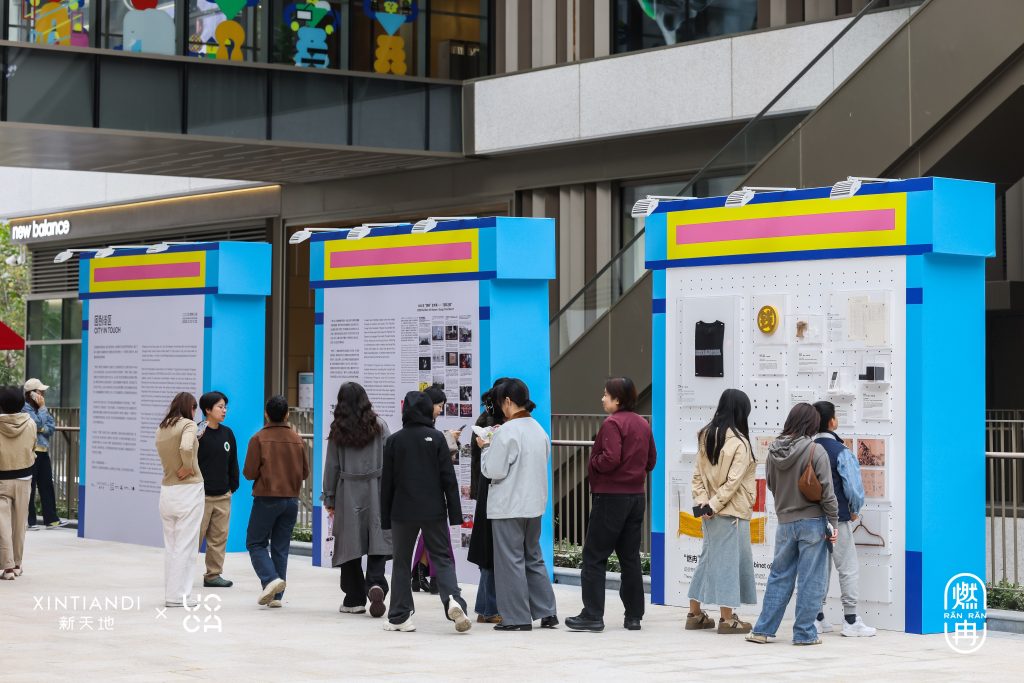
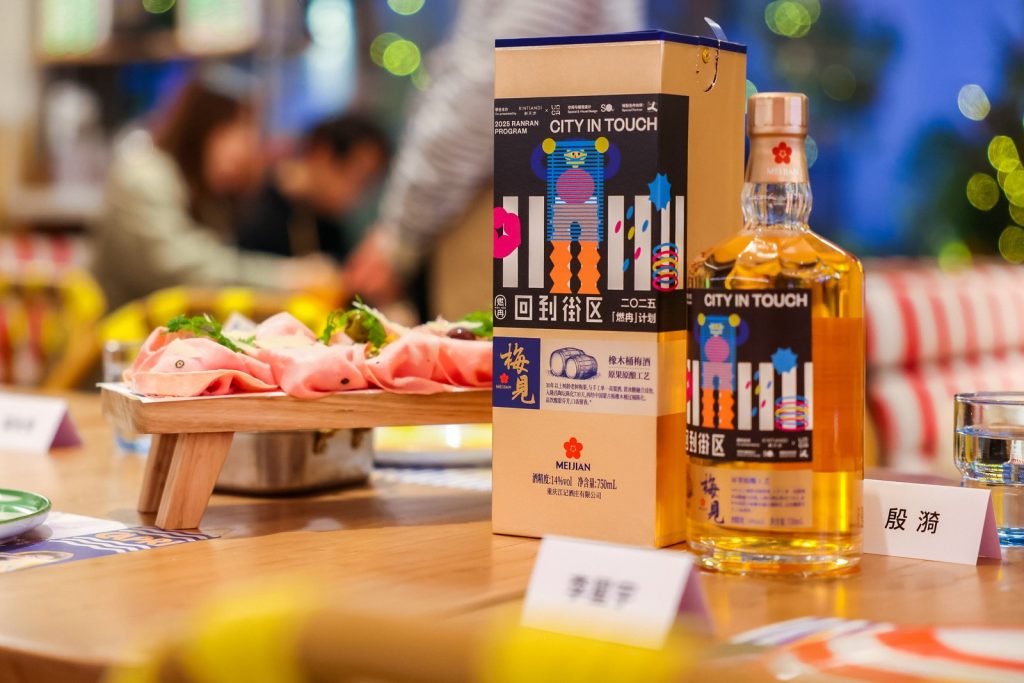
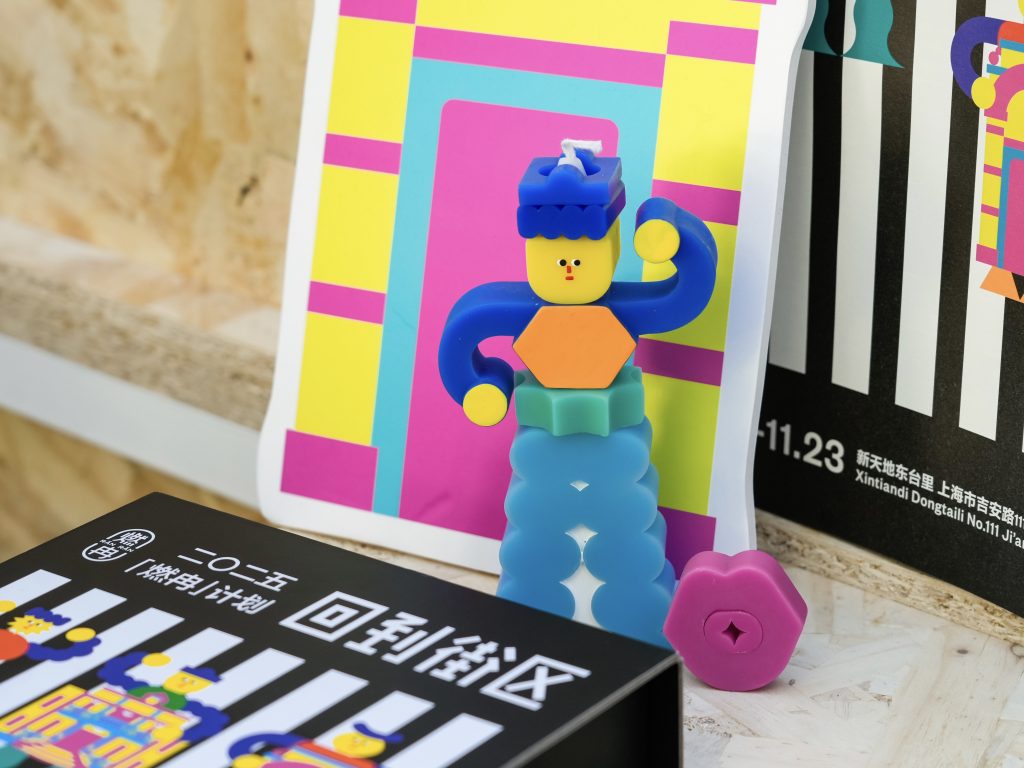
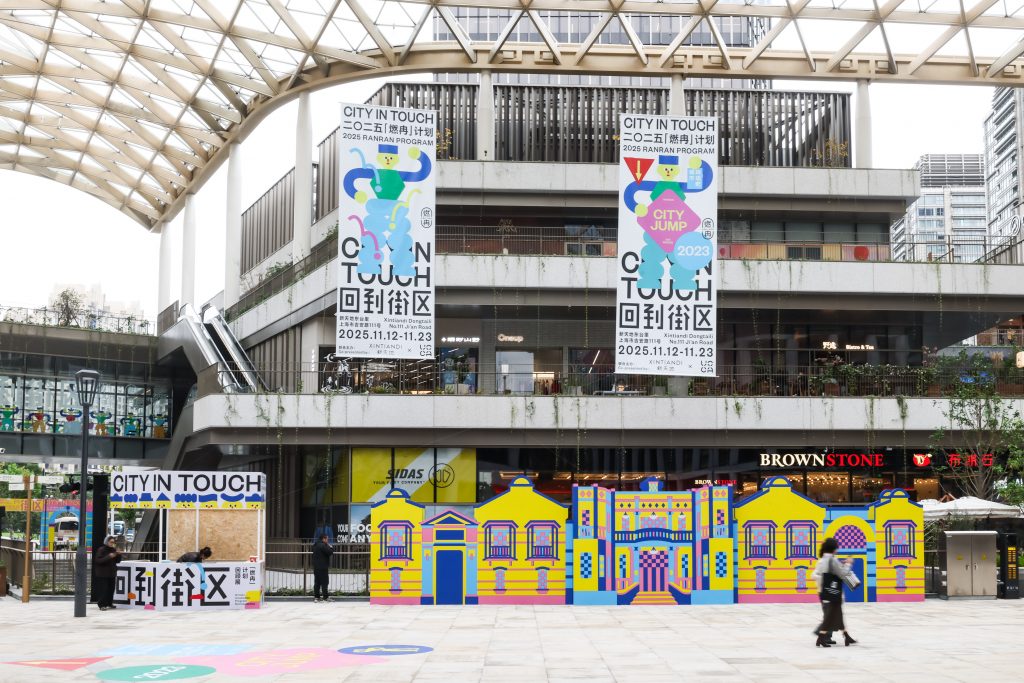
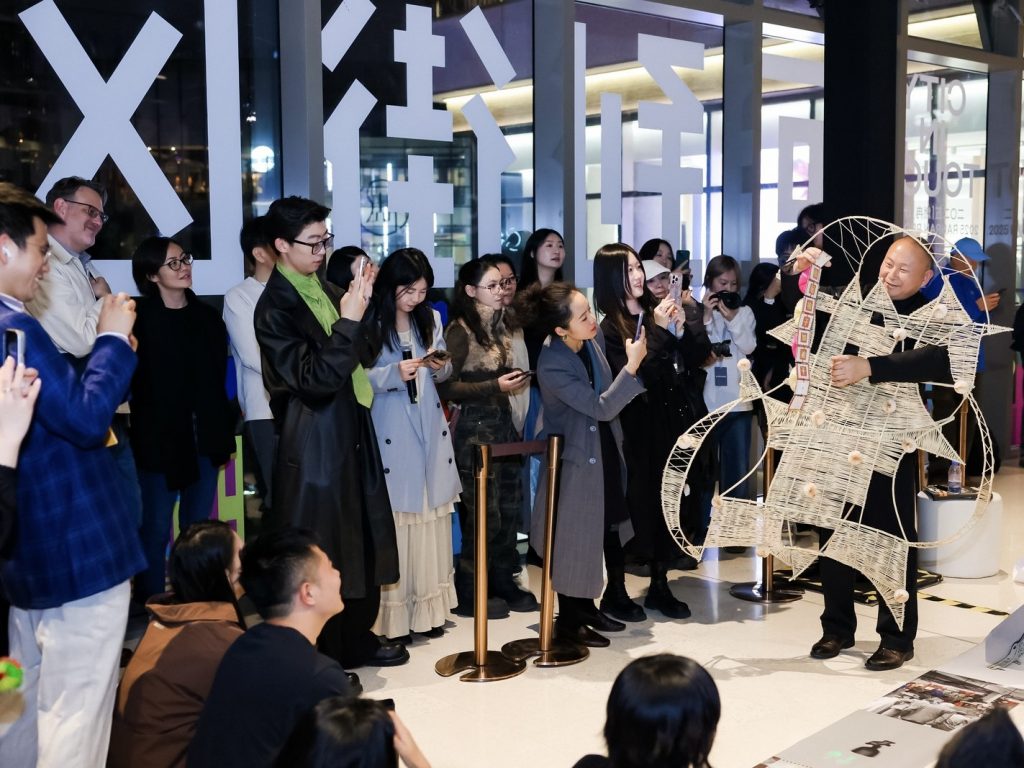
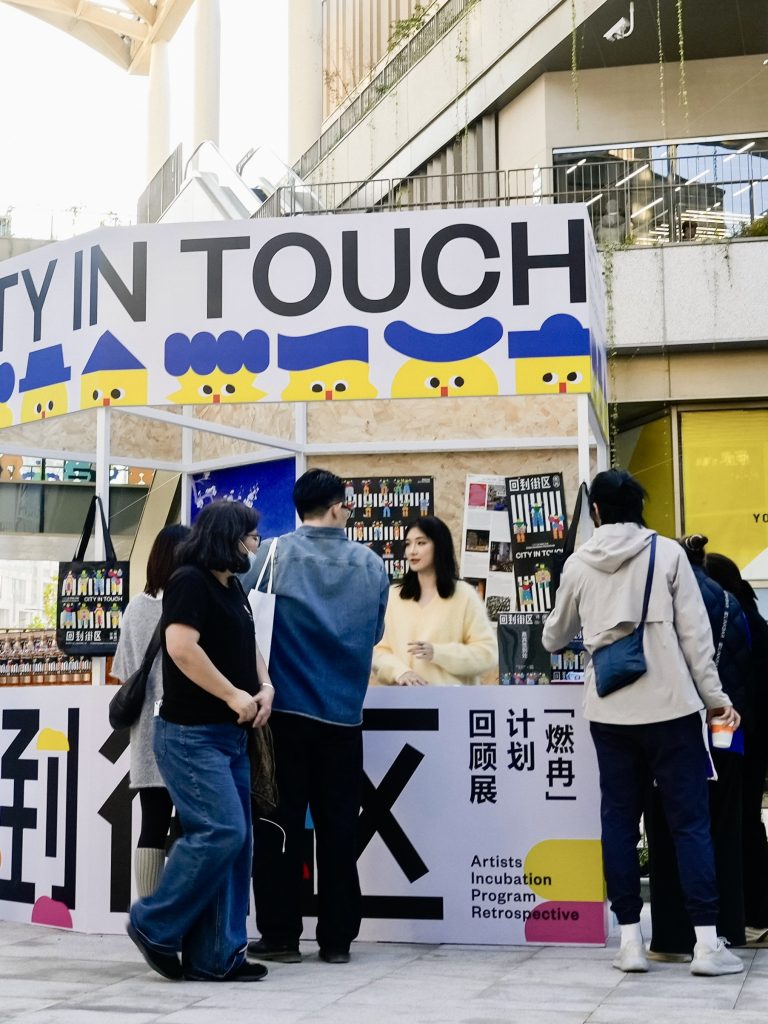
From 12 to 23 November 2025, the closing project, “Ranran 2025 – City in touch!”, took place at Dongtaili in Shanghai Xintiandi. The event reviewed the three years of work. It consisted of a retrospective display and a forum: we built a memory wall of objects from past projects, designed cartoon characters for 31 artists based on their works, produced matching merchandise and sculptural pieces, and invited six experts to discuss art and urban culture.
retrospective display winecandle
The theme “City in touch!” echoes Henri Lefebvre’s theory of the “production of space”:
space is not a neutral container but a field produced by relationships and daily practice. Returning art to the street is an effort to root practice in the social environment and rebuild direct connections between people.
Power of Interpretation
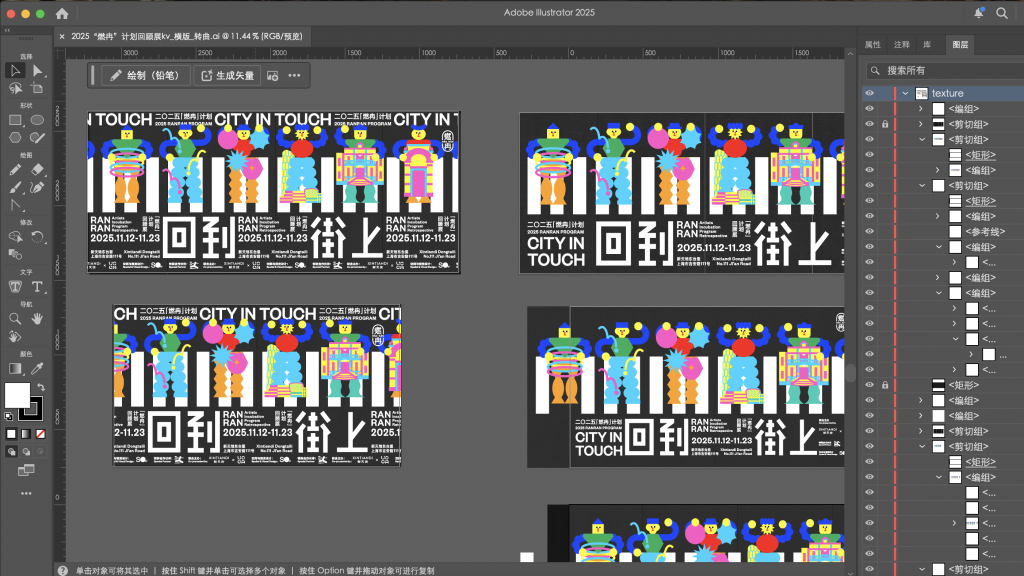
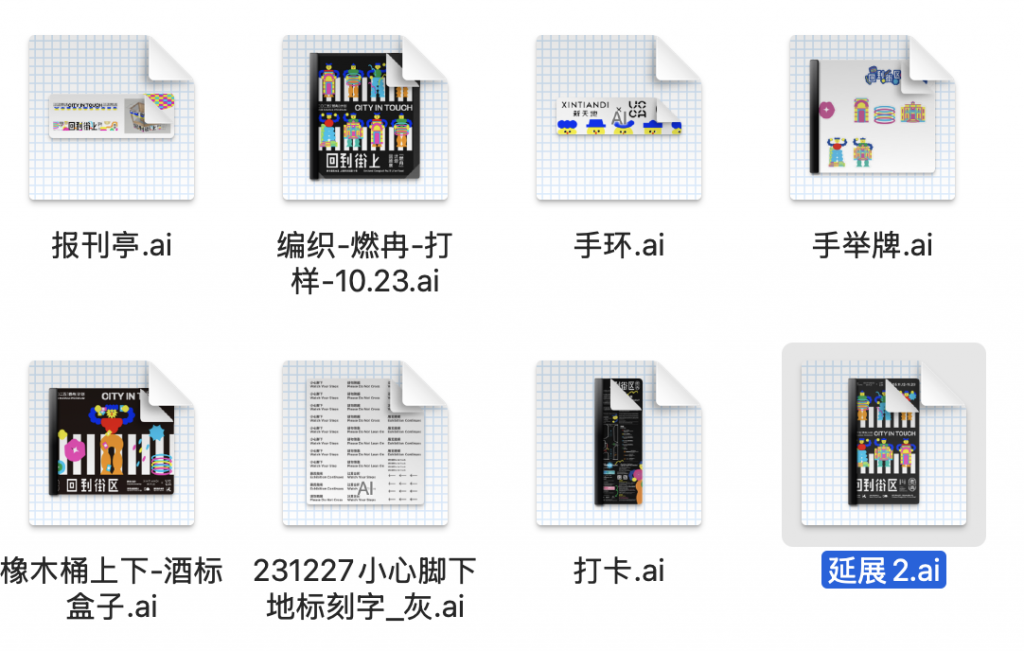
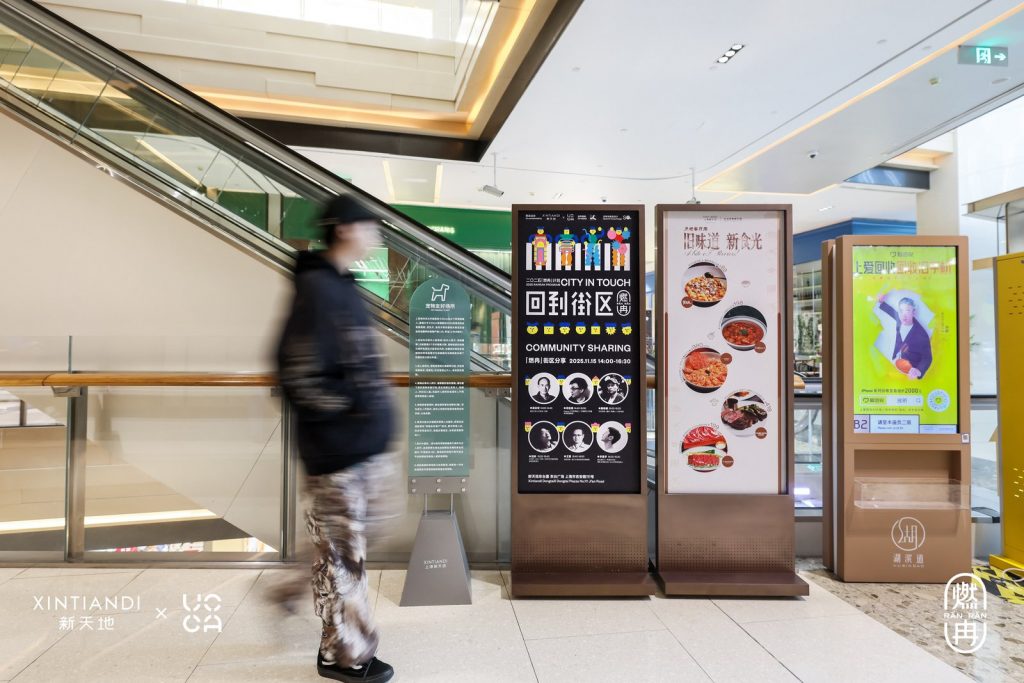
In this project, I was responsible for extending the main visual identity and designing all printed materials, including posters of various sizes and product packaging. The workload was heavy, but I enjoyed the creative challenge of recomposing each layout.
After dozens of designs had been approved internally, the project title failed to pass government review. The original forum title “Public presentation” and Chinese title “回到街上” were judged politically sensitive because of associations with twentieth-century Chinese political history. We were required to change them to “community Sharing”and“回到街区”. The phrases differ only in the last character, their meanings and English translations are almost identical.
Due to this, I had to remake every file to replace that single character. Through this repetitive work, I realised how much I dislike tasks that feel meaningless and require no creativity.
At the same time, the experience showed me the power of communication and interpretation. Faced with the same poster, different positionalities focus on different things: I care about layout and visual balance; passers-by care about the activity’s time and place; officials may only notice one or two “sensitive” words. It made me think about how language shapes perception, how bias forms, and how art might send different messages to different groups.
Connections
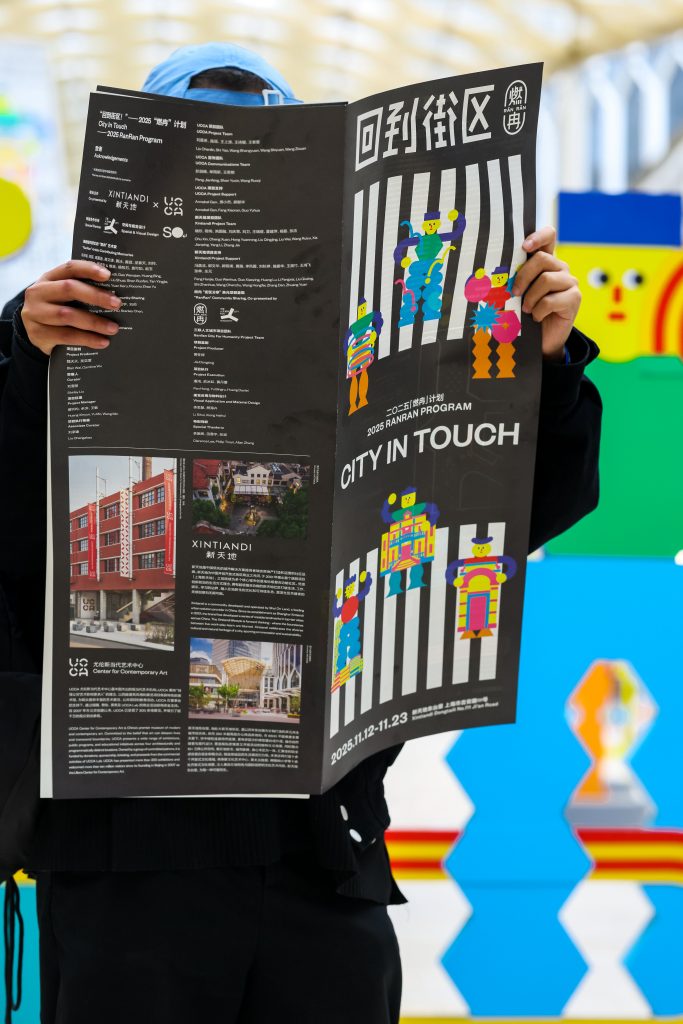
our booklet–looks like a huge news paper!
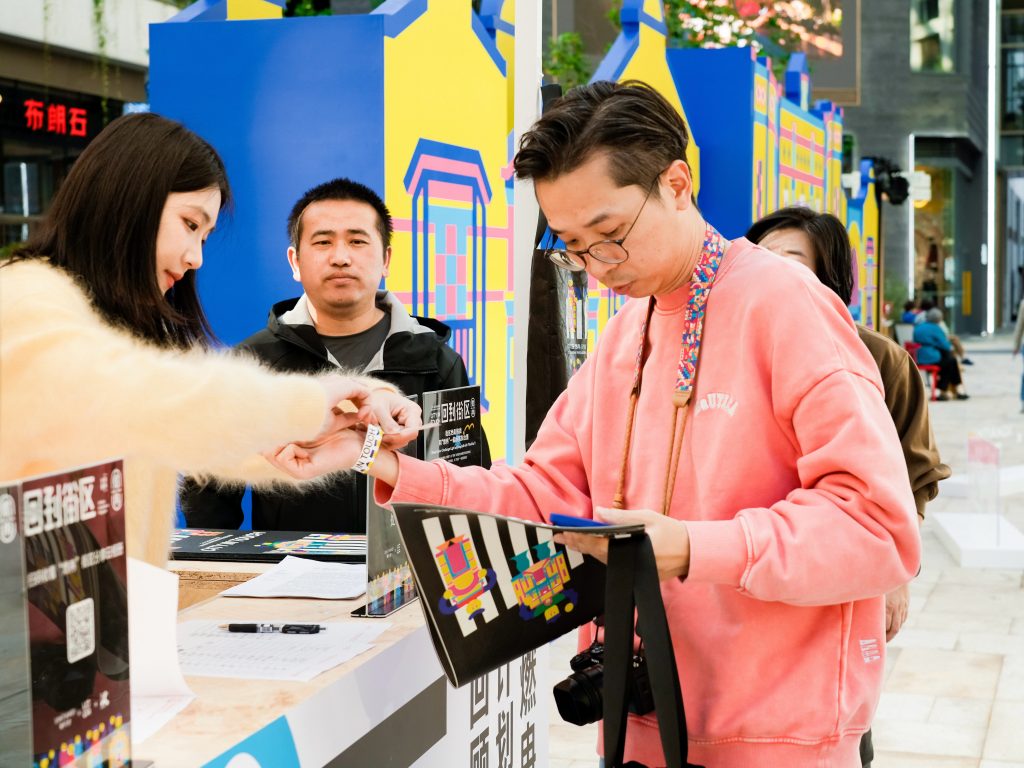
On opening day, I worked at the information deskMany people stopped to pick up the booklet and chat with me. One woman was surprised that I am only twenty. She said that at twenty she was still skipping classes in uni, while my posters were already covering one of Shanghai’s busiest commercial districts.
Her comment shifted my perspective. I had treated these work as “just doing my job”, but if saying it as a twenty-year-old student can visibly shape the visual atmosphere of a major urban area in Shanghai, that is remarkable. Watching people pause in the street to look closely at the memory wall and the posters I designed, I felt both proud and deeply moved. I sensed the links between art and society, and between one person and another.
In that moment, I understood the core idea of the “Ranran” project:
art is never far from everyday life; it is part of life itself, and a window through which we get to know the city and understand one another.
The event lasted only two weeks, but its traces in the city will be long-lasting. Buildings and residents will change, yet the city’s atmosphere and its human connections continue. In Xintiandi, we used art to briefly link past, present, and future. Art quietly enters the environment and becomes part of the community’s shared memory. Its influence may appear now, or surface later in an unexpected moment.
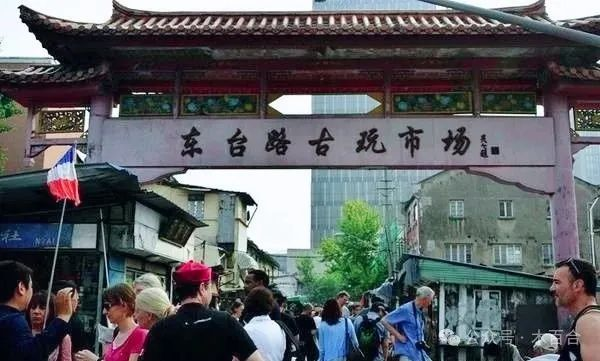
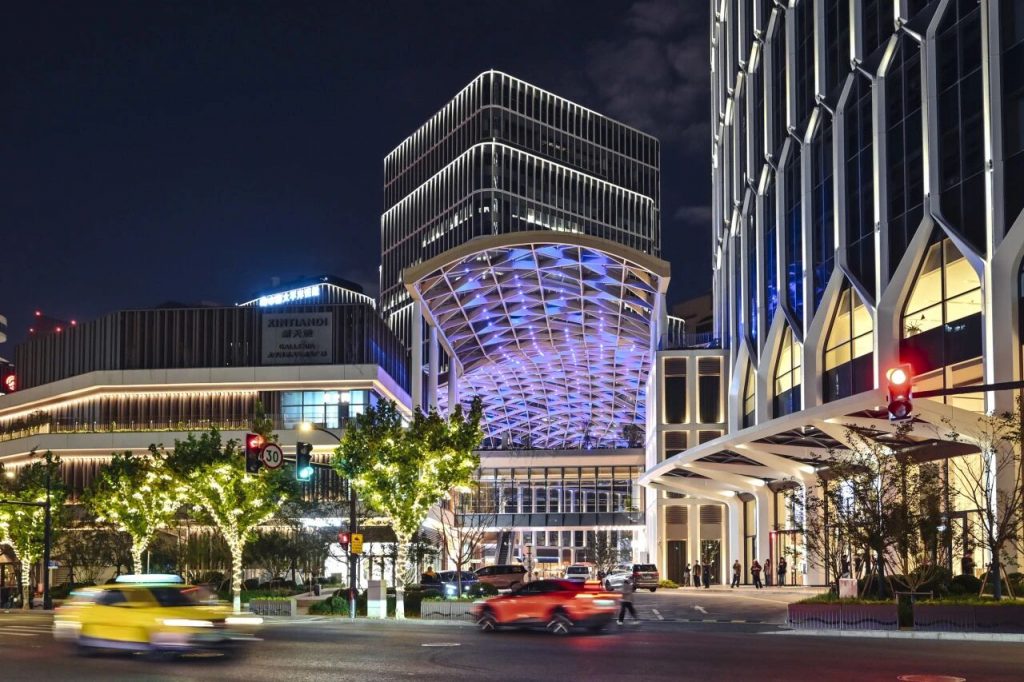
Dongtaili in the Past Dongtaili Today
As an ancestor of future city dwellers, I would like to believe that the energy and thought I put into these works will keep growing in the city, living on in ways that are subtle but enduring.
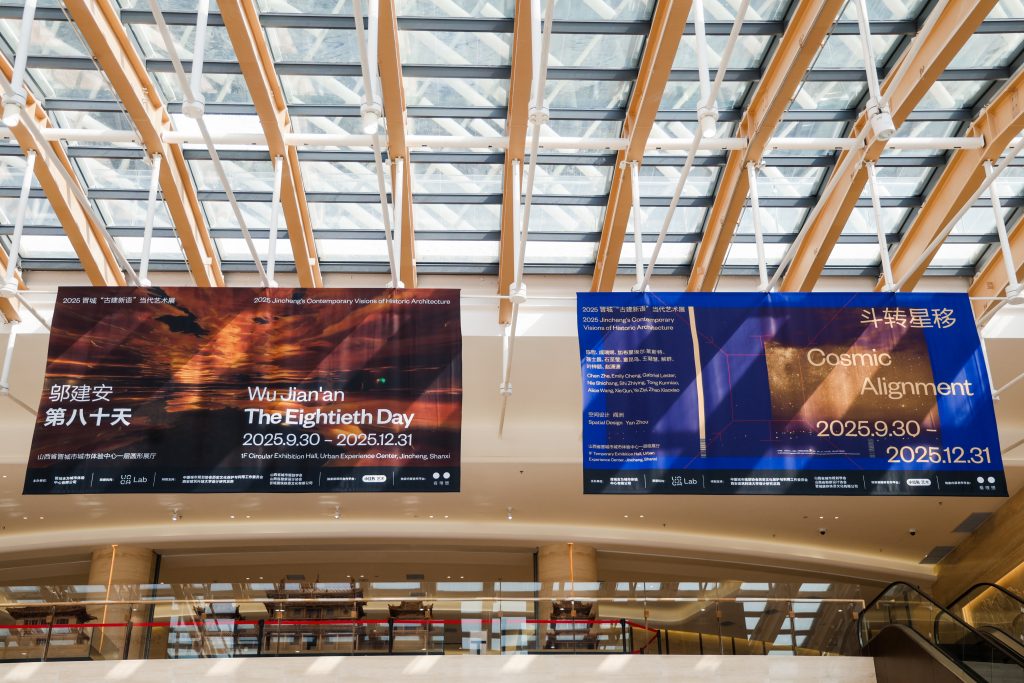
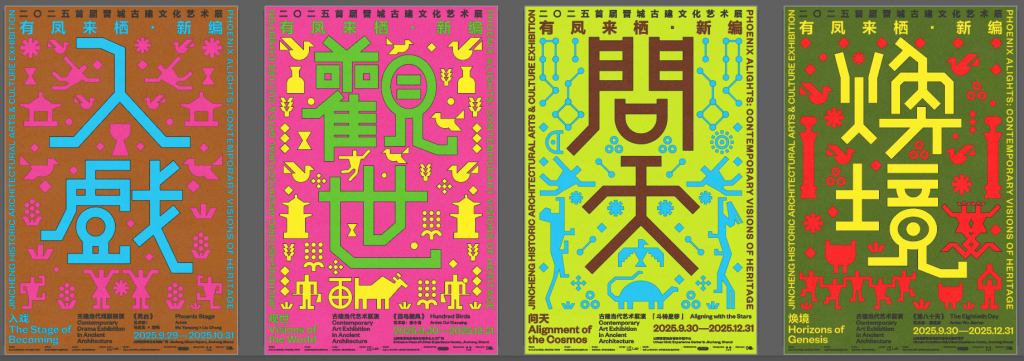
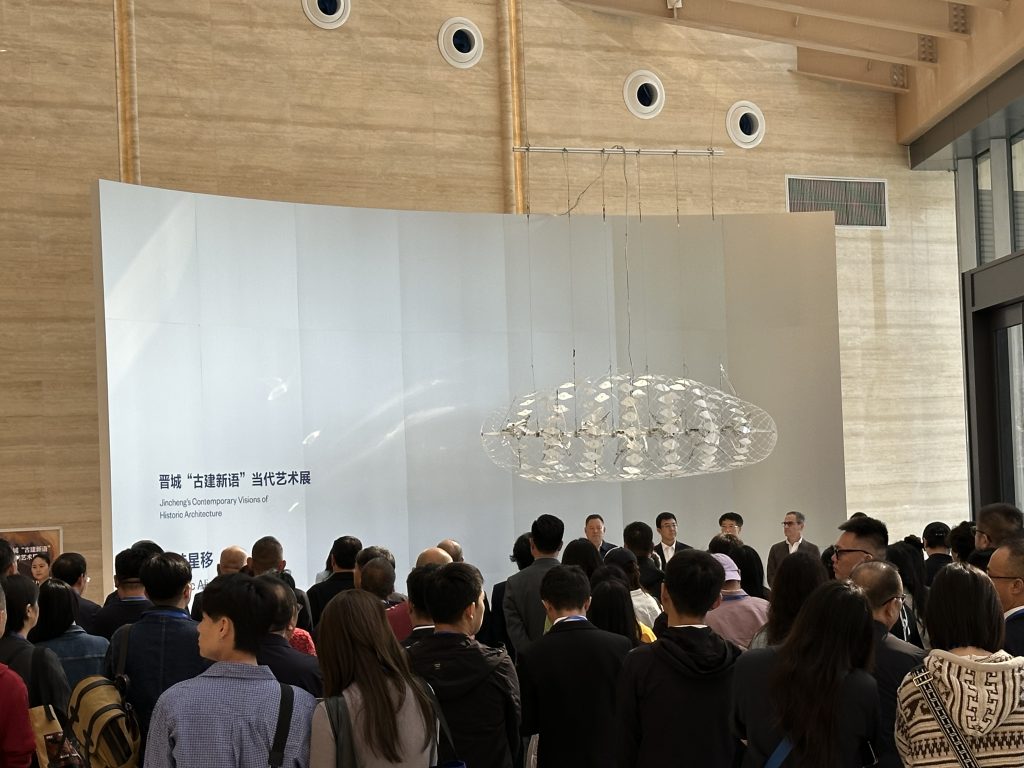
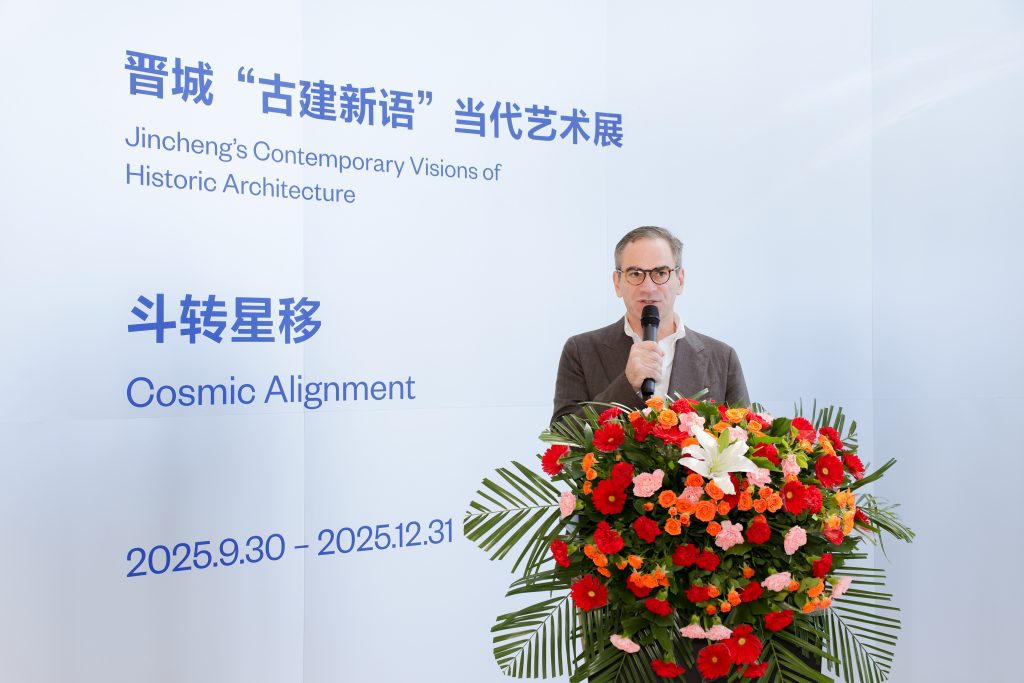
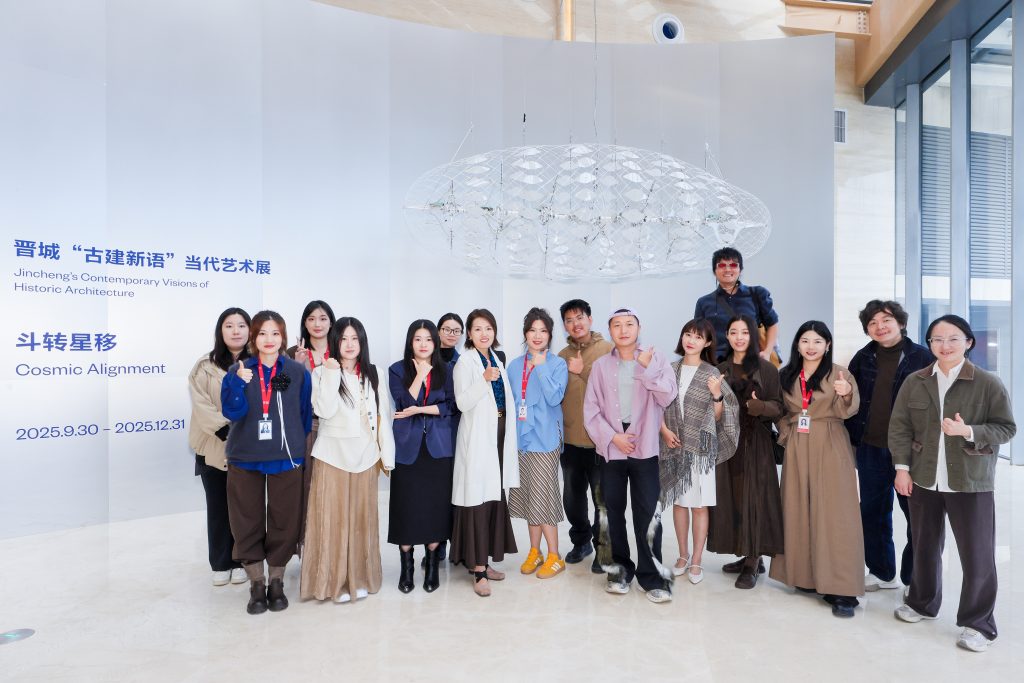
“New Language of Ancient Architecture,” was the first and largest project I worked on during my placement. It was in Jincheng, which is not a developed city, but it is known for historic architecture and deep cultural heritage. The exhibition ran 30/09/2025–31/12/2025 and was a collaboration between our company and the Jincheng municipal government to promote local architectural culture and support the local arts.
The exhibition comprised two parts: one is the group show Cosmic Alignment, featuring ten Chinese and international artists; the other is the site-specific project The Eightieth Day.
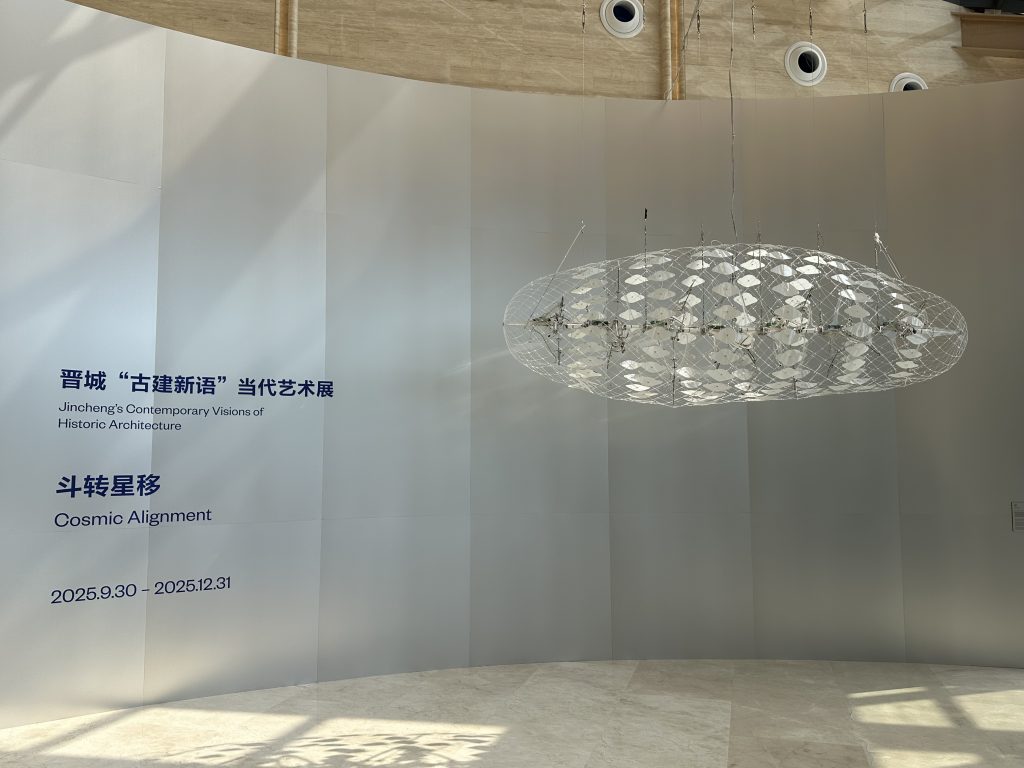
Exhibition 1 — Cosmic Alignment
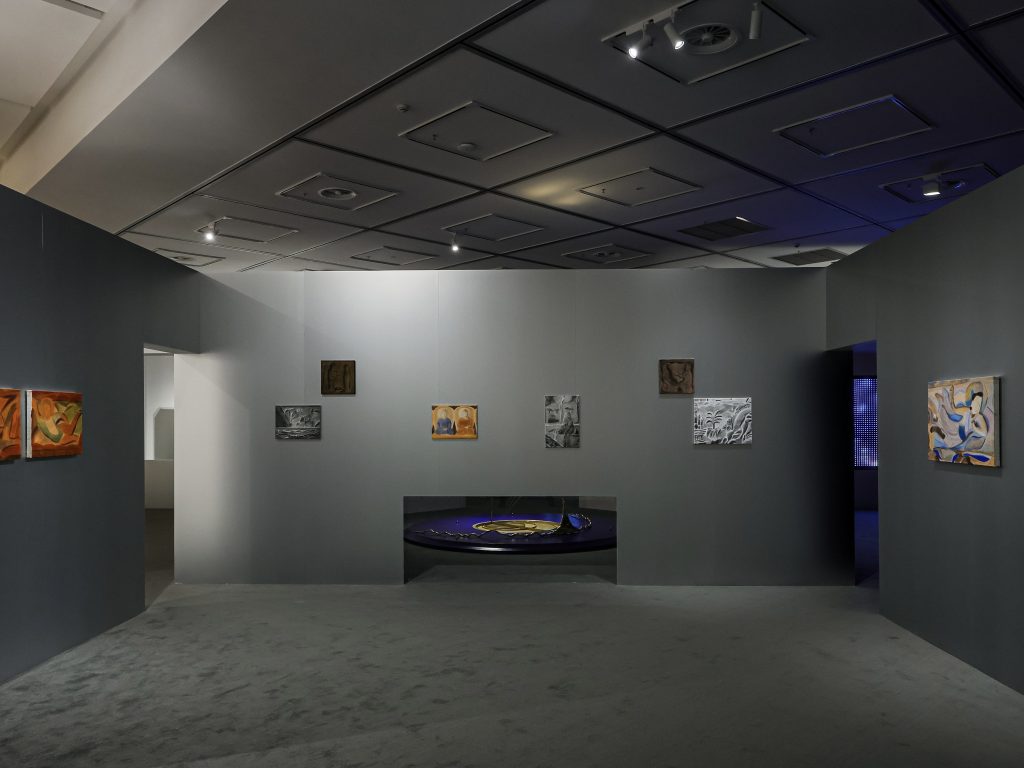
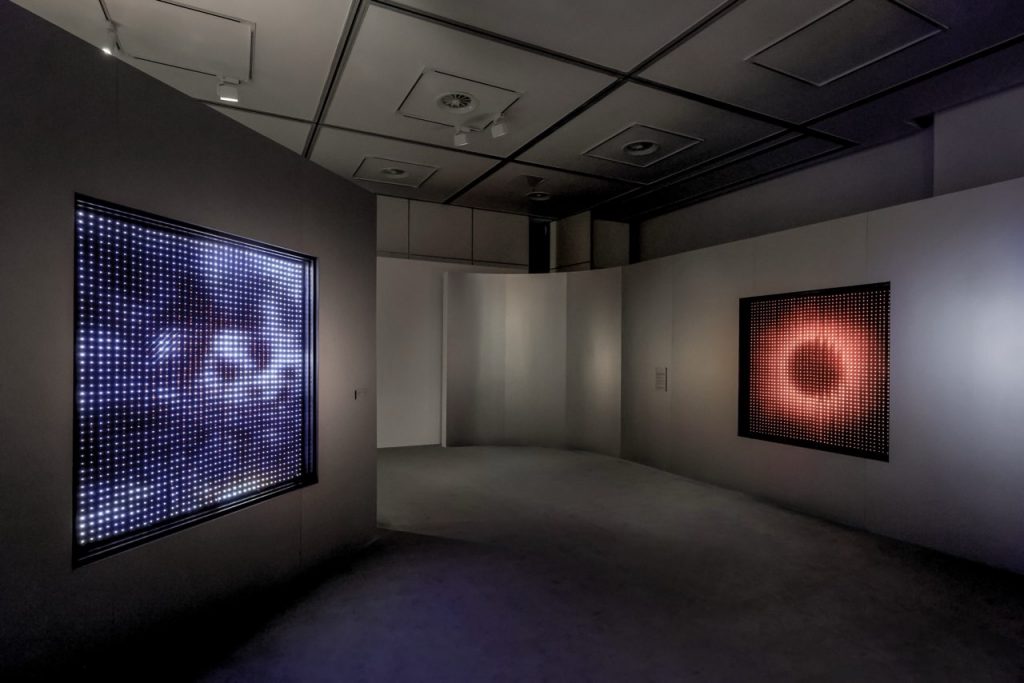
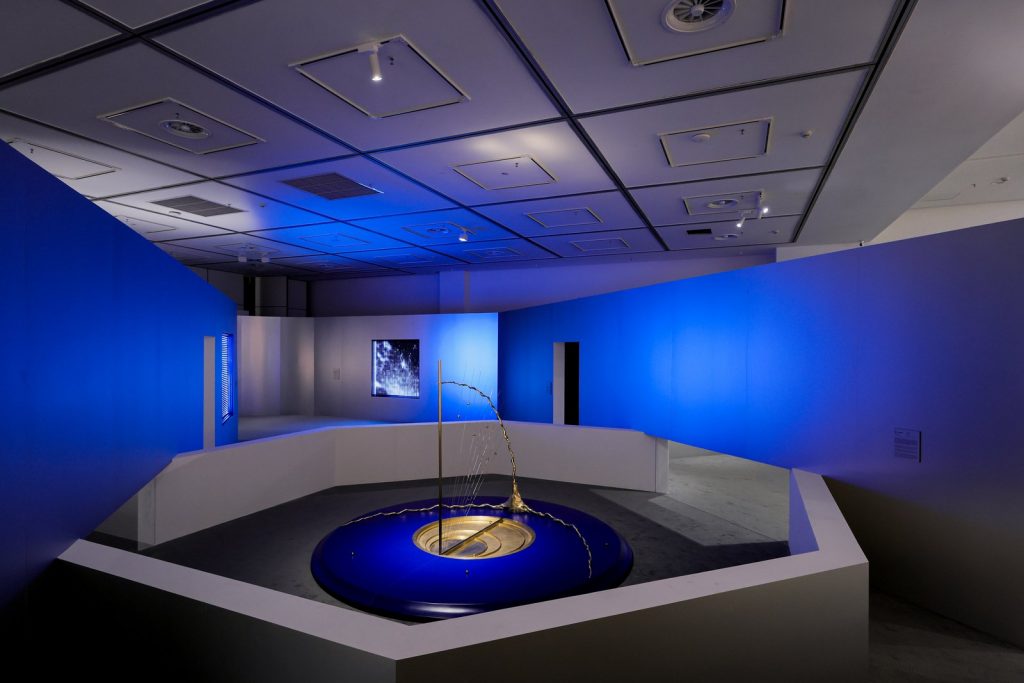
The gallery footprint was modest, but the spatial design was smart: tailored niches for works across very different media and styles, unified by a deep blue–silver palette that sustained a cosmological atmosphere.
Concept
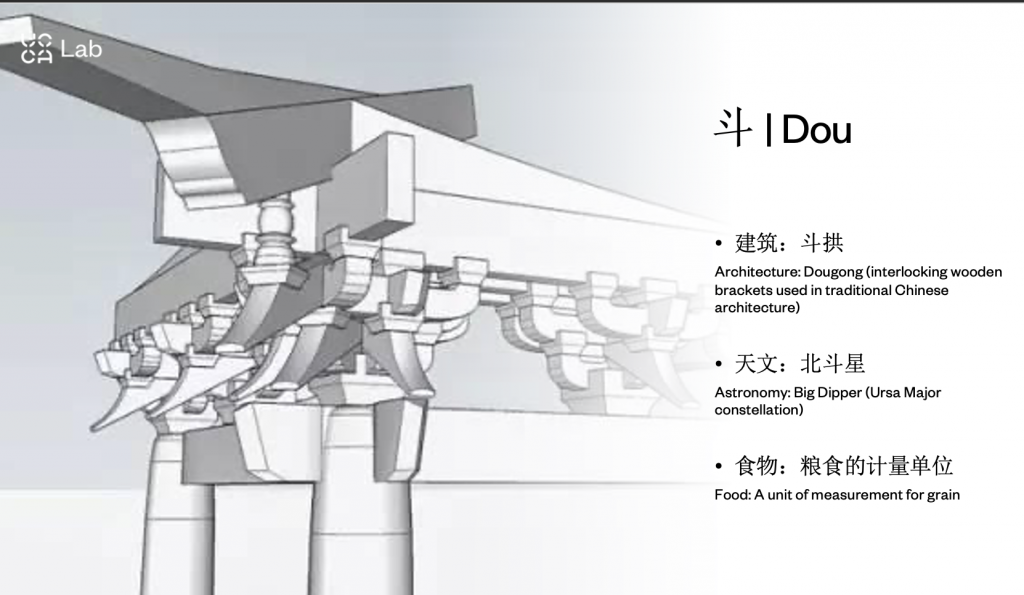
“Cosmic Alignment” grows from the Chinese character “斗 (dou)”, bridging architecture, astronomy, and agriculture.
This ancient unit of measurement interconnected three pivotal technologies—mechanics, astronomy, and numerology. I think this concept is extremely brilliant!The exhibition explores ancient Chinese cosmology through material and technological lenses, embodying the unity of space and time, an infinite universe, and the relationship between humans and the cosmos.
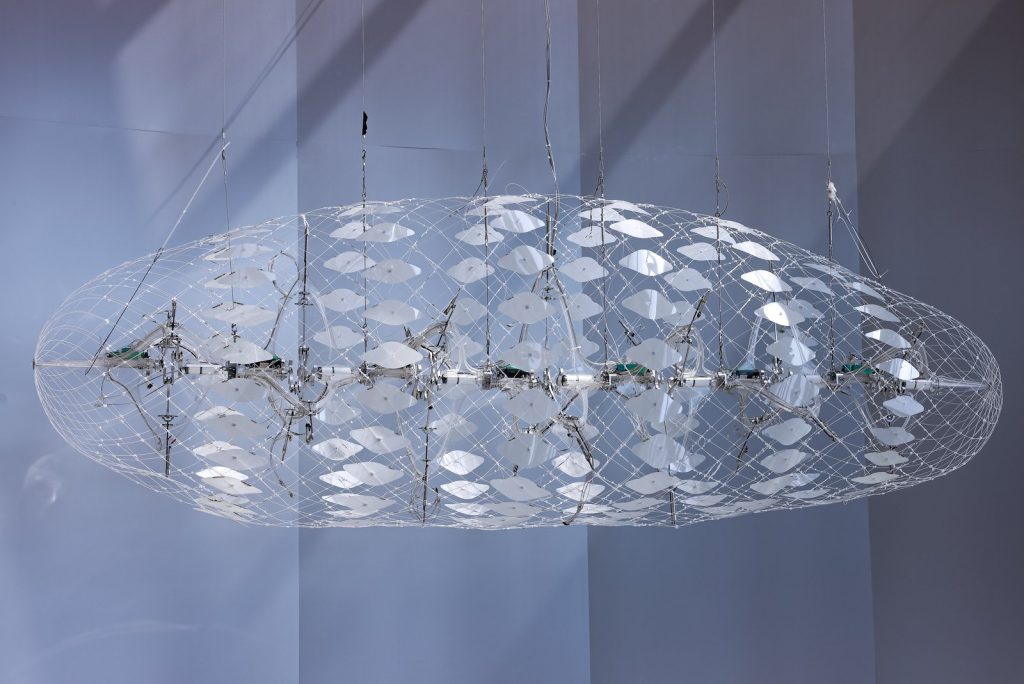
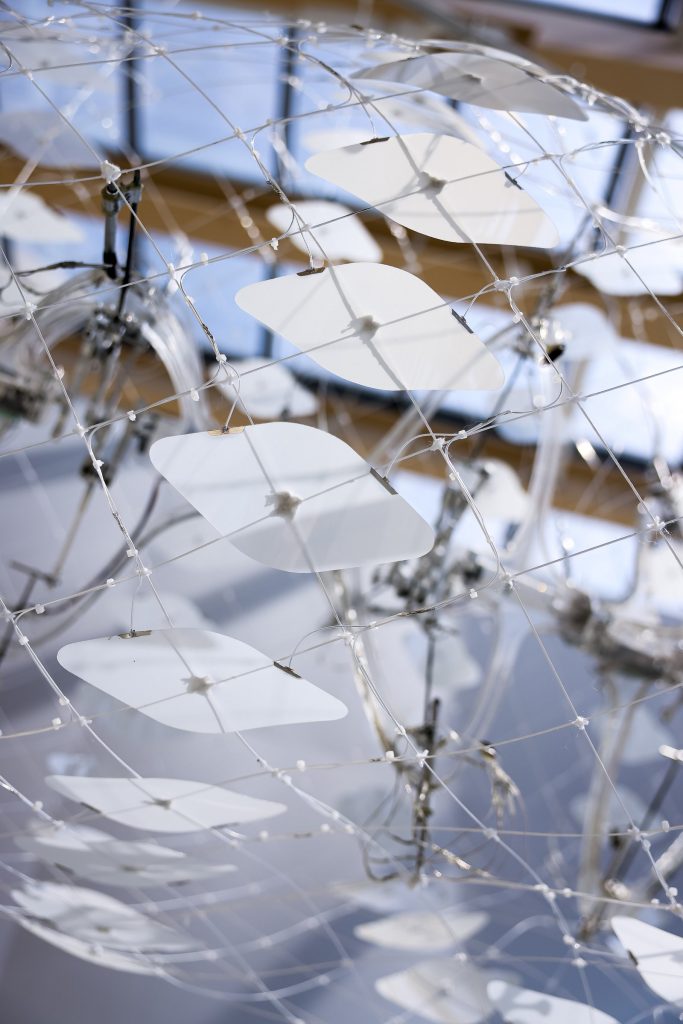
This is a kinetic installation. It uses sensors to collect real-time air-quality data and converts it into changes of form, color, and sound within the mechanism, making otherwise invisible atmospheric conditions perceptible. Like a “translator,” it lets viewers sense environmental change through sight and sound, drawing attention to the interplay between human activity and the state of the air.
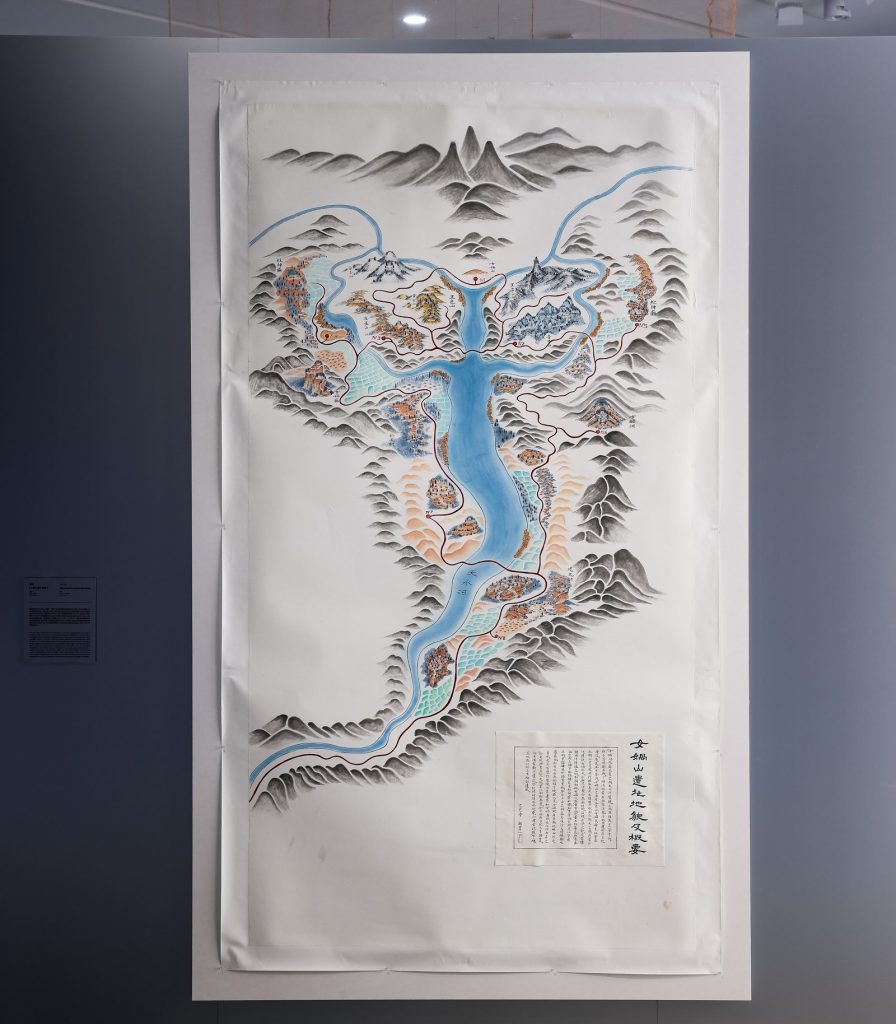
Xie Qun, Map of the Nuwa Mountain Ruins, 2025, ink on xuan paper, 240 × 123 cm
Inspired by Chinese myth of Nuwa patching the sky, the serpent-bodied figure is transformed into the counter-form of earth veins and mountains, symbolizing unity between human and natural form. The work situates myth within concrete spaces and practices, combining material-culture research with anthropological imagination.
I have been reading the Classic of Mountains and Seas and am drawn to the ties between mythical creatures and their geographies; this piece turns myth into a legible spatial and productive reality.
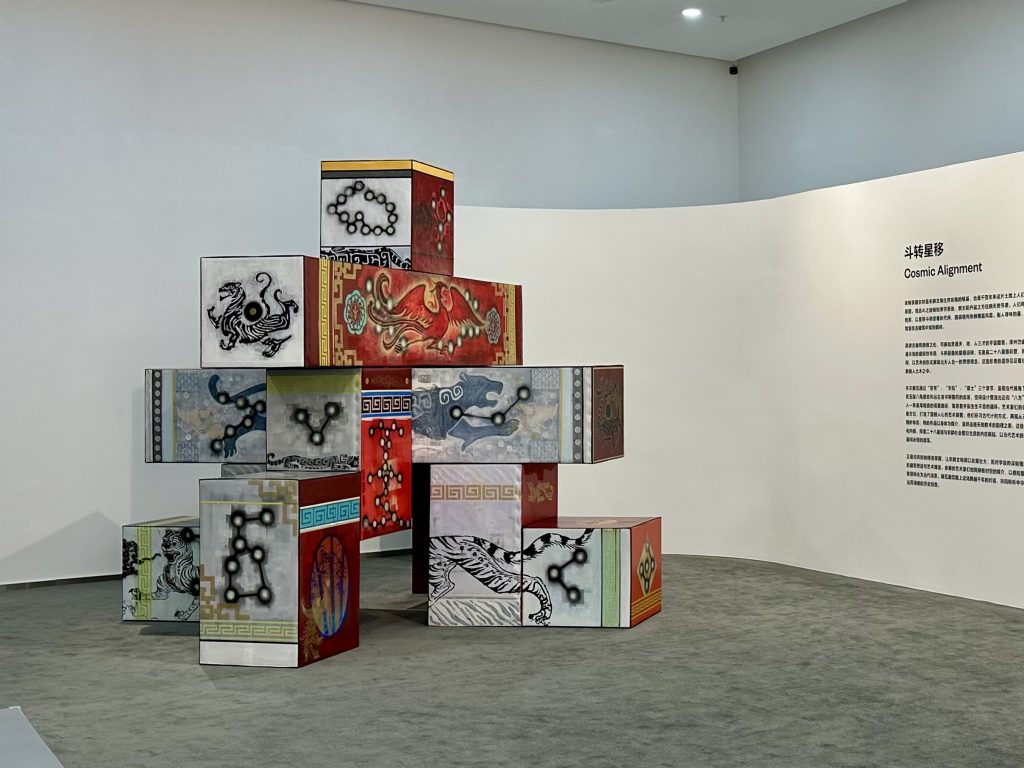
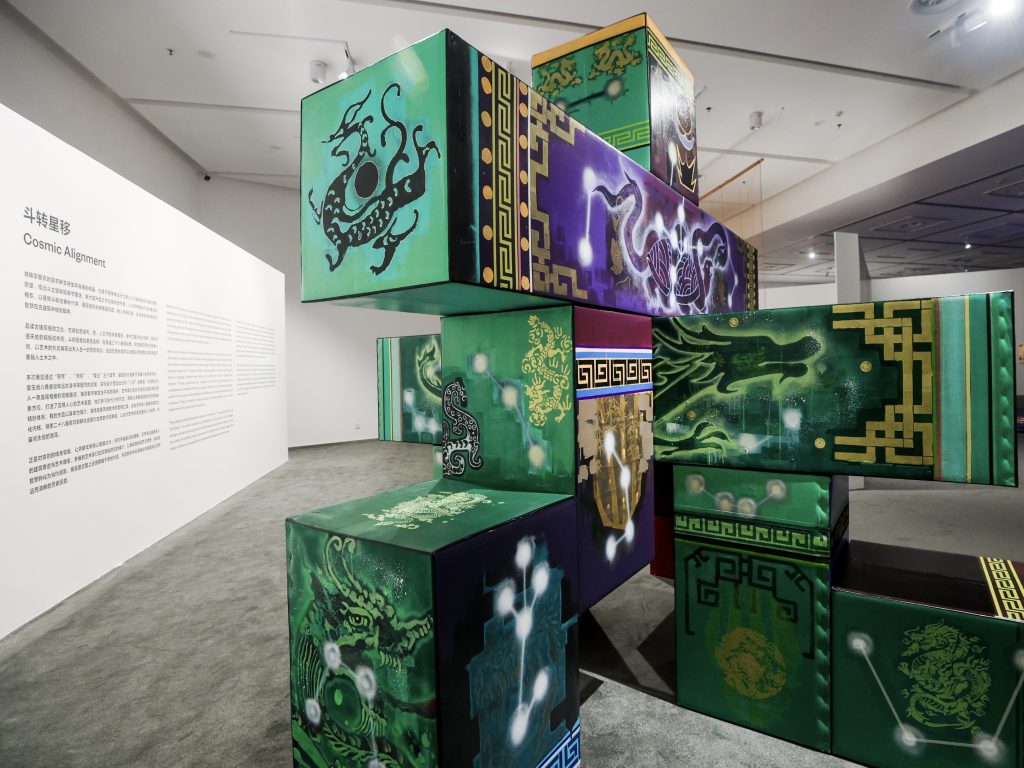
Using discarded cardboard, the artist reconstructs the dougong structure (interlocking wooden brackets) from traditional architecture and paints the Four Symbols(the protection of the four directions). Standing before it, I felt surrounded by stars and ancient temples, sensing the link between cosmos and architecture, faith and belief. I can feel the depth of ancient imagination about the universe.
The work draws on the ancient practice of “measuring with the body”—telling time by observing one’s shadow in sunlight. Later generations invented astronomical instruments to refine this temporal order. The artist suggests humans have never been separate from nature; the cosmos is apprehended through the body, expressing Chinese philosophy about“the unity of heaven and humanity”.
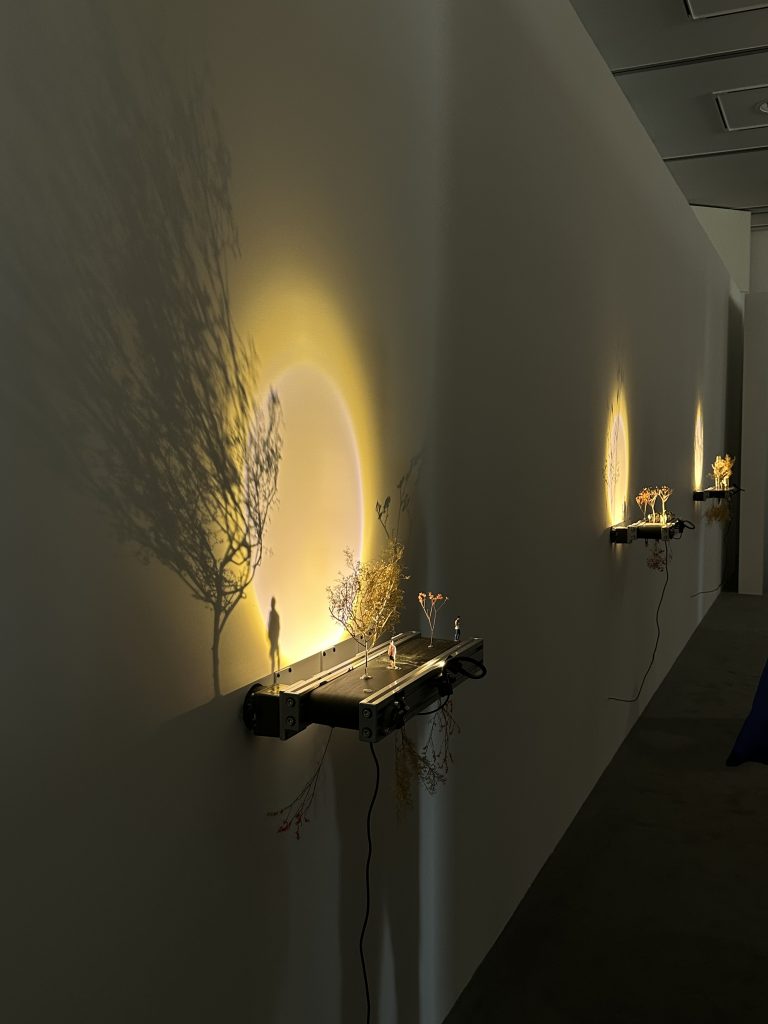
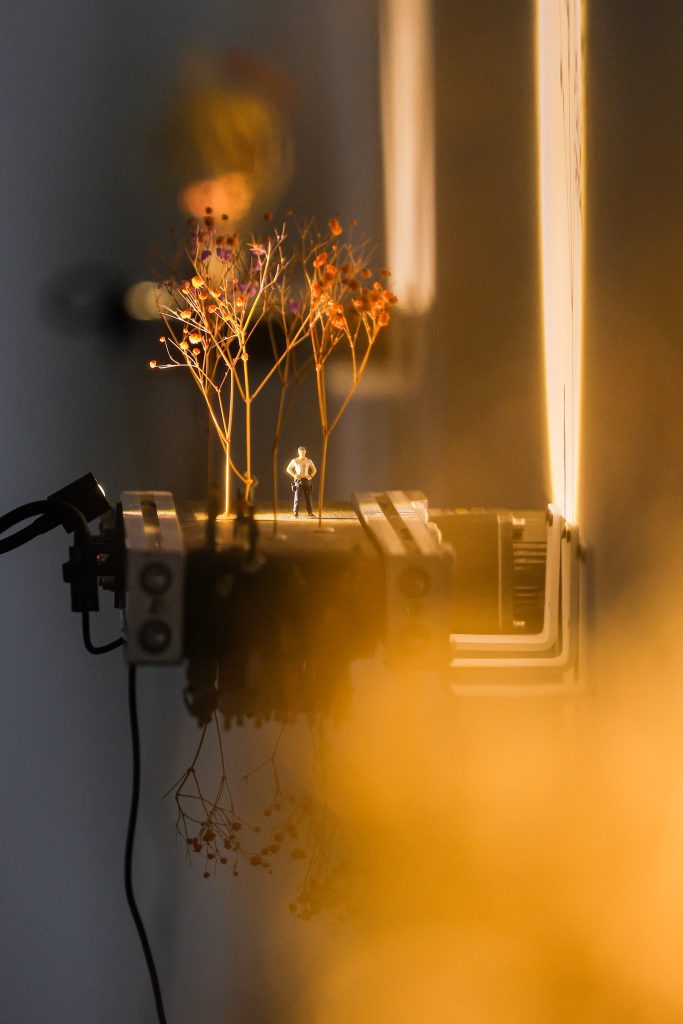
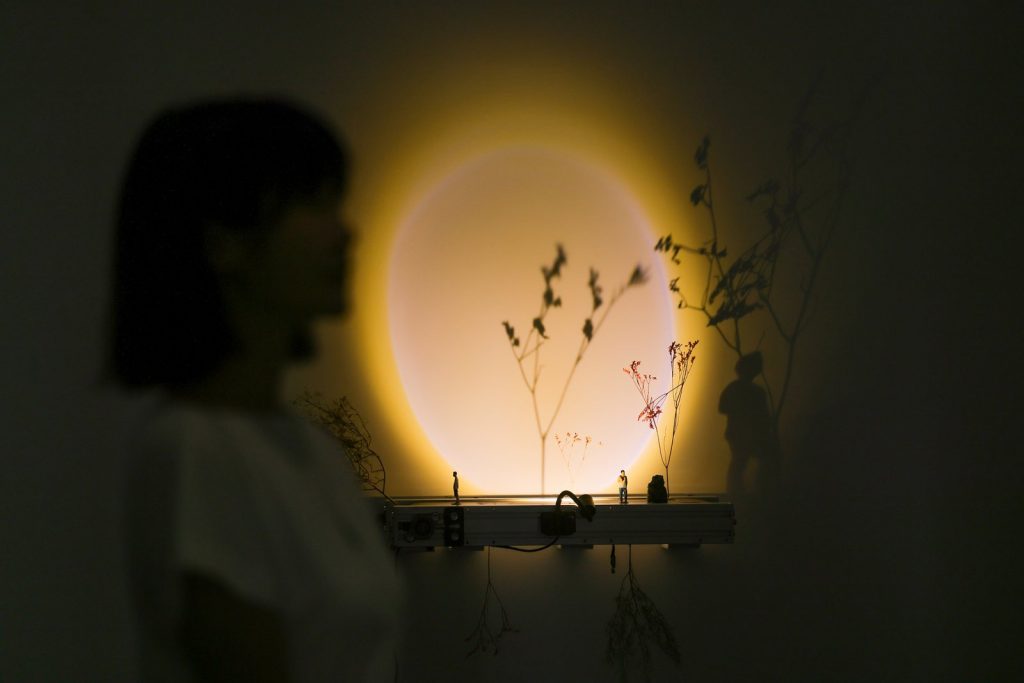
Gabriel Lester, Small People, Big Shadows, 2024, conveyor, tree models, figurines, 45 × 50 × 46 cm
Two light-based works continue Lester’s long-term inquiry into narrative, motion, spatiotemporal perception. Figures and objects travel on a conveyor while constant light witnesses their passage. It reminded me of a famous accent Chinese poem sentence:
“People today do not see the moon of old,
yet this moon once shone on people of the past.”
The light behind is like the moon that remains constant, quietly witnessing change and the passage of time.
Screenshot
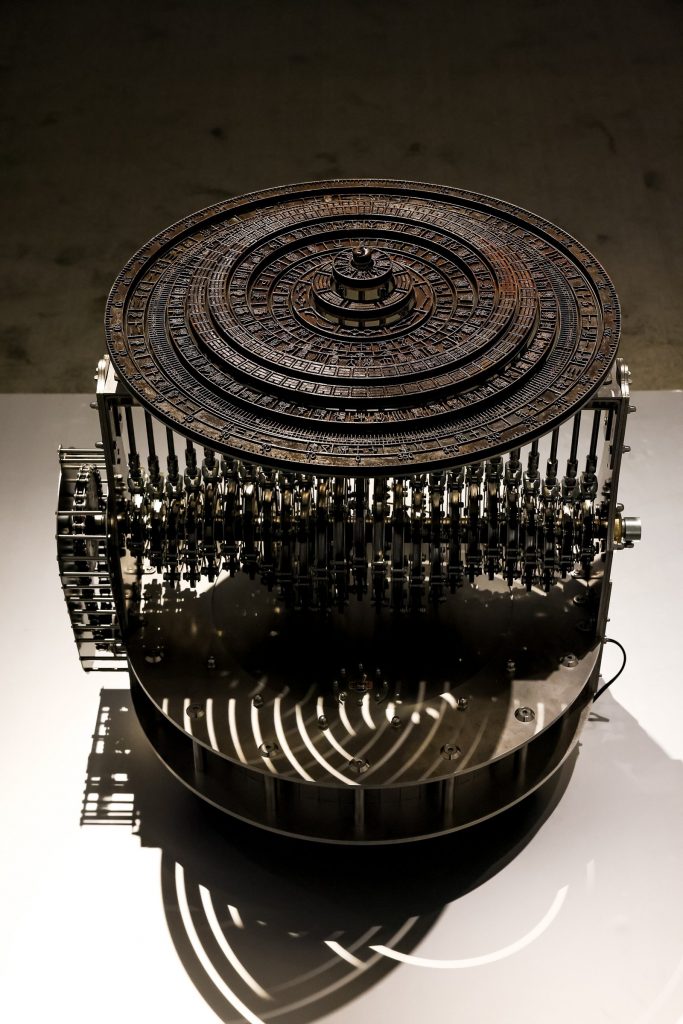
Nie Shichang, Droplet Oscillator, 2025, mixed metals (iron, stainless steel, copper), 90 × 70 × 80 cm
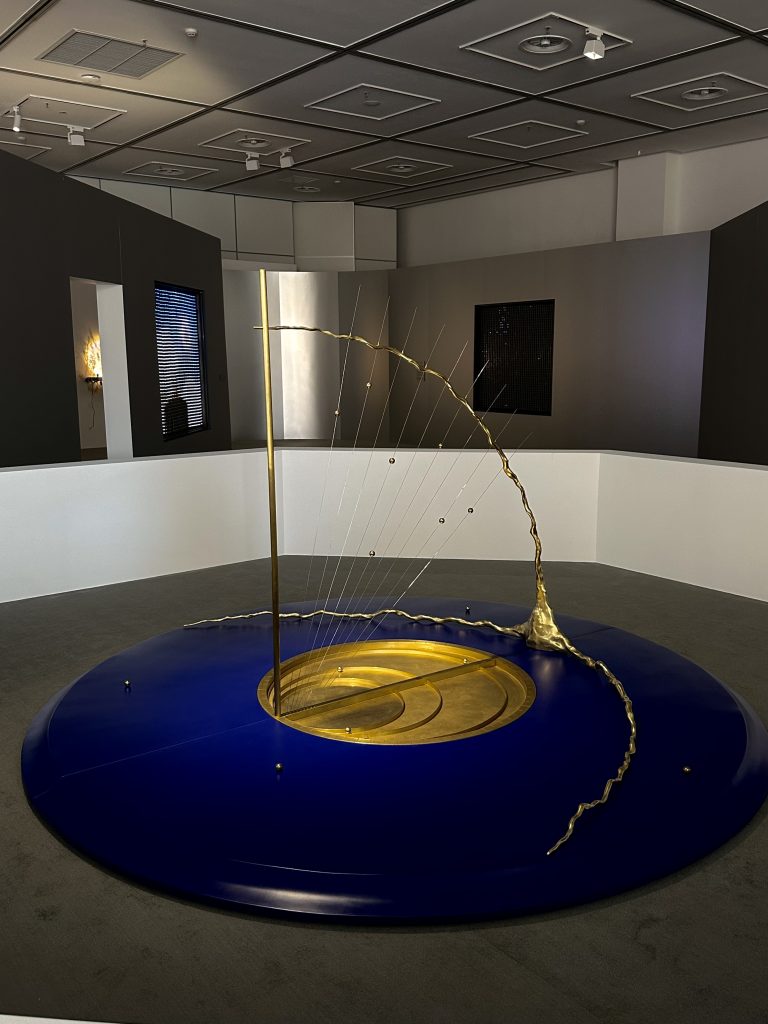
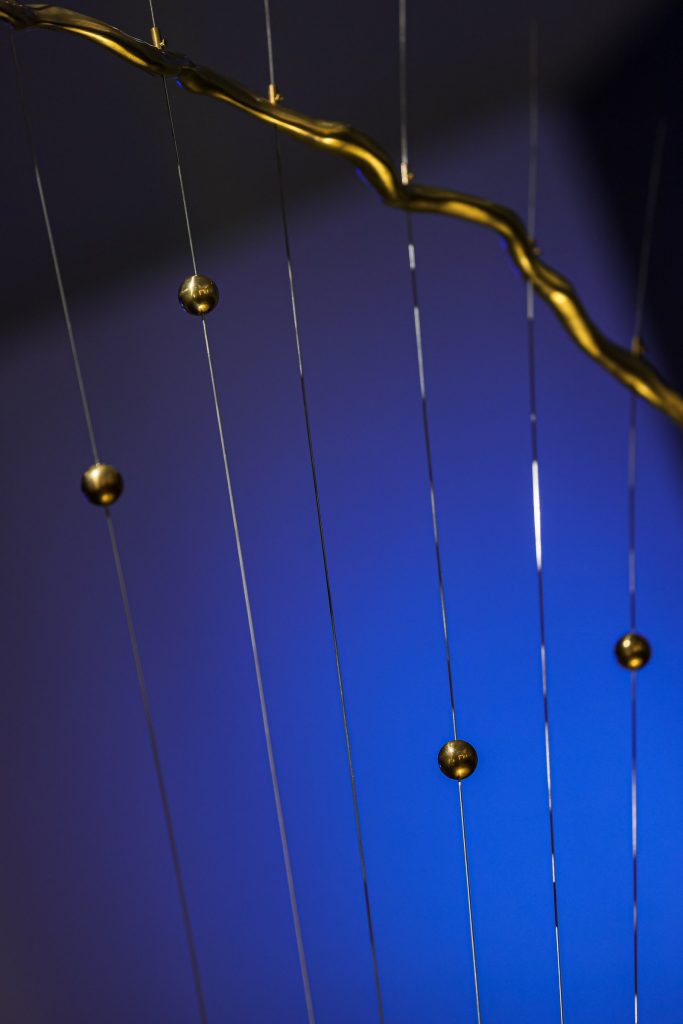
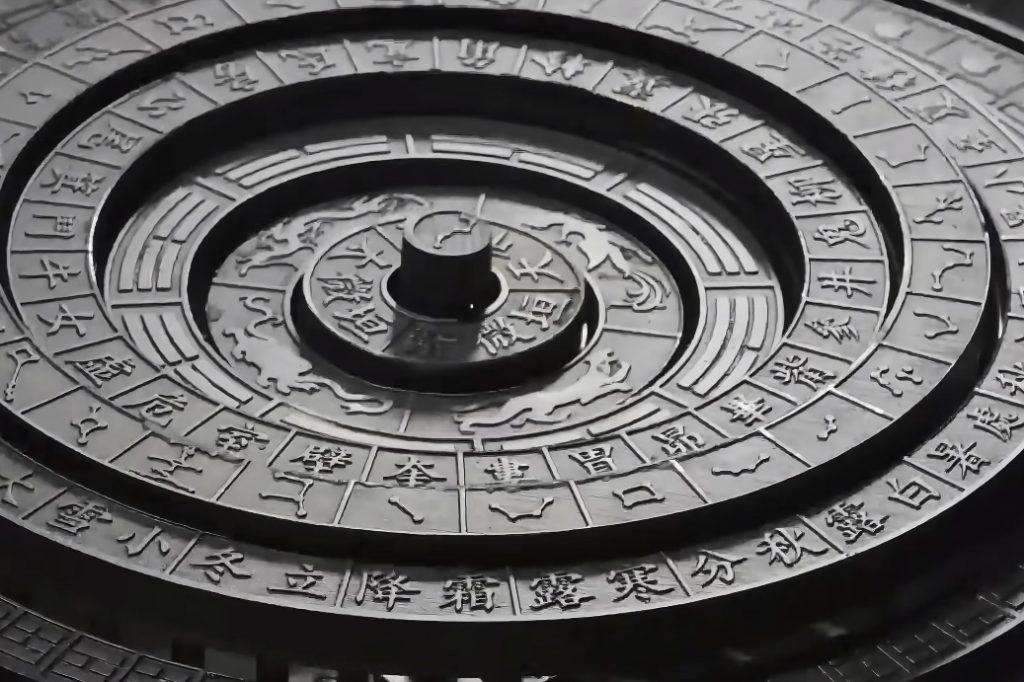
Based on calendar systems derived from sky-watching and agricultural time, the work embeds yin-yang lunisolar principles in concentric rings. It is Merging natural ripple patterns with compass-like forms, a mechanical transmission simulates wave dynamics. As the device runs, rings inscribed with celestial symbols rise and overlap like waves, suggesting a link between subtle variation and grand cosmic order and inviting reflection on natural laws within traditional Chinese cosmology.
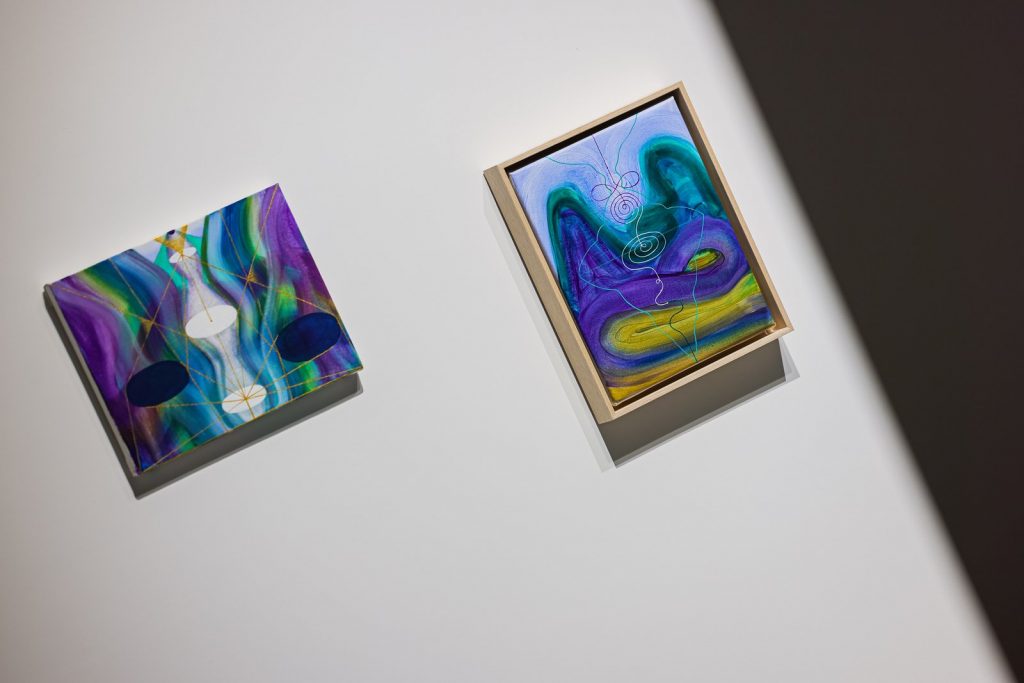
Emily Cheng, Cassandra, 2023, Flashe on canvas, 28 × 36 cm
Cheng explores the spirituality of painting and cosmological philosophy, constructing visions that link inner spirit and universe through abstraction. Combining Daoist talismans, scientific illustration, and prehistoric rock art, she dissolves boundaries between inner/outer, individual/collective, past/present.
Exhibition 2 — The Eightieth Day
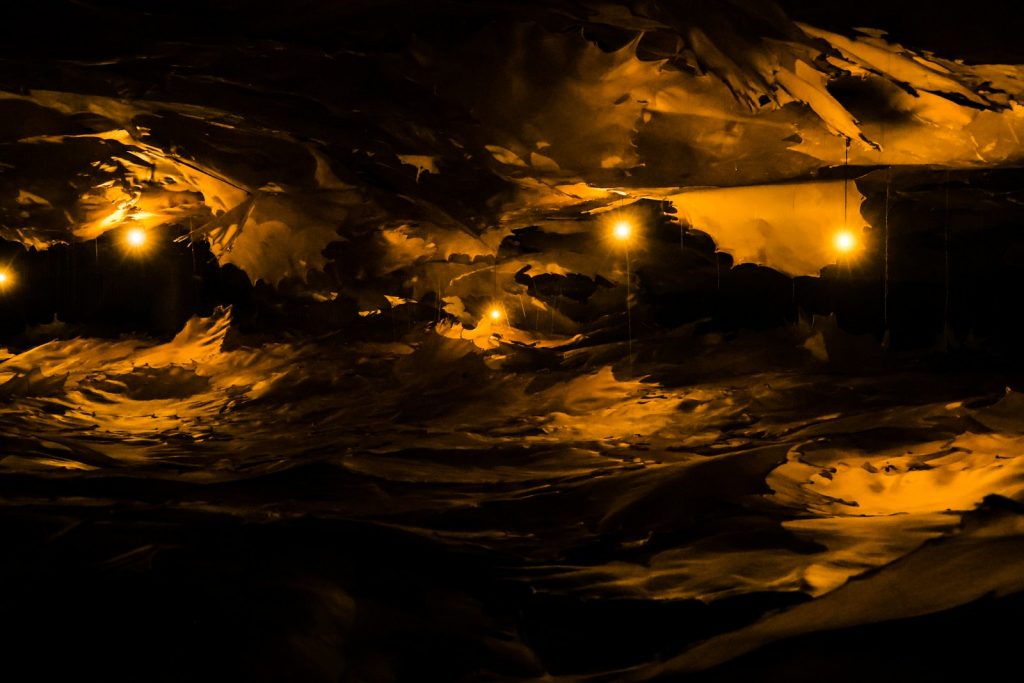
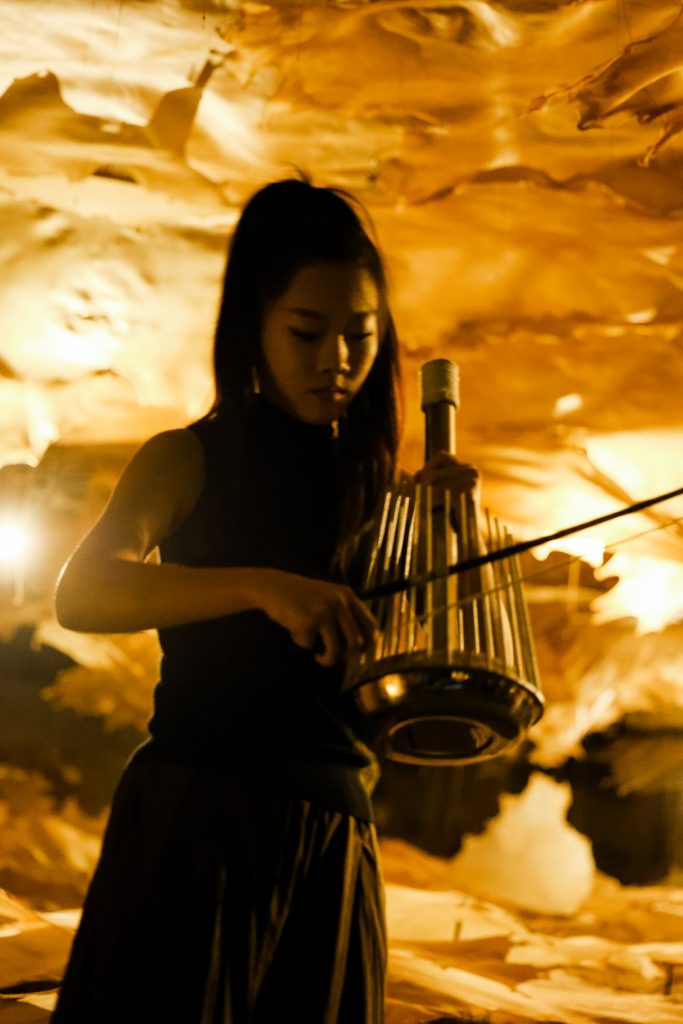
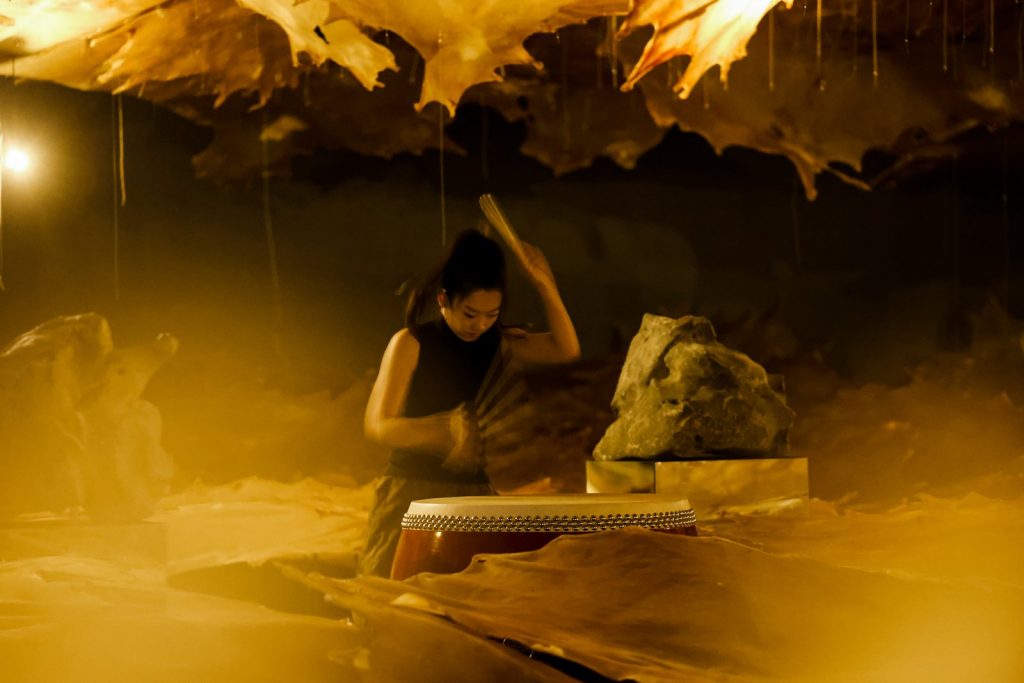
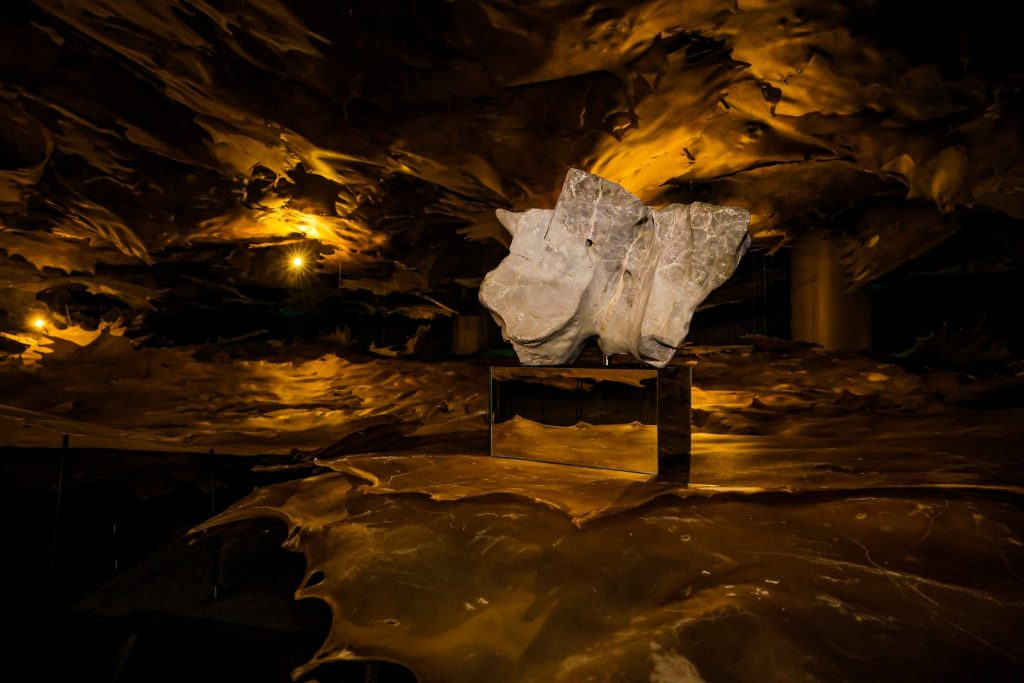
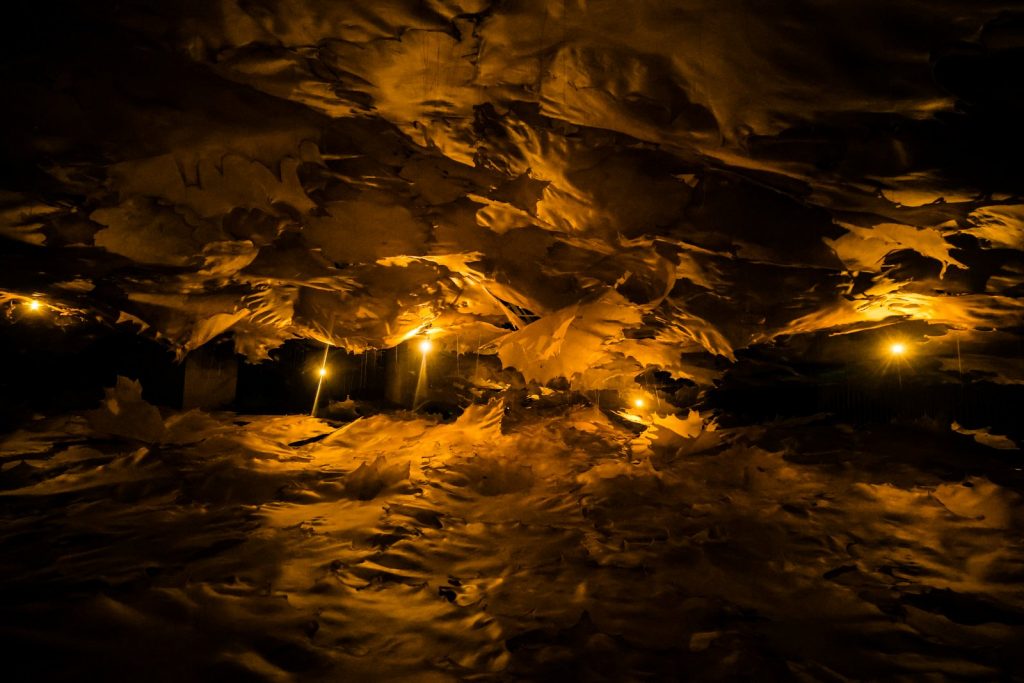
This large-space installation draws on the myth of Nuwa patching the sky. Using raw cowhide, natural stone, and mixed media with instrumental performance, it focuses on the moment just before cosmic order is restored.
I appreciate this immersive format that invites reflection.Walking through, I felt suspended between destruction and repair, chaos and order—as if back before the birth of civilization, about to witness the shift from turmoil to structure. It prompted three questions: Who am I? Where do I come from? Where am I going?
However, as an animal-protection advocate, the material of this work – cowhide – made me into deep reflection. I understand cowhide is a by-product of beef production. It is common in everyday life such as car interiors, bags, where its properties are functionally used. However, in this exhibition, over 200 sheets of dried cowhide were simply suspended in the space, without any real use of their material properties. What will happen to them after the show?Stored away or discarded?
To me, cowhide is not strictly irreplaceable in this context. While Damien Hirst’s work is controversial, His works expose how the living often face death with indifference, even turning it into a spectacle. However, The Eightieth Day explores the dawn of civilization; if the aim is to evoke a primordial atmosphere,fabric or recycled, low-impact materials could achieve a similar effect. More broadly, creative practice should move beyond a human-centered default, ask what “nature” or non-human creature would say, and keep sustainability in view.
A Setback — and What It Taught Me
Beyond this, the project also left me with another important lesson. Our original plan was more ambitious: beyond the exhibition, we scheduled a week-long outdoor stage performance over holiday, designed by famous architect Ma Yansong and directed by Liu Chang, blending contemporary theatre with local traditional opera—a genuinely inventive program. The entire team believed in its artistic merit. Yet one week before opening, the mayor and the police department canceled it, even though rehearsals and stage construction were complete.
From the mayor’s perspective, parts of the work were too avant-garde and dark for an official, government-partnered event. The police cited practical concerns: hundreds of spectators in an open square, insufficient parking, and potential crowd-safety risks. This was my first real lesson that artistic creation is not absolutely “free.” The same artwork conveys different meanings when viewed from the perspectives of different social roles. Mature projects must balance multiple viewpoints; while pursuing artistic ideals, we must fully account for real world conditions and social context.
Conclusion
This project gave me more than new sources and ideas for my research: it deepened my understanding that artistic work must weigh environmental responsibility and communication to different role, alongside concept and form. I’m certain the experience will stay with me and inform my future practice.
Last week, I completed a neurodiversity assessment with a doctor from Psychiatry UK and was diagnosed with ASD (Autism Spectrum Disorder) with mild ADHD. I felt like though years of unspoken frustration were finally acknowledged. Like The Truman Show, I suddenly realized that most people experience life more easily and happily, while I have spent over twenty years imitating and learning how to fit into society.
As a high-functioning autistic woman, I appear almost no different from others: I can live independently and communicate effectively. Yet I have always felt different and lonely. With age, the mental strain and loneliness caused by this difference have grown stronger. Many things that others grasp instinctively require me to use brain to thinking. Additionally, I am more sensitive to external stimuli such as noise or texture, which often leaves me exhausted.
When I told my parents and a few close friends about the diagnosis, they were surprised, concerned but confused, thinking I was overanalyzing. I understand their reaction. In their minds, I am intelligent, friendly, and capable, nothing like their image of autism who struggles with speech or social behavior. One friend asked why I insisted on getting a diagnosis if it didn’t affect my “normal” life or lead to treatment, especially after waiting on the list for six months.
For me, the diagnosis holds profound meaning. It has resolved decades of confusion and pain, explaining why I have always had to work so hard to fit in and why I experience obsessive thought patterns invisible to others. I discovered that many things I once thought “normal” were not. Most people easily notice physical or emotional discomfort, which is hard for me to recognize. For example, I might become irritated because I forgot to go to toilet all day or was extremely thirsty, yet fail to realize the physical cause behind the emotion.
Besides, this diagnosis made me feel my real self that I had hidden behind a mask for so many years was finally seen. I remembered when I was a child, I refused to wear any tight clothes and sweaters, even those knitted by my grandmother. I always felt guilty for my picky and seeming ungrateful. But now, I understand that it was sensory sensitivity, not defiance. I felt immense relief, as if I had received an official notice declaring that I had never been guilty.
Yet, to be honest, my family and friends’ initial reactions left me slightly disappointed. I know they love me, but they cannot truly feel my world or understand the challenges it brings. This made me realize how little awareness of neurodiversity exists, especially in China, where autism is still equated with being nonverbal or socially withdrawn. Those with milder ASD or ADHD symptoms often recognize themselves only through personal exploration.
For this reason, I now have a strong desire to express the autistic experience through art — to help others see, understand, and reduce bias. I want people to know that difference is not a flaw, but another way of being. Previously, my artistic research mainly focused on philosophy and physics — broad, external themes. After being diagnosed with autism, I realized the meaning of exploration life not only in observing the universe outside, but also in perceiving one’s own existence inside.
Each person observes the world through a unique identity, experience, and sensory lens. As someone on the autism spectrum, I hope to use art to record and translate this perception. I believe art is a medium of understanding, acceptation, and embraced.
To be honest, my first reason for applying to the DPS program was quite practical. My health condition wasn’t good, and I wanted to stay in my home country to recover. Besides, I thought some internship experience would help me apply for graduate school.
Yet while filling the DPS application form, I realized what I truly needed this one- year time itself. I am going to enter my final undergraduate year. Although I had done well in all my previous units that mostly earning A’s, I didn’t feel ready to graduate. I was confused about my career direction, and more importantly, I didn’t really understand myself:
Why do I want to go to graduate school? What do I want to do in the future? Where do I want to live? Why am I even alive?
……
I had no answers.
I feared time was running too fast, and I wasn’t ready for the future. So in a way, I used DPS as a way to delay facing it, a “gap year” to hide in, rather than a brave challenge.
But once the year truly began, everything turned out completely different from what I had imagined — far more rewarding than I imagined. Besides the professional experience I gained, I also found the answers I’d been searching for and many new chances.
The first project I joined in my placement was an exhibition about ancient Chinese cosmology, which is a subject I’ve long been fascinated by. It deeply inspired me and reawakened my desire for research. I realized how wondrous the universe is, and I want to continuously explore it through art — not just within Chinese philosophy, but across different civilizations in the world. This confirmed my decision to pursue graduate study, where can help me to continue this exploration on a broader platform.
At the same time, as I met more art professionals, I started to think seriously about possible career paths after graduate school. Perhaps as an independent artist, a curator, an art investment consultant, or even starting my own brand. I began taking small steps, like accepting online commissions for handmade crafts. It was stressful, as I always worried about clients wouldn’t be satisfied, and I was struggling to balance the time between work and creation. but I know that every career begins with uncertainty, and persistence brings growth.
Now I feel my life became positive and energetic. During my three-hour commute, I’ve also developed a new habit that listening to audiobooks. Lately, I’ve been listening to Tao Te Ching (a foundational texts of ancient Chinese philosophy)written by Laozi as my research. Laozi teaches that everything is relative, and he named the origin and return of all things “Tao.”
In Chapter 15, he writes:
“混而能静,澄之徐清;安以动之,徐生。”
“When turbid, remain still, and the water will slowly clear;
When at peace, let movement arise, and life will slowly unfold.”
I was deeply moved by this fantastic idea. I realized the mind must stay calm to be clear; when the heart becomes clear, action flows naturally, bringing genuine vitality.
Now I feel like a clear stream — peaceful, with clear goals and no longer anxious; yet driven by purpose, I keep moving, learning, and exploring, each day filled with quiet energy. Though the DPS year may seem still on the surface, it carries immense power inside, bringing vitality and possibilities.
I’ve finally understood that major study, career, and life are not separated, but as the “stillness and motion” mentioned by Laozi—they complete and transform each other.
Through exploring art and the world, I’m also discovering and refining myself, which is the true purpose of living.
Leave a Reply