Category: Self-initiated Practice

  • SIP research:From Craft to Fine Art Practice

    During my tutorial with Chole and Samantha, I received very helpful feedback on my SIP project. They confirmed that the project has potential, but I also realised that it needs to move further towards an ethical fine art practice. The work should not only aim to “look like” an animal, but should also express my perspective, emotional judgement and values as an artist. I need to develop the project in two main areas: form and material ethics.

    In terms of form, I need to move away from purely realistic imitation and develop a more artistic language. The work should not simply copy an animal’s appearance, but use posture, structure, material and setting to express how I understand animal lives.

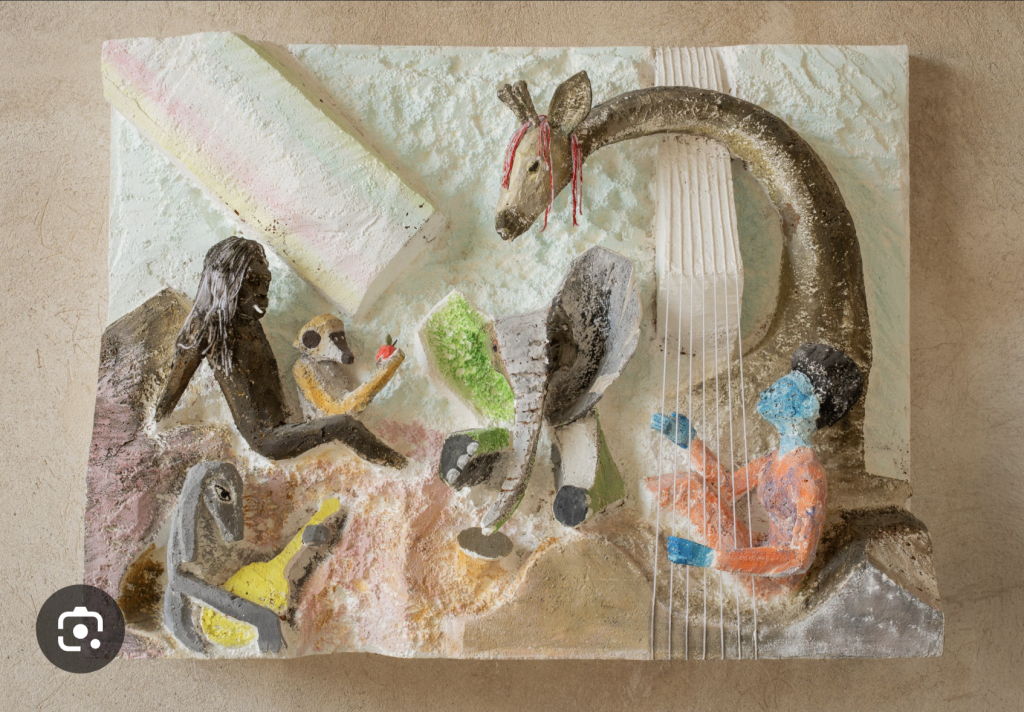
    Lin May Saeed’s work inspired me to see animals as “beings in their own right”, rather than symbols of human emotion or extensions of human ownership. Her work made me realise that I do not have to make a pet that looks exactly like a photograph. Instead, I can give the animal an action, a position or a narrative setting, so the work can move from a single pet replica to a more meaningful animal scene.
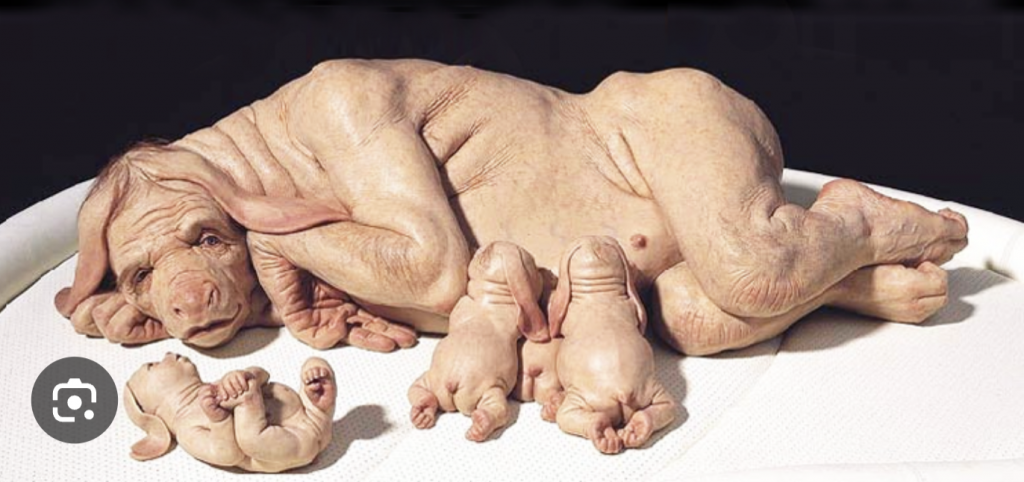
    Patricia Piccinini made me think about whether imperfect, unfamiliar or vulnerable lives can create stronger empathy and care. For my project, this means I do not need to over-beautify stray animals. I can keep their thinness, alertness, scars and imperfections, because these are also part of their lived experience.
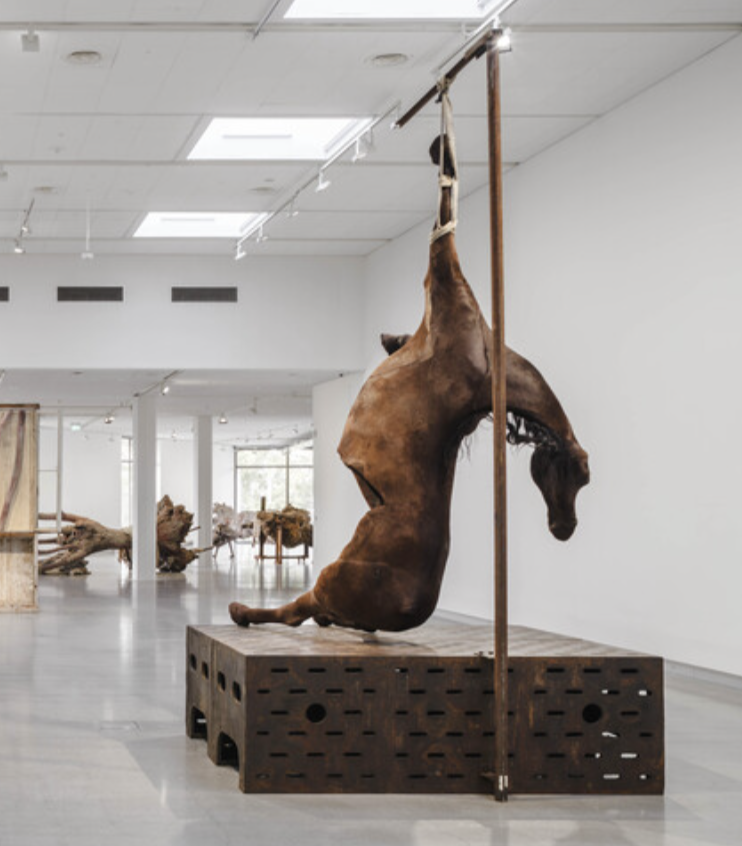
    Berlinde De Bruyckere’s work helped me think about bodies, pain and traces. She often uses materials such as wax, animal skins, hair and textiles to create distorted, fragile forms that feel like bodily remains. Her work made me realise that memorial does not always mean revival or complete reconstruction. It can also mean acknowledging pain, preserving traces and proving that a life truly existed.
    In terms of material, I need to reflect on my previous use of artificial fur. Although artificial fur avoids the animal ethics problem of real fur, it can still cause environmental harm and conflict with the sustainability values of my project. In the future, I hope to reduce synthetic materials and explore more suitable material choices.

    Naturally collected animal hair is an important direction. It is not only more environmentally friendly, but also carries body, scent, memory and intimacy. Especially in pet memorial works, hair can become a real trace of an animal’s existence.

    I also want to research plant-based leather, bamboo fibre, mango-based materials and other sustainable alternatives. Savian / BioFluff’s plant-based fur material has also inspired me. Made from natural fibres such as flax and agricultural waste, it aims to create a biodegradable fur alternative with a soft, luxurious texture and a lower carbon footprint. This showed me that sustainable materials do not have to feel rough or cheap. They can also be soft, intimate and close to luxury textiles.
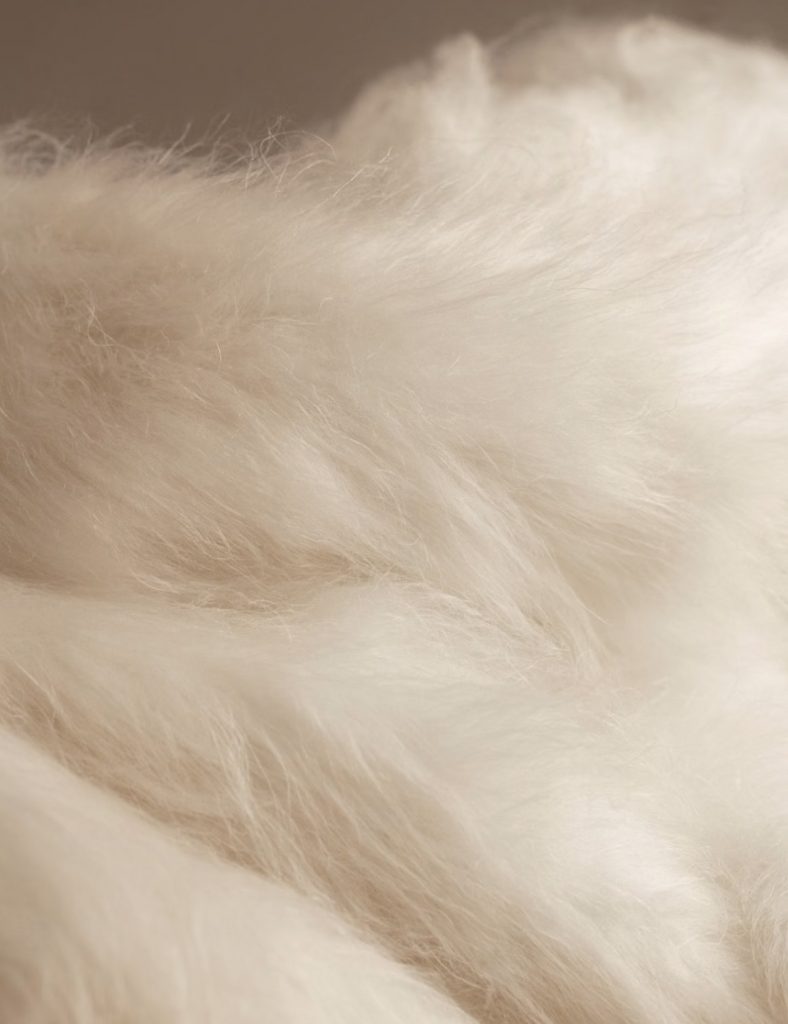
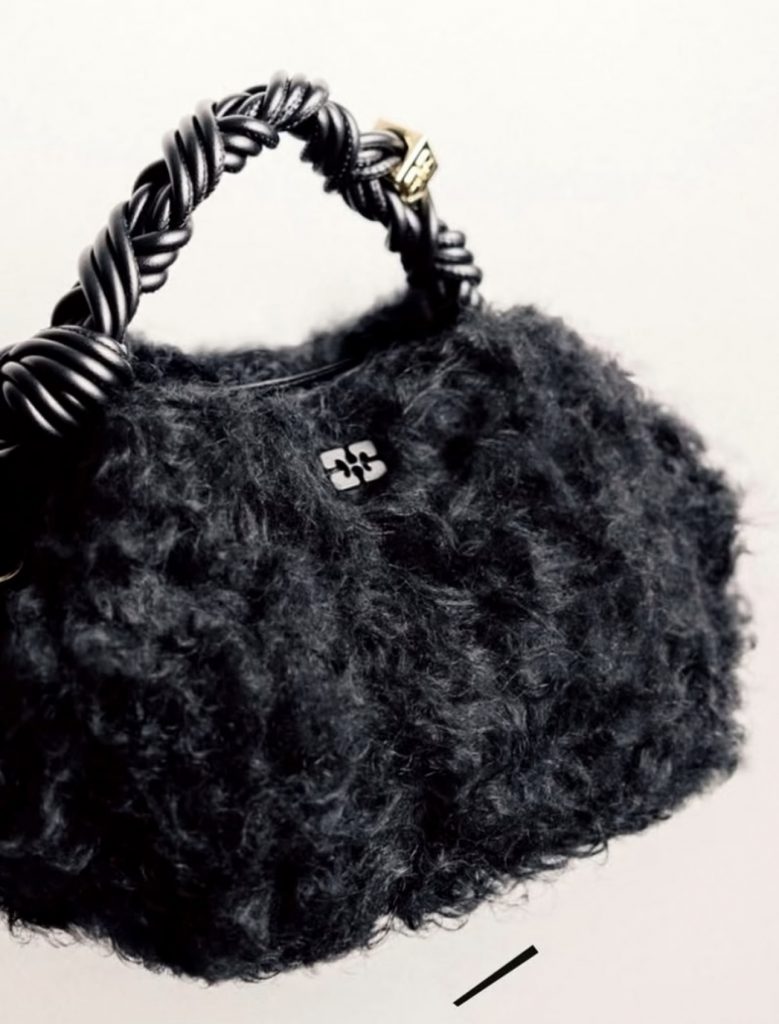
    In conclusion, this tutorial helped me see more clearly that my SIP should not remain a pet memorial product. It should develop into an art project about small lives, memory, material care and ethical practice. My aim is not only to make animals look alive, but to prove that they once lived fully and vividly.
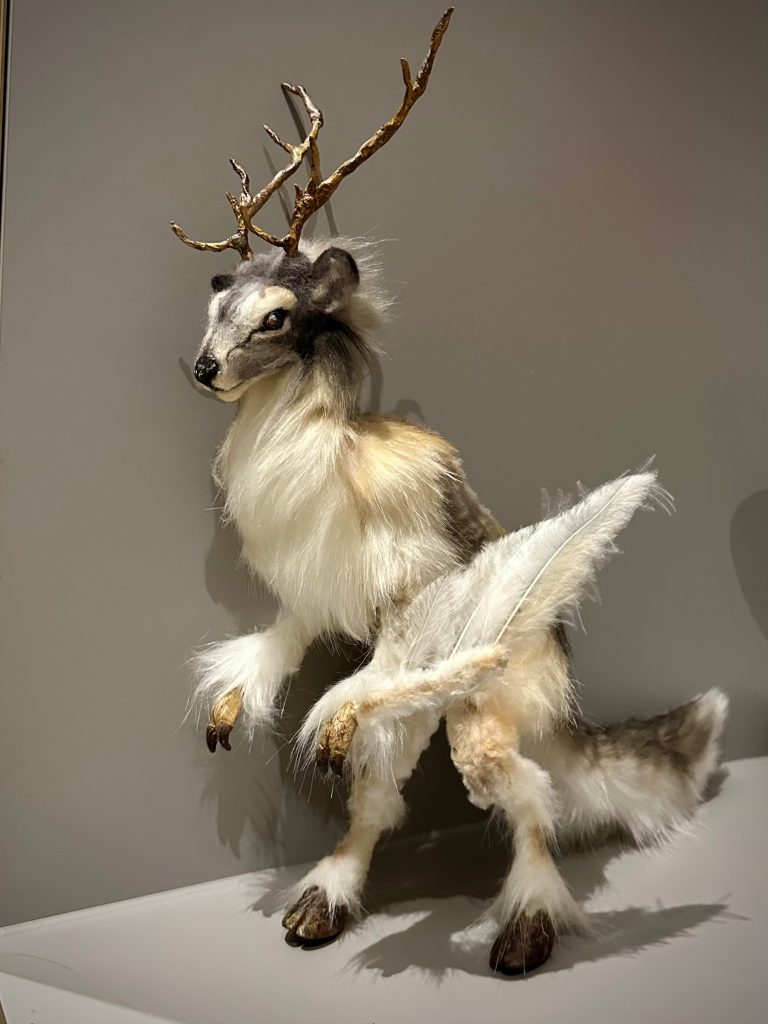
  • Fantasy creature doll

    Chimera, Sophie Wang, Wool, Faux fur, wire, etc. 80×70×30cm

  • Deep time walk reflection- inspiration for SIP

    Deep Time Walk

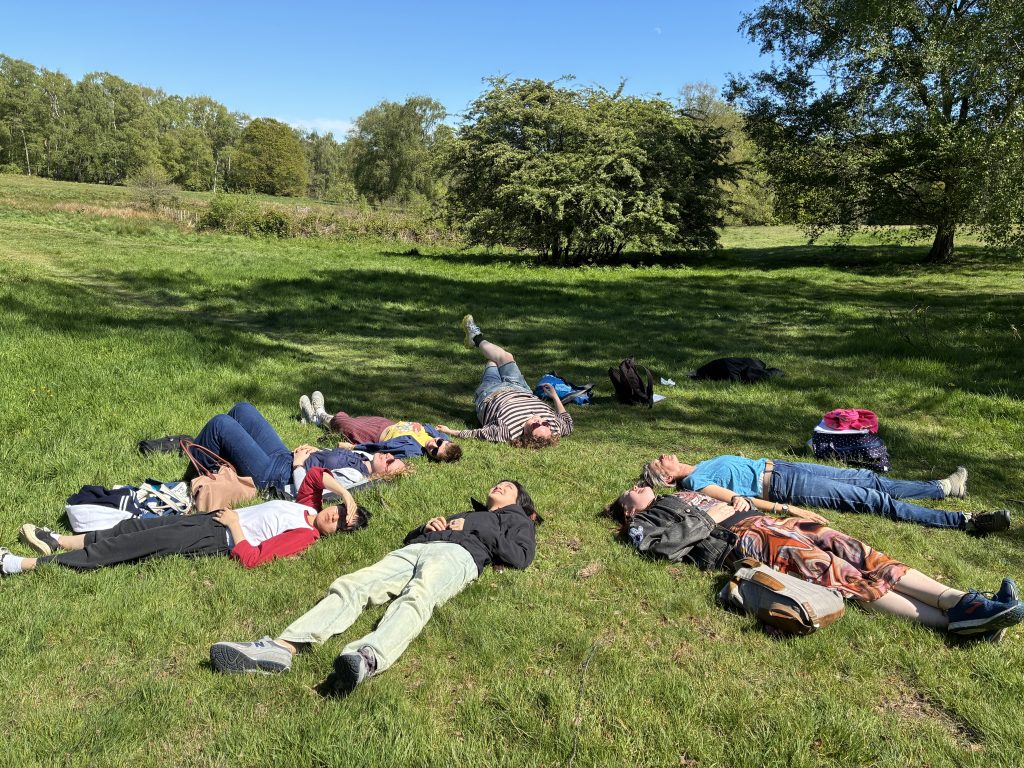
    Yesterday, I joined a Deep Time Walk organized by the DPS team and spent a perfect day with a group of loooovely people. A Deep Time Walk is a 4.6km guided journey that brings Earth’s 4.6 billion-year history to life. Each meter you walk represents one million years of time. It is more than just a walk; it is an experiment for the head, heart, and body, allowing us to find our place within the wider living world through storytelling and reflection.

    From Textbooks to Footsteps

    I studied Environmental Science and Biology in high school, but walking the timeline felt completely different from reading a book. Every step represented hundreds of thousands, even millions of years. By lunchtime, with half the day already gone, we had only just reached the stage of the “Cambrian Explosion.” I felt a sense of urgency, knowing that dinosaurs, mammals, humans, agriculture, and the Industrial Revolution were still ahead, with only a few hours of walking left.

    However, I had forgotten that the progression of time is not linear. Shortly after the rise of mammals, our tutor stopped and used her arm as a scale. In her less-than-one-meter arm span, humans appeared in the middle of her forearm, agriculture at her index finger, and the Industrial Revolution sat right at the very tip of her fingernail.

    Rejecting Anthropocentrism

    I was deeply shaken. Numbers in a textbook can never make you feel how tiny human history is compared to the Earth’s. We walked 4.6 kilometers, yet the entire history of human civilization covered less than 30 centimeters. This scale instantly shatters “anthropocentrism.” Humans are insignificant in the grand scale of ecology and history. What right do we have to think of ourselves as the masters of the Earth? This perspective gave me a more reverent understanding of “sustainability”: environmental protection is not about “saving the Earth”—it is about saving the fragile space that allows humans to exist.

    The Barrier Between Idealism and Reality

    We also discussed a very practical topic: the only reason we can sit here and discuss ecology and the future is that we are receiving a higher education. In the real world, so many people are struggling just to meet their basic needs for food and shelter. When a person cannot even guarantee their basic survival and freedom, they have no energy left to care about the environment.

    This reminds me of a realization from my recent internship: there is a massive barrier between idealism and reality. Without financial support from parents, it is incredibly difficult to make a living by pursuing the ideals or causes we believe in. Concepts like sustainability and environmentalism are often a form of discourse that can only be held by those with a certain economic foundation.

    An Unpredictable Future

    Finally, I had a deep realization: the future is completely unpredictable. The bacterial ancestors at the dawn of the Earth could never have imagined that humans would appear billions of years later. Since the future has no fixed direction, all we can do is enjoy and cherish every present moment. We shouldn’t be overly anxious about a future that hasn’t happened yet, because while everything is unpredictable, it is also full of opportunity.

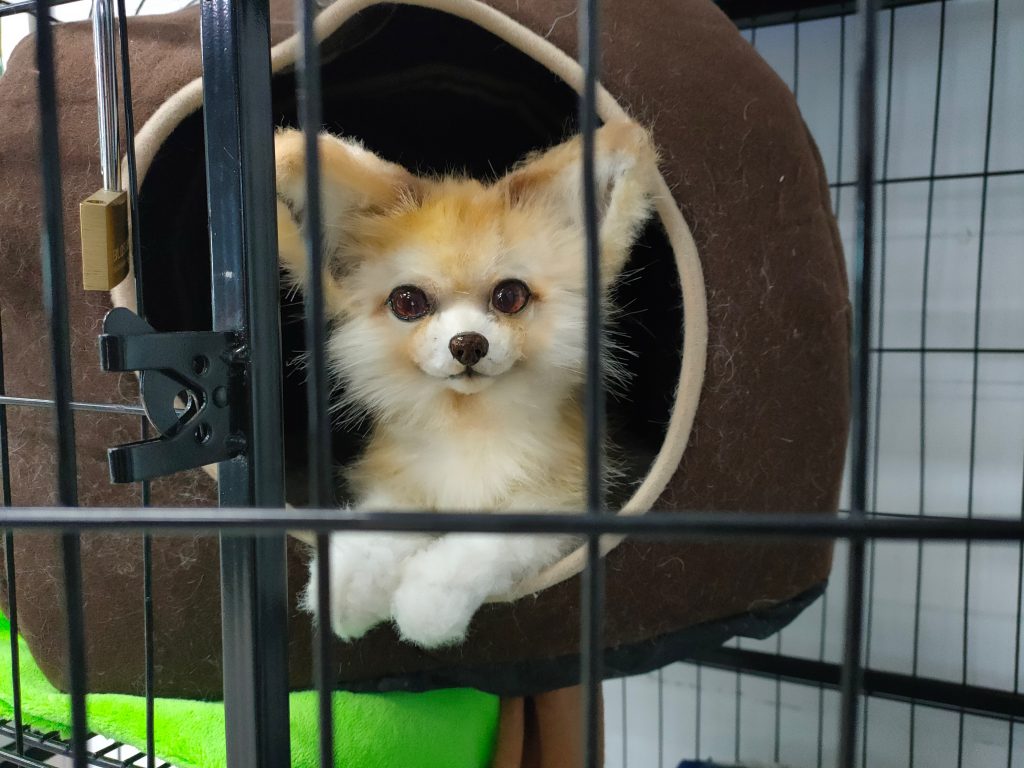
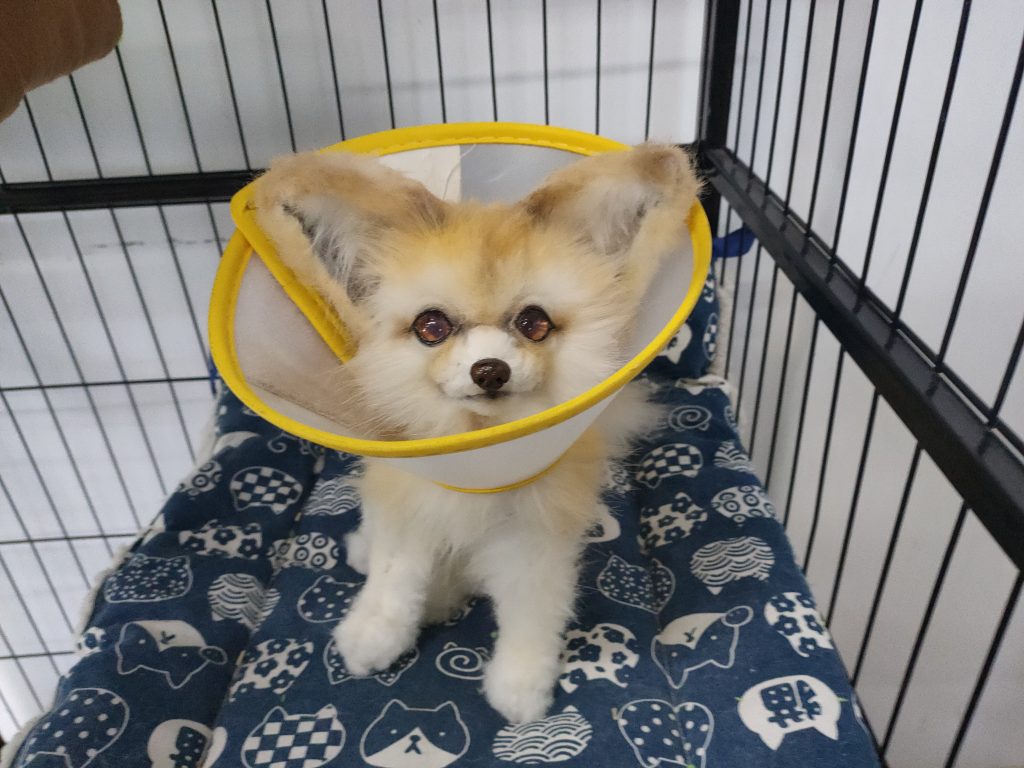
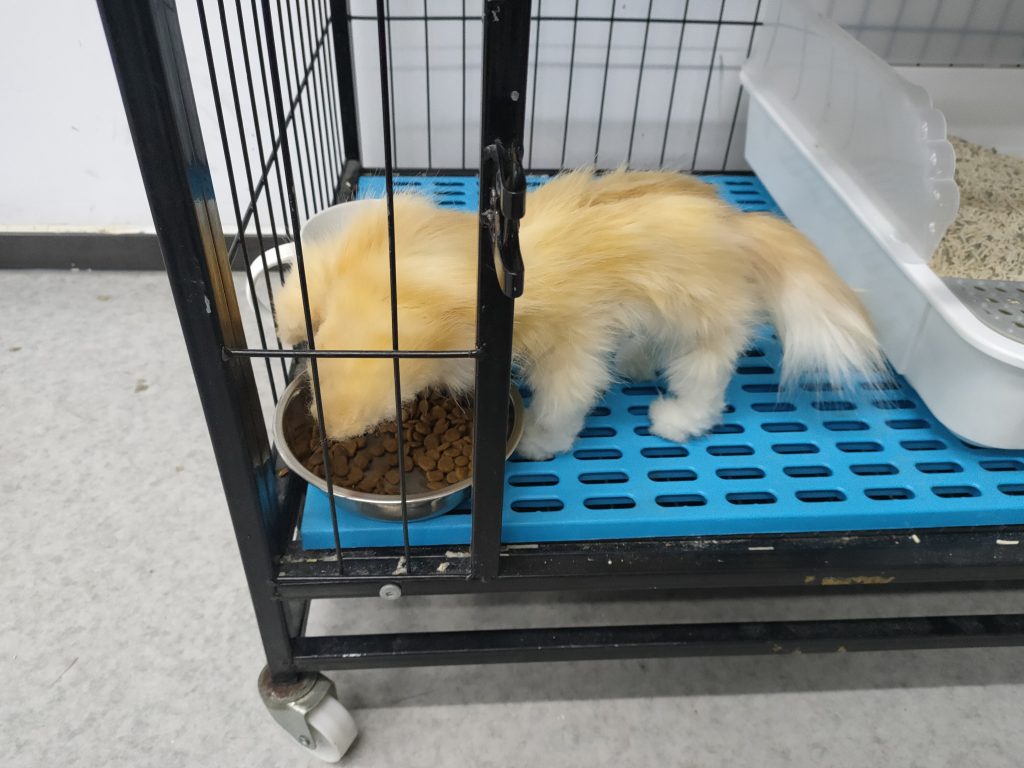
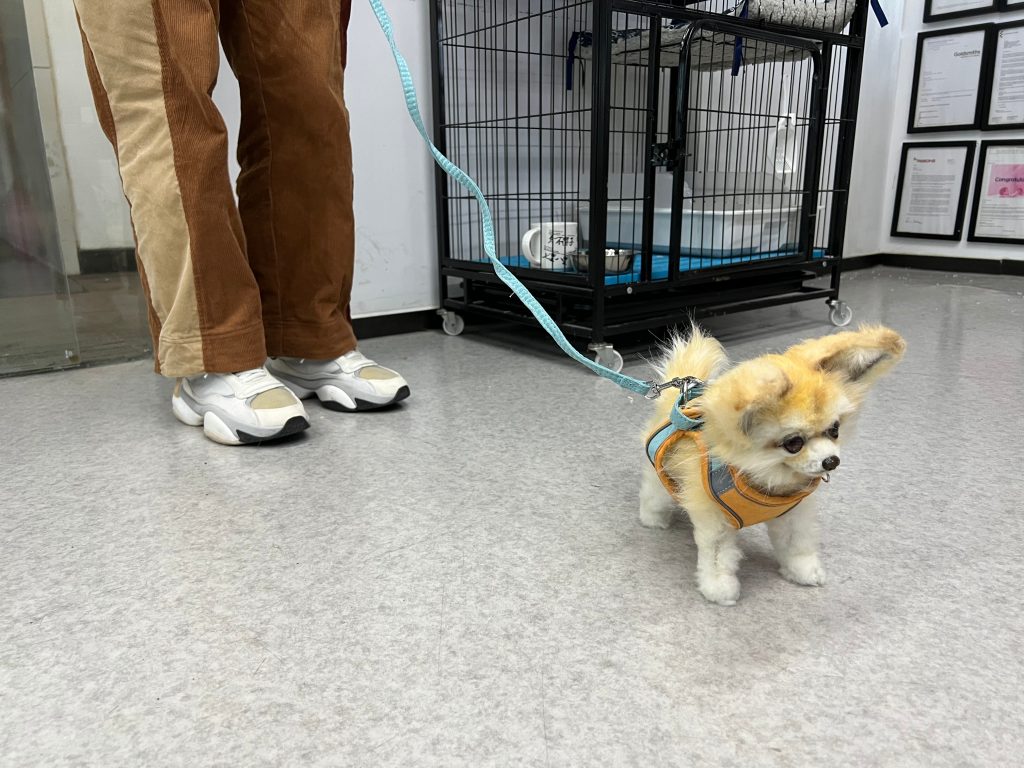
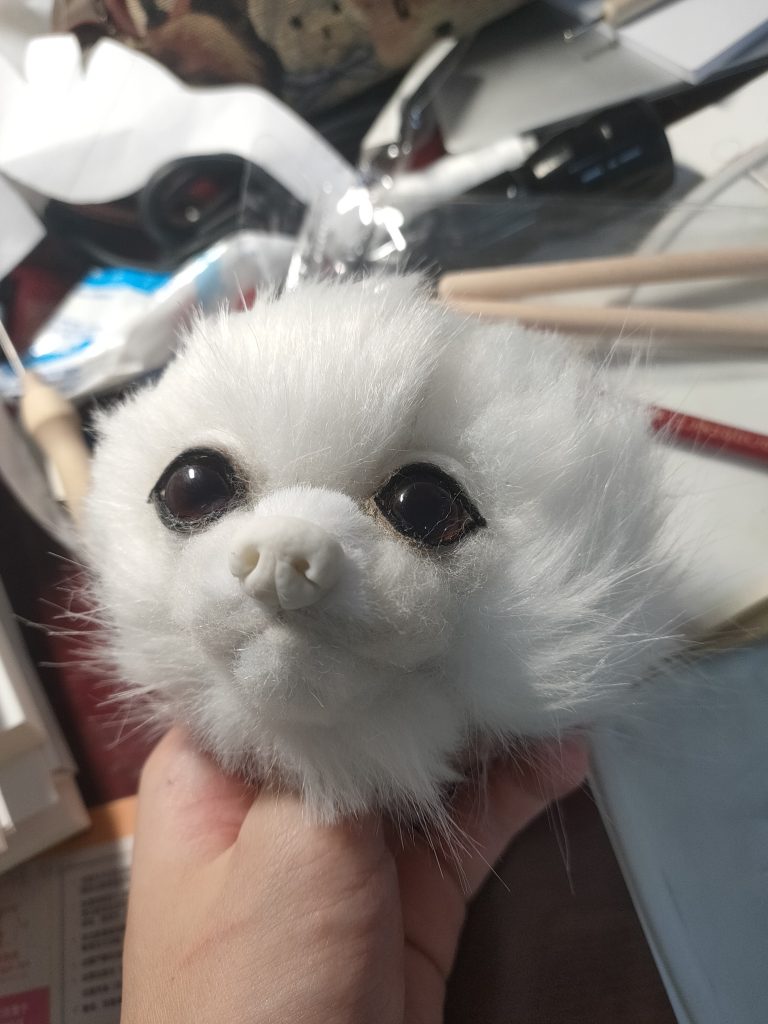
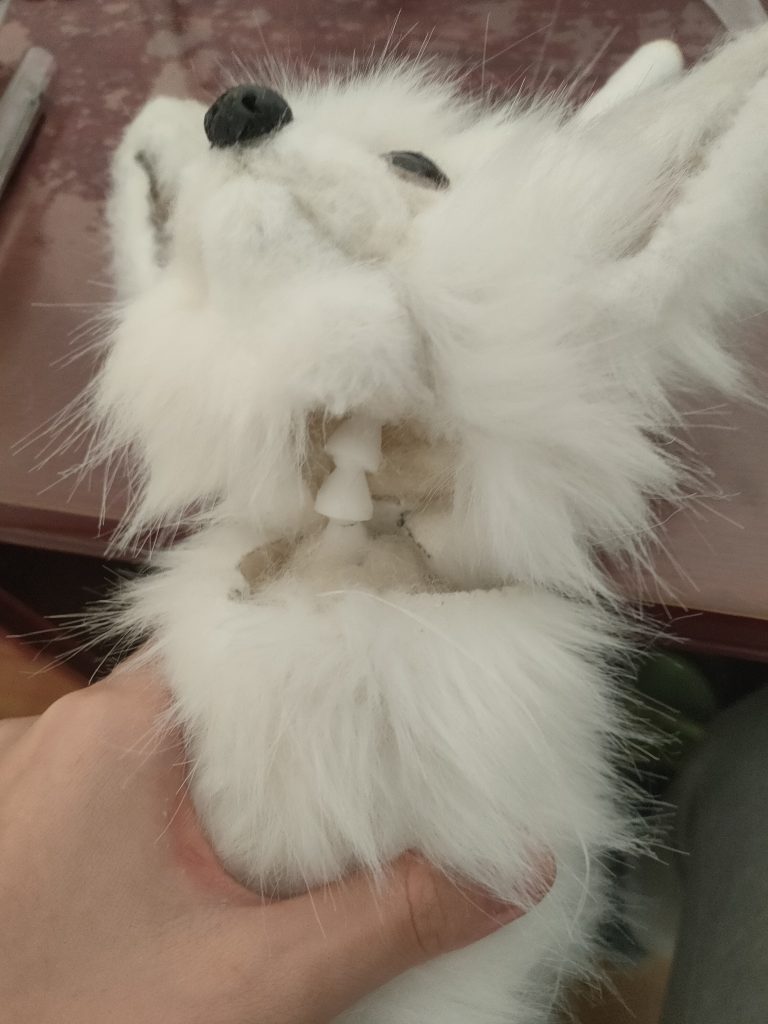
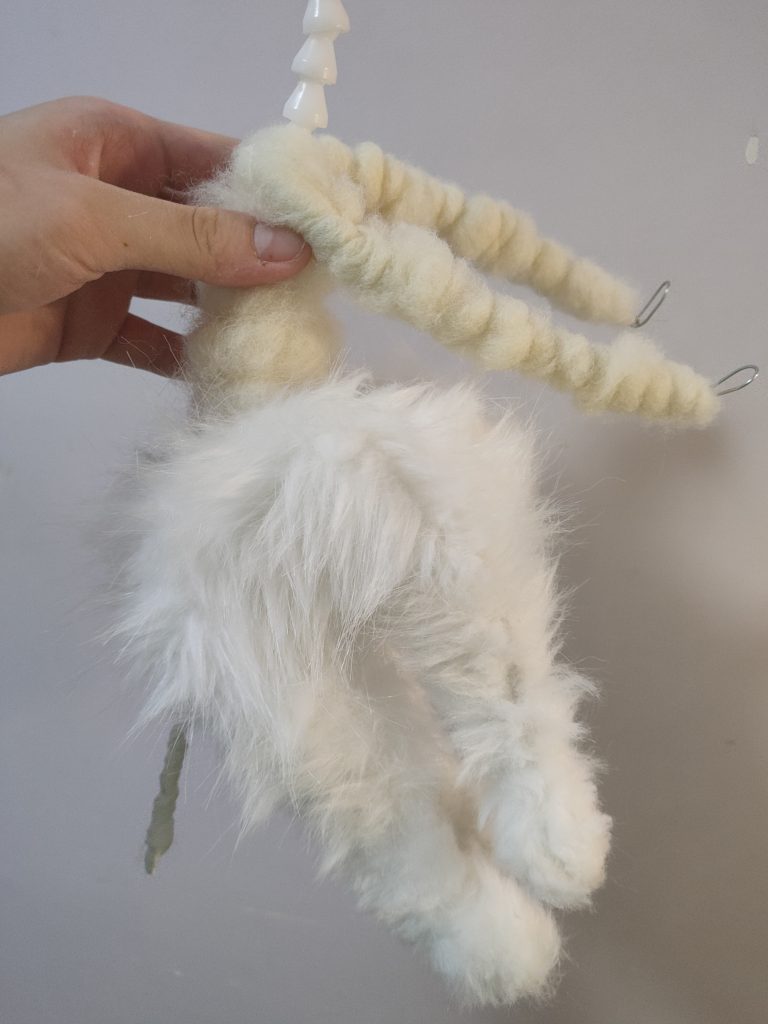
  • Foxdog Posable Doll (commission)

    foxdog, 2026, Sophie Wang

    Wool, plush fabric, wool, wire armature, plastic skeleton, etc. 35cm×25cm×20cm

  • This fish cares. And this one too

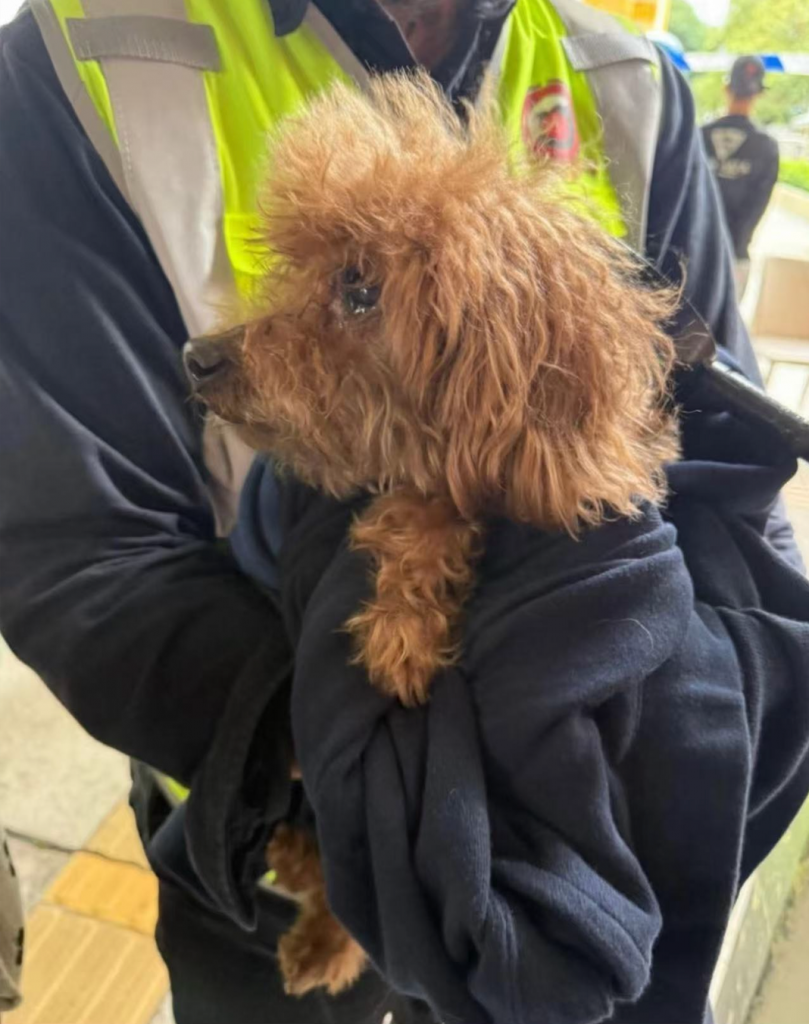
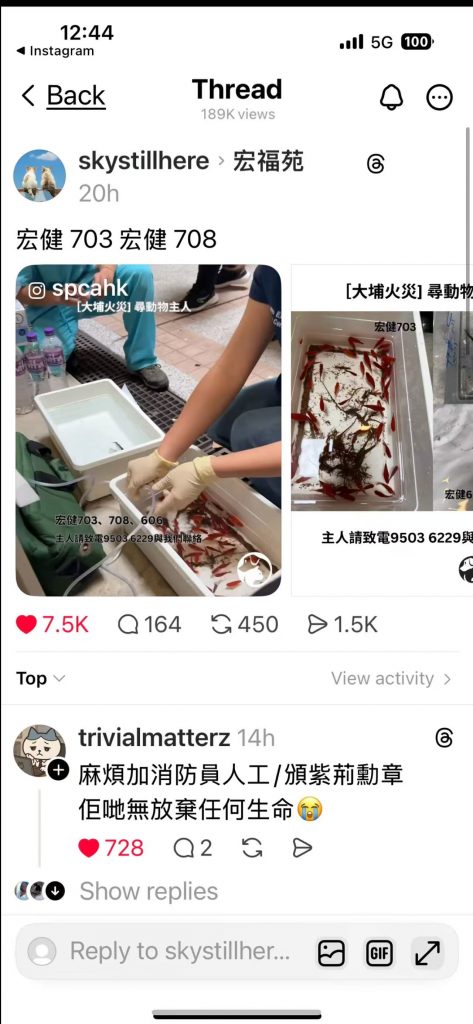
    A few days ago, a major fire broke out in Hong Kong. Eight residential buildings under exterior renovation caught fire in dry, windy conditions. The flames spread uncontrollably and burned for over thirty hours, until nothing was left. 

    I had only seen scenes like this in movies. I could not believe it was real.

    That night, I barely slept. On the news, alongside cries for help, people left messages: “There’s a cat at home.” “There’s a dog.” For the first time, I fully realized that in disasters, the trapped are not only humans. I cannot imagine the fear and helplessness of pets left alone when the fire arrived.

    The next day, as the fire weakened, firefighters entered for rescue. Good news came one after another as residents were saved. What moved me most was that they also rescued many animals: a 15-year-old dog, an 18-year-old cat, a parrot, and even a snake, a turtle, and a tank of goldfish… I was deeply moved. I have pets myself, and I know they are never “just animals,” but irreplaceable family.
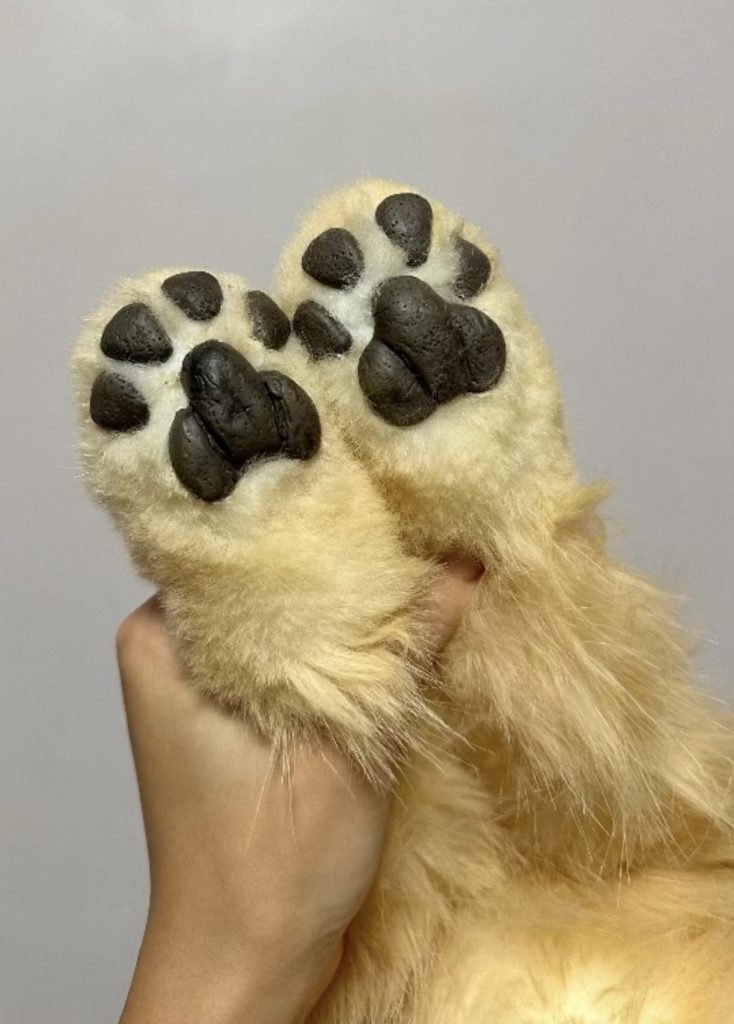
    Honestly, the rescue of these animals moved me even more than the rescue of people. Saving people is what we naturally expect of firefighters. But in such a disaster, they still searched carefully for a tank of goldfish—this is what I truly admire.

    To some, in the face of catastrophe, the lives of cats and dogs seem insignificant, and goldfish or hamsters even more so. Yet it is precisely these “insignificant” lives that most clearly test a society’s respect for life.

    I was suddenly reminded of a story:

    One morning, I walked along the shore and saw countless little fish trapped in shallow pools. Soon the water would evaporate, and they would die. Ahead, a little boy kept bending down, picking up fish and throwing them back into the sea.

    I asked him, “There are hundreds, even thousands. You can’t save them all.”

    “I know,” he said.

    “Then why do it? Who cares?”

    “This fish cares,” he said, tossing another fish into the sea.

    He kept repeating, “This little fish cares. And this one too.

    And this one, and this one…”

    This disaster made me realize that Hong Kong is a truly warm and civilized city. I love my country, yet I must admit with sadness that in many parts of mainland China, ideas such as “all life is equal” and “animals deserve to be seen” are still far from widely accepted. I hope to use art to make these overlooked lives truly visible.
    In a fire that burned down eight buildings, who would care about a tank of goldfish?

    owner cares. kind people cares.

    This fish cares. And this one too.

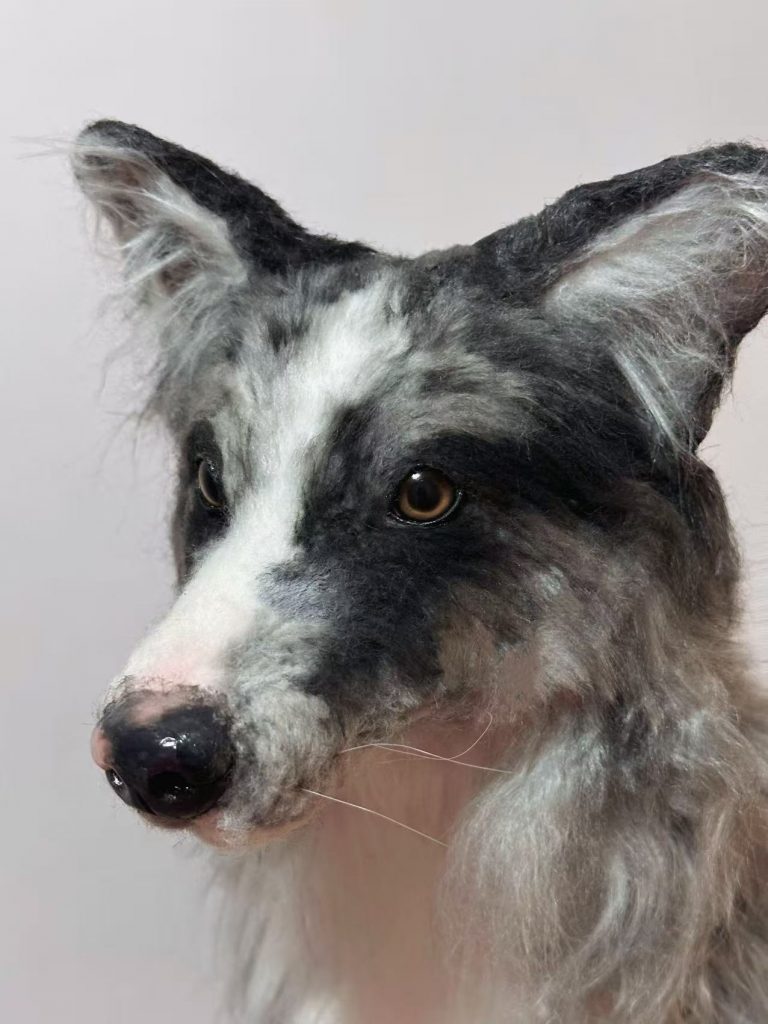
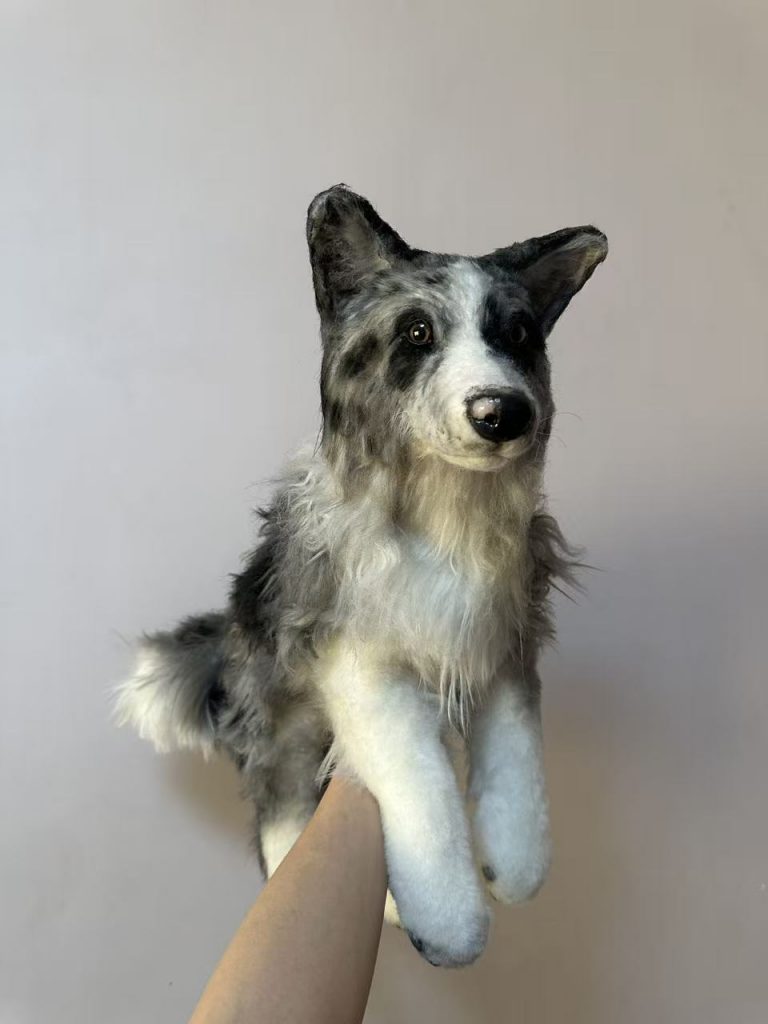
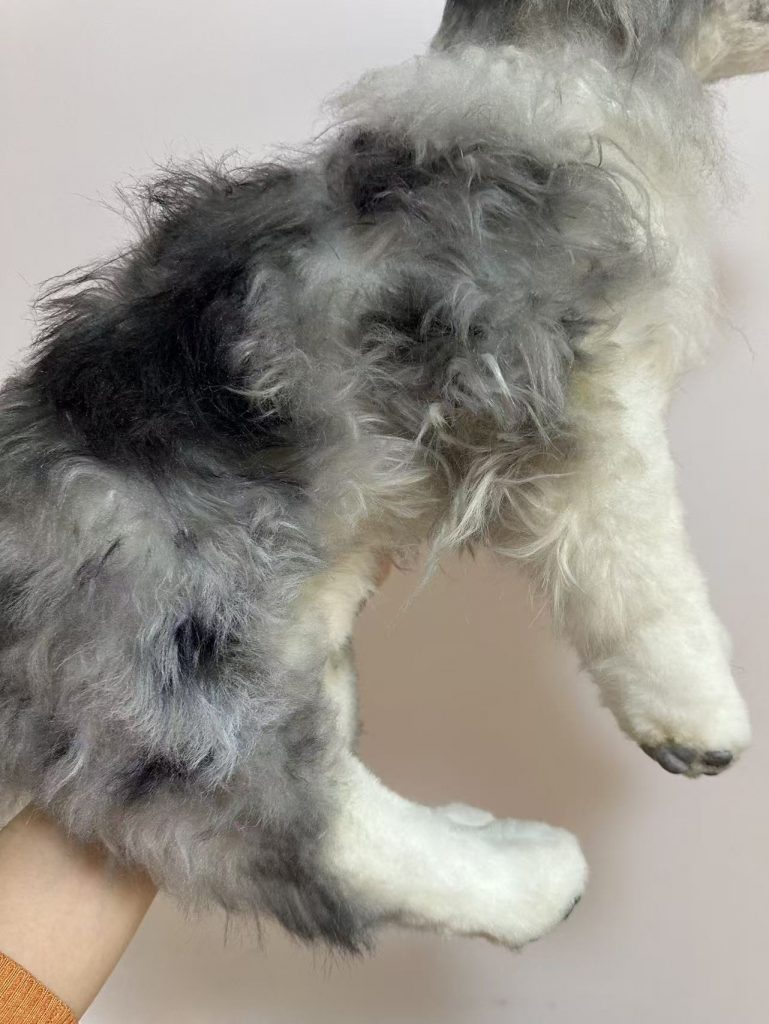
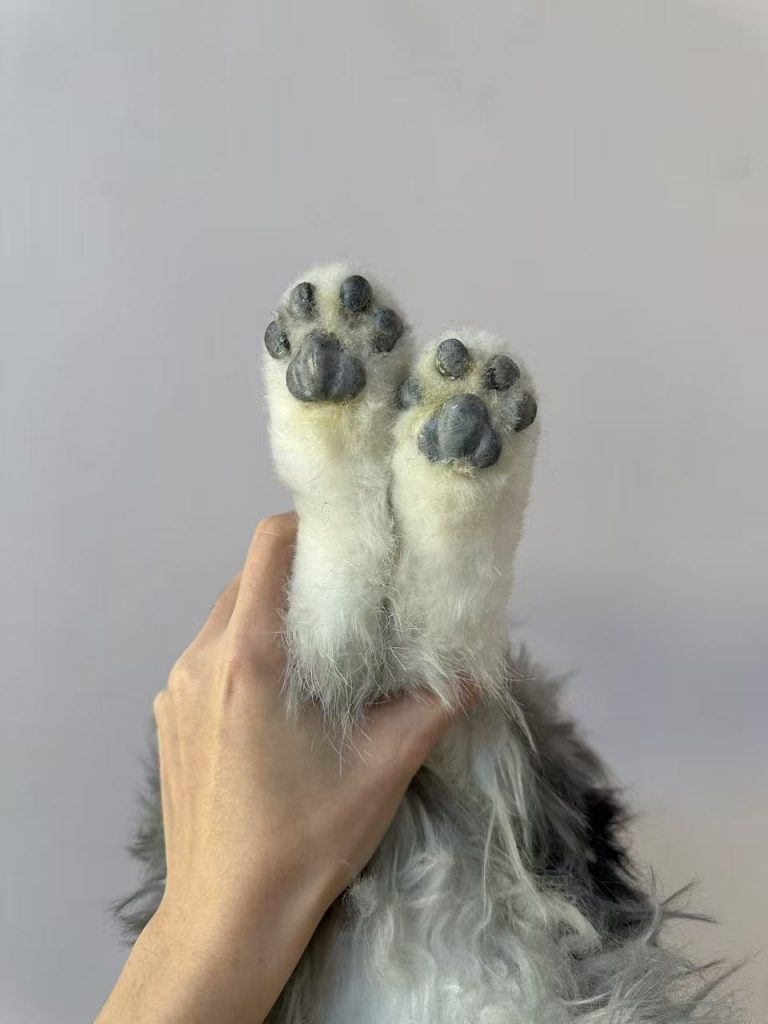
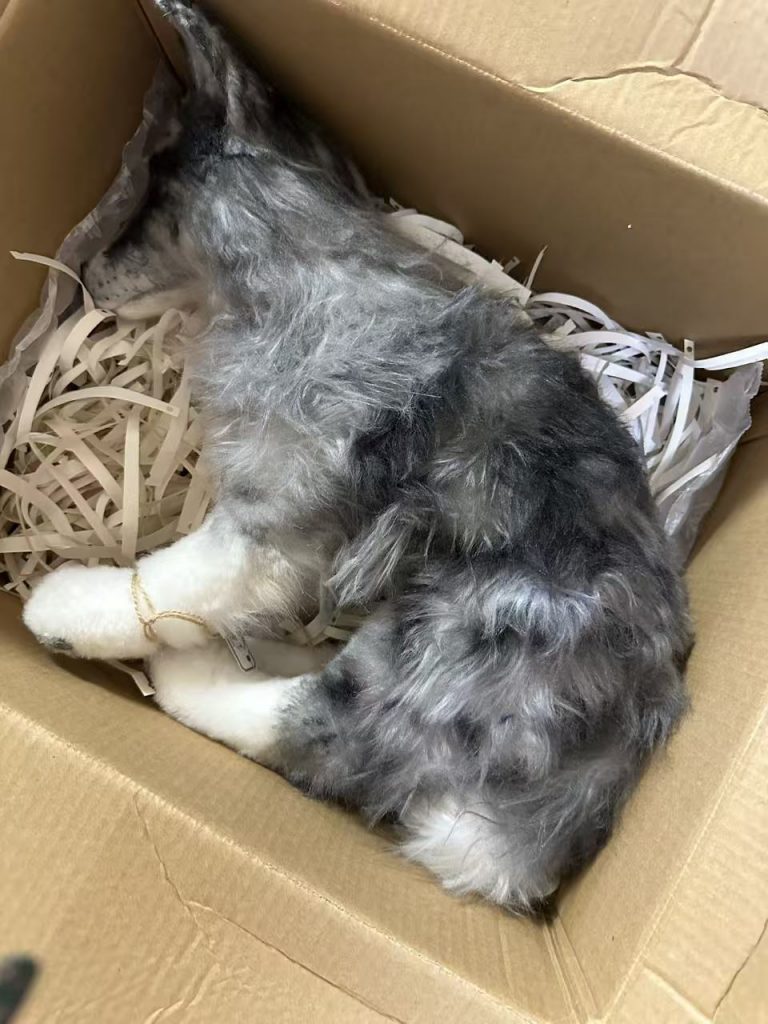
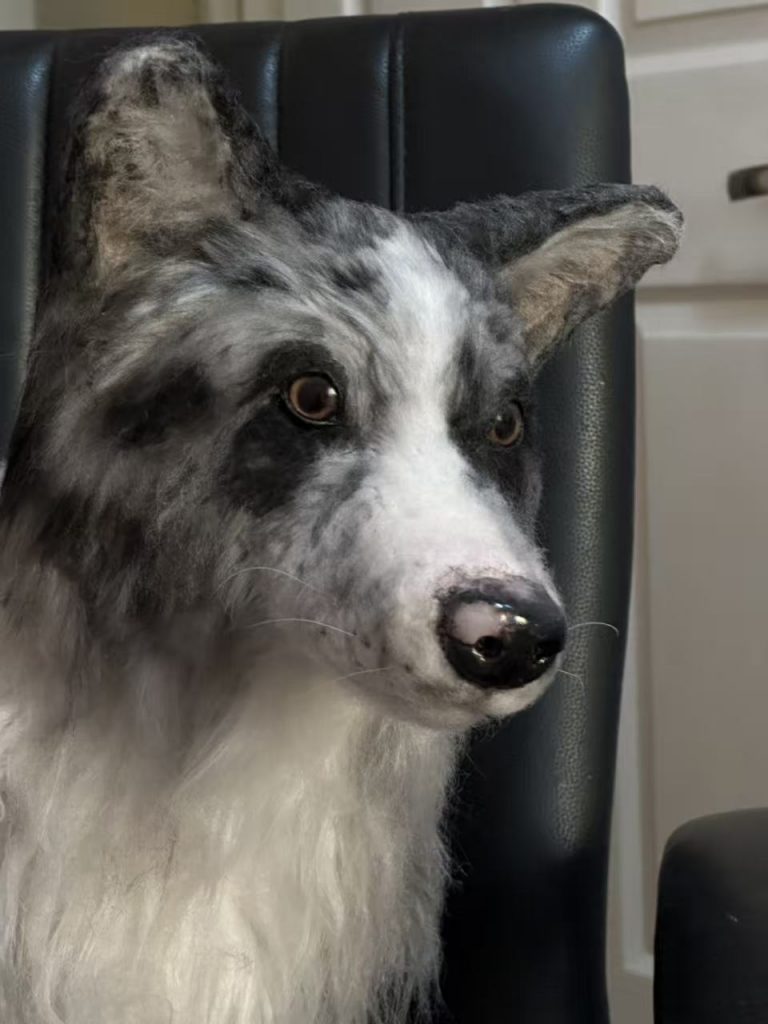
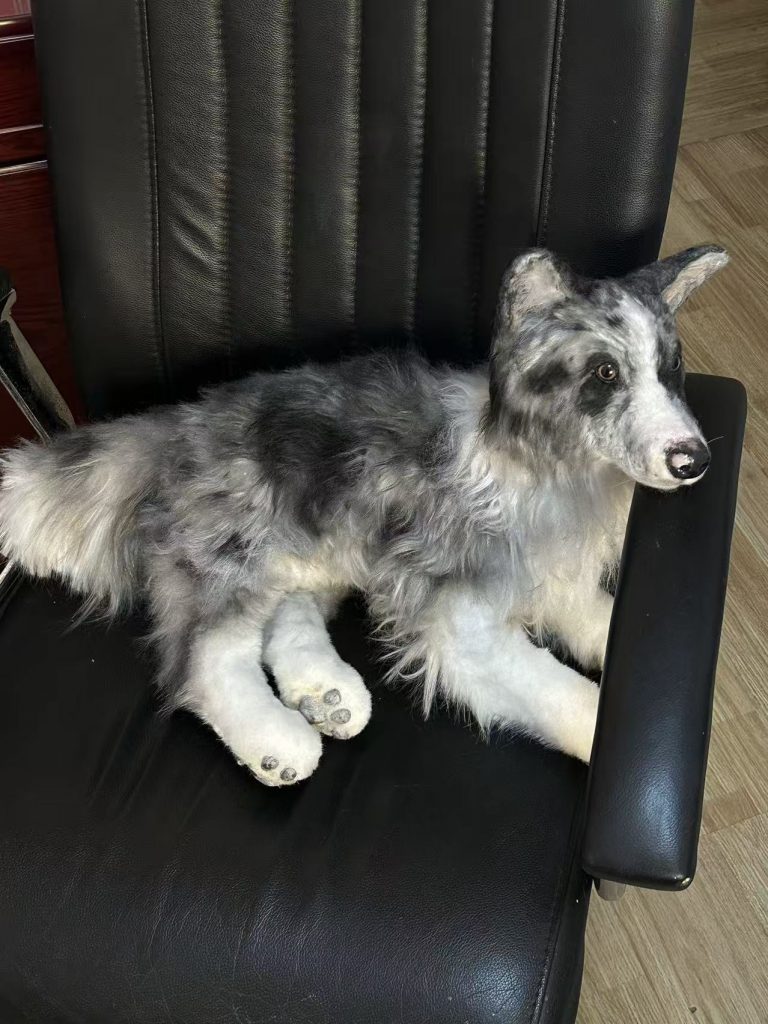
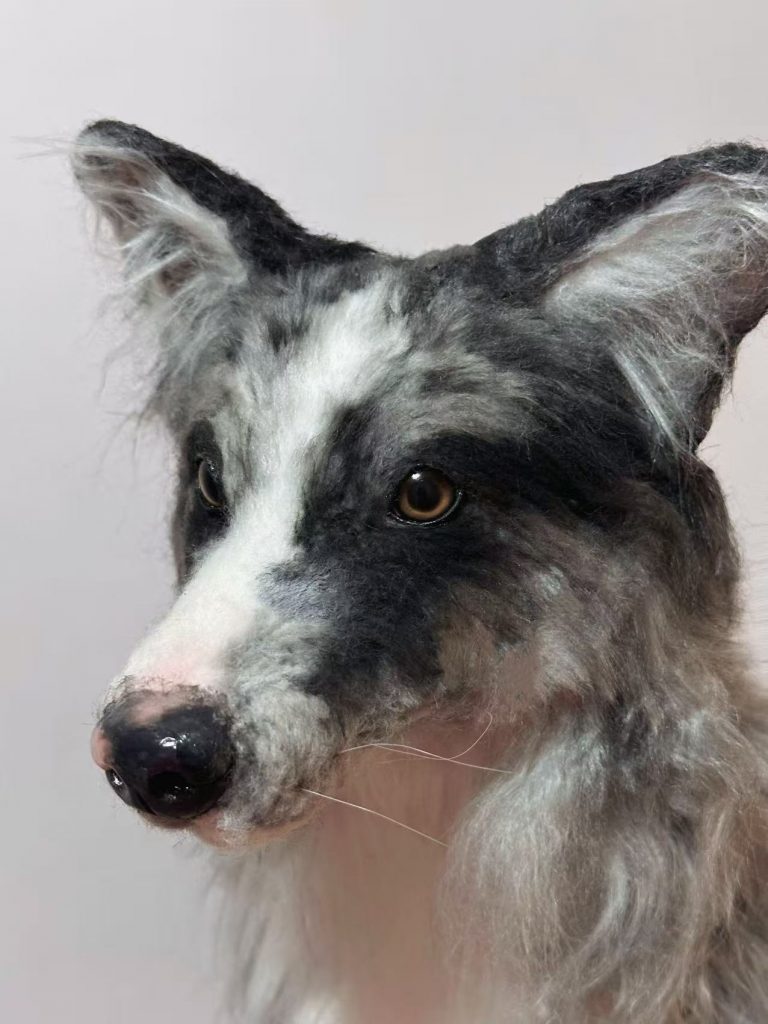
  • Merle Border Collie Posable Doll (commission)

    Merle Border Collie Posable Doll (commission)

    Merle Border Collie, 2025, Sophie Wang

    Wool, plush fabric, wool, wire armature, plastic skeleton, etc. 55cm×40cm×20cm

  • In the fading of soap, I glimpse the constancy of existence

    In the fading of soap, I glimpse the constancy of existence

    Reflection on the Exhibition Selection

    When I was a child, I often felt a quiet sadness watching a piece of soap slowly disappear.

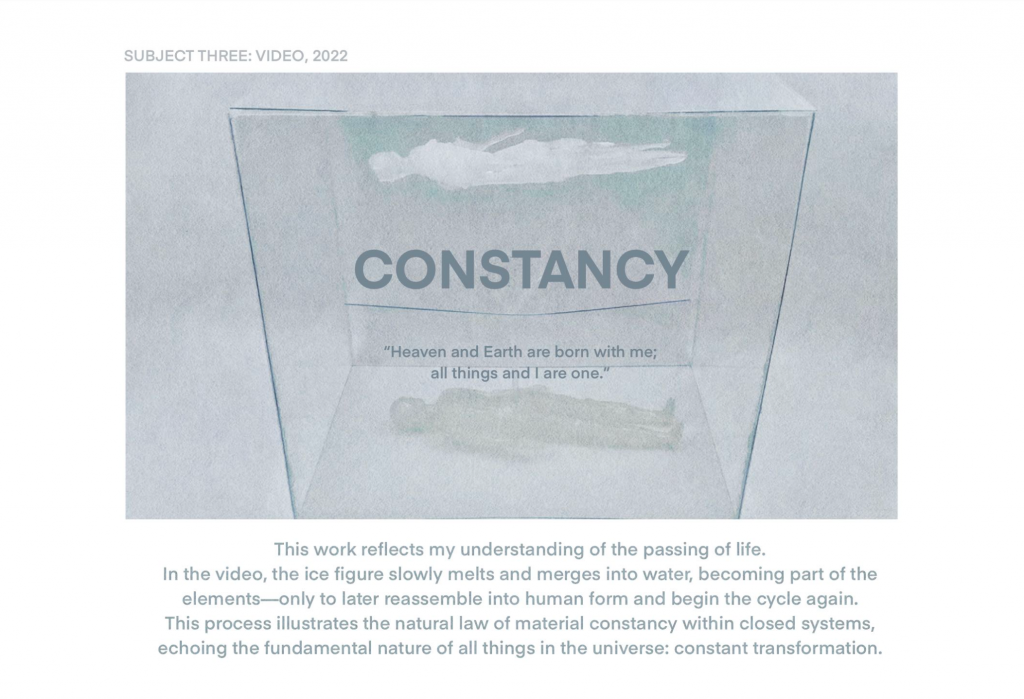
    A new soap is always square, smooth, and jade-like. But with times of washing, it rubs against hands and clothes, then becomes rough and cracked, shrinking little by little until it disappear completely. This mirrors the track of life itself — from an infant to a wrinkled elder, and finally to death, returning to nothingness.

    Yet in a closed system, matter and energy are conserved. Nothing truly disappears, what seems disappeared is merely transforms. Life is the same — individual death is merely a transformation into another form of existence. 

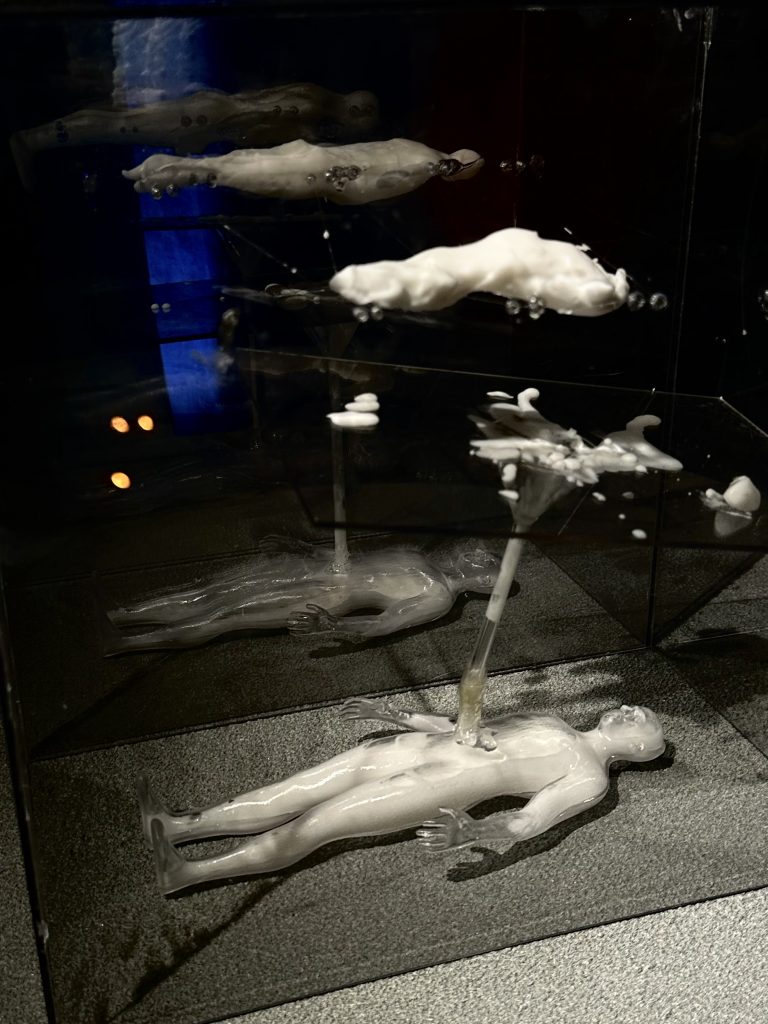
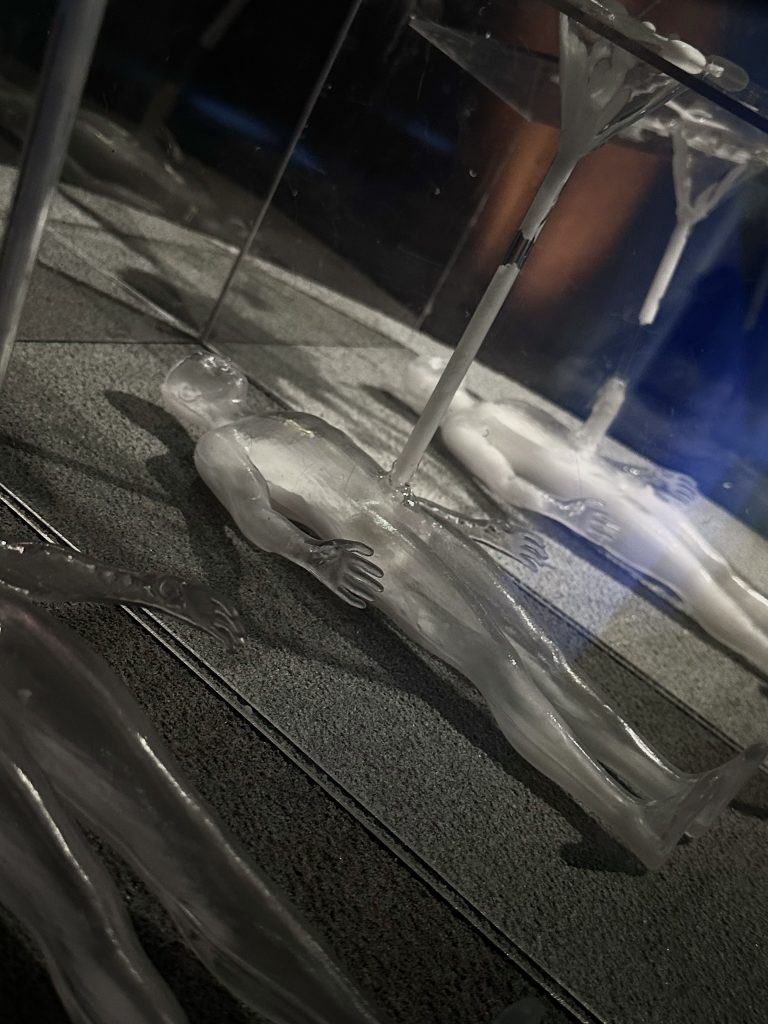
    Therefore, I depict a soap figure gradually dying, while the vanished parts reunite and slowly take shape again, symbolizing rebirth. 

    As Zhuangzi (A famous ancient Chinese philosopher)  wrote:

    “Heaven and Earth were born with me; all things and I are one.”

    Constancy

    2025, Sophie Wang

    35 cm × 35 cm × 60 cm

    Soap, Acrylic, Glass


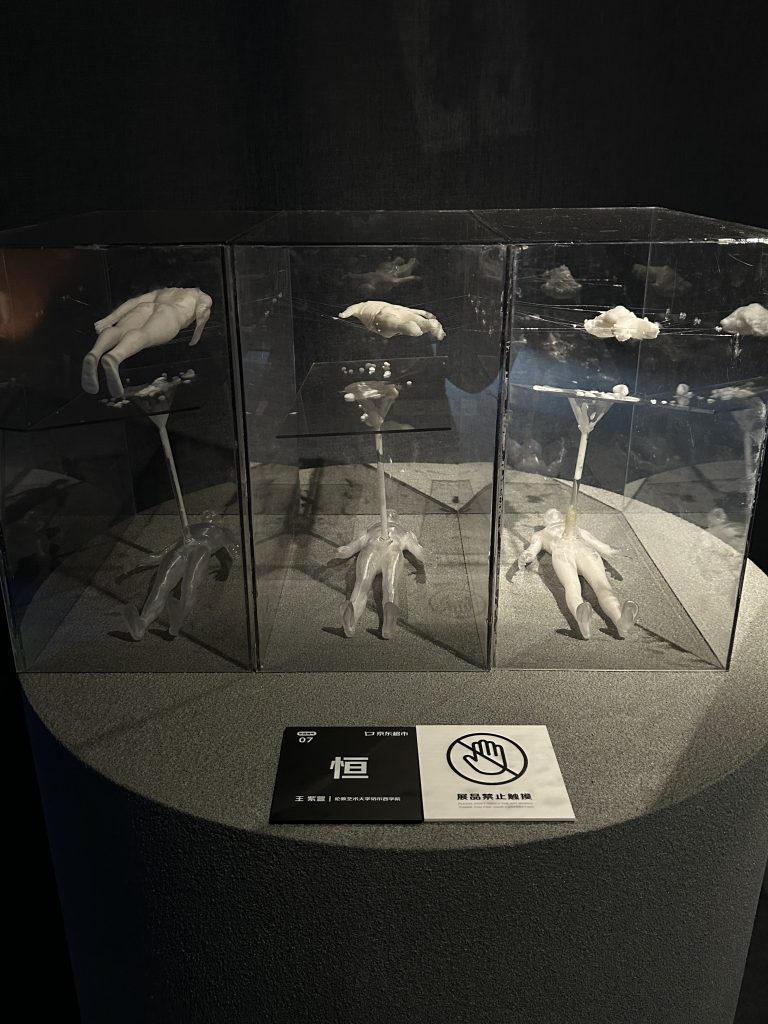
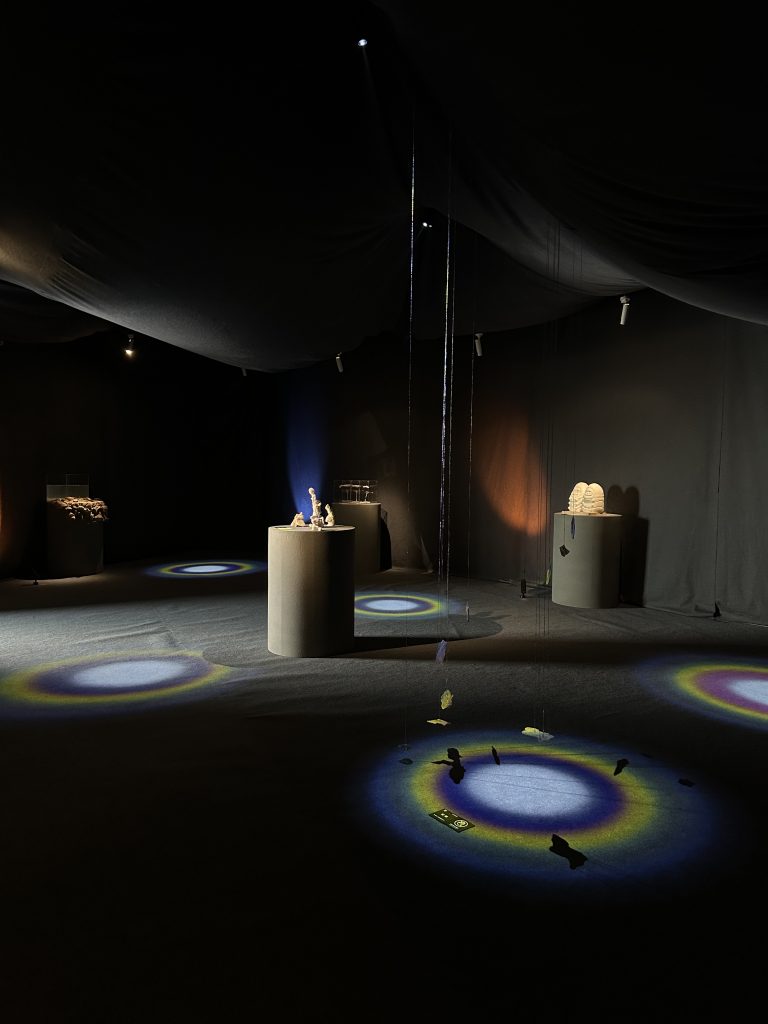
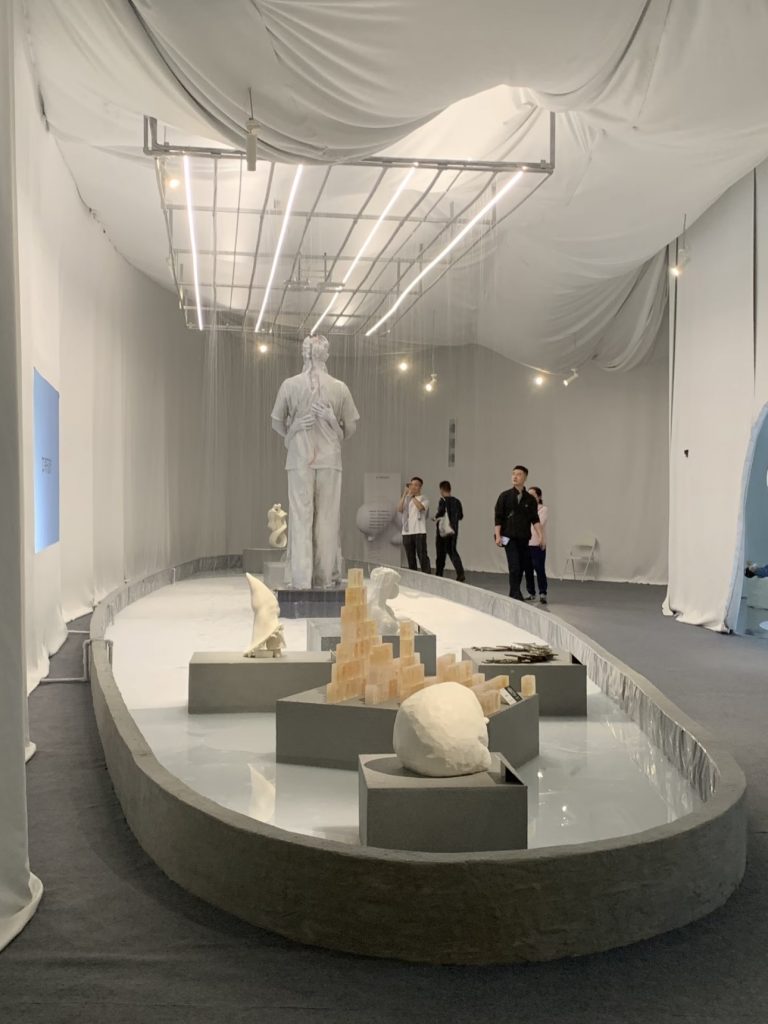
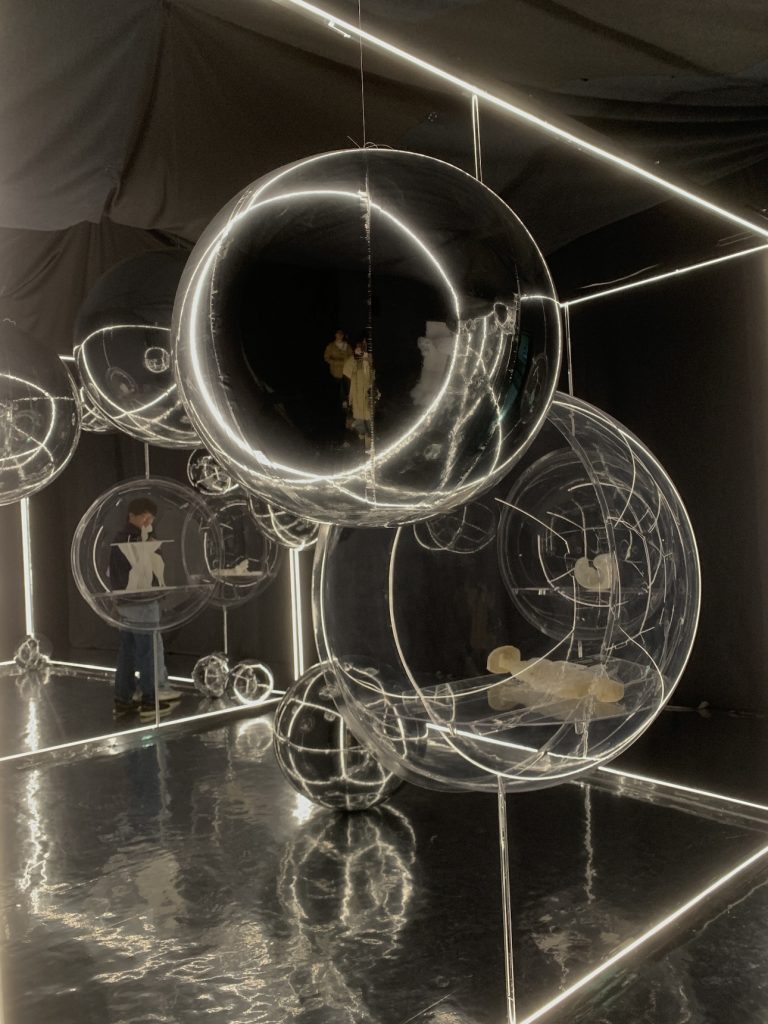
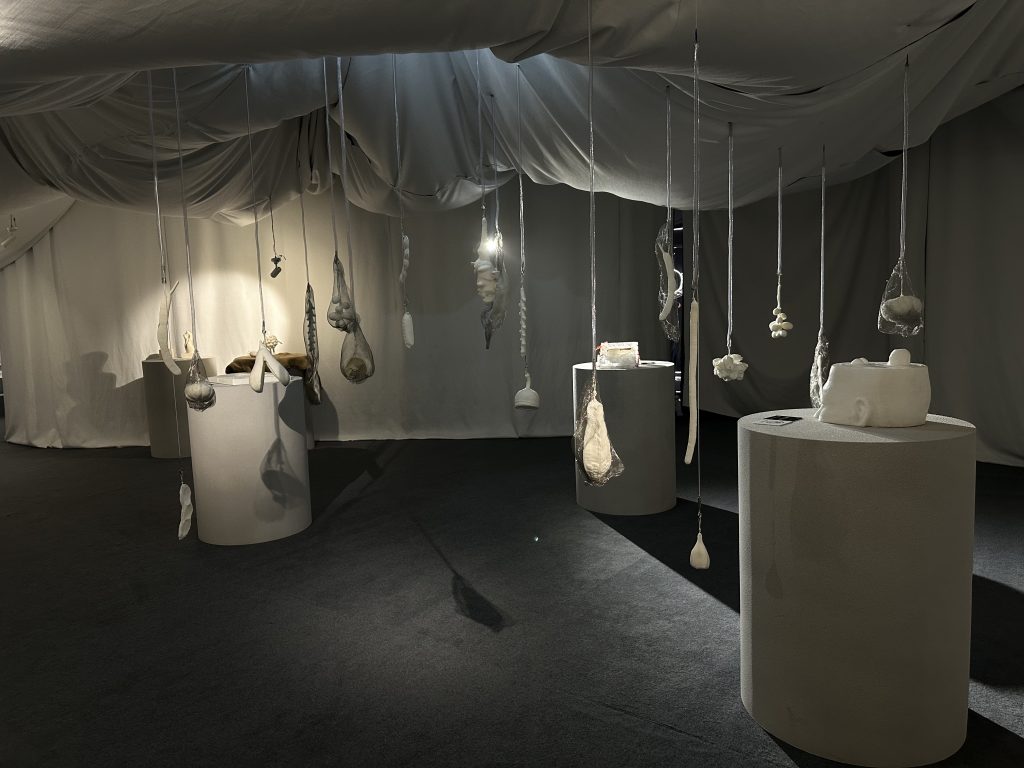
    Lathered Living was held from September 24 to October 8 at 798 Art District, Beijing’s most renowned art hub. It is an exhibition of works from global young artists and supported by JingDong (Joybuy’s parent company, one of China’s major enterprises). In this exhibition, works used soap as the primary material, exploring three sub-themes: interpersonal relationships, the body/self, and perceptions of the world.

    When I first saw the exhibiiton’s open call in August, the sub-theme “perceptions of the world” attract me a lot. I had previously created a work exploring the concept of “disappearance” in Eastern philosophy, which closely resonated with its theme and materials‘ concept. I adapted that work and was successfully selected.

    Previous work:

    This was the first time I independently found an exhibition opportunity and made it through a competitive selection process. I also received a £105 gift card as a prize, so I am so excited and proud of it. Besides, I was also fortunate to see many outstanding works by other young artists in this exhibition. This experience made me feel that my work was recognized and seen by a broader audience. It has encouraged me to take part in more public art activities and share my ideas with the world.

    1. Your one and only father avatar
      Your one and only father

      I am pleased to extend my warm congratulations to the establishment of this online archive. The pursuit of artistic elegance lies in everyone’s mind, deeply encoded with their feelings of love, hate, intimidation, and ecstasy. It is thus the artists, who have a mind sensitive enough to notice the subtlety of this connection, to become microphone of people, speaking their feelings in the language of lines, strokes, lights, and shades.

    Leave a Reply

    Your email address will not be published. Required fields are marked *

  • My First Posable Art Doll Commission

    My First Posable Art Doll Commission

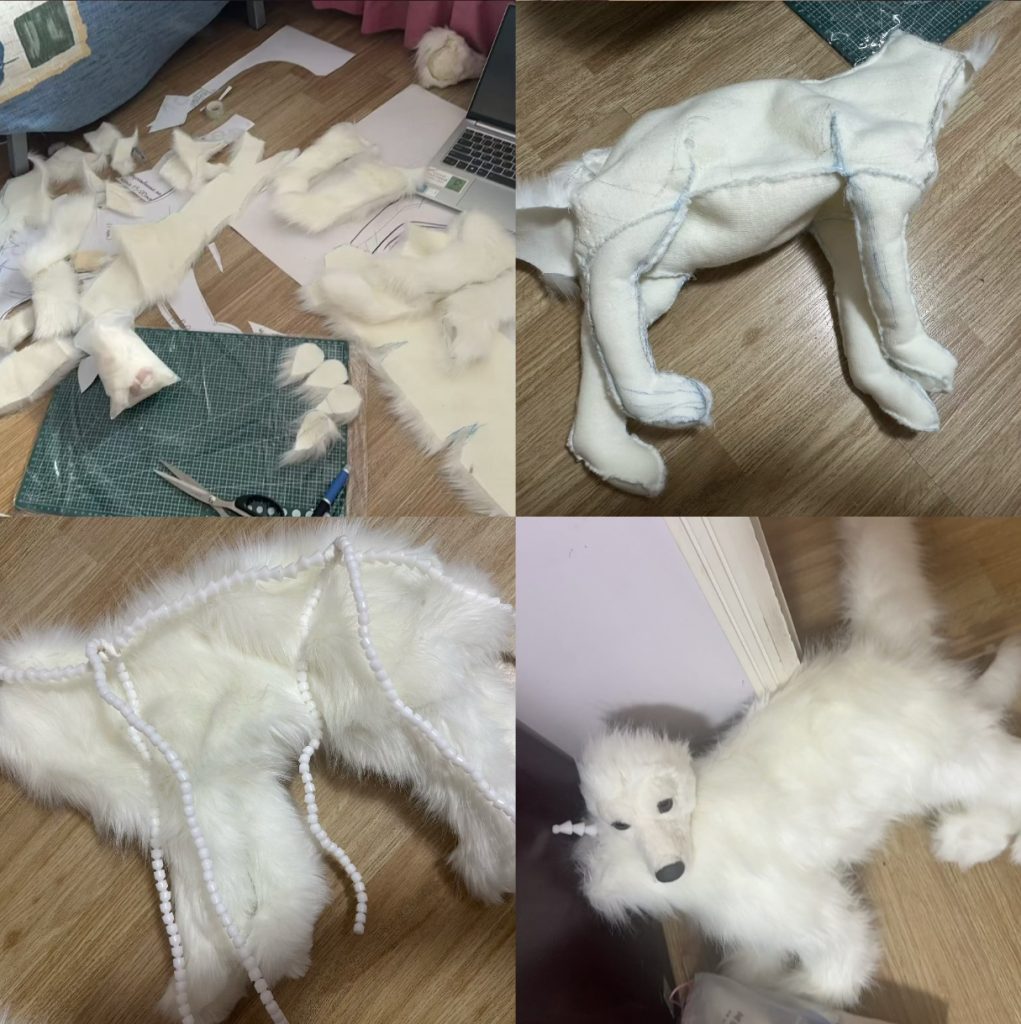
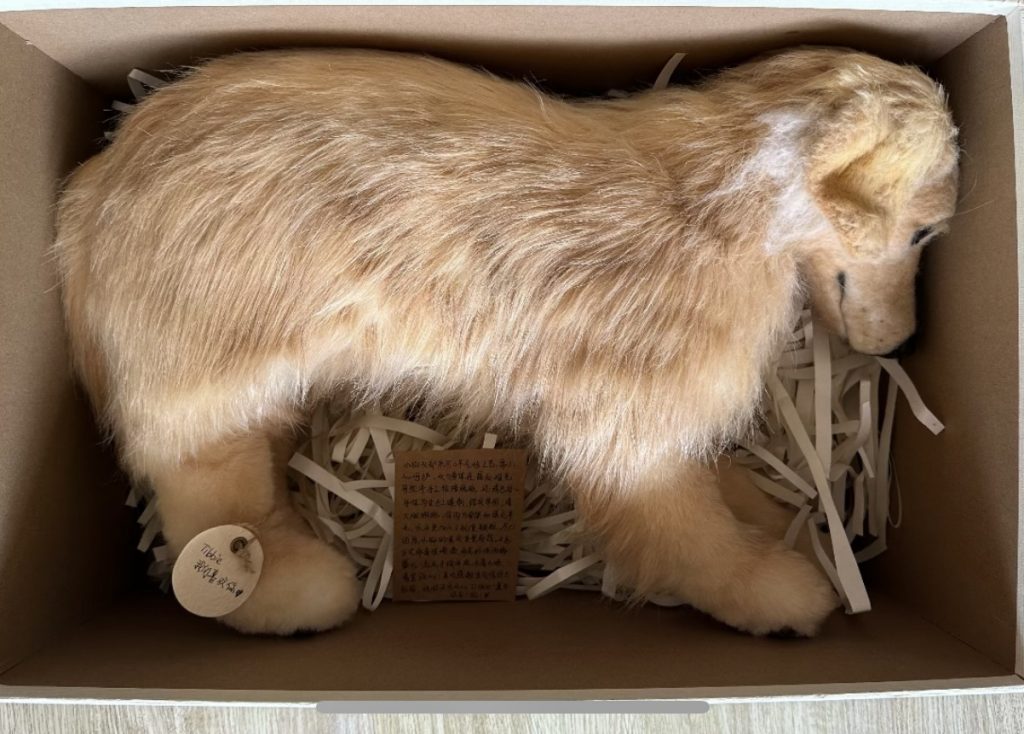
    I’ve loved animals and collected many plush toys when I was a child. I always dreamed of owning a unique creature from my imagination. So when I was 16, I started self researching with wool, artificial fur, and wire skeletons, and made my own fantasy creature dolls. These works later became part of my portfolio and helped me get into UAL.

    Last month, a girl messaged me after seeing my work‘s posts on Xiaohongshu. She asked if I could make a custom doll of her dog Tibble. At first, I rejected directly because I honestly didn’t think my skills were good enough to take commissions. My stitching wasn’t always neat and my fabric patterns weren’t perfect. I’m just a self-taught hobbyist who has only made five dolls rather than a professional. Then she told me that her dog had passed away and she wanted a doll to remember him and hold close. I was deeply moved, so I  decided to try.

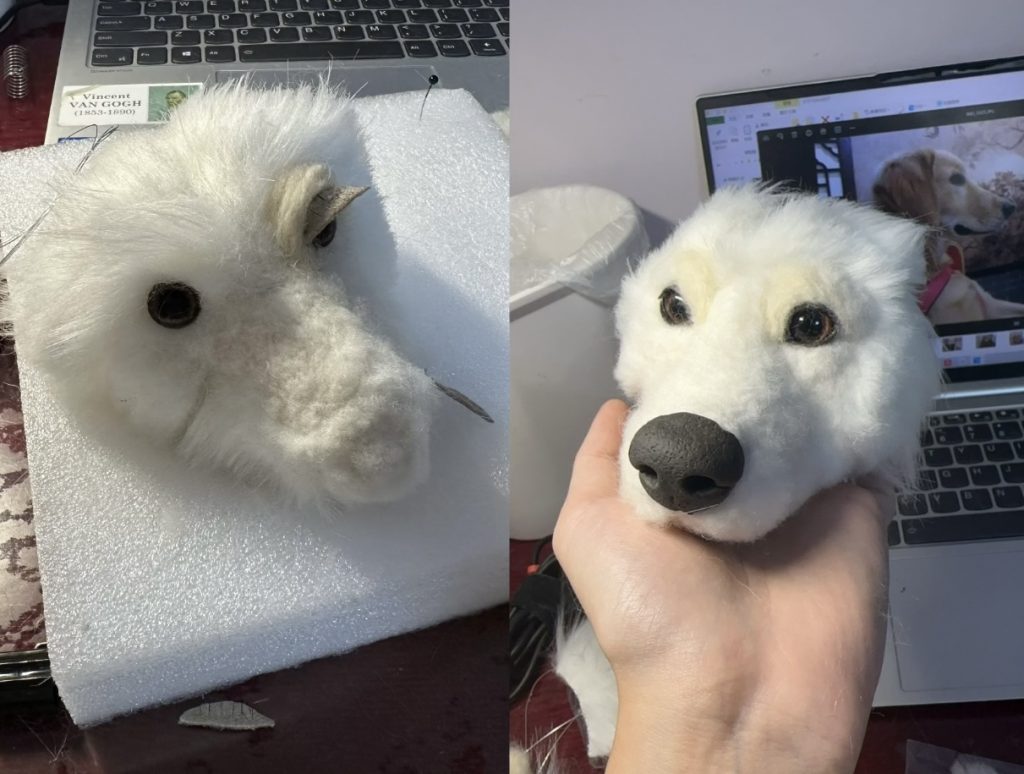
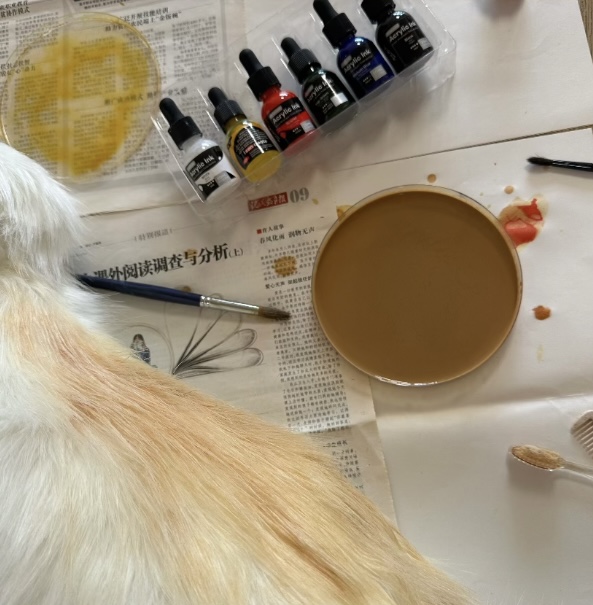
    I felt a lot of pressure for my first paid commission. I wasn’t confident in my craftsmanship — I worried that she might not be satisfied and ask for a refund. Also, this time the doll was not a fantasy creature but a real pet, which made it even more meaningful. I carefully studied dozens of Tibble’s photos and videos she sent me, analyzed his features, made sketches, and selected materials. I also researched different doll-making techniques to make the structure stronger and the finish better. Then came many days of testing, sewing, felting.

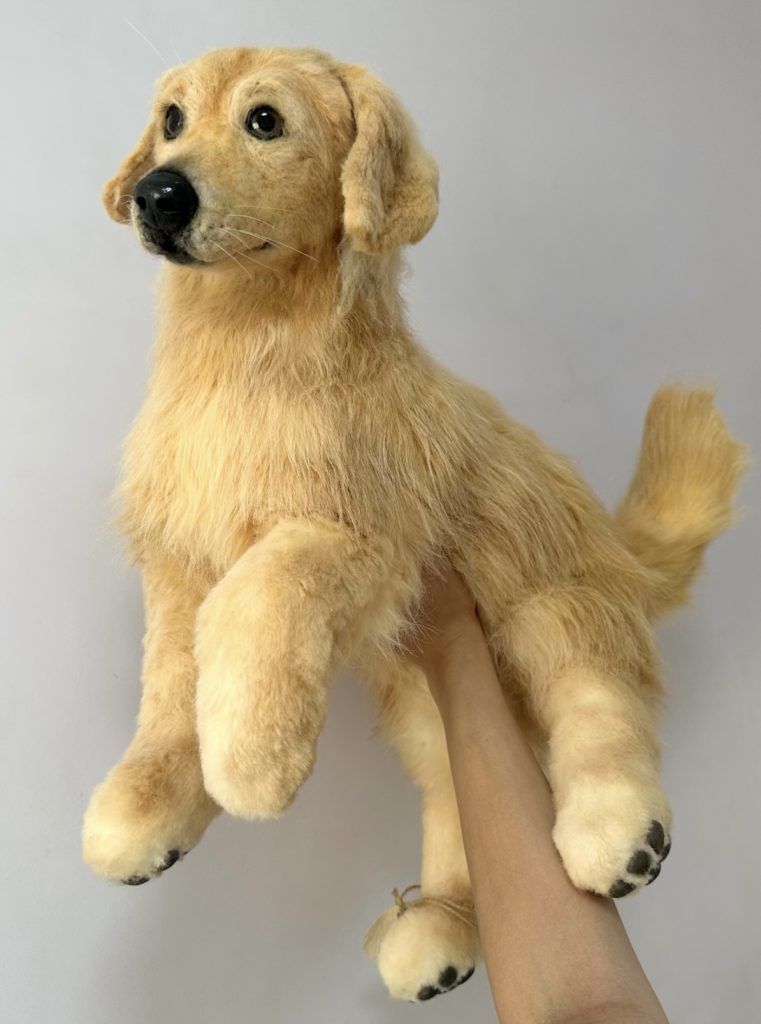
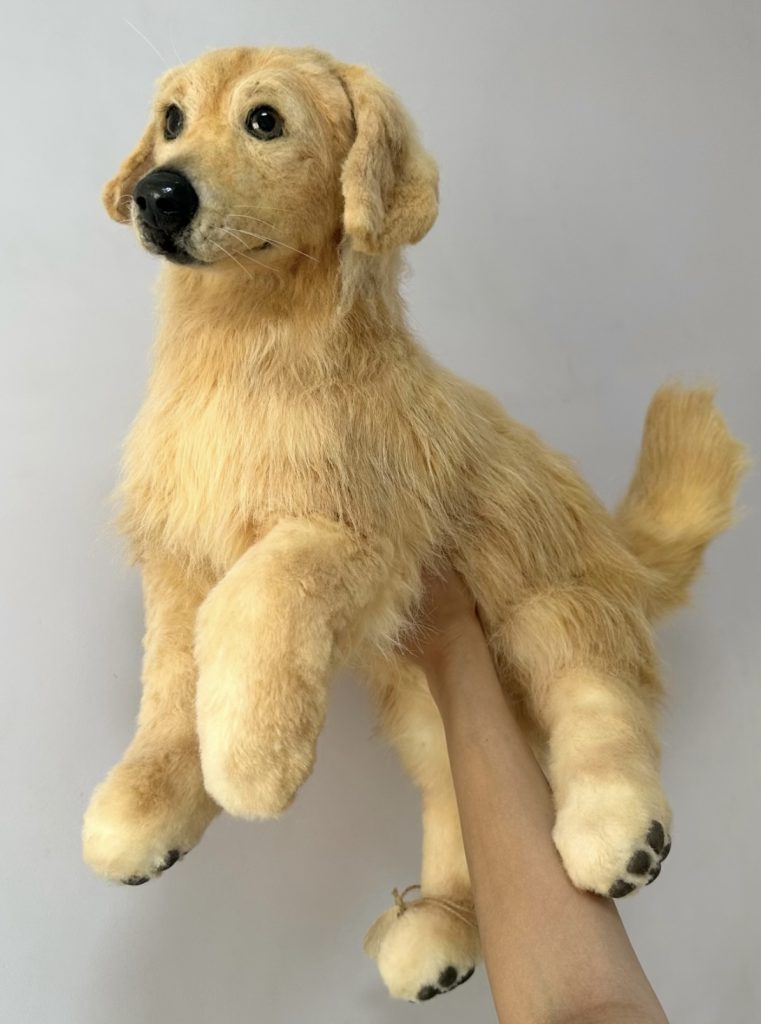
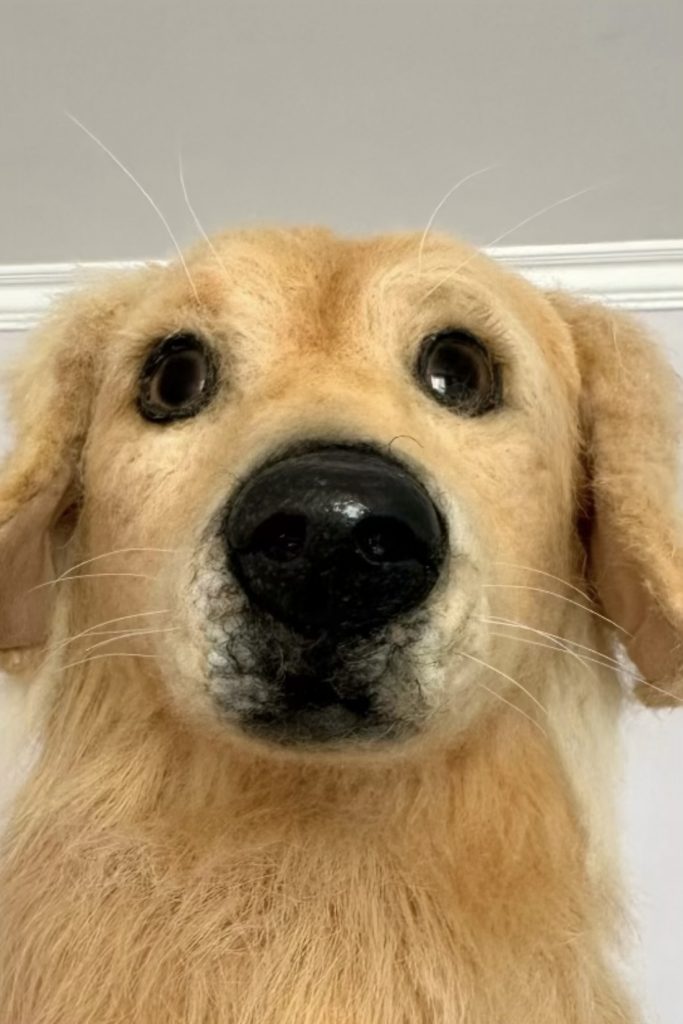
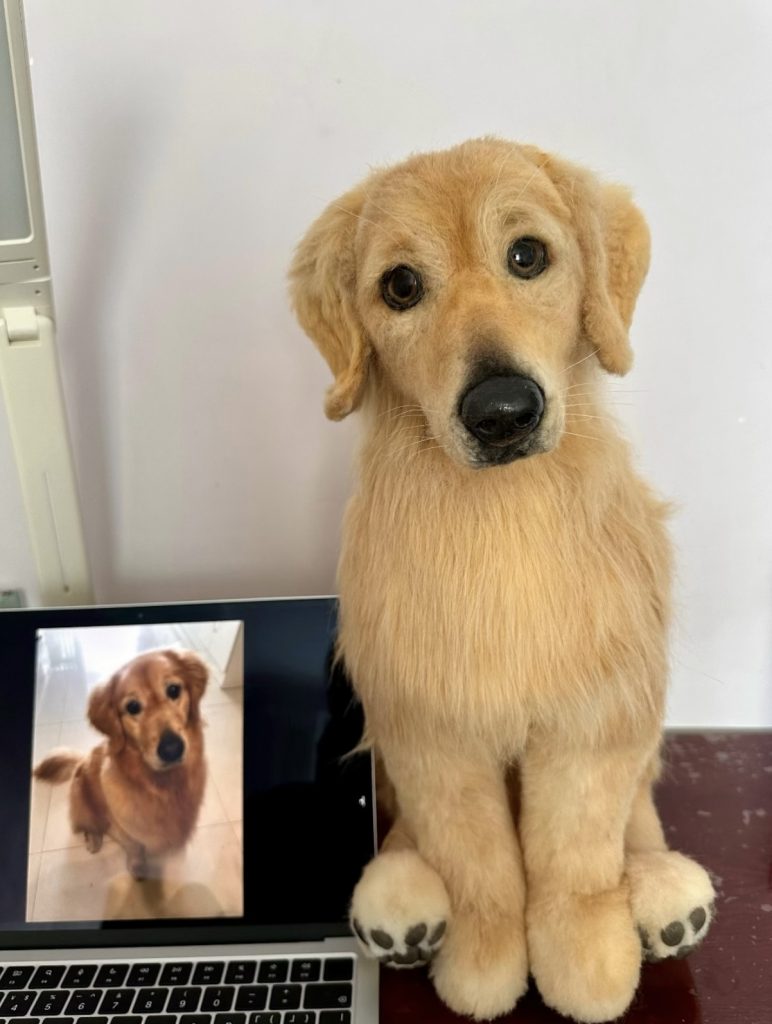
    After more than 20 days, I finally completed a doll that I am satisfied:

    When my client received it, she cried. She told me that over the past year, she had commited more than ten doll makers, but  all their works looked like strangers to her. But my works made She felt that her Tibble came back home. She also told me that when she first saw pictures of my other works, she believed I could capture her dog’s expression. She felt that my dolls had a vivid spirit and were full of my love, which is more important than perfect skills. 

    Screenshot

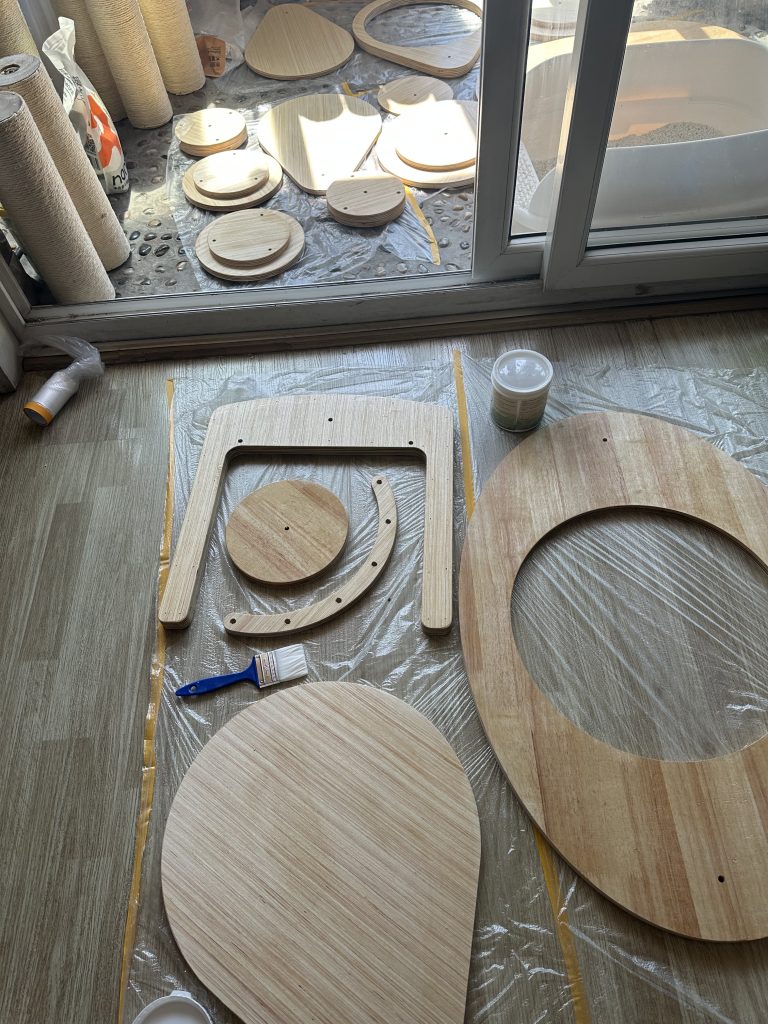
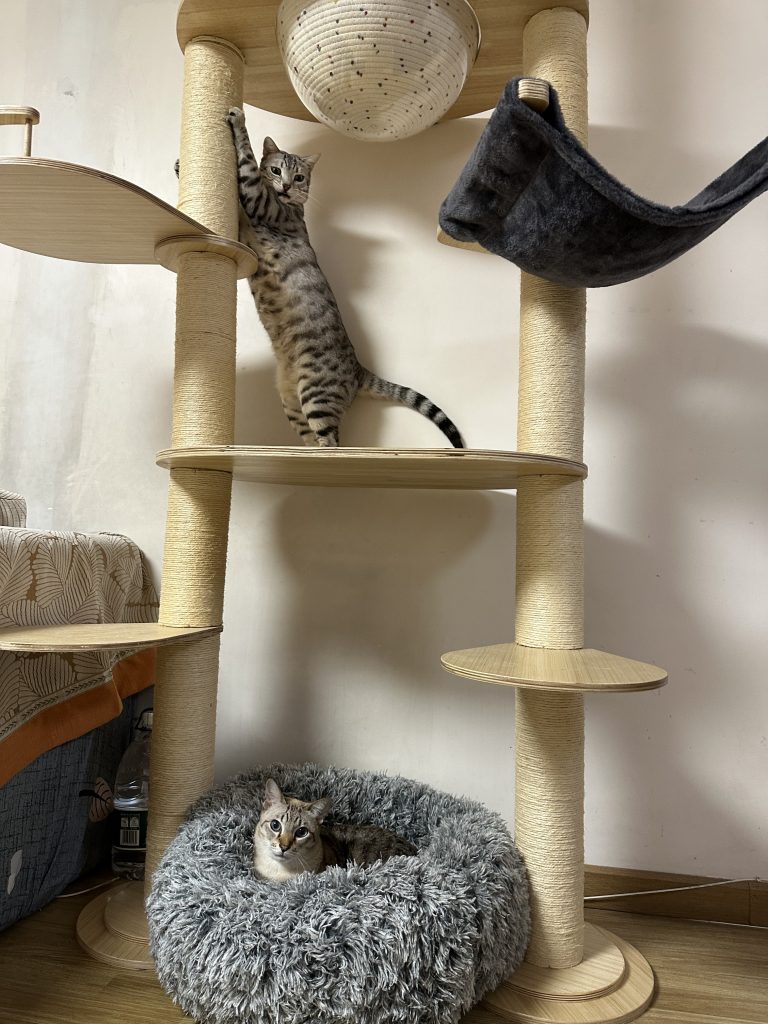
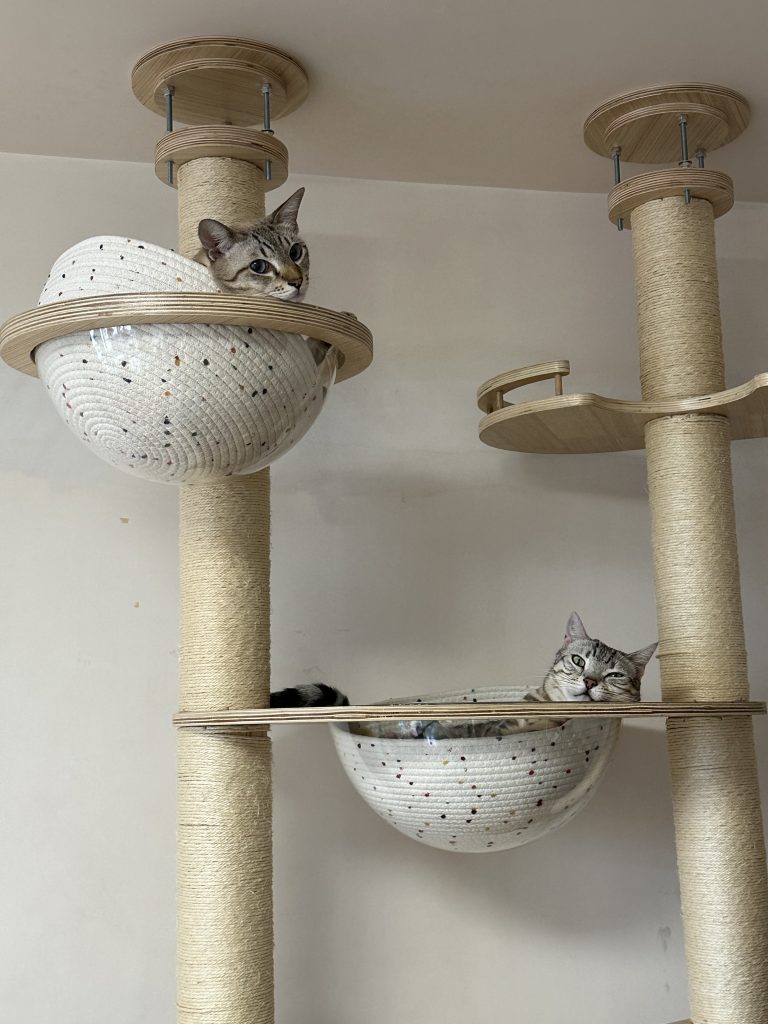
    I earned around £200 from this commission and used it to make a big gift for my cats.

    Compare to my hard working for 20days, this £200 probably wasn’t huge, but it was a meaningful start — I had earned money through my skills and passion.  creating a memorial doll for client’s pet and receiving their gratitude made this experience unforgettable. It encouraged me to keep improving and sharing my work. More importantly, I’ve realized that sensitivity and devotion are always the most important things in artistic creation.

    Leave a Reply

    Your email address will not be published. Required fields are marked *